
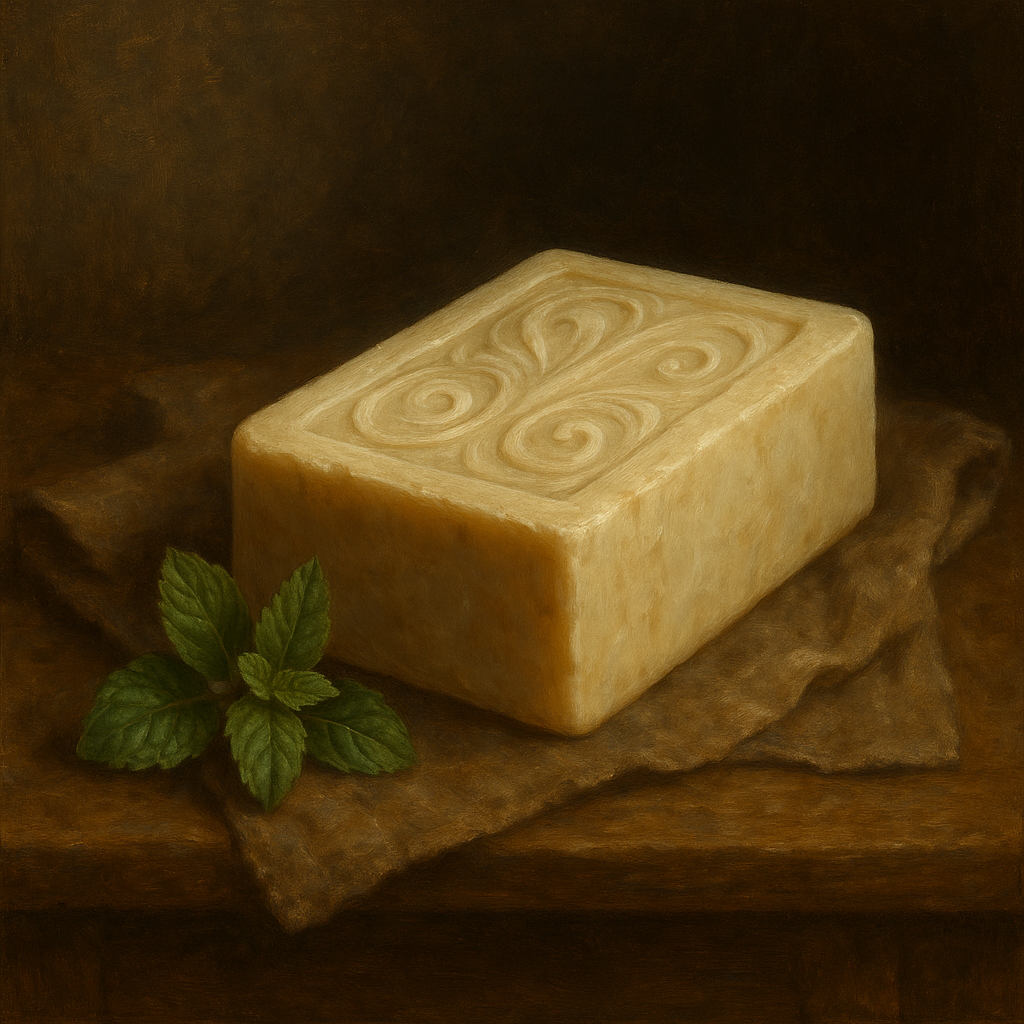
Soap
"Come forth, goodfolk! Lather away the rot with my healer’s own recipe, rich with lavender-bane, cooled with mint, and bound under the waxing moon! Keep the grave one wash further away!"
In Everwealth, soap is more than a cleansing agent, it is a rare luxury, a preventative medicine, and, to many, a symbol of dangerous vanity. With bathing a sporadic, laborious affair for most, and infection an ever-present killer, soap sits on the fine edge between necessity and indulgence. Compared to the fallen standards from The Lost Ages, where public baths, scented oils, and daily washing were common, post-Schism acceptable cleanliness is meager for sure. Today, the average citizen bathes perhaps once every few weeks, more often wiping down with damp cloths than immersing fully. Against this backdrop, soap becomes both shield and status, a fragrant ward against disease for the wealthy, and a lifeline for the few commonfolk who can make or barter it. Though its use is simple, soap’s making is not. Proper herbal-luxury soaps combine rendered fats, lye from ash, and infusions of medicinal plants, creating bars or cakes that clean not only dirt but the invisible swarms of sickness that thrive on Everwealth’s skin-starved masses. The poorest make do with harsh ash-pastes that scour more than they soothe, while the noble houses prize delicately molded blocks scented with lavender-bane, mint, herbs that, in theory, kill pox before it roots in the flesh. Among healers, soap is regarded as one of the most reliable ways to prevent rot in wounds, though scarcity and cost mean most wounds go unwashed until it is far too late.Mechanics & Inner Workings
Soap works by binding oils, dirt, and infectious residues into bubbles (or “foams”), which are then washed away with water. In Everwealth’s herbal-luxury tradition, these foams often carry secondary benefits. Mint cools inflamed skin, resin-balm discourages insect eggs from hatching in hair, and rose-thorn oil is said to drive away “skin ghosts”, the old folk term for recurring boils. The action of soap is not purely physical; certain recipes are bound with simple sympathetic magicks, such as blending mineral water to “wash away the sickness with the tide,” or carving protective runes into the curing cakes to seal in “warding scent.” However, poor-quality or improperly cured soap can strip the skin’s protective oils entirely, leaving it cracked, bloodied, and more prone to infection than before.
Manufacturing process
- Base Rendering - Common soaps use ox- or goat-tallow, while luxury versions may use almond oil, seabird fat, or marrow from the deep-sea whale-fish.
- Lye Production - Lye is leached from the ashes of hardwoods or burned kelp. Poor-quality lye scalds the skin, making its refinement a dangerous but essential step.
- Infusion - Medicinal or aromatic herbs (lavender-bane, resin-balm, mint, yarrow) are simmered in the base before lye is added.
- Saponification - The lye-base mixture is stirred over low flame until it thickens and emulsifies.
- Molding & Setting - Poured into carved molds of wood or bone, the cakes are left to cure for days to moons, depending on desired hardness and scent potency.
- Ritual Binding (Optional) - For high-value or commissioned soaps, runes of health, warding, or attraction are inscribed during curing, then washed away upon first use.
History
The earliest recorded soap in Everwealth at-least came from the coastal highlands of Old Gaeric, where fishermen boiled tallow with kelp ash to keep sea sores from festering. Though soap-making likely predates these accounts by centuries, the practice spread slowly inland, hampered by scarce fats and wood-ash in certain regions. After The Great Schism, The Scholar's Guild sought to regulate soap production, citing its “civil importance” in preventing plague. Guild-licensed soapmakers rose in status, some rivaling minor nobility, especially in regions where old facilities known as 'spar presses' still remain somewhat in-tact, while unlicensed soap was taxed heavily or outright banned in city markets. In the poorest boroughs, folk resorted to “ash cakes”, harsh, unrefined bricks that often did more harm than good.
Significance
Soap is both a shield and a statement. In regions where plague and maggot-flesh are common, it can mean the difference between life and a slow rotting death. Among the wealthy, the scent of fine soap is a subtle declaration of means, a luxury so deeply tied to health that its absence can mark one as desperate, diseased, or both. In Everwealth’s crumbling cities, the smell of freshly washed skin draws attention as surely as fine jewels, and for some, that attention is dangerous. Even so, healers, herbalists, and careful households prize it as one of the few mundane remedies proven to stave off the constant rot of daily life.
Creation Date
Unknown, but regional evidence such-as soap making factories suggest it obviously existed long before the Civil Age.
Rarity
Uncommonly affordable but readily available in coastal and trade-heavy cities; rare and prohibitively expensive in rural, war-torn, or resource-poor regions.
Weight
0.25-1 lb per bar or cake.
Dimensions
Roughly hand-sized; luxury soaps may be shaped into elaborate sculptures.
Base Price
3-8 Capras per cake for common soap; luxury or arcane-bound varieties can reach 15+ Capras or demand trade in rare herbs, spell components, or favors.
Raw materials & Components
- Tallow or Rendered Fat - Base cleanser; rancid fat taints the scent and increases skin irritation.
- Lye from Ash or Kelp - Cleansing agent; over-strong lye burns flesh.
- Lavender-bane - Antiseptic; too strong a dose causes rash.
- Resin-Balm - Insect repellent; flammable in heat.
- Mint - Cooling agent; inhalation of fumes can cause fainting in enclosed spaces.
- Yarrow - Promotes skin healing; mildly toxic if ingested.
Tools
- Iron or copper cauldron (tin-lined to prevent lye corrosion).
- Stirring paddle (ash-wood or bone).
- Carved molds or trays.
- Filtering cloth for herbal infusions.

Comments