
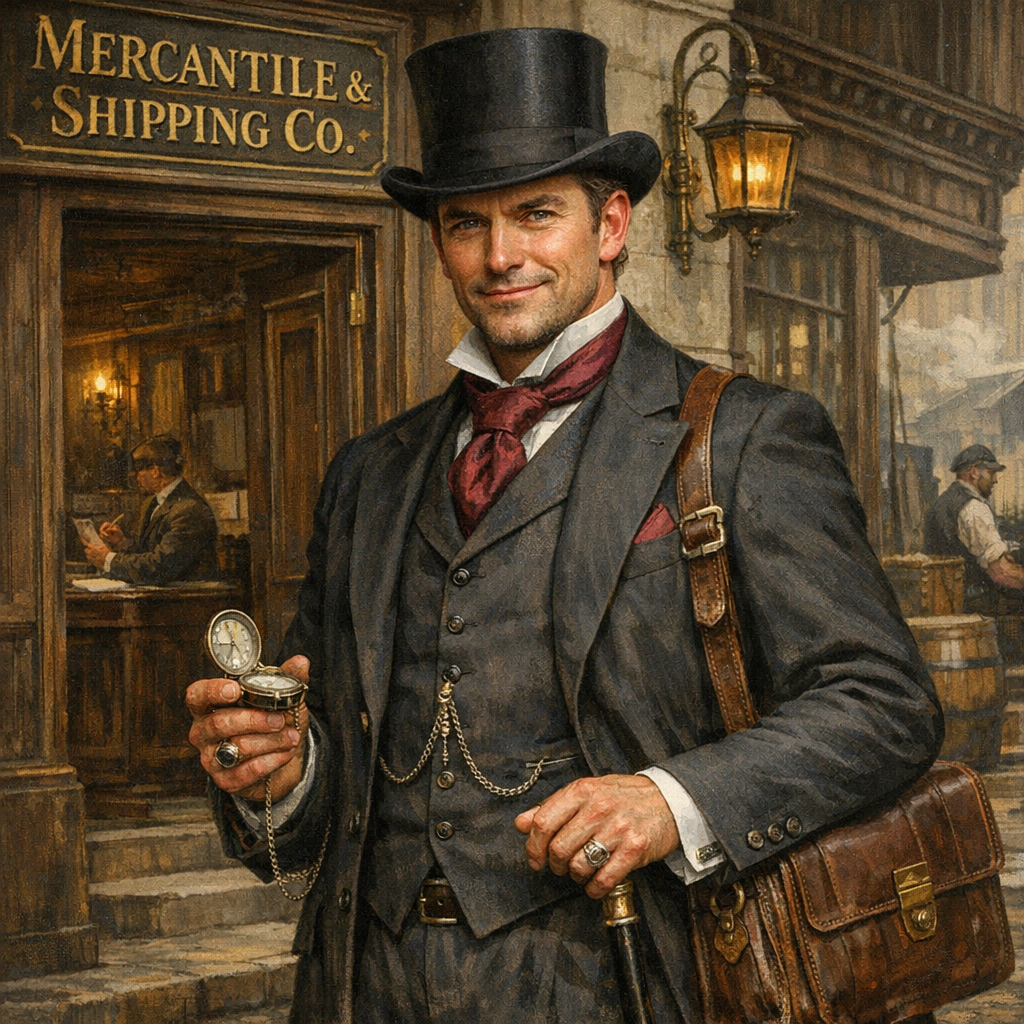
Business Dress
"Clean hands, sharp cuffs, and a smile that costs more than the goods."
Between patched wool and gilded excess lies the uniform of Everwealth’s aspiring rulers. Business dress belongs to its guildmasters, shipowners, magnates, caravan lords, financiers, and anyone else rich enough to be obeyed, but not yet untouchable. These are the men and women who own things rather than titles, who make things happen, who command labor instead of bloodlines; Those who dress to be taken seriously. Where Noble Attire is grotesque theater and the humble Worker's Clothes are patched together for survival, business dress is a game of calculated respectability. Every stitch is intentional. Every crease is a message. It is fashion as leverage, sober enough to imply discipline, refined enough to suggest power, and expensive enough to remind everyone who pays whom.
Materials & Make
Business dress favors quality over rarity, but never modesty. Core Fabrics
- Worsted Wool - The backbone of suits and coats; durable, warm, and capable of holding sharp lines.
- Brushed Linen - Used for shirts and summer wear; crisp, breathable, and unforgiving to sweat.
- Oil-Treated Cotton - Common in accent coats and travel wear, especially among shipmasters.
- Blended Silk Thread - Subtle highlights in cuffs, lapels, and waistcoats, never overt but unmistakable.
- Bone or Polished Metal Buttons - Simple, sturdy, often stamped with a guild or shipping mark.
- Chain Clasps & Watch Chains - Silver or steel, practical but conspicuously visible.
- Tailored Seams - Business dress is fitted precisely; ill-fitting clothing implies failure.
Form & Function
Business attire is built for movement, negotiation, and intimidation without spectacle.
Silhouettes
- Three-Piece Suits - Jacket, waistcoat, and trousers; the standard of legitimacy.
- Accent Coats - Long, structured coats worn over suits, often with reinforced shoulders.
- Tailored Waists - Not corseted, but shaped to imply control and discipline.
- Tophats - Reserved for city magnates and public appearances; symbols of arrival.
- Flat Caps - Practical, favored by shipmasters, factory owners, and traveling merchants.
- Brimmed Felt Hats - A middle ground, signaling authority without aristocratic pretension.
- Polished Leather Shoes - Sturdy, practical, but meticulously maintained.
- Steel-Toed Boots (Disguised) - Common among industrialists who still walk their floors.
Accessories
- Ledger Satchels - Worn openly, often locked.
- Signet Rings - Guild seals or personal marks, used more for documents than vanity.
- Spectacles - Real or affectation, intelligence is part of the performance.
- Pocket Watches - Not for timekeeping alone, but for reminding others whose time matters.
Cultural Meaning
To Everwealth, business dress is the look of inevitable ascent. These are the people who finance wars, own ships that decide famine or feast, and fund colleges, guilds, and sometimes coups. Nobles sneer at them publicly and court them privately. Workers resent them but recognize them as closer, more dangerous gods. To dress this way is to declare:
- I am not protected by blood.
- I am protected by contracts.
- Cross me, and I can afford consequences.
Maintenance, Image & Control
Wardrobe Discipline
- Suits rotated weekly, cleaned nightly.
- Accent coats replaced seasonally.
- Shirts changed daily, sometimes twice.
- Personal tailors retained on contract.
- Valets common, but fewer than nobles.
- Cleanliness is paramount; stains imply disorder.
Public Perception
To the poor, business dress is both aspiration and threat. These are the people who might lift a district out of hunger, or crush it for profit. In taverns, they are called coinlords, ink-kings, or soft-handed tyrants. In court, they are addressed carefully. On the street, they are watched. Business dress is the uniform of Everwealth’s true power brokers, not crowned, not sanctified, but obeyed all the same. It is not yet noble attire. But it is close.

Comments