
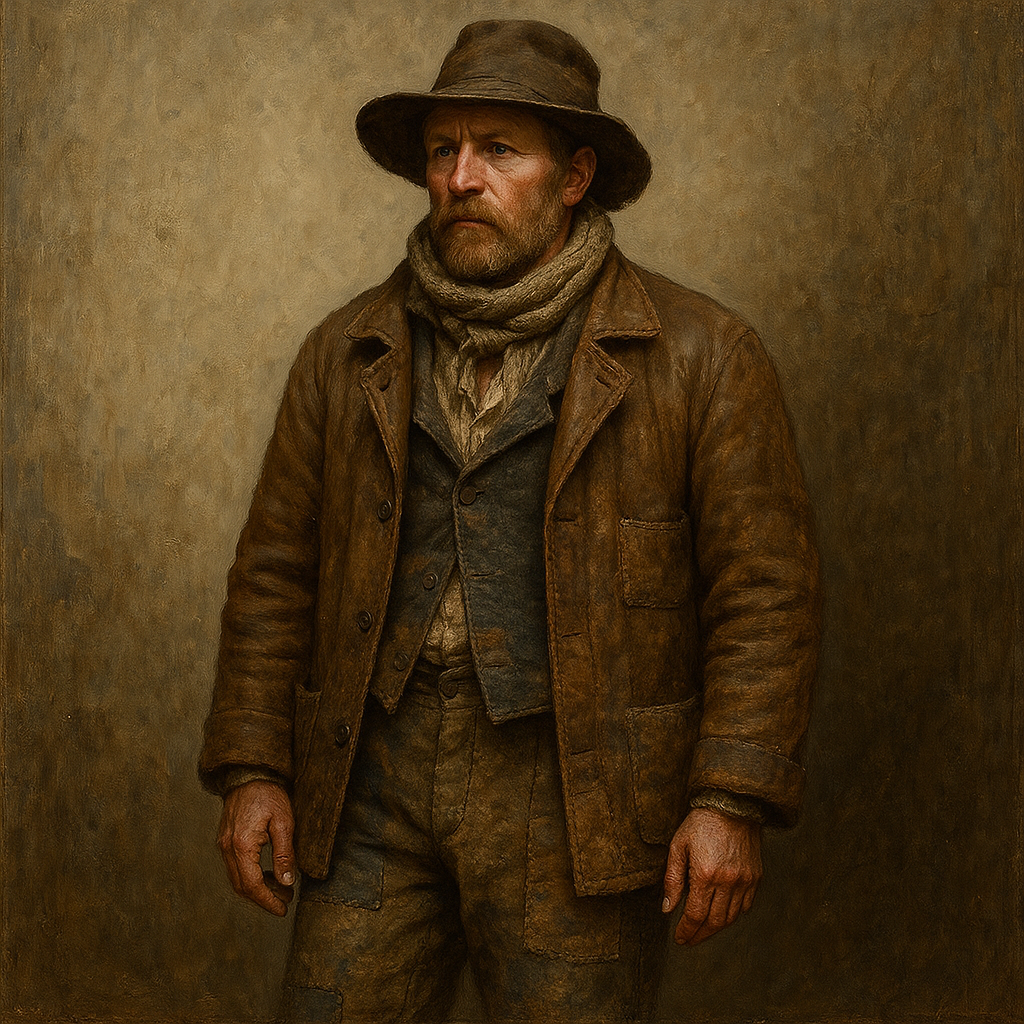
Worker's Clothes
"The coat’s older than me, and if I’m careful, it’ll bury me too."
In Everwealth, the clothes of the working class are less a matter of fashion than of survival. These are the garments worn by field hands, bricklayers, shepherds, dock workers, and every other pair of calloused hands that keeps the kingdom moving. Practicality is paramount, cowhide coats scarred by years of weather, patched wool trousers, shirts that have forgotten their original color. Boots, when they exist at all, are thick-soled and worn to the contour of the wearer’s feet, often inherited from a father, a brother, or a stranger buried without them. Most own only a single set of “best” clothes, kept folded away for market days, holy observances, or funerals; the rest is work gear, mended until the fabric is more stitch than cloth. It is a fashion born not of choice, but of necessity, and in that necessity, it has developed its own character.
Materials & Make
Working class garments are a patchwork of whatever can be had:
- Wool and Linen - Sturdy, breathable, and endlessly repairable.
- Cowhide and Goatskin or rarer leather made from Feathergrazes- Used for coats, aprons, and protective wear.
- Canvas - Popular for trousers and work shirts due to its toughness.
- Patchcloth - Remnants from other garments, sewn in mismatched squares, sometimes with contrasting thread that turns necessity into a kind of accidental artistry.
- Dyeing is rare and typically limited to muted browns, grays, and faded blues, the shades least likely to show stains from mud, soot, or grease.
The style, if it can be called that, follows the needs of the trade:
- Layered Shirts & Vests - To survive both morning frost and midday heat.
- Long Coats - Heavy, weatherproof, and capable of being rolled under the head for sleep.
- Wide-brim Hats & Scarves - Not fashion accessories, but shields from sun and soot alike.
- Boots & Shoes - Thick leather soles for those who can afford them; otherwise, worn sandals or bound rags.
Working class garb is more than mere uniform, it is a silent badge of identity. A man’s coat says where he’s been; the stains on a woman’s apron tell what she’s survived. The rich may look down on patched sleeves and threadbare hems, but among laborers, the marks of use are points of pride, proof that one works, earns, and endures. Clothing here is communal property as much as personal, passed down through families, traded among neighbors, or gifted to newlyweds to help them “start on the right stitch.” Repair & Reuse
A significant part of working class clothing culture is the art of repair:
- Tailoring by Necessity - Spouses, grandparents, and itinerant cloth-menders keep clothes alive well past their expected years.
- Visible Mending - Patches in different colors, not hidden but displayed, a sign that the garment has been cared for.
- Seasonal Alterations - Summer sleeves cut short and re-sewn for winter with additional fabric, or coats lined with rabbit fur to make them last another cold season.

Comments