
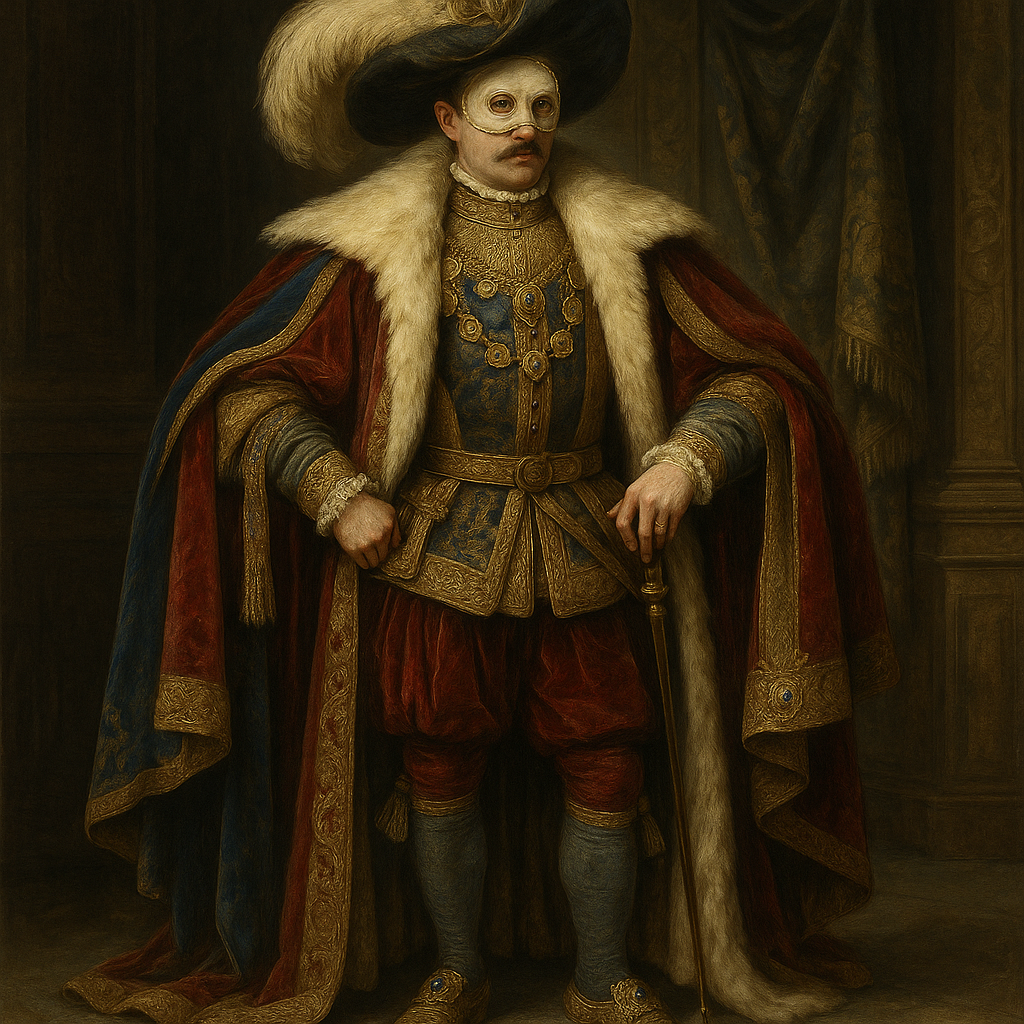
Noble Attire
"Silk on the outside, rot on the inside. That’s how you know it’s money."
Where the working class dresses for survival, the wealthiest of Everwealth dress for spectacle, for dominance. Their clothing is not simply stitched fabric, but living declarations of superiority, a performance of wealth that borders on the grotesque. The fashions of nobles and merchant princes are bastardized imitations of The Lost Ages’ aristocratic grandeur; Portraits from centuries past depicted monarchs in ceremonial flourish worn only for paintings and rare occasions. The wealthy of The Civil Age, ignorant of that context, assume such opulence was everyday wear, and have spent generations escalating it into absurdity. The result is a class who staggers through the kingdom draped in impractical extravagance, gold-soled shoes, embroidered coats weighing more than armor, fur collars so wide they brush against doorframes. In a land where most folk own one pair of boots for life, the elite wear footwear worth a year’s wages merely to fetch wine from their cellars.
Materials & Make:
Noble clothing is defined by excess, the rarer the material and the greater the waste, the finer its standing.
Fabrics of Luxury
- Elfese Silk - Imported at ruinous cost from the coasts or looted from pre-Schism vaults.
- Tarmahc Velvet - Glossy, treated fabric whose creation involves poisonous dyes and swamp-minerals.
- Downs of Feathergrazes - Shimmering thread spun from the delicate down of the renown plainsbeast.
- Gilded Canvas - Everyday cloth embroidered in gold thread to mimic the fashions of half-remembered Lost Age royalty.
- Gold & Silver Filigree - Sewn directly into hems or used as lace, purely decorative.
- Gemstone Buttons - Sapphires, amber, pyrrhium-flecks, or polished jade depending on which house seeks to flaunt its lineage.
- Exotic Furs - Pelts of Inkfoxes, Frost Lynx ruff, Aquian shark-hide belts; often worn in climates where such garments are absurd.
Form & Function:
Function is secondary, sometimes nonexistent. What matters is presence.
Silhouettes
- Towering Collars that reach the ears, imitations of ceremonial Lost Age attire, now daily wear for nobles.
- Billowing Sleeves and layered capes with tassels, often dragging in mud while servants scramble to lift them.
- Corseted Waistcoats with inlaid metal ribs that restrict breathing but “frame lineage properly.”
- Gold-capped Boots heavy enough to slow a man’s stride, yet worn even indoors to signal abundance.
- Jeweled Heels encrusted with precious stones, their weight causing knee injuries so common among nobles they’re called “Opulence Shins.”
- Feathergraze Slippers softer than snow, worn once, discarded forever.
- Plumed Hats rising so high they require ducking beneath doorways.
- Decorated porcelain face masks embroidered with pearls or precious metals, worn by men and women alike to “conceal imperfections from the lesser eye.”
- Genealogical Chains, necklaces depicting house crests, alliances, and ancestors, clinking like armor.
Cultural Meaning:
To Everwealth’s elite, clothing is currency, weapon, and shield all at once. Among nobles, the value of attire is judged not merely by cost, but by wastefulness. The more impractical and ornate the outfit, the more it signals that the wearer has servants enough to attend them, coin enough to replace anything ruined, and power enough to ignore discomfort. A noble’s coat is a résumé. A lady’s trailing train is a banner. A man’s gilded boots are a proclamation that no street filth could possibly reach “someone of his station.” Meanwhile, commonfolk view rich attire with a blend of awe, resentment, and disgust. Children whisper that nobles shine because they “burn coin to keep warm.” Dockhands say a noble’s hat plume is long enough to sweep away a starving beggar. And in taverns across Everwealth, the rich are mocked as
Maintenance, Vanity & Waste:
While the poor master the art of repair, the wealthy master the art of discarding. Wardrobe Turnover
- Outfits are worn once for gatherings, twice for galas, and never thrice.
- Tailors are employed full-time to replace garments ruined by such extravagant impracticality.
- Entire rooms, galleries, are dedicated to storing last season’s fashions before they are auctioned or burned.
- Teams of valets and maids assist in dressing; noble garments often require three to five people to assemble correctly.
- Clothing is perfumed daily, sometimes so heavily that it masks the scent of rot from poorly stored furs.
- Embroidery and metalwork must be polished hourly to maintain the “glow of lineage.”
- Nothing displays wealth more clearly than waste. A noble tearing a silk sleeve on a nail is less an inconvenience than an opportunity to sneer at inferior craftsmanship and order a replacement double the cost by morning. To the wealthy, clothing is not survival. It is proclamation. To the poor, it is insult made manifest.

Comments