
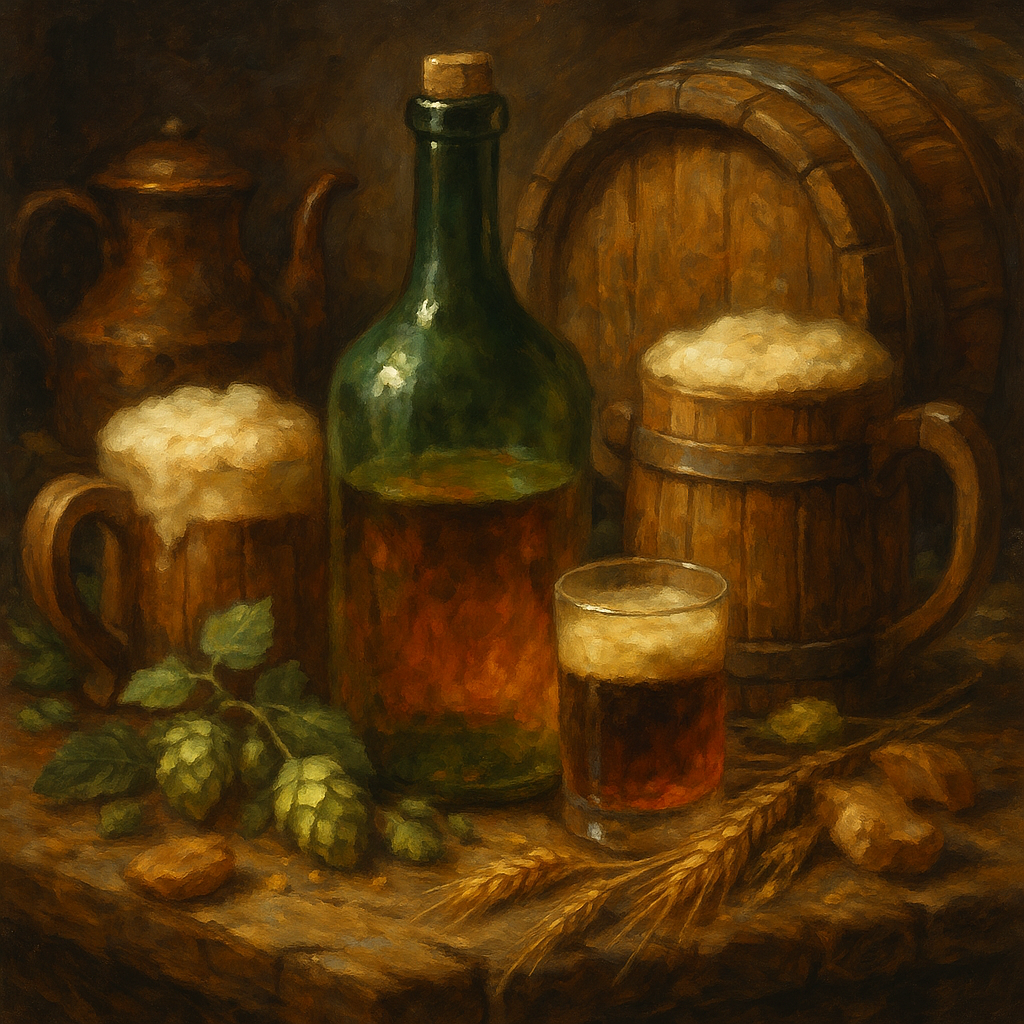
Alcohol
"Bread fills the belly, but drink fills the soul, right up until it spills out your mouth."
It began as a promise in a gilded bottle, a “miracle tonic” brewed to mend the sick and grant vigor to the weary. What it delivered instead was warmth in the belly, courage in the blood, and trouble enough to drown a kingdom. Across the ages of time from the sun-scorched vineyards of the Elfese coasts of Chikara in ancient days, to the smoke-choked backrooms of goblin taverns in a place called Everwealth these lands would become, alcohol has survived wars, plagues, and empires, not because it heals, but because it comforts. It has paid mercenaries, sparked revolutions, and convinced sailors to charge into seas they knew would kill them. In Everwealth, a man may die without bread, but he will crawl a mile through mud for a drink.Mechanics & Inner Workings
At its core, alcohol is the product of fermentation: sugars in plant matter broken down by yeasts into a substance called 'ethanol' mixed with varying recipes for different flavors. While mundane to modern brewers, in the Lost Ages it was often enhanced with trace magicks to extend shelf life or embolden its effects. Even now, some vintners and brewers swear by charms carved into their cask lids, claiming the drink “ages with spirit.”
Manufacturing process
- Mashing: Base ingredient is crushed and soaked in water to release sugars.
- Fermentation: Yeast added, often with regional “starter cultures” passed down for generations.
- Aging: Weeks for ales, years for fine wines; occasionally with magickal stasis to force decades of aging in hours.
- Finishing: Clarified, flavored, or fortified with additional fermented product or distilled spirits.
History
First conceived in the earliest hours of The Lost Ages, alcohol began not as vice but as vision, marketed as a miracle tonic that would purify the blood, sharpen the mind, and ward away disease. Its inventors promised it as the cure-all that would outlast empires. In truth, it failed to heal anything but boredom, yet it persisted. Across centuries, failed cures turned to tavern staples, spawning wines, meads, ales, and countless other fermented drinks. Its survival was ensured by necessity, as a safe alternative to the infected and parasite-rich waters of Everwealth, as payment to sailors braving dangerous voyages, and as the one reliable companion in the lonely dark of mining tunnels or war camps. While nobles sipped spiced vintages from silver goblets, goblins hawked spit-shined mugs of swamp beer to caravan guards in the dust-choked markets. By the time of the Schism, alcohol was no longer a failed experiment, it was a cultural foundation.
Significance
Alcohol is far more than a drink, it is a universal language. It fuels trade routes, inspires poetry, starts wars, and ends them. Its presence at festivals and funerals alike cements it as both comfort and curse. Some of the rarest vintages are worth more than land, and smuggled liquors have decided the fates of border sieges.
Creation Date
Early Lost Ages (~5,000 years before present Everwealth reckoning).
Rarity
Common to Rare (region-dependent). Some townships over seas are rumored to practice 'prohibitions', like sects of Serpentine civilizations out of the Tarmahc islands outright illegalizing the substance, deeming it sinful, harmful, and inconducive to productive society.
Weight
Varies by container.
Dimensions
Also varies by container.
Base Price
A night’s drinking runs from one Copper Capra for swill to ten Gold Capras for vintage fit for nobles. Most tavern ale sits between one and five Bronze Capras a cup, though quality climbs fast the closer you drink to the capitals.
Raw materials & Components
- Primary sugars: grains (barley, rye, bog millet, Razorwheat), fruits (apple, plum, sun-berry), or rare imports like the berries of Burnbrambles.
- Fermentation agents: Yeasts (common or specially cultivated strains).
- Flavor additions: Spices, honey, smoked wood chips, or even dried monster parts for “vitality” brews.
- Containers: Oak or ash barrels, clay amphorae, or steel casks for transport in harsher climates.
Tools
Fermentation vats, crushing presses, cask-coopers’ tools, siphoning tubes, and glass-blowing equipment for bottling. Some rural stills use nothing more than a hollowed log, a stone lid, and time.

Comments