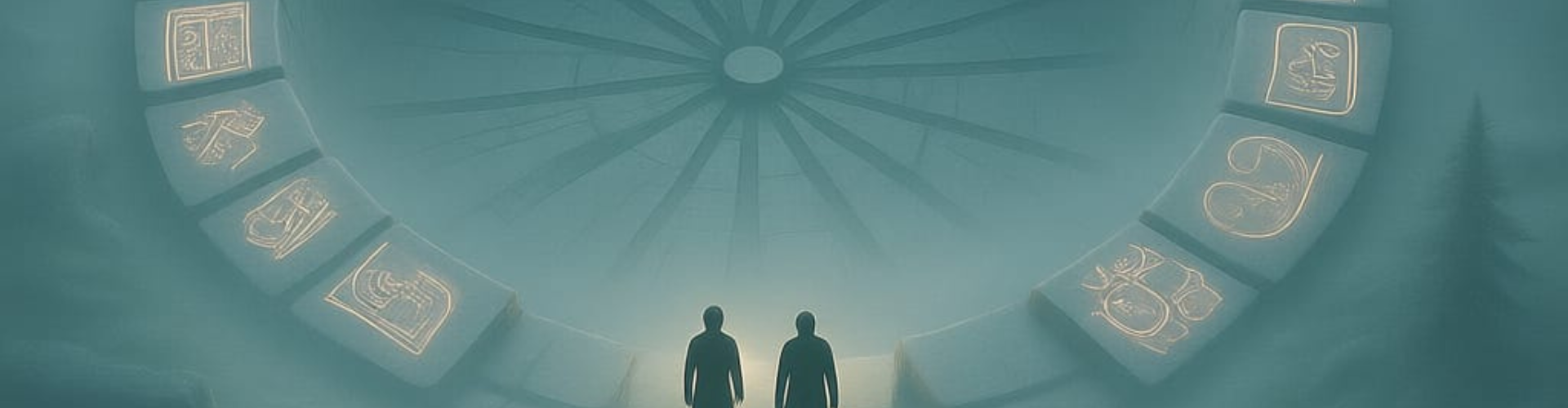
Pit of the Foe
Geography
A vast, perfectly circular crater said to be miles across, rimmed by jagged black stone. At its center is either:
- a bottomless abyss (in Ta- myths),
- a still lake of pitch-dark water (in Pecou myths), or
- a glowing scar of stone (in Kiwta myths)
Legends hold it was not formed by nature, but carved into the world by the united strike that sealed the Forgotten Fourth away.
Ecosystem
Barren and desolate. The soil around the rim resists life.
Only twisted shrubs and fungi cling to the edges, some bioluminescent.
Birds and animals avoid the crater, though carrion creatures sometimes circle its perimeter.
Ecosystem Cycles
Some stories say the Pit “breathes,” exhaling mists at night or during eclipses. While other rumors of tides in the black water tied not to the moons, but to memory of the Fourth’s presence.
Localized Phenomena
Whispers carried by the wind — said to be the voices of the Foe.
Compass needles spin wildly when brought near.
Sometimes, lights flicker at the center, interpreted as attempts by the banished to claw their way back.
Climate
Perpetually colder than the lands around it.
Frequent storms gather overhead, as if the heavens themselves resist its reopening.
Fauna & Flora
Unique mosses and fungi grow at the edges, some said to drink in sound.
No large fauna dwell there, though myths speak of eyeless creatures slithering up from the crater depths.
Natural Resources
Black stone fragments said to be unbreakable. It’s forbidden to own pieces of this stone because legends say these fragments are cursed, carrying echoes of the Fourth.
History
The Pit of the Foe was not merely a battlefield — it was the aftermath of unity. When the Triad Wars reached their darkest hour, the three races — Ta, Pecou, and Kiwta — stood on the edge of extinction. Each had lost whole cities to the unseen influence of the Forgotten Fourth, a presence that thrived on their hatred.
Out of this ruin came the Graven Pact, carved in stone beneath a blackened sky. Its clauses promised peace, shared stewardship, and an end to domination. Yet its final vow, the Clause of the Bound Grief, demanded more than cooperation — it demanded purging. To ensure that no hatred could ever feed the Fourth again, the Triad turned their combined craft and sorrow toward one act: the sealing of the Foe and all their echoes beneath the earth.
The ground split open where the ritual was cast. The crater it left behind became known as The Pit of the Foe, a wound that never healed. Each culture remembered it differently:
- To the Ta, it was the mountain’s grief made visible, a burial of everything that had been corrupted
- To the Pecou, it was a mirror turned dark, swallowing the reflection of every sin
- To the Kiwta, it was a gate of silence — not a death, but a containment
In the centuries that followed, the Pit became sacred and forbidden. Custodians from all three species — sworn under the Shared Stewardship Clause — guarded its rim, ensuring no one spoke the Fourth’s name again. They called themselves the Graven Keepers, and their vigil was meant to last forever.
But forever is brittle.
By the time of the Shadow Star Bloom, the Keepers were gone. The site fell to ruin, and the exact location of the Pit faded from record. When humans arrived, they found fragments of fused black glass and ancient warning sigils etched in spirals — the only clues to a catastrophe that no longer had a name.
Tourism
Tourism is forbidden. It is a place that is still feared. Yet, the Pit remains the most sought-after unconfirmed site in the world — a place where science and myth blur, and where the last words of the Triad still echo:
Let them be forgotten, that we may remember peace.
Table of Contents
The Black Crater
The Fourth’s Tomb
The Eternal Drown (some traditions claim the black waters of the Pit feed into the drowned afterlife)


Comments