The Eternal Drown
Summary
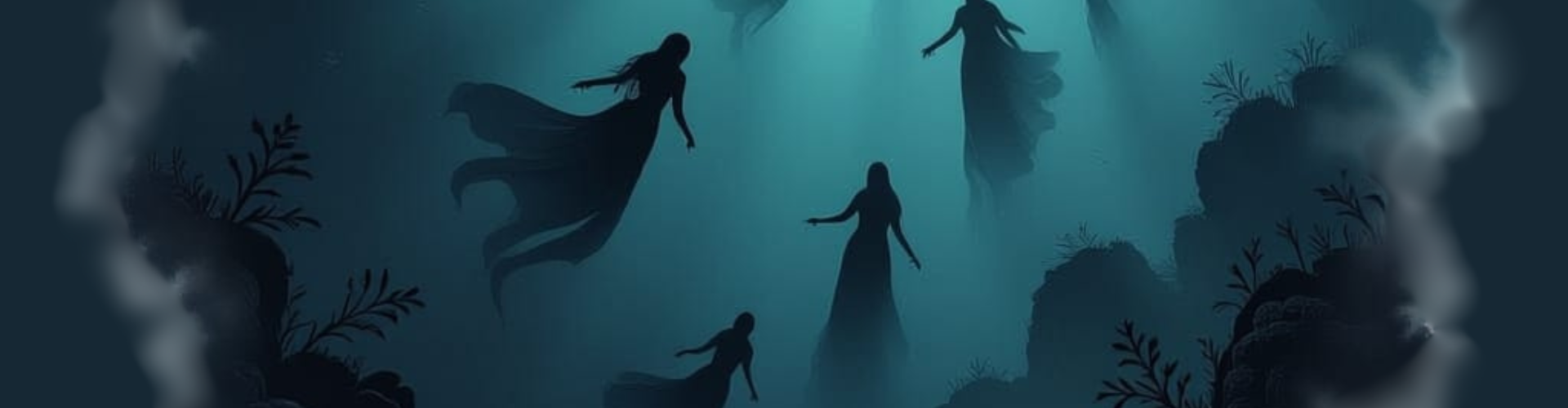
The Eternal Drown is a Pecou myth describing the fate of unworthy souls. Those who fail in their duties to community, land, or ancestors are cast into an endless black sea after death. Instead of rejoining the cycle of soil and harvest, they are trapped beneath dark waters, endlessly struggling for breath. The myth reinforces Pecou values: care for the earth, loyalty to kin, and respect for the dead.
Historical Basis
Some historians speculate the myth began after a catastrophic flood that drowned entire Pecou villages in the early First Era. Survivors may have seen drowned bodies tangled in reeds, inspiring the imagery of eternal thrashing.
No physical “Black Waters” have been found, though some scholars connect it to underground rivers.
Spread
Central to Pecou funerary rites and agricultural festivals.
Known widely among Kiwta and Ta-, though treated as “Pecou superstition.”
Written versions carved into clay funerary tablets, some still preserved in ruined barrows.
Variations
Eastern Plains Pecou: emphasize communal betrayal — traitors drown.
Western Pecou: focus on wastefulness of crops — gluttons and hoarders drown.
Cultural Reception
Among Pecou, the myth is sacred and tied to identity. Parents tell it as a warning to children during harvest festivals.
Among Kiwta, it’s occasionally referenced in art as an allegory for hubris.
Among Ta, it is considered overly grim, but respected as part of Pecou tradition.
In Literature
Pecou poets often invoke the Black Waters when describing betrayal or loss.
Funeral chants often include lines like “may you rest in soil, not drown in shadow.”
A few Kiwta epic poems repurpose the image of drowning as a metaphor.
In Art
Clay reliefs show thrashing figures wrapped in reed-like arms, a common motif on Pecou grave markers.
Songs with droning rhythms and rising/falling tones imitate the gasping struggle of drowning.
Pecou sculptors sometimes reinterpret the Black Waters as waves made of soil, blending death and rebirth imagery.
Telling
“Those who turn their back on the land, who waste its gifts, or who abandon kin and crop, will sink into the Black Water. There they thrash without end, choked by roots that hold them fast, never to surface, never to rest.”
Table of Contents
Kiwta and Ta know of it through trade and funerary exchanges, though they interpret it more as a metaphor than literal afterlife.


Comments