Northern Isle
Geography
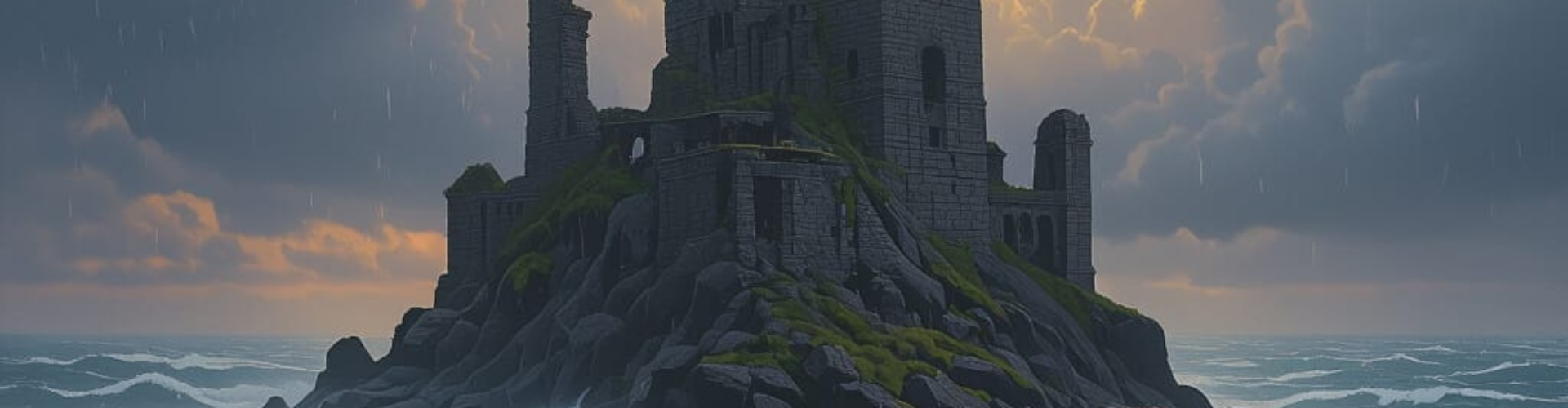
A jagged, cliff-ringed island with almost no beaches, making landfall treacherous.
Stone Towers: Dozens of hollow basalt spires, some 40–60m tall, aligned with stars and lunar paths.
Lowlands: Moss-plains and brackish pools.
Ridges: Jagged black basalt ridges cut across the isle like scars.
Ecosystem
Sparse but hardy.
Vegetation: lichens, frost-ferns, brineweed.
Animal life: seabirds dominate; seals and crustaceans feed on tidal zones.
The towers themselves act as artificial “niches,” harboring rare glowing fungi that thrive in their hollows.
Ecosystem Cycles
Storm Season (early year): violent seas, little chance of approach.
Clear Season (mid-year): calmer seas, expeditions possible.
Starfall Nights (late year): unusually bright meteor showers, strengthening local myths.
Localized Phenomena
Magnetic Disturbances: Compasses fail; mechanical timekeepers lose rhythm.
Whispering Winds: Tower hollows funnel air into eerie “voices.”
Auroral Bands: Strange green-violet lights appear overhead even at low latitude, especially during Static Storms.
Climate
Summers: gray, damp, averaging 7–10°C
Winters: harsh winds, sleet, sea ice
Climate is unpredictable, prone to sudden storms.
Fauna & Flora
Fauna: seabird colonies, salt-crabs, migratory seals
Flora: brineweed, moss, frost-ferns, bioluminescent fungi
Uniqueness: glowing fungi which human archaeologist theorize was cultivated by ancient builders to map constellations.
Natural Resources
Basalt & Obsidian: abundant, volcanic
Bioluminescent Fungi: once cultivated by the Kiwta
Star Metals (rumored): meteorite fragments beneath tower foundations
Most remain untouched due to the isolation of the island, especially during storm season.
History
Pre-Triad Wars: Towers believed constructed by Kiwta astronomer-priests
Triad Wars: Mentioned as a neutral observation site, possibly for prisoner-binding rituals
Post-War Era: Feared and abandoned; tied to omens of betrayal and grief
Human Discovery: Discovered shortly after landing on Nisa; expeditions sporadic, often ending in disaster.
Tourism
Scholars/Archaeologists: Seek proof of astronomical alignments.
Treasure Hunters: Pursue rumors of star metals and relics.
Tourism is dangerous, limited, and often fatal.
Table of Contents
Kairnset (Kiwta, “Stone Eyes of the North”)
Bruol Gla (Pecou, “Mother’s Northern Grave”)
Korr Vaan (Ta, “Stone Above”)
The Chains Above (Pecou): the isle as a site of grief-binding rituals.
The Elder’s Silence (Ta): the mountain once rose from the sea here to leave a warning.


Comments