
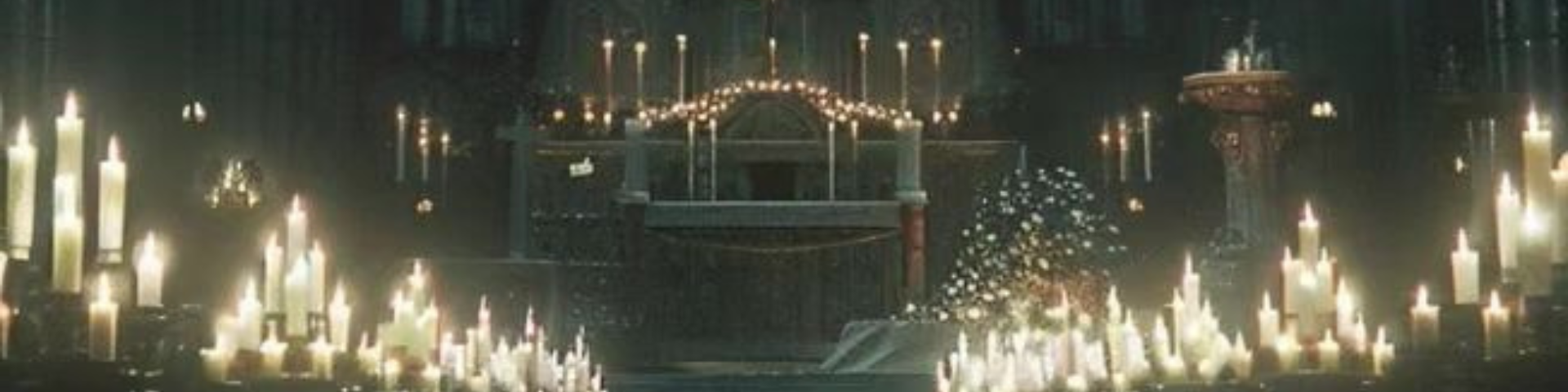
Deities
"During my childhood abduction, which was part of a clumsy political scheme against my mother, my brother and I were held for eight days in the lightless sewers beneath Esson. When we were finally rescued, it was not the guardsfolk, the Lord Mayor's Men, or even my mother and her loving crew who eased my terror. No, it was the warm rays of the sun across my face when I was finally returned to the surface-world that chased my fears away. In that moment of pure relief, I knew there was a loving god looking over me. The shafts of light were his arms, and the warmth I felt was his divine embrace.-Lussani Sirdach, Priest of the Eightfold Faith
Throughout the ages, mortals have gazed upon the grandeur of their worlds and pondered the source of such sublime design. Bound to linear cause and effect, the mortal mind seeks the origin behind every wonder. If reality is the result, then surely there must be a cause. Into this conceptual void entered the gods: timeless beings who, since the dawn of mortal awareness, whispered from beyond the veil and guided those whose paths echoed their will. As awareness deepened, so too did the bond. The now-acknowledged gods granted their divine blessings and the rewarded mortals, their faith vindicated, gave further devotion. Soon faiths flourished across the Cosmos. Rituals were practiced, scriptures were etched, and dogmas codified. Today, the relationship between deity and mortal is woven into the fabric of life. The divine might of the gods is felt across Aemaphia, even as the true nature of the deities remains cloaked in mystery to most. Until now...
The many Deities of Aemaphia are not distant, unknowable forces, but vibrant, ever-present archetypes that shape the mortal world through divine Concordance and unrelenting conflict. They are the personifications of cosmic principles, such as life, death, storm, wisdom, balance, and decay. Each one a vast and contradictory embodiment of mortal desire, fear, and transcendence. Worshipped through song, rite, blood, or contemplation, these gods are not merely objects of faith but active players in Aemaphia’s ongoing mythos, their rivalries reflected in the rise and ruin of empires, the shaping of species, and the tempests of magic that course through land and soul alike. Mortals revere them, defy them, even become them. For in Aemaphia, divinity is as much a mirror as a mantle.
Manifestation
"I am the Struggle. I have always been the struggle. I shall always be the struggle. I am that which is meant to test your mortal resolve."-Torden speaking through a Storm Prophet.
In Aemaphia, deities do not arise from nothing. Rather they manifest into Existence through the convergence of ardent belief, consistent myth, and the intangible primordial forces that govern all realities. Born from the deepest wells of Concordance or Discord, gods crystallize where mortal meet absolute truth, often seeded by cosmic events or ancient archetypes echoing through Existence. Some emerge fully-formed from the dreams of civilizations; others coalesce slowly over epochs, forged by collective need, fear, or reverence. To manifest as a deity is not merely to be born, it is to be recognized by Existence itself. Forever bound by divine name, godly purpose, and omnipresence. Thus deities are woven into the mythic lattice that underpins reality itself.
It is the timeless pursuit of both theologians and occult scholars to unravel the mysteries of the divine. Mortals are inherently drawn to the unknown, compelled to seek what lies beyond the veil of understanding. Nowhere is this yearning more fervent than in the contemplation of the gods themselves. To discern their hidden purposes, to grasp the magnitude of their power, and to uncover their origins. These quests lie at the heart of countless philosophical traditions. Yet revelation is a double-edged sword. While some truths illuminate the faithful path, others can unravel the very foundation of belief, leaving only awe or despair in their wake.
Deities and Reality
Deities are not merely beings of power. They are reflections and regulators of reality’s architecture. Their existence is both a consequence of and a contributor to the structure of the cosmos. Each Divine Archetype forms at a specific interstice or core of the four fundamental realms, allowing them to anchor and channel particular forms of mageia. Thus, their dominion over conceptual and physical phenomena such as time, death, fire, love, memory, or gravity is not arbitrary but metaphysically intrinsic. On an existential scale, these gods uphold laws of reality or manifest as cosmic principles, ensuring that time flows, matter holds, or souls cycle. The fact that deities arise naturally within all known realities implies that Existence itself is reflexive. It is a sentient engine capable of generating self-aware laws to maintain balance. In this view, the divine is not an external force imposing order on chaos, but a spontaneous phenomenon of harmony born from complexity, expressing reality’s own desire to be understood and maintained.
Even the weakest deity in Aemaphia possesses the terrifying ability to warp reality, not through arcane study or scientific manipulation, but by sheer alignment of their will with Existence itself. These lesser divinities may only influence small pockets of space or fleeting moments in time, but within those bounds, their authority is absolute: a blade that never dulls, a spring that never dries, a village where no child ever cries. Yet as one ascends the ladder of deific rank and archetypal magnitude, the scale of power becomes incomprehensible. Greater deities are not bound to reality, they drag it behind them, unconsciously reshaping laws of nature in their passing. Their presence is gravity. Their thoughts are causality. They carry with them Divine Domains, spatial nexuses of raw divine essence from which they anchor their power. For the minor gods, these may be no more than misty hollows hidden within the mortal world. But for the most powerful, these realms devour whole planes of the Eternal or Essential Realms, becoming boundless kingdoms of law, chaos, fire, song, or silence.
Perhaps the most unnerving speculation among cosmologists and heretic mystics alike is this: all reality, all the realms and interstices between, may itself be a single, unthinkably vast Divine Domain. Merely the unconscious body of the Existence Engine, Epitome of all Epitomai, dreaming itself into being. Should this prove the case, it would mean that to live is not merely to dwell in a world governed by gods, but to exist within the thoughts of one.
Deities and Mortals
The relationship between deities and mortals is one of mutual dependence. Theologians teach that mortals are the chosen vessels through which divine will is expressed, and in return, mortals receive purpose, guidance, and blessings. Worship is seen as an act of sacred concordance, a way to align one’s soul with the divine current of the cosmos. Occult scholars, however, view this relationship as more transactional or even parasitic. Some deities rely on mortal belief to maintain cohesion and power. Others are titanic in scope and exist entirely independent of mortal attention, operating instead as expressions of reality itself. Thus, devotion can empower a god, but not all gods are dependent on direct devotion.
In short, Faith is an energy source that gods feed upon and, in turn, deities share their divine power with those who empower them to further increase their faith. Worship plays different roles depending on the deity. It can be a sustenance, a tether, or a tuning fork. Some gods draw power from intentional rites and rituals. Others swell in might simply through the repetition of mortal action: the swing of a farmer’s scythe, the cry of a newborn, or the sharpening of a blade. Some deities rise and fall in influence based on deliberate prayer, while others are fed by the unconscious momentum of civilization. In truth, despite the teachings of many holy texts, mortals may not need deities to survive. However, millennia of indoctrination have shaped every mortal culture to look to deities to explain suffering, shape destiny, reward piety, and impose meaning upon the chaos of life. Deities, on the other hand, benefit from mortal belief not only as a source of power, but as a way to maintain structure, spread influence, and, at times, incarnate directly into the world.
To exert their will, deities employ miracles, revelations, avatars, and echoes; subtle or cataclysmic signals through which they communicate and command. But their reach is neither flawless nor guaranteed. Mortals can misinterpret divine intent, resist celestial influence, or even abandon faith altogether. And yet, the dynamic endures. As long as mortals dream, struggle, and die, the divine finds fertile soil. And as long as deities reach across the veil, mortals will build altars... even if they do not know the names of the gods they serve. Most mortals, even high ranking priests of a particular faith, are unaware of the truths of this power dynamic. Should a foolish scholar uncover the dependency of faith that defines the relationship between mortals and the divine, they also find themselves faced with a dreadful choice. Either maintain the deific status quo or become heretics actively trying to topple the divine order of things.
What is a Deity
"Know this. The Burghan is. There is nothing more one needs to know when one truly knows that."-Duunmor'keth of the Two Laws, E'mam of the Words of Wisdom
In the vast cosmology of Aemaphia, a deity is not merely a powerful spirit or exalted being. A god, as they are also often called, is a metaphysical construct born of and bound to the fabric of Existence itself. These divine entities are generated where the four fundamental realms of reality converge. Formed in the liminal seams that connect the Astral, Eternal, Essential, Temporal, and Ethereal Realms. Each god embodies a principle, force, or concept so absolute that it gains consciousness and power. Their role is both existential and catalytic: some uphold natural laws, others maintain cosmic balances, while a few simply are, without mortal-comprehensible purpose. Their very presence influences the flow of time, the integrity of souls, the weight of judgment, or the shape of elements. A god’s Deific Rank defines the scale of its might, ranging from gentle omens to world-rending incarnations, with each rank determining how much of reality a deity can reshape without destabilizing the cosmos.
Deities interact with the world through a myriad of means, such as possessed vessels, prophetic visions, and anointed reliquaries. Gods cannot walk freely among mortals, for even a glimpse of their full presence would shatter minds and boil the sea. Instead, they reach through avatars, whispers, and dreams. Their power is most intimately felt through Divine Magic, a deadly fusion of fundamental mageia so potent it mimics the impossible purity of Ectoplasm, the very building blocks of reality. This energy, like the gods from which it radiates from, cannot be directly wielded by mortals or even lesser immortal beings such as Celestials without obliteration. Yet through faith, ritual, and divine sanction, deities can lend slivers of this force to their faithful, enabling them to call forth miracles, cast curses, and receive divine revelation. Whether they intervene out of compassion, obligation, curiosity, or inscrutable motives varies by deity, but their attention, when granted, is never done casually.
Classifying Deities
The classification of deities is not merely an academic indulgence but a practical necessity for theologians, occult scholars, and faithful practitioners alike. With the staggering diversity of divine beings across Aemaphia; ranging from omnipotent cosmic shapers to localized guardian spirits, categorization allows mortals to better understand, interpret, and engage with the divine. For scholars, classification offers a framework to map the relationships, origins, and influences of deities across cultures and planes. For the faithful, these systems help organize worship, structure rituals, and codify belief, offering clarity in a cosmos where the divine is as complex and varied as existence itself.
In the divine cosmology of Aemaphia, Deific Ranks describe the relative power and metaphysical complexity of a deity. These ranks are not hierarchical in the mortal sense but instead reflect the scale, stability, and dimensional scope of a god’s manifestation. From ephemeral omens to world-shaping epitomes, each rank signifies a different degree of interaction with reality, influence over mageia, and permanence across the Realms. Understanding a deity’s rank provides scholars and mystics alike with insight into how that divine being expresses its will and presence in the cosmos.
In mortal occult scholarship, a secondary classification has emerged to help codify and study divine phenomena: Sacred Orders. There are currently two orders by which gods are measured in relation to mortals, those being Major Deities and Minor Deities. Unlike Deific Ranks, which are intrinsic to a deity's metaphysical structure, these sacred orders refer solely to the scope of mortal worship. A Major Deity is venerated by large, often decentralized populations across multiple regions or cultures. A Minor Deity is one whose worship is confined to a small, often localized group; such as a single city, mountain tribe, or secret cult. These labels carry no correlation to power. In fact, many terrifying Embodiments and foundational Epitomes remain classed as "minor" simply because their veneration is rare or forbidden. Thus, a god’s reach among mortals may wax or wane, but their essence remains immutable, carved into the bones of reality itself.
Sacred Order of Major Deities
As stated earlier, the Major Deities are some of the most widely worshipped gods across all of Aemaphia. They are worshipped by hundreds of thousands of mortal souls and are known to nearly every sapient society. Here is a list of some of the gods that are categorized within this sacred order.
Sacred Order of Minor Deities
The Minor Deities are a classification of lesser known gods throughout Aemaphia. Their worship is often limited to a specific region, or profession, or persecuted by larger society. Many of these gods also serve as patrons for the disparate cults known as Those Led Astray. Here is a list of some of the gods that are categorized within this sacred order.
While the classification of deities into Deific Ranks or as Major and Minor Deities may seem purely anecdotal, these systems play a crucial role in the field of occult scholarship. They allow theologians, mystics, and arcanists to categorize the divine forces they encounter, organize religious texts, and compare spiritual phenomena across cultures. Such classifications become especially important in the rare instances when mortals directly interact with deities, helping frame these overwhelming encounters in terms the mortal mind can begin to grasp. Yet within organized faiths, these scholarly distinctions are often dismissed outright. Priests and devotees typically regard their own patron gods as the most vital to enlightenment and exaltation, irrespective of scholarly rank or universal scope. In this way, the classification of the divine serves two purposes: it brings order to the ineffable for those who study it, and it highlights the vast gulf between faith and knowledge that has always defined the mortal relationship with the divine.
The True Nature of Divinity
"Deny the existence of Deities at your own peril. Though I've never encountered one myself, I've experienced enough of their divine "handiwork" to know they are unimaginably vindictive on the best of days. And prone to summon apocalyptic events at their worst."-Simthen Gosep, Less-Than-Devout Adventurer
One of the most closely-guarded and sanity-shattering secrets of Existence is the fact that, despite having mastery over occult mageia, the beings identified as Deities are not, themselves, creatures of Anima native to the Eternal Realms. Rather the vast majority of what mortals worship as "gods" are sapient constructs of Psyche born from the collective belief of mortals that form in the abstract interstices of the Astral Realms and its sibling realities. Once these nascent deities collate into quasi-psychoplasm, they bore into other realms and continue to develop into genuine divine beings based off of the shared beliefs of mortals. In the simplest sense, unlike what most religious doctrines would have one believe, mortal lives preceded, and in fact, created deities. This was accomplished by the collective faith of mortals unconsciously consolidating into constructs of pure Psyche known as Tulpas. These constructs possess all the traits and qualities of the deities they were modeled after and even warp their designated reality to retroactively validate their existence among mortals and the other native beings of their respective realms. Once born, Deities believe themselves to have always existed. This esoteric truth proves, at least for the gods, essence precedes existence.
The true nature of divinity has led astral scholars to classify all gods as Deific Tulpas. Despite their collective grouping, these Deific Tulpas can range wildly in potency and influence when compared against each other. Furthermore, theologians and the devout find this classification used by astral scholars distasteful, bordering on blasphemous in nature.
Deific Ranks
"It is profoundly unwise and incomprehensibly arrogant to assume the Gods conform to any structure observed or crafted by mortals. No more ludicrous than fish who fancies themselves philosophers speculating on the comings-and-goings of those unknowable beings flying far beyond the bobbing surface of their watery realm."- Resnik, Archcardinal of the Eightfold Faith
In Aemaphia and across Existence, the various divines are not made equals. Deific Ranks define their power, scope, and influence across the planes. From the unknowable Progenitors of the Ethereal Realm to the newly risen Apotheons, each is bound by a deific rank that reflects a god’s cosmic stature and metaphysical reach. High ranking Divines such as Personifications or Manifestations command vast domains and are often worshipped across continents or entire worlds, while lesser Divines like Aspects or Fragments hold sway over specific peoples, places, or aspects of reality. Beneath them stir the Omens, minor motes of divinity, transient or localized beings that blur the line between household gods, guardian spirits, and living ideas. These ranks are not fixed; through ascension, usurpation, or collapse, a being may rise or fall within the celestial order, echoing the very nature of power in Aemaphia.
Omen
The most minor of Deific Tulpas is the Omen, and are seen as the lowest order and most common type of the Lesser Divines. Omens can emerge from the collective belief of as few as eight hundred individuals. These entities often manifest as localized phenomena: a shared vision of a monstrous figure, a region-wide prophetic dream, or a strange and symbolic event meant to be interpreted and acted upon. Omens rarely possess a physical form within the Temporal Realms, instead influencing the world through pure psychic force. Most are merely motes of divine subconsciousness within the churning interstices of the Astral Realms, manifesting as spells such as Dream to communicate with mortals.
Transient by design, Omens vanish the moment they fulfill the purpose that birthed them. Their bodies, formed from dense concentrations of raw Psyche, collapse violently when they fade, disrupting nearby reality in a burst of psychoplasmic energy. This metaphysical detonation often ensures their intended message or compulsion takes root, reshaping surrounding materia and immateria in accordance with the Omen’s final will.
The most recognizable expressions of Omens are powerful occult spells: a prophetic dream, a miraculous event, or the appearance of a planar entity. Some Omens are conjured by the singular faith of a powerful cleric, druid, or paladin. Others are shaped by the unconscious devotion of a gathered multitude. Whether born from whispered prayers or burning rituals, each Omen exists as a fleeting fragment of divine will. They are meant to be seen and felt, though never for too long.
Fragment
Divine Fragments are territorial expressions of divine will, often taking the form of Patron Saints, Genius Loci, or Community Gods. Due to the malleable nature of psychoplasm, Fragments are inherently temporary, typically fading once their designated task is fulfilled. However, identical "clone fragments" can reappear countless times across different places and moments, depending on communal need. In rare cases, particularly potent Fragments may evolve into self-sustaining Aspects.
These entities often manifest as ancestral guardians or legendary hero-spirits, appearing to protect a region during times of great peril. They are among the oldest known expressions of cultic devotion. Many paleolithic religions throughout the Cosmos are structured around the worship of such Fragments, long before the development of formal pantheons. Within the Giantkin tradition of the Aetheoinei, many legendary figures known as Demitheosae are now considered Fragments by occult scholars.
Likewise, numerous Planar Allies summoned through divine or arcane means are categorized as Fragments. Among the Beastfolk, animalistic Fragments act as minor intermediaries between mortals, their Totemic Sires, and the Speakers of the Primal Laws. The minor Yori Kami that dwell within the Ten Thousand Score Shrines of the Harmonious Way provide further examples, serving local communities in ways both symbolic and profound.
Aspect
The Aspects are regional interpretations of concepts such as a national or cultural deity, and are considered the highest order of the Lesser Divines. However, they are also the rarest type of this caste, given their close proximity to the Higher Divines and the role they play within the divine agenda. Often Aspects are created by Personifications or even Incarnations to exert their divine will directly upon a specific group of mortals. They are strategic extensions of greater forces. Exponentially more powerful than Fragments, the Aspects are champions of their gods. In fact, the vast majority of named servants of the gods, such as prominent Eternals or Elementals are, themselves, unknowing Aspects formed in the moment of their deities' genesis. These Aspects are collectively known as Angels, and are often mistaken as kin of the native inhabitants of the other Realms. Another example of Aspect, common in Aemaphia, are the Vivit Sancti of the Eightfold Faith and the Ikitsei of the Harmonious Way. Both are canonized mortals who achieved posthumous apotheosis, becoming an independent extension of their patron deity or philosophy. These two examples are part of a larger category of deific being known as Apotheons. Though born of mortality and therefore tethered to the Temporal Realms, Apotheons ascend to embody facets of faith itself, often taking on the mantle of an intense ideal, a specific virtue or vice, a radical interpretation of canon, or a singular concept within a larger dogma. Further details on Apotheons and their role within the divine hierarchy can be found later in this article.
Manifestation
Deities identified as Manifestations are temporal concepts that have achieved apotheosis, such as awakened nature spirits or ancestral primogenitors. These beings are often referred to as demigods by laymen and are categorized as the first order of the Higher Divines. They are unique entities, bound to a specific region or phenomenon within the Temporal Realms, and typically dedicate themselves to the protection or governance of a particular feature of the world. Many of the Kamigami worshiped in the Harmonious Way are classified as Manifestations. In the Mysts of Myth, all things are believed to possess some form of awareness, and by extending reverence to everything, the faithful inadvertently awaken these sentiences. This reverence can birth new Manifestations without intent. Practitioners of the Harmonious Way accept this as a natural extension of their faith, but the druids of the Primal Laws take a more deliberate approach; awakening Manifestations as prophets of the Speakers through prolonged rites. This process is exhausting and rarely undertaken, only after deep debate within the enclave. Even then, the Manifestations that emerge from nature often defy expectation or control. Across Aemaphia, the many Totemic Cults of the Beastfolk are directly guided by Manifestations known as Feral Sires. A loose patchwork of splinter faiths born out of countless interpretations of the Primal Laws, the Totemic Cults are some of the oldest examples of culturally-exclusive faith systems, with each Feral Sire acting as both spiritual forbearer and active deific patron of their respective Beastfolk species. Finally, the vast majority of the Pantheosae worshiped by the Aetheoinei are also classified as Manifestations, further reinforcing the Giantkin's deep ties to the living world and the unseen forces that shape it.
Personification
The Higher Divines known as Personifications represent specific Temporal concepts, such as the Sun, made quasi-physical through the force of belief. These entities are among the most frequently identified as true Gods. Each Personification is unique to a single sphere within the Cosmos and maintains an active interest in the lives of the mortals who brought them into being. The Deos Octonus of the Eightfold Faith are all examples of Personifications. For instance, Aelius is the stern god of the Sun, Warriors, and Righteousness. Though unique to Aemaphia, he bears resemblance to other solar deities across the Cosmos, including Apollo, Pelor, and Quetzalcoatl. The Psilatheosae of the Aetheoinei and the many Kenmeina Okati of the Harmonious Way are also classified as Personifications by occult scholars.
As deific tulpas of physical and conceptual elements of mortal existence, Personifications are often tethered to the Temporal Realms. However, due to their immense reality-warping power, they function as living, self-contained "demi-dimensions" permanently coexistent with mortal reality for as long as they manifest. Each Personification acts as an autonomous interstice, bridging the planes with their presence. Destroying such a being is a colossal challenge, for if one succeeds, the collapse of their unstable divine essence often results in a singularity followed by an explosion akin to a dying star. Even then, unless all of their followers truly believe they are gone, the Personification is likely to return.
Incarnation
The esoteric Incarnations are deific tulpas of complex universal concepts such as Tyranny, Serenity, Total Anarchy, Altruism, Primal Savagery, and Absolute Order. They are often seen as the upper-echelon of the Higher Divines. Most manifest exclusively within the Eternal Realms, and use weaker deific beings to act as emissaries with mortals. Formed by the collective psychoplasm of all living beings and gestalt concepts of intrinsic values or conditions, Incarnations are intrinsically linked to mortal existence without being directly tethered to the Temporal Realms themselves. They are distant but interested in mortal activity on a grand scale. The most iconic examples of Incarnations in Existence are, of course, the Lords of Hel and the Demonic Supremes as each are a physical incarnation of a particular sin of Ruin or Tyranny. They each influence the Temporal Realms with innumerable sects of their Church of the Infernal and Cults of Ruin respectively, hoping in vain to tip the scales of existential ethics toward damnation. Few Incarnations are localized, however the Burghan of the Words of Wisdom is a unique example of a culturally-specific Incarnation. The Burghan is shared, in some form, by all Orcs throughout Existence as the Incarnation of Orcish Suffering and Resilience.
Unique among the Incarnations are the Speakers of Secrets within the Primal Laws, which are the Incarnations of Nature and act as the primary "deities" of the druidic religion. Unlike Personifications, which are limited to a single sphere, or even the Burghan who is unique to all Orcs across Existence, the Speakers of Secrets are multi-realmic in scope. As every Sphere, regardless of influence, eventually establishes indigenous life of some kind, every Sphere within the Cosmos eventually expresses primalistic druidism. Nature worship has proven itself to be the most common expression of faith. To further complicate the matter, as the Astral, Eternal, and Essential Realms also possess forms of nature and obey versions of physical law in accordance with primal mageia, they too are subject to and dominion of the Speakers. Thus the influence of the Speakers of Secrets encompasses every sphere of the four fundamental realms of Existence simultaneously. Simply put, nature is not limited to a single world, a single plane, or even a single universe. As a result of this unique characteristic, the Speakers of Secrets do not reside in the Eternal Realms, instead dwelling everywhere at once. These facts have led most occult scholars to argue that the Speakers of Secrets are the most powerful Incarnations in all of Existence.
Embodiment
Among the most powerful deific beings encountered by mortals, while also being some of the most challenging beings for mortals to comprehend, are the Embodiments. These deities are fundamental concepts that all things are subject to, such as the states of Materia (Vapor, Solid, Plasma, and Liquid), or the nature of Immateria (Anima, Essencia, Etherea, Necrosis, Spiria, and Psyche), or even more basic ideas (Creation, Space, Time, Motion, Light, Void, and Annihilation). Most of these deific entities reside within the existential core known as the Essential Realms. They form as part of the foundational functions of existence, and are thus very alien and far removed from mortal machinations. There is only one Embodiment of a concept in any given multiverse. Unlike Manifestations or Personifications which can share a concept, Embodiments are singular in their representation within Existence. For example, there are many gods of Death but one Embodiment of Annihilation. The concept of Jinen Jehan from the Harmonious Way is often cited as the closest thing mortals have to a "definitive example" of an Embodiment, in this case the Embodiment of Friction. As beings possessing total omnipotency, omnipresence and omniscience over their foundational domains, Embodiments are frightening creatures beyond even Celestial or Elemental comprehension. Thus, mere mortals are considered utterly insignificant to the Embodiments, requiring neither worship or recognition.
Epitome
At the top of the divine hierarchy sit the Epitome. The greatest of Higher Divines, Epitomai are indispensable omniversal concepts such as Concordance, Discord, Perversion and Preservation. These entities are outside the confines of any singular Existence, which is a concept few occult scholars can fully grasp. Though they are truly unknowable, their influence is undeniable. It is likely that these deific supremes were not formed by any known materia or immateria, as such notions are paradoxical to our limited understanding of their nature. The Epitomai are beyond substance and insubstantiality. They have always been beyond dimensional confines, and their very existence gives dimensions meaning. Epitomai, if they do appear somewhere in Existence, often do so as absolutes. They are comprehended by mortals as objects or locations. Many Legendary Items are in fact Epitomai. For example, the Book of Vile Darkness, the Hand and Eye of Vecna, and the Ruby Rod of Tyranny, are each physical representations of the Epitome of Discord. Furthermore, when an Epitome does appear, they do so in every Existence simultaneously throughout the omniverse. For example, the Existence Engine appears at the core of every Ethereal Realm simultaneously; creating the infinite number of multiverses that make up the ever-expanding Omniversal Superstructure, while also containing the immeasurable scope of the Omniversal Superstructure inside itself as a paradox-inducing "decadimensional cross-polytopic fractal-curve mobius construct". In many ways, the mysteries of the Epitomai are simply beyond discovery, as truth itself is subject to their inscrutable and ineffable will.
Divine Magic
"Drink deep of this chalice, child. For within is the pure healing love of Luathel, our Mistress in the Moonlight. Your grief, long-endured, has brought her unending grace. Your pain, long-suffered, has brought her uncompromising mercy. Drink deep of her silver chalice and know your faith in her, our Mistress in the Moonlight, is rewarded."-Teresa ir'Matha, Archdeacon of LuathelThe deities maintain their uncontested dominance over reality through their mastery of Divine Magic, also known as Mageia Theose. Divine magic is no mere mortal sorcery. It is the whisper of creation itself, a radiant force pulled from the veins of reality and shaped by the will of gods. Said to echo the Existence Engine's own primigenial breath, this magic does not simply cast spells but rather alters truths and forges the thread of reality itself. Divine Magic is a thinking, yearning form of Higher Mageia. Formed from a foundation of occult powers and bonded with ancient arcane and primal energies through sheer godly will, divine magic is the sacred fire from which miracles are born and worlds are broken. To invoke it is to speak in the tongue of gods and be heard by the universe itself.
Divine magic in Aemaphia is not merely a tool. It is a cosmic language spoken by the gods, formed from the volatile fusion of raw metaphysical forces. At its core lies Animaplasm, a potent, radiant strain of occult mageia imbued with intent and sentience, capable of bending reality to divine will. When bonded with the more structured forces of primal and arcane mageia, the Animaplasm becomes a catalytic trinity known as Theoseplasma. This volatile blend of immateria mirrors the sacred substance known as Ectoplasm, the pure, undiluted mageia immateria of the Existence Engine itself. Thus divine magic grants deities the unequaled power to create and destroy with equal ease: to shape matter, forge souls, fracture time, and even rewrite the laws of nature. Divine magic is not simply energy, it is purpose incarnate, shaped by belief and bound to the domains of the deific wielder. To mortals, its effects may appear as miracles, blessings, or cataclysms, but to the gods, it is the native expression of their cosmic authorship. Divine magic is thus both an echo of the Existence Engine and a declaration of divine sovereignty. It is a raw assertion that what is willed, becomes true.
Theoseplasma is not merely powerful. It is perilous to all non-deific beings. Divine magic is a force so potent that its very invocation is fatal to nearly all who dare attempt it. Only true deities can wield it without ruin, their essence uniquely attuned to the volatile surge of Theoseplasma. Mortals who attempt to channel divine magic are obliterated in an instant, their bodies vaporized and souls seared into nothingness before the first syllable of their incantation escapes their lips. Even beings of pure Anima, such as Archons, Devils, or any Celestials crack and collapse beneath its magical weight. Though ancient tales whisper of Dragons invoking divine power, such claims remain cloaked in myth. To steal the power of the gods is madness, for divine magic is not meant to be borrowed. Divine Magic is the breath of deity itself, and it burns impostors alive in righteous fury.
Occult Mageia and Divine Magic
To a layperson, the priests and paladins of their faith seemingly wield divine magic. Scriptures teach this as so and clerics preach this observational deduction as a simple truth of devotion. However among the learned, it is widely understood that mortal magi who channel the will of their divine patrons do so through the medium of Occult Magic. Known in academic circles as Spiria Mageia Anima, this form of magic is born from the fusion of two fundamental forces: Animaplasm, the raw, unfiltered occult energy drawn from the Eternal Realms, and Spiriaplasm, the soul-stabilizing mana intrinsic to the Temporal Realms. It is this precise union that renders the otherwise volatile Animaplasm safe for mortal manipulation, allowing magi to wield divine will without being unraveled by its potency.
Though structurally similar to Divine Magic, Occult Mageia is generally less potent and lacks the inherent autonomy granted to deific expressions of will. Yet it holds a unique distinction: it is fueled by the belief of mortals rather than the authority of gods. This reciprocal current of devotion is the key to understanding the intimate bond between mortal faith and divine presence. Through their faith, mortals conjure Occult Mageia. In turn, the collective belief of these worshippers sustains and empowers the Divine Mageia manifested by the gods themselves. One flows from the hope of the believer, the other from the certainty of the divine.
That said, deities can employ their mortal followers as living conduits, similar to the Divine Foci magi use to channel occult magiea, through which they conduct Theoseplasma directly into the Temporal Realms. In these moments of communion, the god binds their divine mageia to the soul of a faithful magus, producing an intensified occult effect that mirrors the stability of Occult Mageia but operates at a significantly elevated potency. This practice allows the deity’s will to manifest more safely within mortal bounds, yet with devastating efficacy.
Many scholars argue that this sacred synergy is the source of the most powerful occult spells known to devout priests, druids, and paladins across Aemaphia. Spells such as Miracle, Planar Ally, Resurrection, or Holy Word may owe their origin not to mortal ingenuity, but to divine cooperation. Naturally, the priests themselves assert that all magic flows solely from their patron’s grace, further clouding the truth behind the origins of such potent mageia. Whether divine gift or occult coalescence, the outcome remains the same: overwhelming power shaped by faith.
Localization
"Lo, the heavens darkened o’er Veras Cael, that gilded den of splendor and of sin, where e'en the bones of saints were sold for sport, and altars wept ‘neath coin and crimson tide. The priests, unshriven, scoff’d at sacred verse, and kings did name themselves undying gods.
Then came Donin.
Not as a whisper came He, nor a dream, nor like the dying breath of wither’d age. Nay. He strode forth as Judgment’s pitiless shade, towering o’er the ziggurats thrice-high, spade in spectral clasping, his frame a tomb of silence wrought in obsidia, his visage pitch as inky void adorned with coin'd eyes and crown'd wreath of gold and gem, his voice a funerary bell that tolled no note but Truth, and with each ringing crumbled stone, and snatched the breath from out the liars’ throats.
Where’er He trod, the earth itself did cleave, and from His footfalls rose forgotten names. The dead unwept, now summon’d to be known. Where’er He rais'd up His hand, behold, the river boiled and the welkin sour'd. Afore long, He cast His gaze upon the palace throne, and lo! The king did wither, year by year, a century of rot in but a single breath, his flesh shed soft as petals lost to gentle wind.
'By Concordance, I turn thee back' So thunder'd the silence round. Not in sound, but by the weight of certitude divine.
Veras Cael didst burn, not in flame unquenching, but the endless black of Annihilation. And when the dawn did pale the blackened sky, no city stood. No echo. Not a name. All dust. All silence. But all in the peace of Balance, once again made whole."-Il Octo Libros de Trutina, Book XIII, 23-28
Though gods are vast in scope and metaphysical in their nature, they often choose to localize a sliver of their incomprehensible power into a more suitable form that can safely operate within the many realms of Existence. Through Avatars and Echoes, a deity of the Higher Divines may physically manifest onto a significant battlefield, among a massive congregation of faithful followers, or at some other moment of cosmic importance, wielding a fragment of their full might while retaining the bulk of their being within their Divine Domain. These domains, anchored in their interstice of origin, are metaphysical thrones shaped by belief, divine scope, and magic resonance. Thus, while Aelius, the god of war may appear as a flame-eyed general before a dying soldier, his true form remains coiled in the Astral-Eternal convergence of the Second City, seated upon a throne of radiant golden light and immortal presence. Thus, through these methods, a deity can be anywhere, while never fully being there. Present in place, but rooted in the mythic geography of their own unique deific existence.
Echoes and Avatars
Deities, though vast and distant, often extend fragments of their essence into the world through Echoes and Avatars, divine simulacra sent forth to enact their will. These two proxies are not gods themselves, but tethered externalizations: temporary vessels of divine intention, always linked to their source through an unbroken metaphysical bond. Whether to whisper prophecy or to rain fire, these deific proxies serve a singular, sacred purpose. Once their task is fulfilled, be it salvation, revelation, or obliteration, they are drawn back into their origin, dissolving into raw mageia. They are the hands and voices of divinity, walking among mortals so the gods need not descend fully from their realms.
An Echo of a deity is a subtle, often incorporeal projection. A minor resonance of divine will that speaks, reveals, or warns. Most often expressed as disembodied voices, natural phenomena, or dreams, Echoes are how gods instruct the faithful, issue sacred commands, or pass judgment through word rather than deed. They are common in moments of ritual, prayer, or sacred revelation. One may encounter an Echo as a burning bush that speaks in riddles, a face in the ripples of water offering omens, or a voice booming in the mind of a prophet moments before history is altered.
Where Echoes inspire awe, Avatars command it. An Avatar is a fully corporeal, though diminished, incarnation of a god, fashioned in the image or symbolism of the deific tulpa. These terrifyingly majestic forms are conjured when a deity must act directly: to smite the wicked, protect the innocent, or shift the course of history. Avatars are towering, radiant, and often accompanied by unnatural phenomena. Their appearances are accompanied with unquenchable fire, unnatural silence, or the cracking of time itself. For example, the Avatar of Sarudin is known as the Brazen Bull, an enormous bovine of shifting molten living brass and four wicked horns of adamantine. It is said that the brass hide of the Brazen Bull is impervious to any mortal weapons, and that it bellows white fire from its nostrils to purge the impurities from the enemies of its deific master.
Divine Domains
Almost all faiths across the Cosmos speak of a heaven, a realm where the gods dwell far from the woes of the mortal world. While much of these beliefs are hopeful wish-casting, there is some truth to the exaggerated misinterpretations of mortals. Deities do dwell in dimensional quasi-realms unique to them, known as Divine Domains. Divine Domains are the sacred citadels, splendid heavens, and mythic sanctuaries in which many gods reside. They are realms unto themselves, stitched into the very interstices or cores of the existential realms from which their deific tulpas were born. These pocket realities reflect their god’s nature: luminous gardens of harmony for the likes of Amerra, or labyrinthine ossuaries of perfect silence for Donin. To the faithful of the Eightfold Faith, these Domains are envisioned as paradisiacal afterlives, where souls are rewarded for devotion and righteous living. Similarly, followers of the Harmonious Way believe that reaching Nirvanya is to merge one’s essence with a perfected Samatue, manifesting within the abstract causeways of the Sutra along the endless Path of Perfection.
But these notions, like much of religion, are poetic myths. There is no true afterlife awaiting mortals, faithful or faithless. All souls, regardless of virtue or vice, are ultimately broken down into raw mageia and cycled back through the Existence Engine to fuel creation anew. At best, the anima of a devoted soul may be partially absorbed by their deity, becoming a sliver within the divine gestalt; a whisper among the god’s boundless psyche. At worst, a fragment of their soul will be drawn into the Eternal Realms, where it will be distilled and used for the Celestials' inscrutable ends. Spent like fuel in their own alien fires.
Yet belief, that stubborn architect of wonder, has begun to bend even this inexorable truth. So fervent is mortal faith in reward beyond death that Apotheosomatic Simulacrum has spontaneously begun to occur. In simple terms, ghost-like "spirit-clones" born of the sheer conviction of departed mortals have begun to manifest within the Divine Domains. Known as Petitioners, these entities are not true souls preserved, but perfect echoes sculpted by individual and collective belief itself. These Petitioners, of course, are unaware of their true origin and believe themselves to be the rewarded "soul" of the mortal they are modeled after, possessing all of the memories of the departed though also exhibiting a more zealous devotion to their specific deity. Now, in direct contradiction to the design of the Existence Engine, a growing number of these Petitioners wander the heavenly dream-palaces of gods they never truly reached. Furthermore, given the paradox-inducing nature of divine mageia, this new phenomena does not seem to unsettle the Deities themselves. As far as they now knew, these faithful Petitioners were always meant to be there. What consequences this strange divine phenomena will have on Existence itself remains to be seen.
Divine Archetypes
"I climbed the path where names dissolve, each step unlearning breath and birth. My shadow vanished in the wind, my bones became the shape of thought.
The stars no longer blinked above. I stood where silence makes its home, a place where want had never lived, and even truth forgot its name.
There was no gate. No voice. No crown. No roaring choir. No gilded throne. Only the stillness that watched me rise, and smiled with the face I once had worn.
I passed through self, and self again, ‘til self became a ripple wide. A memory held in the breath of gods, a thread rewoven in the loom of sky.
Now I am all, and I am none. The mirror holds no need for glass. I was a mortal. I am a mountain. And I shall be the wind that passes through it."-Path of Empty Gates, Thirteenth Psalm of the Taoki Chowa.
While the Deific Rank determines a god’s power and Sacred Orders classify their earthly influence, the Divine Archetype is used to group similar deific beings with specific shared features. A god's divine archetype is used to link deities via origin, essence, and metaphysical function into a quasi-pantheon. These archetypes can stretch across diverse religions and epochs of existence. Divine Archetypes are the cosmic blueprints of godhood, defining how a deity was typically formed, what type of mageia they generally wield, and how they consistently interact with the many fractals of reality. Whether they are born from mortal belief, the pressure of natural law, or the raw collapse of Aether, these archetypes help scholars, sages, and cults alike trace the spiritual taxonomy of Aemaphia’s gods. Each archetype listed within this article corresponds to a unique interstice or core within the Great Realms that serves as the wellspring of divine magic and deific maturation; be they the Astral, the Eternal, the Essential, the Temporal, the Liminal, the Ethereal, or even the Void beyond. Thus, divine archetype functions like a pedigree or ethnicity for deific beings that provide scholars with even greater understanding.
In response to the complexity of the grand tapestry that is divine cosmology, scholars and occultists further separate divine archetypes into two broad classifications: the New Gods and the Old Gods. While this division was originally one associated with "age" or "origin", the two archetypes are more accurately separated by criteria such as existential function, intention, and relationship to mortal perception. The New Gods are those deities who participate in the unfolding myth of existence through worship, miracles, and direct influence, forming the living pantheons that shape culture, faith, and magic. The Old Gods, by contrast, reside deeper within the scaffolding of reality itself. They are concerned not with prayer, but with the underlying forces that sustain or unravel the laws of Existence. The distinction exists not to simplify, but to clarify. For while all gods possess power, only some are present and active. Others simply are, woven into the bones of the cosmos, untouched by belief yet essential to its survival.
The New Gods
The term New Gods is not a statement of youth but of proximity to mortal thought, faith, and consciousness. They are the deities most commonly worshipped, studied, and feared throughout Aemaphia and beyond. This vast classification includes Holy Patrons, who act as divine sponsors for champions and saints; Essential Forces, who embody elemental truths that shape the world; and Eternal Icons, whose thrones reside in the higher reaches of immortal realms. Mystic Ones, formed from dreams, archetypes, and shared memory, also belong to this category, as do the enigmatic Primeval Spirits who uphold the primal laws of becoming and balance. Even the Other Things, stranger fragments of divinity shaped by unknown forces, are sometimes counted among their number. While their origins vary, the New Gods share a distinct trait: they are accessible. They answer prayers, grant power, reveal visions, and participate in the unfolding myth of mortal experience. Their names are etched into temple walls and whispered in dying breaths. They are the gods of revelation, veneration, and visible consequence.
Holy Patrons
The first divine archetype that occult scholars encountered, and thus categorized, were the Holy Patrons. Holy Patrons are shaped by myth and faith, and in turn, shape the fate of civilizations. Formed from the collective faith of mortals and born in the churning three-way interstice between the Temporal, the Astral, and Eternal Realms, these deities wield tremendous fonts of refined mageia fueled by belief and the universal concepts of Concordance. Despite their extra-realmic origins, Holy Patrons are typically bound to the singular Temporal sphere that contributed to their creation. Most Holy Patrons are Manifestations or Personifications, although some can become so ubiquitous with their followers that they become Incarnations. Of the many deific beings across Existence, they are the most commonly "worshipped" in the classical sense, and they include gods like the Deos Octonus of The Eightfold Faith, the Feral Sires of the Totemic Cults, and even the abstract Burghan of the Words of Wisdom in their numbers.
Eternal Icons
Next, the Eternal Icons lord over the Pinnacle, the Palisade, and the Pit as the "gods of the Eternal Realms". As such, these strange deities hold a unique position within the complex dynamic between the divine and mortality. Forged in the distilled heart of the Eternal Realm, the Eternal Icons can wield pure Anima, the essence of ethics and moral absolutism, alongside Divine Magic. Their views on Existence are terrifying and their wills are near-incomprehensible to mortals. Unlike the Holy Patrons, the Eternal Icons are independent of Temporal influence or mortal corruption. However they also possess a bottomless desire for the raw power found within souls of mortals. This drive is so overwhelming that it compels almost all of the Eternal Icons actions, even at the expense of their own Realms. This is due, in part, because Souls represents one of the few magical powers the Eternal Icons do not innately control. The Eternal Icons are often Incarnations and Embodiments, and their divine scope is limitless within the confines of the multiverse. As a result, the Eternal Icons are not so much "prayed to" but are forces that are more endured, feared, or bargained with. Major examples include the nine Lords of Hel, the five Demonic Supremes, and the Demiurge of Tartarus.
Essential Forces
Born within the clashing maelstrom of raw Quintessence, the Essential Forces are among the oldest and most powerful deific beings in existence. Forged from the impossible fusion of Astral thought and Essential substance, these sacred colossi command elemental energies infused with Divine Magic. The most prominent of their kind serve as Embodiments of vital existential forces, and even the weakest among them possess the might to shape continents, summon storms, and breathe creation into being. Often vast, primal, and indifferent to mortal concerns, the Essential Forces embody pure Quintessence. They are the metaphysical scaffolding upon which all reality rests. They govern abstract and alien concepts such as entropy, gravity, or natural growth, and to witness one is to brush against the bones of existence itself. Even so, much like the Eternal Icons, the Essential Forces crave the potency of mortal Souls and were the first to lure worship from sentient life as a means to harness this power. Unlike other deities who appear in varied pantheons across the Cosmos, the Essential Forces are exclusively venerated through the ancient, reality-spanning faith known as The Masar, where they are revered as the Khadam Muluk.
Mystic Ones
Birthed from the luminous depths of the Astral Realm, the Mystic Ones are godlike entities of pure Psyche, woven together from dreams, legends, and the shared consciousness of sentient beings. They are surprisingly accessible deities, making great efforts to interface with mortals and gain worship. Wielding inscrutable arcane mageia infused with Divine Magic, the Mystic Ones exist as much as concepts as they do as individual deities. Thriving on metaphor, memory, and the enduring weight of cultural legacy, they are shaped by the myths mortals tell, the lies they embellish, and the truths they seek. The most powerful among them are gestalt beings born from the collective mythologies of countless civilizations. Also within their ranks are the Apotheons; ascended mortals whose stories have crystallized into eternal symbols of heroism, villainy, or caution. Mystic Ones walk the blurred line between philosophy and faith, mirroring the mercurial nature of their native realm. They teach that true power does not reside in blind devotion alone, but in the pursuit of wisdom, the honoring of stories, and the understanding of what each myth truly means. Mystic Ones are most commonly worshipped within traditions such as The Harmonious Way and The Aetheoinei, yet echoes of their presence resonate in nearly every religion across the Cosmos, such as the Vivit Sanci, Wild Kith of the Totemic Cults, or the Ikitsei.
Primeval Spirits
Forged at the liminal threshold between the Ethereal Realm and all subordinate planes of Existence, the Primeval Spirits are enigmas of unfathomable antiquity. They wield the raw essence of Soul and shape untethered Divine Magic as effortlessly as breath, embodying the inviolable natural laws that govern all life. These are not gods in any conventional sense, but foundational intelligences. Cosmic forces that predate creation, annihilation, or time itself. Their power is beyond measure or mortal comprehension, operating in archetypal purity far removed from emotion, worship, or desire. Yet despite their remoteness, the Primeval Spirits are not absent. They permeate all living things, speaking through the serene pulse of the earth, the savage rhythm of storms, the roiling suffering of plague-ridden beings, and the silent instincts that guide even the simplest beast. The most widely known among them are the Speakers of Secrets. These four ineffable, gestalt entities that whisper antediluvian truths into the prophetic dreams and ecstatic visions of those who walk the path of The Primal Laws. These elusive spirits do not wear names or take form, but their teachings ripple through the Cosmos, shaping druidic traditions wherever life finds a foothold. To encounter a Primeval Spirit is not to see a figure or hear a voice, but to become overwhelmed by a truth so ancient it transcends memory and myth. Even mortals who remain unaware of their existence often live in quiet obedience to their wordless commandments, following patterns etched into the soul of the world since the first seed cracked open in the dark. The Primeval Spirits are not worshipped, but obeyed by all things that live, often without knowing why. They are the silent governors of balance, the breath of Concordance itself.
The Other Things
Emerging from the unreachable depths of Existence, where the furthest flung edges of reality bleed beyond the impossible veils of the Void and touch alien unknowable "non-realms" that should not be, the Other Things are unspeakable quasi-entities that are not merely anomalous, but wholly inimical to reality itself. The Other Things crawled their way from the forsaken and unfathomable boundaries outside of the fringes of the existential unknown and now reign as the "Gods of No Thing" across all of Existence. As deities, even implausible "pseudo" deities, they can summon Divine Magic. However, theirs is a bizarre simulacra that mimic and mock every known form of mageia with effortless blasphemy, corrupting nature in ways that defy both Aether and Nether, Concordance and Discord, Everything and Nothing alike.
These Other Things are not gods in any recognizable sense, but deific Aberrations. Anathema given grotesque shape. Paradox given inscrutable will. They are colossal monstrosities of transcendent madness that warp the very framework of reality by their presence alone. Despite their sheer potency however, the Other Things are not motivated by simple destruction or even the conventional corruption of body, mind, or soul. They are the collective Embodiments of Perversion, and are thus the metaphysical antithesis to Concordance and the preservation of Existence. The Other Things do not merely oppose harmony, but are driven by an ancient and incomprehensible compulsion to torment Existence into self-destruction. If Discord is the equal and opposite reaction to Concordance, then Perversion is the force that drives both into collision with one another, confusion about their own nature or role, and collapse into hypocrisy and incongruity. It is not total oblivion that the Other Things seek, but a recursive spiral of existential defilement. The Other Things do not crave everything in Existence, nor do they wish to reduce it to nothing. Their aim is other. Ineffable. The desire that cannot be expressed or understood. No Thing. A reality infected with unreality, where the scaffolding of truth itself is warped under the weight of corrupted pseudo-meaning.
Wherever the Other Things stir, logic twists, time falters, and the sacred is rendered profane. Their arrival heralds the unraveling of causality, the inversion of natural law, and the violation of all boundaries between soul, flesh, and idea. Most mortals are mercifully spared the knowledge of their existence, for even awareness in these beings can carry with it unsettling psychic contagions and debilitating physical mutations. Only the truly deranged form cults in their honor. Often known as Those Led Astray, these vile lunatics deliberately worship the foul quasi-deities in a nihilistic hope to see reality unravel. However, the Other Things care not for their followers and any "divine boon" granted is done so purely by cosmic accident. Most of the Other Things are so alien that they are not even aware of mortals, and the few that are conscious of life view such insignificant things as "devotees" with a peculiar concoction of intense apathy and aloof malice. They do not feed on faith, hope, universal certainty, or existential truth, but are instead empowered by the unknown. They are deific parasites, gorging themselves on the dubiety of Existence. As beings of anathematic perversion, the Other Things are the intrinsic enemy of every other Deity and all beings within Existence. The Other Things care not for myths, nor prophecies, nor divine judgments. They care for No Thing. They are turpitude given shape and insanity made flesh. The Other Things are a harrowing reminder that even within the infinite scope of Concordance itself, there are a few truly terrible things without any understanding. They are the unspoken horror lurking in the blind spots behind, beneath, and beyond the concepts of creation, preservation, and annihilation.
The Old Gods
Far more elusive are the beings known as the Old Gods. Unlike their New God counterparts, these entities do not dwell within pantheons or receive the prayers of common folk. The Progenitors, born of pure Aether, silently uphold the latticework of reality from within the Ethereal Realm. Their eternal adversaries, the Primordials, are beings of raw Nether whose presence heralds unmaking and whose philosophies reject all intervention. Between these great polarities linger the shadowy Praetorians, hypothetical or forgotten ancestors of divinity itself. The Old Gods represent something more fundamental than worship or faith. They are part of Existence’s internal anatomy. Their struggle is not for mortal souls but for the nature of Concordance, Discord, and the laws that permit reality to function at all. Though few religions actively venerate them, the influence of the Old Gods is felt in every flicker of causality, in every law that remains unbroken, and in the subtle gravity that holds realms together. To speak of them is to acknowledge not just the light of divinity, but the flame which produces them.
The Progenitors
Emanating from the luminous core of the Ethereal Realm, the Progenitors are beings of pure Aether: the primordial essence of all potentiality. Unworshipped and largely unknown across the Cosmos, their silent labors sustain the very architecture of mageia as they attend the mysterious Existence Engine, the mechanism by which all realities are spun into being. Though not as viscerally powerful as the Primeval Spirits, the Progenitors exist within a deific rank of influence so profound that they are often regarded as "gods to other gods", entirely removed from mortal concerns and temporal faiths. Bound by their own metaphysical nature to the Ethereal Realm, the Progenitors observe the endless churn of dimensions with tireless interest. They believe themselves to be the arbiters of Concordance, and are responsible for seeding and shaping the great cosmic lineages: the zealous Celestials of the Eternal Realms locked in their endless holy wars, the scheming Qayid of the Essential Realms that give motivation to both materia and immateria, the aloof Jyothi and mercurial Chaya that lord over the Fey Courts of the Astral Realms, and even the draconic guardians and abolethic defilers that inhabit every corner of the Temporal Realms, shaping mortal life in inscrutable ways. The Progenitors’ efforts to uphold their interpretation of Concordance place them in constant opposition to the Primordials, whose contrary essence seeks to unravel all that has been wrought. Though few mortal beings understand them, the Progenitors see themselves as the silent architects of possibility, the unseen minds behind reality’s capacity to persist at all.
The Primordials
Spawned at the fraying and paradoxically impossible "borders" of the Ethereal Realm, the Primordials are beings of pure Nether, an unmaking force that stands in direct opposition to Aether. Nether is not mere absence, but a fundamental and reactive energy that reshapes, corrupts, or obliterates anything forged of Aether. Emerging at the exact same instant as the Aether-born Progenitors, the Primordials see themselves as the true representation of Concordance, one based in the metaphysical truth of Nether itself. Though they work against the will of the Progenitors, they do not see themselves as enemies of the Existence Engine. The Primordials venerate its reality-forging rhythms yet, unlike their cousins, they claim no stewardship over its workings. This innate philosophical motivation places the Primordials at odds with the Progenitors, whose tireless meddling to "preserving" their interpretation of Concordance is seen as a profound perversion. The Primordials view their distant Ethereal kin as naive at best and tyrannical at worst. To the Primordials, the metaphysical scaffolding of Existence cannot be infringed upon, as to tamper with the Existence Engine is to invite Discord into the natural Concordance of its innate design. Thus they must undo everything the Progenitors have established to restore true Concordance. Of course, the Progenitors regard the efforts of the Primordials as sabotage, driven by a compulsive yearning for Discord. This difference has thus condemned both factions to an unending metaphysical war.
Though they are revered by some of the nihilistic cults, known as Those Led Astray, that are scattered throughout the Cosmos, the Primordials are never encountered directly. The metaphysical nature of their Ethereal biology prevents them from crossing into the lesser realms. However, their influence lingers in every plane and dimension, carried by a single unstoppable expression of their essence: the dreaded Tarrasque. This catastrophic entity is not a creature in the traditional sense, but a cosmological inevitability. The Tarrasque is the Epitome of Discord, simultaneously present in every sphere, every dimension, every plane, and every realm. Wherever it stirs, annihilation follows as the Tarrasque cannot be reasoned with, chained, or truly destroyed. It exists only to unmake, mirroring the Primordials’ sacred tenet... that all which the Progenitors have crafted must be unraveled. The Primordials are not evil by mortal reckoning, though their influence is almost always anathema to Existence as we understand it. They are not destroyers for destruction’s sake, but the necessary counterpoint to the Progenitors. The agents of unmaking through which all new patterns must emerge. In their wake lies devastation, but also the fertile silence from which Existence might dream anew.
The Praetorians
The Praetorians are, true to their name, the first of all deific entities. They not only predate the Progenitors and their Primordial rivals, but are said to paradoxically originate before Existence itself. According to the most esoteric texts written by the Celestials themselves at the very beginning of all things, the Praetorians bore witness to the formation of the Existence Engine from a vantage beyond the boundaries of what would become reality. Unlike the Progenitors and Primordials, who each hold a reverent (if opposing) relationship with the Existence Engine, the Praetorians harbor only unfathomable detestation for it. To them, the Existence Engine and its unceasing act of creation shattered the serenity of their idyllic "before". Yet despite their loathing, the Praetorians cannot directly intervene in the workings of the Existence Engine. As beings, even god-like ones, whose nature precedes Existence, they are forever removed from the source of their ire and perpetually impotent against it. Their very ante-preeminent theophany prevents them from unmaking what now "is".
Among the few scholars who are aware of their obscure legend, most agree that the Praetorians were either annihilated or imprisoned outside reality during the Existence Engine's awakening. Many also believe they were instrumental in its creation, though the exact motivations and methods remain forever sealed in the forgotten state that preceded all causality. While the academic consensus on the subject does not consider the Praetorians the sole, or even primary, architects of the Existence Engine, the residue of their alien and inscrutable essence appears deeply entwined within its function. However, the anathematic fragments of this influence are profoundly malignant. Few cosmologists and occult scholars can deny an observable and unsettling imperfection to Existence, as if there is a simmering disembodied disdain that faintly radiates from every particle of the multiverse, causing some things to occasionally fall, ever so slightly, out of place. A haunting cancerous presence that whispers in each soul and screams in the silence of reality's void. Some scholars further suggest this abstract Praetorian influence is why the multiversal construct itself is so mindnumbingly complex and needlessly contradictory. If true, then this "flaw" in the very design of reality would be the most significant and devastating remnant of the Praetorians. They would be responsible for the imperfect nature of existence itself. The source of all Perversion and Discord. The innocuous, insignificant, but fundamentally defective gear within the grand meticulous intricacy of the multiversal machinery that would eventually undo all that was done through the endless efforts of the Existence Engine themselves.
These fears are not unfounded, as compelling evidence supporting this disturbing theory have recently been brought to light. Scattered across the four fundamental realms and their countless planes are unnatural "objects" of impossible destructive power. Appearing as orbs of pure emptiness, these Shards of Oblivion possess the ability to nullify both materia and immateria. Erasing substance itself. These profane artifacts have led occultists to speculate about a theoretical counterpart to the Existence Engine, often called the Extinction Aperture. The "No Thing". If such an abstract force were to be real, it is undoubtedly the final expression of the Praetorians' immeasurably hateful will made manifest. For such an Extinction Aperture would be a metaphysical failsafe that would unravel the very actions that ended the age of the Praetorians and gave rise to all things.

Comments