
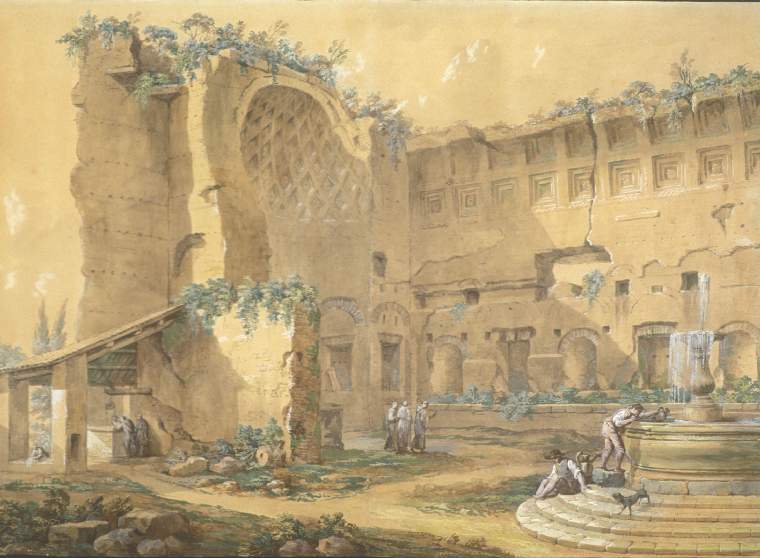
Ruins of the Great Temple of Ikaria
Woe to you, womb of Ikaria, former queen of the world, now queen of tears and wailing. Ancient and precious reliquary of divine objects and blessings, now empty like a mollusc’s shell on the beach. Proud and beautiful mother now dishonoured by the forces of evil and pathetic men. Only the shadow of the ruins of your buildings reminds your children of the glory of the past.
Left to ruin...
The fall of Ikaria and systematic looting of the old Imperial capital in 460 AP onwards took a toll on the building leaving it in ruins. According to the chronicles of eyewitnesses and later archpriests of the city, the temple was sacked terribly when the city fell but months prior to the fall, where part of the population began to be evacuated to Blati, many of the city's relics began to be shipped as well, including, despite the reluctance of many priests, the chryselephantine statue of the god Abbon Shabai and the Holy Tunic. When the city fell the altar of the sacrifices and libations was used as a dining table by the barbarian soldiers, the gold for the ceiling was taken off and the marble and columns from the walls and the floor were used to decorate the walls and mansions of the new lords of the city. A century after the fall of Ikaria, the temple's appearance was desolate, with its roof beams rotting away and some of its tiles reused for neighbouring homes. The atrium with its columns had completely disappeared, its materials being reused for other buildings (allegedly for the private gardens of the city's barbarian ruler). The pediment collapsed in 588 BP, and its remains were used to repair the walls, along with hundreds of tombstones from the city's cemeteries. By 625, when a monk visited the city, the Great Temple of Ikaria was in an even worse state. The roof had collapsed a decade earlier, and all that remained were the walls and the apse where the statue of the God of the Sun and Wisdom once stood. The ancient pedestal on which the statue rested could still be seen, as well as the hole through which libations were made. In the centre of that ancient shell, there was a fountain, whose waters, according to local tradition, could cure any illness if one had faith, as well as allow one to hear the voices of the deceased from the afterlife.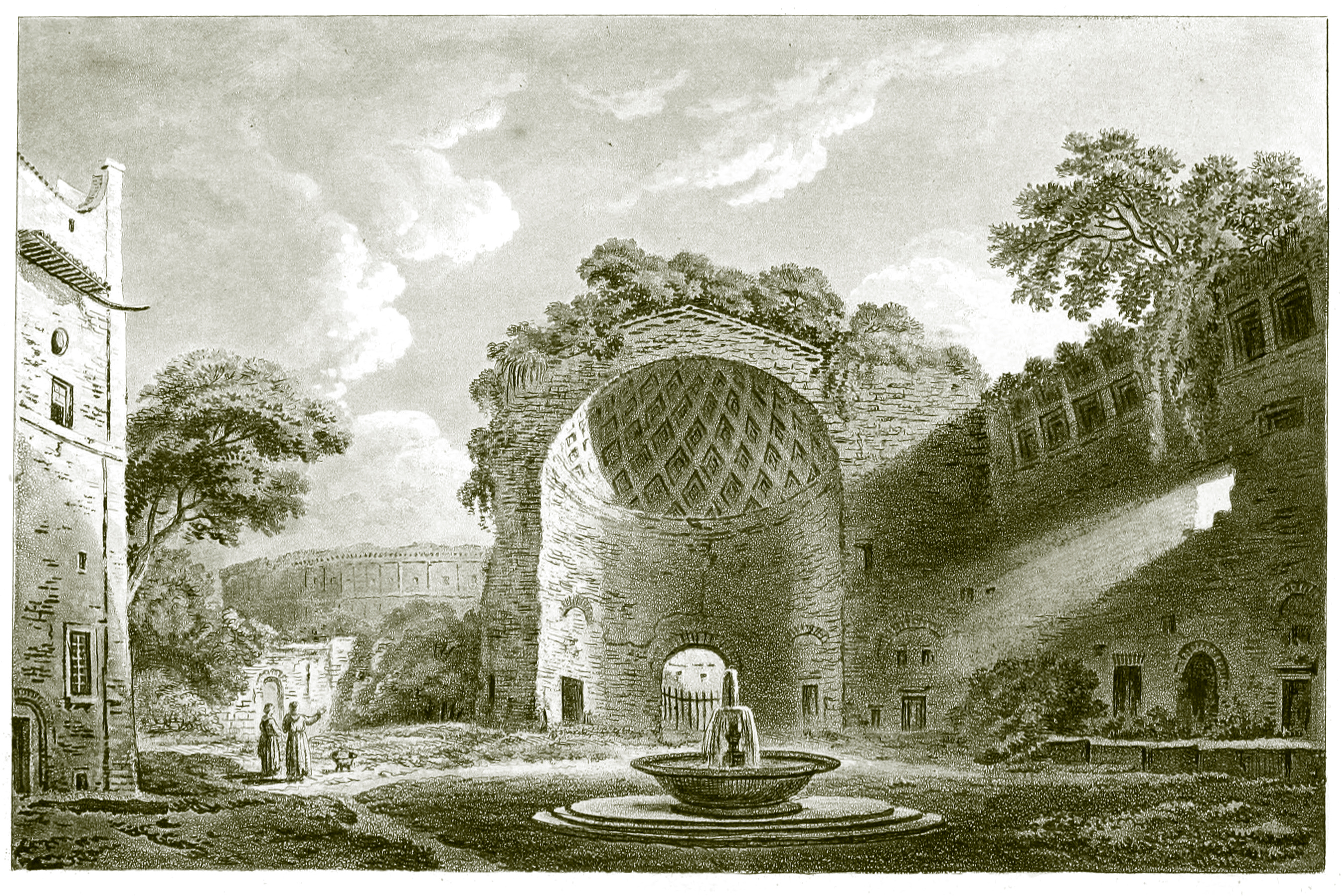
by wikipedia
The ruins nowadays
Today, the temple ruins remain in the same state as when the city was reconquered. A municipal law of 722 prohibited the extraction of any material from the monument as building materials. However, years earlier, many of the materials from the temple and other ruins in the area served as construction materials for the homes of wealthy individuals or powerful priests within what was once the temple precincts. For example, the windows of the master bedroom of the home of one of these potentates are formed by the remains of two ancient columns that once stood in the apse of the Great Temple.I can't describe my disappointment when I arrived. I was expecting something more reminiscent of the former glory of our ancient capital, but instead I found a rectangular area, a sort of courtyard with the famous fountain in the middle and an apse, once luxuriously decorated and robustly built, with vegetation growing on top. On the right wall, one can still see the niches where the statues and icons of the gods were located, as well as the door that connected to the old garden. The entire west side of the temple has disappeared, and in its place are houses and modest mansions where one can see everything from fragments of columns to the entrances of buildings whose floors are nothing more and nothing less than remnants of the former great temple floor. Nowadays, locals gather there to chat, have picnics, and in summer, take shelter in the shade of its walls or the trees that grow in the area. Sick people of all kinds also come to be cured in the waters of the fountain, as well as curious people and people who claim to have been healed by its waters who come to give thanks to the gods.The temple area has become like a garden for the neighbours, the fountain is still there and continues to attract pilgrims and curious people wishing to be cured of an illness or hoping to communicate with their loved ones in the afterlife.
Type
Ruins

Comments