
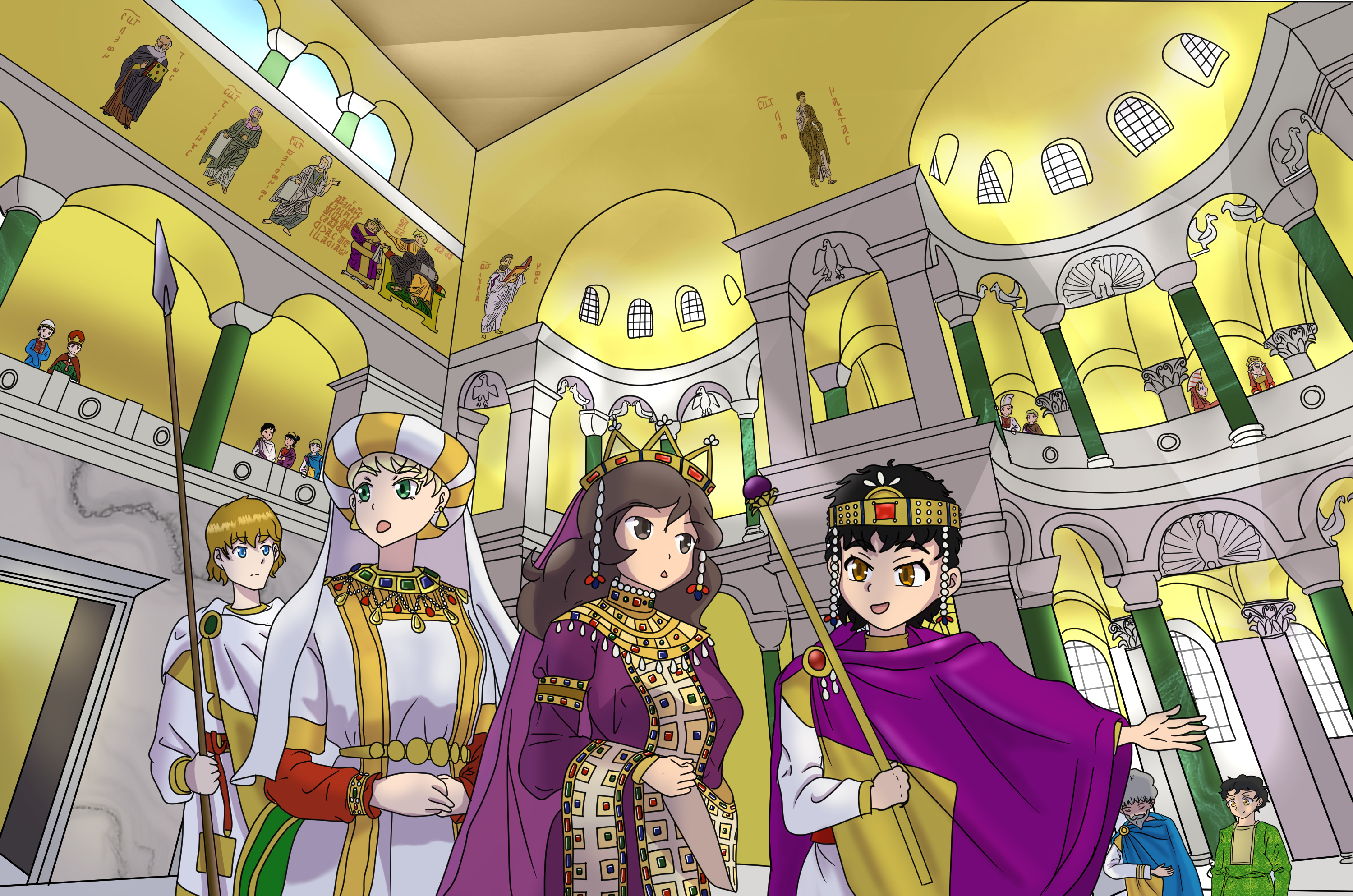
Emperor of Blati
What brings you in front of his Imperial Majesty, the Emperor of the Ikarians, Descendant of the Godess Zerah, custodian of the holy sceptre and defender of civilization?The Blatian Emperor, the Rigas is, alongside the Seris Emperor, the most powerful ruler in all Yeia. From their majestic and world wide famous palace in Blati, the heirs of the Ikarian Emperors of old rule over an ever expanding Empire. This is both a very powerful but also very dangerous position plagued by intrigues and all the intricacies of ruling one of the world's largest, wealthiest and most powerful empires.
Requirements
For being elected as Emperor of the Blatians, you have to be a member the Imperial Family, a descendant of the last Ikarian Emperor Arcadius VII, none outside the imperial family can hold the office. (Contrary to the old Ikarian Empire, where the system of succession was more relaxed and not dependant so much on the family). This is so because they want to show the legacy and the continuity with the old Empire. No age is required for the office, is the Emperor is a child, a Regency is stablished and his public ceremony of coronation is posponed until he becomes an adult, when he reaches the age of 16. Until then, the child emperor, wears a imperial diadem and a child sized version of the imperial robes. Blatian Emperors might chooseto rule alongside a co-emperor (always a close relative or a member of the Imperial family) in times of crisis or if the Emperor is a child and the Blatian Senate considers it's the best for the Empire.Appointment and Coronation ritual
There he was, the Emperor of Blati, the living descendant of the Ikarian Emperors in the middle of the great Hippodrome, the people present there cheared him and shouting: Hail Emperor of Ikaria, may your reign be long and prosperous!, and then cried 3 times: Many years to you!.For a Blatian Emperor to be effectively appointed as such, first it has to be proclaimed by the army. According to tradition it is done outside the city walls. There the soldiers will raised the Emperor on a shield and put a diadem on his head, after this, the military standards will be raised and the soldiers will aclaimed the candidate to the throne as Emperor. Then, in a procession they will escort him to the Hippodrome of the city. There he would be presented in front of the croud in full military armor and if the people gives it approval, they will chear and acclaimed him as Emperor.

Coronation of an Blatian Emperor by Madrid Skylitzes
Imperial Regalia
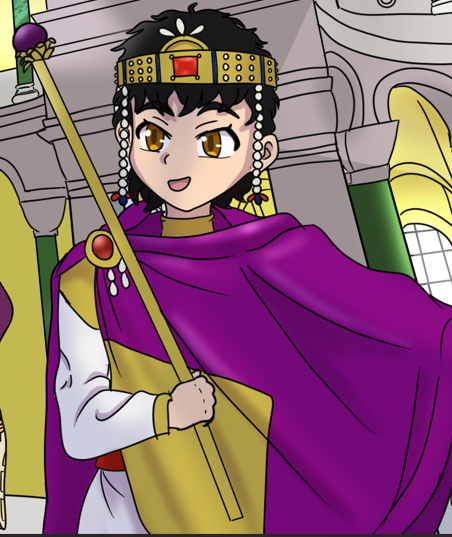
This is a very important topic for a Blatian Emperor, because many of the elements and items of the regalia are linked to the Ikarian past and the claims of all the Blatian Emperors to be the rightful continuation of the Ikarian throne. The first and most important is the Holy Scepter. This element of the Imperial Regalia has passed through the hands of every Emperor of Ikaria since the founding of the Empire in 1000 BP.
It is believed to have been a gift from the goddess Zerah to the first Emperor, and only the Rigas may touch it directly; anyone else who dares to touch it will be killed instantly by the power of the lightning contained within the magical orb at the top of the scepter. The fact that the Emperor is the only one who can touch it without dying is also a sign of the Goddess of Thunder's approval, since she is the divine mother of the Ikarian people.
by Callyxtus
Other powers
Blatian Emperors are the embodiment of the sacredness of the State, those who insult them, insult the Empire and it's people. Because of this , and the fact that, in theory they can trace their lineage directly to the goddess Zerah, they are given semi- divine honours (and as we would talk in the next section, some could be even deified after death). Though there is a High Priest of the Reformed Church, the ultimate religious authority and the one who performs the sacrest of rituals is the Emperor. This is more evident by the fact that he choses who would become the High Priest of the Reformed Church. The Emperor is also the the de iure head of every priestly college in the Empire. The Rigas also acts as the Head of the Senate, moderating the debate and also preparing the agenda of matters to be discussed, and also has the power to veto propossals or laws made by the Senate. Because of this sacred role as the embodiment of the state, the Emperor is named in the military oath each legionary has to make each New Year's Day , not only as a symbol of undying loyalty to him, but also to the state that he represents. Blatian Emperors, as their Ikarian ancestors have the power to make laws, they are the source of all the legal system of the Empire and the final appeal court. Their decissions or their words can settle disputes among cities, private citizens or civic assemblies across the Empire, because their words are law. In case of emergency, or if there is no suitable candidate or to celebrate an special ocassion, the Emperor might be elected also as the senior consul of that year, this tradition goes back to the earlier times of the Empire where Emperors and Consuls used to jointly command the Imperial armies. Speaking about armies, the Emperor is the commander in chief of the Imperial armies and true to the spirit and legacy of their ancestors many capable Rigas have commanded the armies to great victories and reconquest of lost imperial territories both against the barbarians as well as other Blatian petty kings. If the Emperor cannot lead the troops then he chooses a experienced and trusted commander as Master of Soldiers, the generalissimo of all the Imperial armies who obbeys and answers only to the Emperor.
Command structure of the Blatian army by Callyxtus
Deification and cult of the Emperors
If an Emperor is popular among the people, the Senate, and is also seen as just, honorable and caring for the people he might be deified after death. This proclamation of an Emperor declared a god is read both at the Senate Doors as well as in the Great Forum, a college of priest might chosen for that specific emperor in particular although there is already a college of priests both in the capital and across the provinces that worships and do sacrifices in honour of all the deified emperors. The body of that Emperor might be translated to a temple built in his honour but usually Emperors are buried in a chamber of the Great Temple of Blati that functions as an Imperial Mausoleum where people might do offerings or pray to that deified emperor and where priests of the Imperial Cult perform the rituals. The subject of deified Emperors has been a bit problematic, especially in centuries prior, because it's not clear what powers or where in the hierarchy of divinities, would be deified emperors be located. In the end, everyone agreed that Deified Emperors are lesser gods, not as powerful as the gods of the traditional Ikarian Religion, most likely at the same level as the saints of the Reformed Church. The festivals celebrating the 5, 10 or 20 years of reign of the Emperors can also be considered as part of the Imperial Cult, as well as statues of the Emperors erected in the cities ( as embodiment of the state for the living emperor, and as "lesser gods" to the deceased ones).Cultural significance
The Emperor of Blati (for those who live inside the empire, and for some of the neighbouring nations) is the legitimate emperor of Ikaria, the symbol of the continuation of this great Empire that Blati represents. "If the emperor is still on the throne, then Ikaria still lives on" is famous Blatian saying. To the surrounding cultures, specially the Green and Snow Elves the Oronai, the Blatian emperors are recognized as the legitimate emperors of Ikaria, and in some diplomatic documents they named the Emperor of Blati as either the Emperor of Ikaria, or the Emperor of the Blatians and lord of Ikaria. For the Blatians, as well as the old Ikarians, there are only two emperors on Yeia, their own and the Seris Emperor, the rest of the remaining monarchs are called "Kings". Also the aforementioned Imperial cult unifies the Blatian peoples and gives them a sense of belonging to the same nation, aside of sharing the same language, culture and religion.
Type
Civic, Political
Form of Address
His imperial majesty
Alternative Naming
Rigas / Emperor of Ikaria
Equates to
The Blatian Rigas is similar to the Seris Emperor or the Oronai Archons (or Kings).
Source of Authority
by the people and the gods
Length of Term
during his lifetime
Current Holders
Related Organizations
Related Professions

Great article, as always. I love the idea of raising the would-be-emperor up on a big shield. The deification of past emperors is really interesting too.
Explore Etrea | WorldEmber 2025