
Great Temple of Ikaria
Description of the building
The Great Temple of Ikaria was the biggest and most lavish of all temples of the old imperial capital. It was built at the top of the acropolis of the city, the most sacred part of Ikaria, where the Imperial Palace was also located (a pattern repeated again in Blati). Legend says that it was built on a rock where a lightning bolt sent by the goddess Zerah fell. This was the most important temple of Ikaria and the most prominent of all the temples dedicated to the King of the Gods in the old Imperial capital.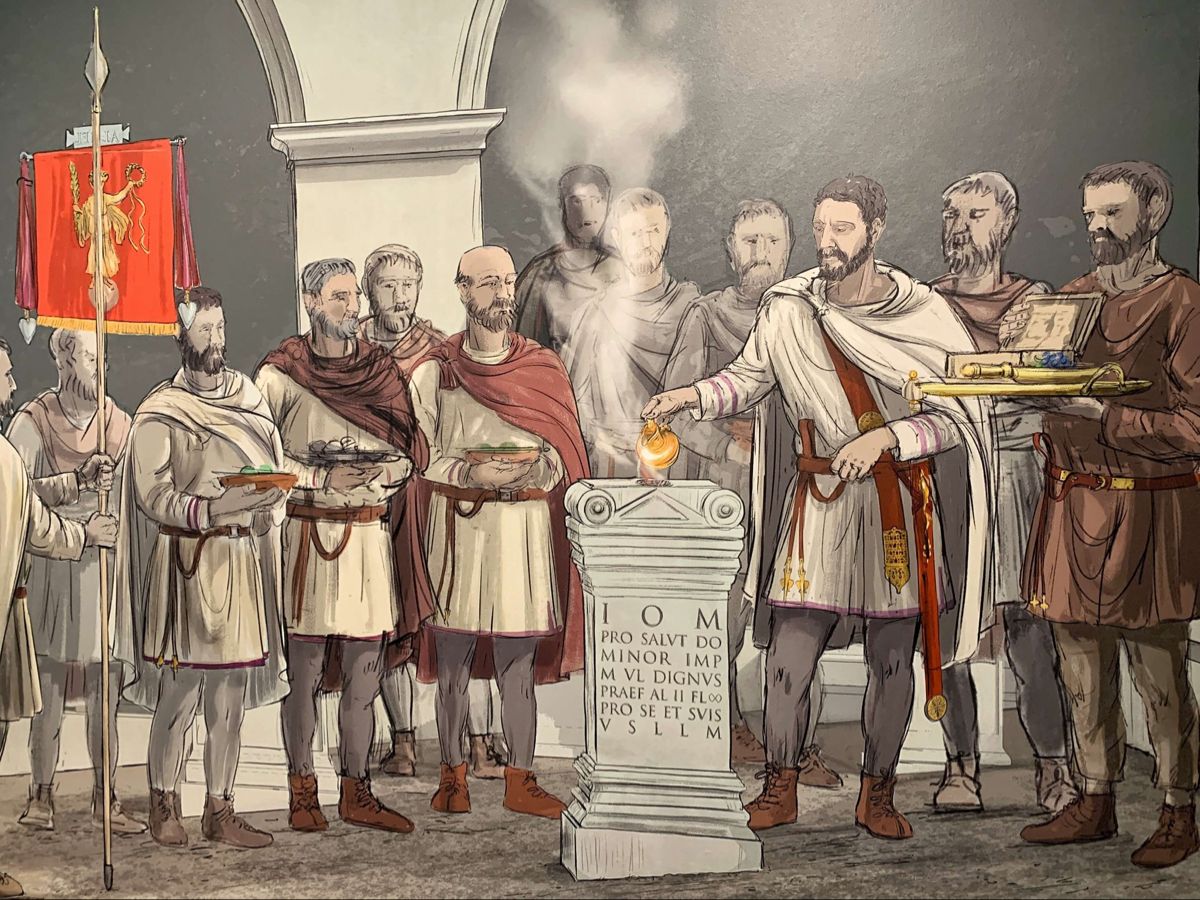
by Pavel Simak
The earliest temple was made of wood but around the 4th century BP it was rebuilt in limestone and marble. A courtyard was added in the 200s BP with marble columns and beautiful public gardens at the back of the temple.
In the middle of the courtyard there was an altar where offerings were made to the gods and also to the Emperor (as this was a centre of Imperial cult as well as cult to Abbon Shabai).
To Abbon Shabai, father of gods and humans, light of wisdom and goodness, protector of the just, Tiberius, Emperor of the Ikarians, in the third year of his reign, together with the Senate of Ikaria, dedicated this altarThe pediment of the temple was decorated initially just with a medallion showing the portrait of the god wearing a radiate crown, but a new sculptural cycle was added around the 190s BP which represented the heavenly court with Abbon Shabai in the centre seated on his throne accompanied by Tyr and his sons interceding for the destiny of humanity.
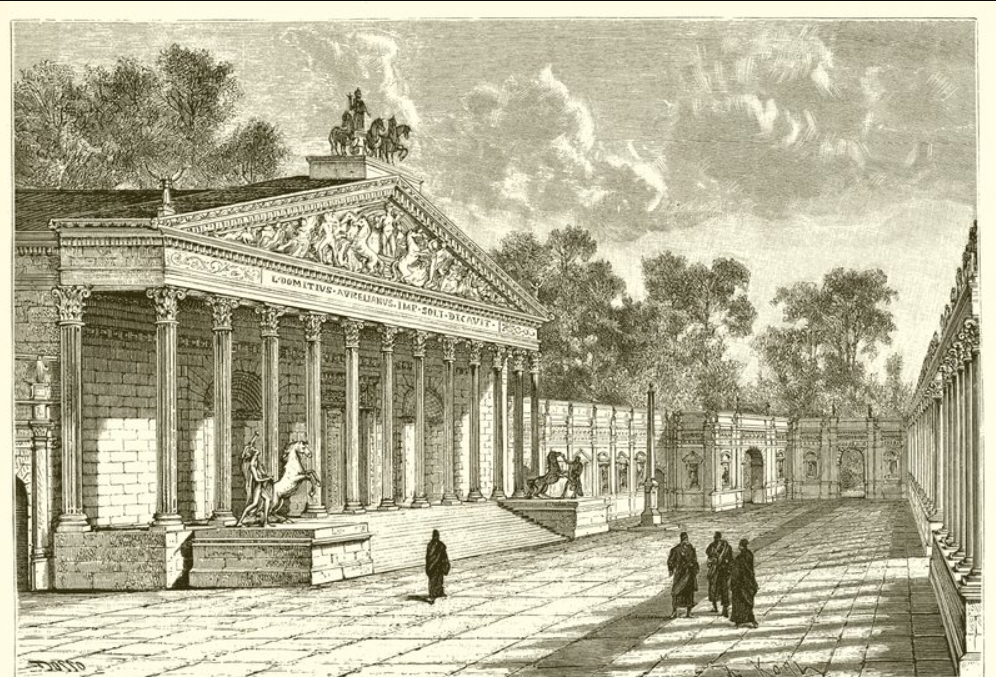
by Gerhard
The religious center of the Ikarian Religion
The temple was at the centre of the religious life of the city, Triumphal parades ended up in the temple where the Emperor would make offerings to the gods thanking them for the victory over Ikaria's enemies. Offerings would also be made to the King of the Gods on occasion of the Emperor's anniversary of their ascension to the throne. The building also grew in importance after the preaching of the The Prophet where many relics associated with him were stored at the temple, including the Holy Tunic, one of the most sacred relics for the faithful of the Reformed Ikarian faith. This relic was placed at the foot of the statue, carefully watched day and night by priests and soldiers of the Imperial Guard, and was carried in procession alongside the statue during the festival of Abbon Shabai. In fact, after the proclamation of the Reformed Ikarian Faith as the official religion of the Empire this temple became the seat of the High priest of the Reformed Church before the fall of the city in 460 AP.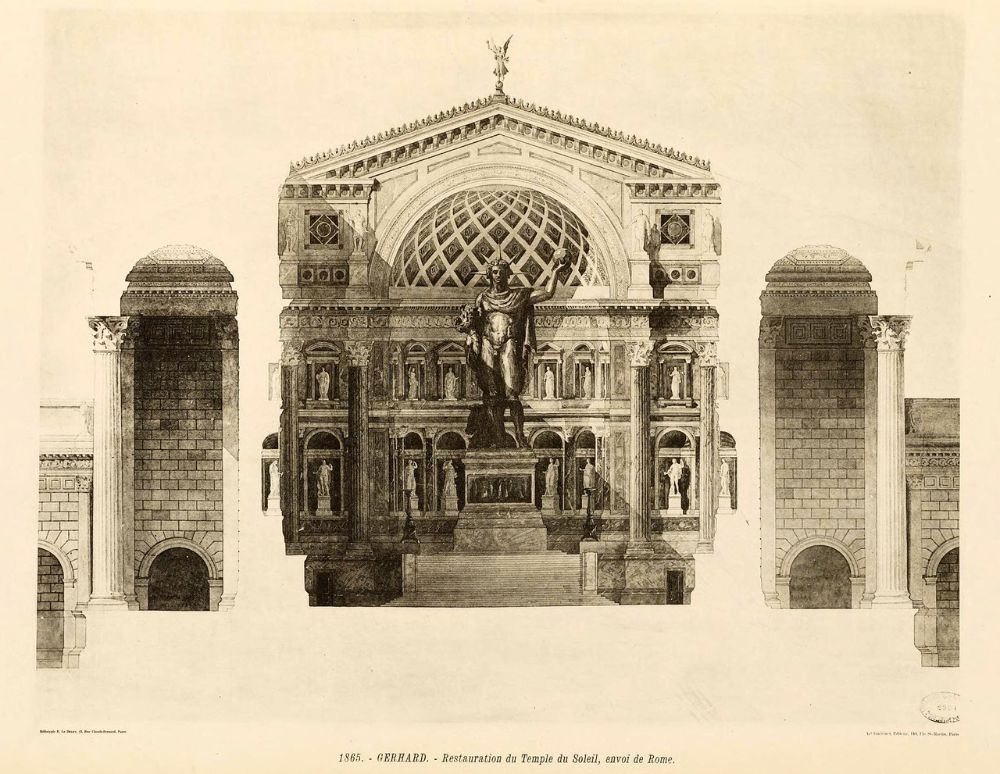
On one side of the temple, near the statue of the god, I noticed several large sarcophagi, as tall as a person, made of porphyry. One of them had its sides decorated with gold leaf, while above another hung a jewelled golden crown, supposedly belonging to the emperor who lay there. All of these were surrounded by candles and incense burners, as locals have the custom of coming here and offering incense as a way of worshipping and showing their respect.
The College of Priests
Aurelian II established a college of priests of the god Abbon Shabai and the cult of the deified Emperors. It was formed by 7 priests whose purpose was not only to carry out the offerings to the god but also to warn of the defects or ceremonial faults that were committed in the sacrifices. In the first century AP another 3 priests were added to the college after the death and deification Drusus I in 81 AP. These 3 priests were assigned the rituals and ceremonies related to the cult to this specific Emperor and they presided over the ceremonies and sacrifices during the Druseia Festival, the feast honouring this deified Emperor. In terms of robes and appearance, the priests of Abbon Shabai that worked at this temple wore a yellow tunic and toga with purple stripes similar to those worn by senators. The priests assigned to the cult of the deified Drusus wore the same garments but they wore a hat on their heads with miniature busts of the emperors.
RUINED STRUCTURE
ca. 460-480
ca. 460-480
Type
Temple / Religious complex
Parent Location
Owning Organization

Aw, it's sad it is now a ruined structure. The statue that looks like it glows in the sunlight sounds so beautiful.
Explore Etrea | WorldEmber 2025