

Locksley House
⚠️ Content Warning
This article may contain mature themes, including homoerotic content, complex power dynamics, sexual encounters with vampires and anthropomorphic beings, as well as other adult material.
Reader discretion is advised.
Purpose / Function
Locksley House has served as the primary London residence of the Viscounts of Locksley since its construction in the mid-19th century. Originally commissioned as a prestigious townhouse for parliamentary seasons, diplomatic receptions, and society gatherings, the house was designed to project stability, refinement, and quiet influence rather than overt grandeur.
Over time, its function subtly shifted. While still hosting select social events and formal dinners, Locksley House gradually became more administrative and strategic in nature. Under Willoughby James Horthon's stewardship, the house now serves as the operational heart of the Horthorn family’s affairs: legal consultations, discreet political meetings, financial negotiations, and correspondence are conducted behind its closed doors.
In recent years, the house has also taken on a more private role. With the Viscount and Viscountess absent on prolonged diplomatic mission, Locksley House became both home and refuge—particularly for Gabriel Michael Horthorn. As such, it now balances two purposes: a public-facing seat of aristocratic continuity, and a deeply personal sanctuary shaped by the presence of an Angelus. Those sensitive to the supernatural often remark that the house feels unusually calm, as though its very walls have learned to breathe more gently.
Architecture
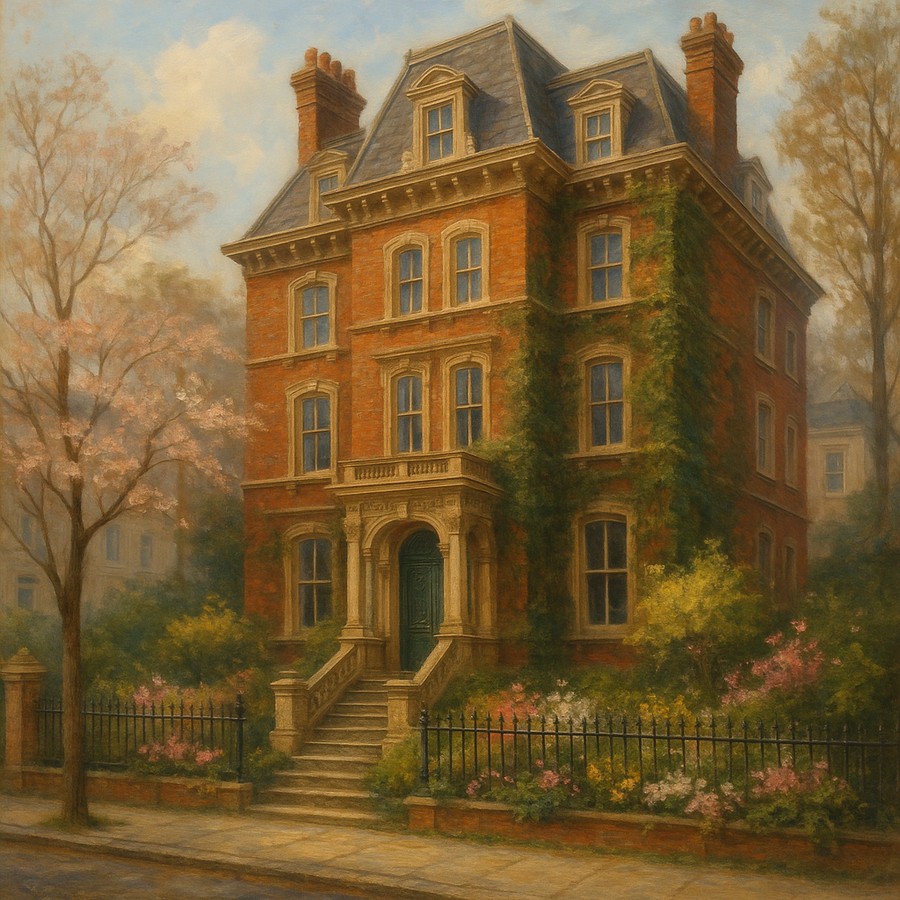
Locksley House is a refined example of late Victorian townhouse architecture with strong French Second Empire influences, a style fashionable among London’s upper classes in the latter half of the 19th century. The most striking feature is its mansard roof, clad in dark slate and punctuated by tall dormer windows, lending the building an air of continental elegance uncommon even in Mayfair.
The structure is built primarily from deep red London brick, contrasted with Portland stone detailing around windows, cornices, and the grand entrance portico. The façade is symmetrical and disciplined, yet softened by decorative elements: carved stone lintels, subtle pilasters, and a balustraded first-floor balcony above the main entrance. Wrought iron railings enclose the front garden, their design restrained but finely worked.
While the building conforms to the general scale and dignity expected of Mayfair residences, it stands out through refinement rather than excess. Ivy climbing the brickwork and the careful integration of greenery give the house a slightly romantic, almost timeless quality, as though it has aged more gracefully than its neighbours. The overall impression is one of wealth, stability, and cultivated taste—quietly impressive, never ostentatious.

Comments