
Parsano
Parsano: The Gilded Hand
The commandery of Parsano places its faith in a more tangible, universal power: coin. It stands as a unique entity within the Hegemony, not a unified kingdom under a single ruler, but a formidable mercantile confederation, a league of city-states bound by a shared, relentless pursuit of profit. Here, the guiding principle is not divine mandate or arcane theory, but the elegant, unforgiving logic of the open market. The commandery thrives on a culture of hypercapitalism, with pro-business policies and exceptionally low taxes designed to attract the most ambitious merchants and artisans from across Haven.
Ostensibly, Parsano is governed by a council where the governors of its great cities share power as equals. This structure was intended to foster cooperation and prevent any single faction from dominating the others. In practice, however, the ideal of equality is a polite fiction. In Parsano, a governor’s influence is weighed not by their title, but by the overflowing coffers of their city. Wealth is the true measure of authority, and alliances are less matters of state and more strategic business partnerships.
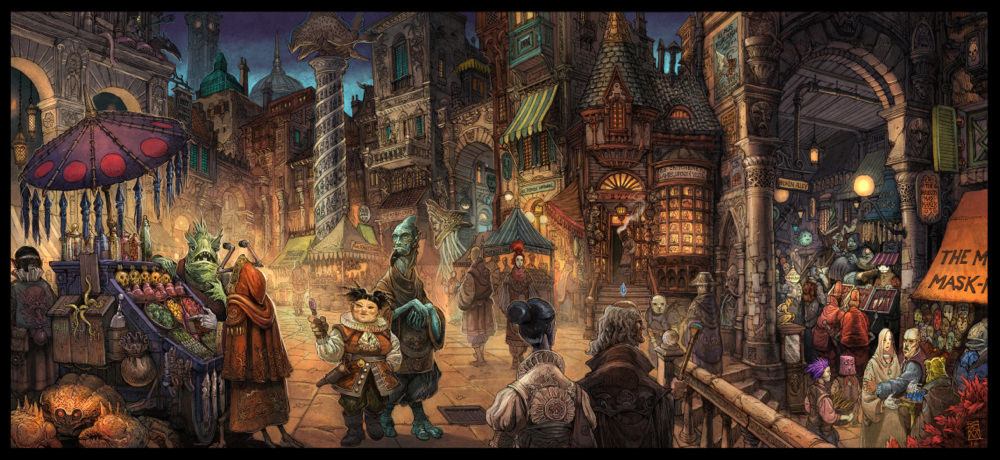
At the pinnacle of this hierarchy stands Thar, a colossus of commerce and the most populous and wealthy metropolis in the entire Hegemony. Its markets are a vibrant, chaotic tapestry of enterprise, where fortunes are made and lost in the time it takes for a cargo ship to unload its wares. While the council maintains the pretense of a partnership, it is the Governor of Thar whose voice truly dictates the commandery's direction, their economic might a force more persuasive than any royal decree.
The culture of Parsano is a direct reflection of its government. Its people are ambitious, pragmatic, and fiercely independent, measuring worth by one's assets and contributions to the endless flow of trade. Each city within the commandery boasts a unique specialization—one might be the heart of textile production, another a center for rare mineral refinement, while a third perfects the art of shipbuilding. This diversity creates a codependent, yet highly competitive, environment where innovation is prized and inefficiency is scorned. It is a land of contracts, not crowns, where the rhythm of life is set not by temple bells, but by the clang of the forge and the quiet, constant scratch of a quill in a counting house.
Comments