
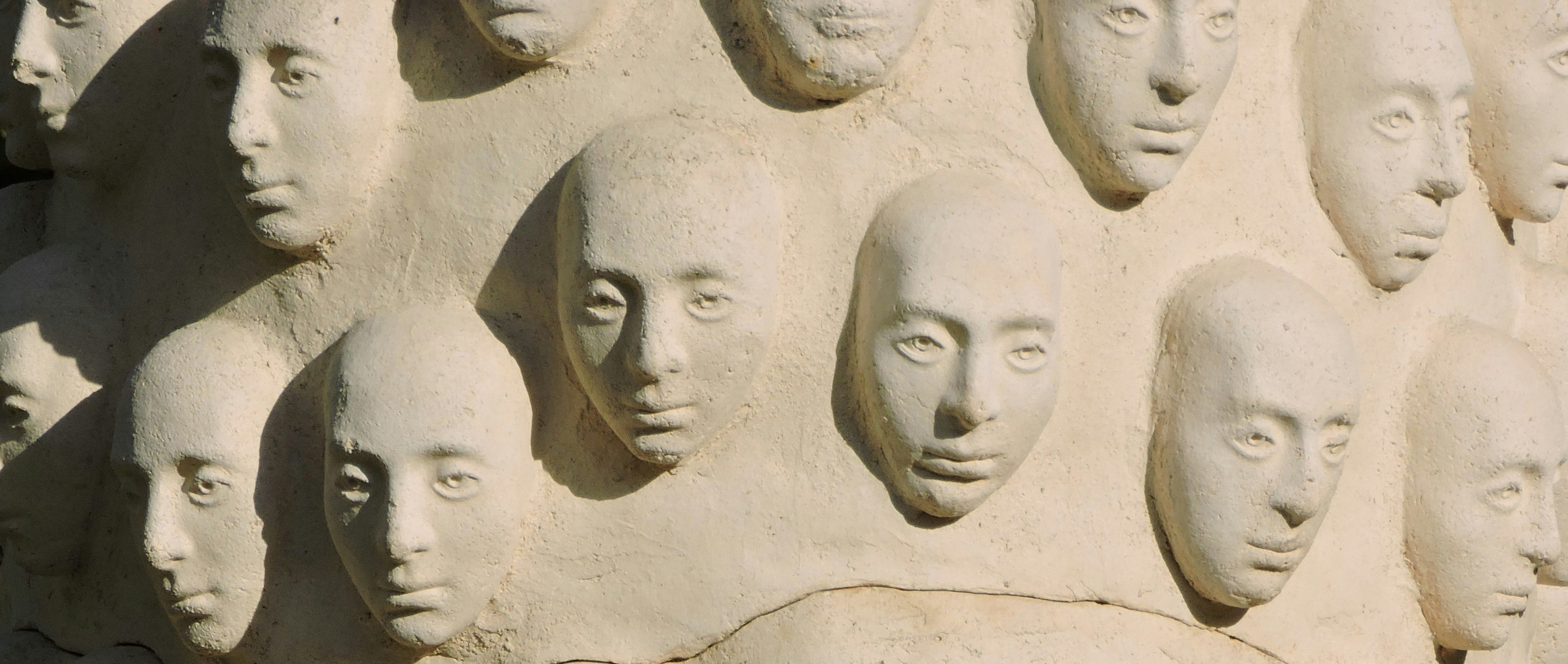
The Crowded World
Southern Cosmology
The people of the south do not have a single word that means "god." Instead, they see a world crowded with a host of supernatural, preternatural, and monstrous entities. They distinguish these into many types, but most of the words get translated zyrys in the Northling tongue anyway.
The following traditional list of "known entities" is not considered exhaustive. Gominda sages believe there are many more kindreds in the world than the ones we know about. Some are unknown because we've never happened to cross paths with them, others because they've chosen to remain hidden.
Like any overly systematic hierarchy, the whole thing has a dash of bullshit to it, but it gets some things right. If you put the northern and southern cosmologies together you get somewhat closer to the "truth" for this legendarium.
Pure Celestials
Shaper of Worlds
Ça (origin ancient): Also known as the Great Poet, Ça is a creator spirit, He Who Tells The Tale That Is The World.
At one and the same time, the water in which we swim and the headwaters from which we flow: this is Ça.
Great Forces
Atuna (origin ancient): Atuna, called Atna in the north, is kindler of the sun and keeper of its fire, associated with heat and light and clear weather. Her physical form is a lion-headed queen who walks upon the sun and reigns there over a vast kingdom of fire spirits with justice--and patience, since fire spirits are notoriously unruly. All men carry a spark of her fire during life, which departs when they die.
Thadrash (origin ancient): Bringer of storms and rain, called Thadra in the north. In the lore of north and south alike, his physical form is a grizzled mariner with a long grey beard who sets sail on the celestial sea during the autumn equinox. While he is away, Pento has its dry season. He returns at midsummer, bringing the rains.
Tirayit (origin ancient): Tirayit's domain is fertility: of men, animals, and the earth itself. All seed needs her blessing to bear fruit, and farmers leave out offerings at night to entice her to pass through their fields. Many of them also hang medals of Tirayit on the necks of their breeding animals. Couples wishing to conceive make offerings too. Northerners say Tirayit is the same as the goddess Atreya, who rules luck and erotic love. Southerners retort that if this is true, Atreya is a vulgar corruption of Tirayit. Tirayit's physical form is a young woman with thick black hair that reaches to her heels.
Mamjys (origin southern): Mamjys is the Nurse, the Mother of Holy Comfort, who nurtures the world in secret and tirelessly visits the suffering. Since most northerners cannot pronounce j, they have adopted her as Mamzys. The origin of the name is probably an archaic verb *memáj meaning to nurse. Her typical physical forms are a matronly woman with big breasts or a dog with heavy teats. Rarely, she appears in the form of a disheveled young woman, mourning and wailing in the night with no one to comfort her. In that form she can be frightening, like La Llorona.
Ciciyon (origin southern): Consort of Mamjys, Ciciyon is both healer and trickster and befriends those who laugh often. His physical form is green-skinned and faintly reptilian.
Silgys (origin southern): He who lives alone upon the moon, known enigmatically as the Friend of Silence. Associated with nocturnal contemplation and wisdom. Physical form is a concentration of moonlight.
Radnys (origin ancient): The Builder, patron of cities, walls, tools, and metalworking. Birds, ants, termites, and other building animals are said to fall under his sphere of influence (not spiders, though; their silk is too ethereal). Physical form is a muscular man in the prime of his life with a cloak made of stars.
Ifaryt (origin ancient): Rules war, strife, and striving. Physical form is a warrior maiden.
Jumada (origin ancient): Undifferentiated and infinite matter, what we moderns would call quantum soup. Some of the traditional sages thought this entity should be placed among the Subtle-Bodied, not the celestials, but in the popular imagination they remain a celestial, perhaps to fill out the round number of nine Great Forces. In physical form, a constant shapeshifter, usually an animal, sometimes a body of water.
The Myriad
The world throngs with immaterial spirits of lesser influence, known as "The Myriad." They can influence humans in subtle ways. Mortals feel them as moods, or the sense of being watched, or a thought that feels like it came from somewhere else, or paresthesia, or perhaps a sudden insight. These beings are forbidden to take physical form. Building a city summons a spirit who becomes particularly attached to that city and concerned with its fate. Prolific family lines are thought to have particular spirits attached to them.
Subtle-Bodied Beings
These entities are bound to the physical world in a way that Celestial Beings are not. They include Minor Forces and Fiends, Chthonics, and Muses. Minor Forces infuse the elements they govern and seldom attempt any other visible form. Fiends are Minor Forces who chose violence and were banished to the eastern badlands of the Everdwelling, where they often walk in visible form, the easier to govern their thralls. Chthonics and their offspring, the Muses have bodies proper to themselves but experience a nonlinear form of time and space.
Minor Forces, aka the Worldbound
Scholars debate whether one Force belongs to all (e.g. forests or deserts) throughout the world or whether their spheres of influence are more regional, so Citazra is our local hearth-coal spirit but far away in the frozen north they might have another.
Citazra, guardian of hearth-coals
Cumaris, brother of herds and shepherds (aw; northern name Ecmerys)
Hathad, lord of the ancient forests
Isadi, owner of metals, especially the precious ones: gold, tin, and copper
Maluna, spirit of canals and seasonal rivers
Qayati, lady of salt
Senuti, lady of grain
Ansaguo, lord of plagues
Radi, witch of the deserts
Mazoth, who haunts the realm of sleep and dreams
Yumi, mistress of the young (eastern) sea (s)
The Seven Fiend-Kings
Torac Sang, lord of order
Ochan Cal, lord of chaos
Mothog An, the thing that haunts the deepest lake
Colad Gar, the storm in the valley
Pocosh Nab, lord of violence
Odaz Bag, lord of sorrow
Oguath Shal, king of swamps
Chthonics
The ruling council of the underworld is made up of at least three figures that date back to the ancient west: Azmara, Azrith, and Ramos. The other four were likely added later.
Azmara, whose domain is memory and the past
Azrith, whose domain is death
Ramos, whose domain is the stars of winter and of friendship
Emenani, whose domain is secrets and things hidden
Azul, whose domain is doors and passage (northern name Zola)
Shameth, whose domain is fog
Erimara, whose domain is the ancient (southern) ocean
Muses
In the southern mythos, the thirteen muses are the children of Ramos and Azmara.
Rajaló is eldest of the Muses, firstborn daughter of Ramos and Azmara. She is patron of the visual and decorative arts: textiles and fiber arts, murals and mosaics, painting and drawing. Her symbols are lambs and sheep, flax flowers, lapis lazuli, and spiders.
Carana, second-born of the Muses, is patron of song, storytelling, and epic tales. Her symbols are honeybee, hearthstone, loaf of bread, and lyre.
Shacca, the third-born Muse, rules rhythm, dance, and percussion. Her symbols are the wryneck bird, the calcaneus bone, and drums.
Guareni is the fourth Muse and patron of romance, erotic literature and art, and seduction. Her symbols are the dove, fig fruit, gazelles, and pomegranate blossoms.
Tifrit, the fifth Muse, is patron of laughter, satire, comedy, and dick jokes. Her symbols are cucumbers, bells, barley, Rocky Mountain oysters, and hallucinogenic mushrooms.
Yamasha the sixth-born governs history, oratory, governance, law, and cartography. Her symbols are the chisel, wax seals, lemons, and hawks.
Fedaya is seventh-born of the sisters. She and Yamasha are the "middle children" of the Muses. Her domain is astronomy, mathematics, and navigation. Her symbols are the sextant, the eight-pointed star, and moss.
Iliri, the eighth Muse, rules pure music: melody, harmony, and instrument-making. Her symbols are the lark, the flute, and the rainbow.
Imcasta, the ninth, rules architecture, stone-quarrying, bodybuilding, and athletics, and she is closely allied with Radnys. Her symbols include termite mounds, acacia trees, gypsum, and oxen.
Xidra, number ten, is patron of three-dimensional representation. Dolls, statues, sculpture, and also beast fables. She has some spooky vibes, though mild compared to Farya's. Alabaster, clay animal figurines, and mandrake root are her symbols.
Madeni the eleventh is the Muse of theater. Her domain encompasses acting, performance, roleplaying, masks and costuming, and all disguise. Her symbols are the mask, face painting, dice, and the starling.
Shar, the twelfth-born Muse, governs meditation and spiritual cultivation, hermits, and gardening. Her symbols are the cypress tree, the chrysalis, owls, frogs, and copper ore.
Farya, the youngest and strangest Muse, dwells apart from her sisters. Mortals and Museborn alike regard her with a certain amount of fear. Her domain is blood, the beating heart, and veins; ashes and wildfire; creation from destruction; pathos. Her symbols are wolves, ashes, dirt, and the sternum bone. Her gifts are said to always come at the cost of a tithe to the underworld, and in some versions of her story she is the consort of Azrith.
Kinfolk
Human beings occupy this category alongside many other fully embodied beings. Members of the various kindreds often find that they face similar challenges and can come to mutual understanding, with a little effort--but they can also be very mistrustful of one another.
Mortals
Us. People. Men. Anthropoi.
Museborn
In the aeons of prehistory, the Muses traveled in the mortal lands, and eventually they came upon human hunter-gatherers and herdsmen. They formed...relationships...with these humans and became pregnant with the first half-Muse, half-mortal children who would produce the race of the Museborn. By decree of their grandfather Ramos, the Museborn are allowed permanent residence in the Everdwelling. Their home city is Madriga of Lys, but they tend to inherit their mothers' wanderlust.
Psychopomps
Foxmen guide souls from the northern shores of the Everdwelling to their halls in the Utter South, traveling mostly by passageways deep underground. They are, as you might guess, anthropomorphic foxes. At various points along the migration of the dead, they have shafts leading up to burrows on the surface, with cozy hearths and ceilings hung with all types of trinkets collected from the dead.
Mistles are huge, transparent creatures, which if they were visible would be a cross between woolly mammoths and sea anemones. They wander the Borderlands, trying to play games with the souls of the unburied dead.
Echoes
Also known as Remnants, these are various types of ghost.
Primal echoes: Minor Forces whose governed realm ceases to exist simply go on, but as Echoes. So an ancient forest that has long since become desert might spawn a lingering spirit, which wanders the earth as a ghostly presence.
Doppelgangers: In the Terazed badlands, certain magics can steal bits of people's life force, which the people in question see running away in the form of doppelgangers. Museborn are vulnerable to this kind of damage just as mortals are, so Fiend-Kings sometimes use it keep their thralls from escaping. Taroc Sang is especially fond of this strategy. The doppelgangers continue to exist and may return to places that have been familiar to their source.
Figments: Illusory creatures of the central Everdwelling, sustained by a powerful imagination but without physical substance (you touch them, your hand passes through empty air). Madrigans sometimes keep them as pets, as do Fiend-Kings. It is said that Madrigans also produced them in the mortal lands when they visited, because mortals found such delight in them.
Ghosts: When deceased mortals are left unburied or refuse to follow the foxmen's paths, they wander the world as shades. There are throngs of them in the Borderlands, which catches them like a basin catches water, but they also can appear in the mortal lands.
The Faded: Very rarely, a living mortal travels to the Everdwelling. It's even more rare for them to find a way back--but while they're there, their lifespan gets extended indefinitely. Mortals aren't made for this, so over time they fade into lost semblances of their former selves and either go astray and get killed, or live simple lives in villages Madrigans have set up for them.
Guardians of the Everdwelling
Some scholars argue that these are not Kinfolk but simple Beasts. However, most believe they could talk, if they wanted to.
Serigala (singular: saragul) combine the feline ferocity of the lion and the canine ferocity of the wolf in perfect balance. They roam the edges of the Utter South and are pets to Ramos and guardians of his territory.
Gryphons dwell on mountainous islands to the east of the Everdwelling and are tasked with keeping the Badlands isolated.
Charo-scorpions guard the underworld itself and are the pets of Azrith.
It is said that there is also an unknown fourth kind of guardian. (Secret: they are shapeshifters.)
Elemental Spirits
Fire spirits populate the high airs, deserts, jungles, and other hot regions. They are quick to anger and quick to envy mortals, and can lay waste to a whole country if they want to.
Windlings are childlike, winged air elementals, also known as shepherds of the clouds for their ability to influence rainfall.
Mooncreepers are spirits of night, who can be glimpsed passing from shadow to shadow under moonlight. They may choose to help mortals whom they like to pass unseen. They may also blind mortals whom they don't like, often leading them to disaster.
The Wretched
The wretched are monsters--predators with preternatural ferocity. They do not possess true intelligence, only ancient hungers and an instinct for seeking out what they may devour. The Hungry Ones prowl the land and the Leviathans prowl the depths of the seas. They have never shown any sign of being able to speak, which the scholars are relieved about--because if they spoke, the monsters would be Kinfolk too.
Hungry Ones
Ghoul-like beings that have a primal hatred of intelligence and the power of speech. They seek to devour the Kinfolk. In fact they derive ecstatic delight from the destruction of Kinfolk or anything made by their arts, and are known to haunt graveyards, battlefields, and ruins.
The Hungry Ones move in packs. When they have nothing to feed on, they can preserve their cursed lives by burrowing deep into the earth and going dormant for long periods, sometimes centuries, until a sufficiently gory disaster wakes them.
Leviathans
Leviathans dwell in the blackest depths of the sea, where no light reaches, consuming whalefalls and shipwrecks. Their passage creates deadly currents that reach almost to the surface of the water and can suck unwary swimmers down into the depths. They only surface near the shores of the Everdwelling, where their presence makes it perilous to try to reach those shores by boat.
Return to DISCOVER PENTO
It's a wonder the sky in the south isn't too crowded for birds to fly.

Comments