
Gomi
Eldest city-state of the Pentoan-speaking peoples and capital of the southern world before the Conquest, Gomi has a long and storied history. The Gominda aren't about to let anyone forget it.
Government
Gomi is a vassal of the greater Pentoan Empire. It maintains a monarchy of its own but pays annual tribute to the empire in copper and artisanal goods, plus taxes in the form of a portion of its harvests. A nearby garrison of northern soliders is posted to keep a constant eye on it.
History
Gomi divides all history into eras of about seven centuries. This unit of time is called the çofra: 729 years, the sacred number that is nine times nine times nine.
Though they have populated the southern region of Pento for millennia, they still regard themselves as exiles from a long-lost paradise far to the north and west. When those lands dried out and died, they moved east and settled on a coast that faced the rising sun. When that land, too, began to die, they built boats to take them across the sea to where rumor said green lands waited. The Shipbuilding is where Gomi begins its count of history at year 1 (abbreviated UC, since this count would become the Universal Calendar of the Pentoan Empire).
First Çofra (1-729 UC)
When the fleet finally sailed (or so the story goes), a great storm rose out of the south halfway through the journey and wrecked it against an unknown shore, where the people have dwelt to this day. It's also where they encountered the Museborn of Madriga, a fraught friendship that would change their civilization forever, since it was the Museborn who taught them to smelt bronze and to write down their stories.
According to tradition, the foundations of the City of Gomi proper were laid in 270 UC and the city was ruled by council until 538, when the first kings of Gomi established themselves and reigned for nearly two centuries.
Second Çofra (730-1458 UC)
At the beginning of the second septicentennium, in 730 UC, the Gominda re-established council rule, which lasted this time for five hundred years, until conflicts with the Hildi allowed monarchy to gain a foothold. Ihan I, the first fully attested king of Gomi, was crowned in 1229.
These were flourishing years, when the city was mature but still strong, and the gifts of the Madrigan visitors made daily life wondrous. The gardens grew in an enchanted fashion, despite the long dry seasons, and the hot springs had miraculous healing virtue, and the animal life was diverse beyond anything in today's world. The Madrigans helped their mortal kin refine writing, painting, agriculture, textile production, music, dance, storytelling, and astronomy. The festivals of this time are legendary, since the Museborn loved a good celebration.
Third Çofra (1459-2186 UC)
The third septicentennium of the city of Gomi was one of dramatic rise and fall. The early centuries were marked by wealth and prosperity. 1459-1603 is considered the classical period of Gominda poetry. An age of scholarship and consolidation, focused on preserving the past, followed--and age that was also marked by attempts to harness and control the elusive magic of the Everdwelling.
Ghelfas the Transgressor came to the throne in 1895, and his reign was marked by the construction and perfection of Blood Gates. This led to the catastrophic falling out with the Museborn who destroyed the Blood Gates and swore they would never again visit the mortal lands. That year, 1933, was marked by geological cataclysms throughout the region. Earthquakes, tsunamis, volcanic eruptions.
A generation later, the poets of Gomi were scrambling to preserve an enchanted world that seemed to be slipping away forever. Anares composed the Darej Ayaz between 1971 and 1980. It gained popularity slowly but steadily, and the late 2000s saw a mini-renaissance of art and storytelling within Gomi and across the south. Soon, however, the restless north would begin its wars of conquest.
In 2163 Gomi became a vassal of the northern Pentoan Empire, and so the third era ended in defeat. According to its own lorekeepers, Gomi existed as an independent city-state for a total of 1,893 years before being subsumed into the Pentoan empire.
Fourth Çofra (2187 to present)
In 2287, an emperor of Pento attended a performance at the Temple of Carana in the southern desert, which marked the beginning of an age where Gominda thought and culture gained influence in the north. Ashti of Gomi is born in 2362 and marries Emperor Mefáre in 2381.
Geography
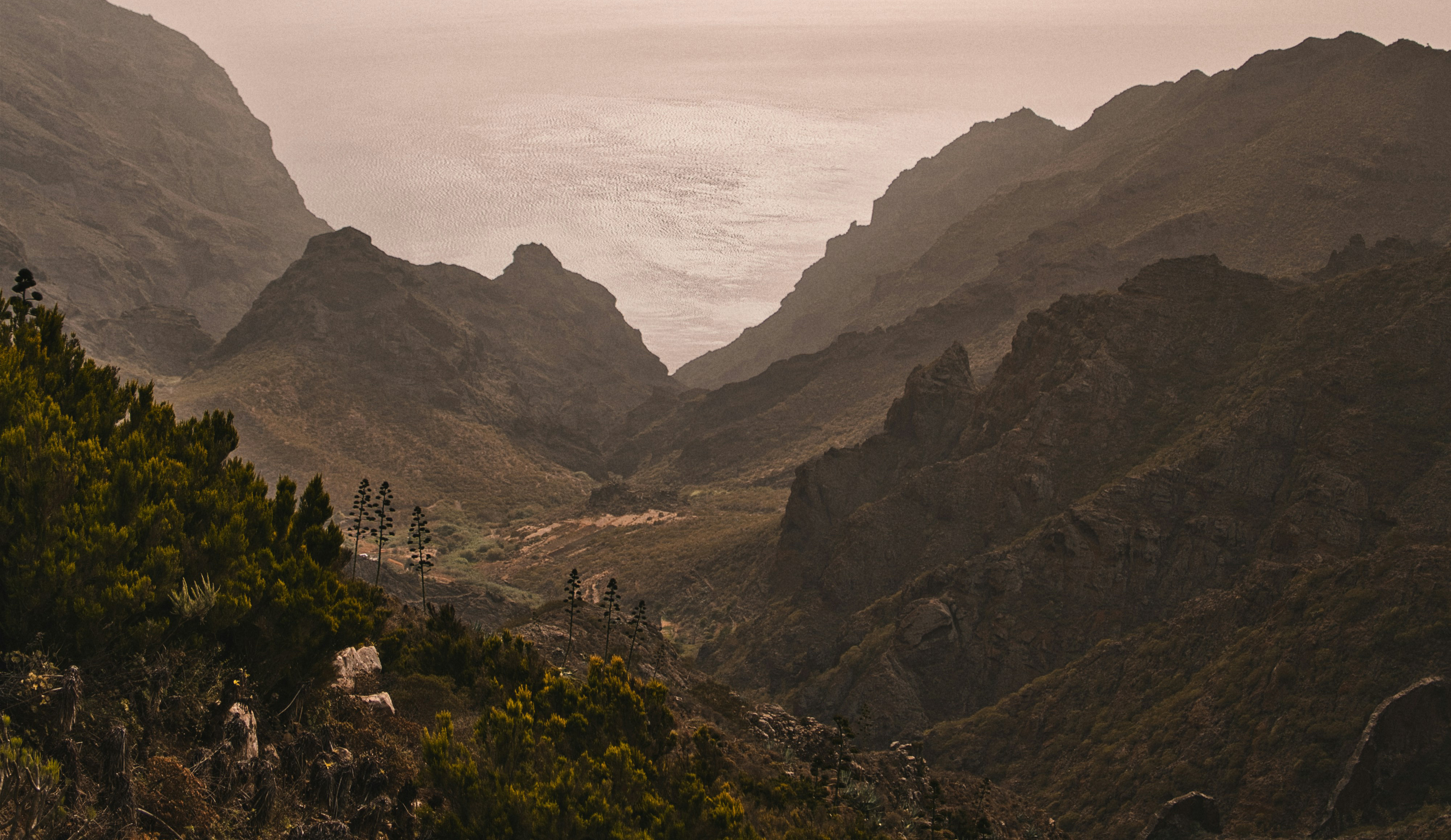
The region is dominated by the volcanic Azyrinth mountains, steep spine of the Dog's Head Peninsula. Much of this land is extremely rugged and there are peaks that rise to over 2000 meters, though there are no known plateaus suitable for building at that elevation.
Climate
Gomi lies near the Tropic of Cancer and its climate is hot semi-arid (Köppen BSh). Elevation moderates the heat somewhat, especially at night.
Rainfall occurs mainly in the summer months.
Natural Resources
The chief natural resources of the region are copper, sheep and goats, and abundant fish from the tropical seas to the south.
The people of Gomi have practiced terraced farming from time immemorial. Along the south slopes of the mountains, they collect and store rainwater for irrigation. Much farther inland, on the dry north slopes of the mountains, water is drilled from aquifers, extracted from the hearts of the mountains.
In the microclimates of the Azyrinth mountains, unique crops grow. The lionsblood tree, prized for its fragrant orange wood and clusters of tuberous red flowers, grows at the highest elevations, as do wild coffee and the savory herb mazuri, though none of these are as abundant as they once were.
Return to DISCOVER PENTO
Founding date: 270 UC
Walled city area: 0.9 sq mi
Walled city population: 30,000
Walled city elevation: 3,290 ft
Demonym: Gominda
Provincial land area: 460 sq mi

Comments