
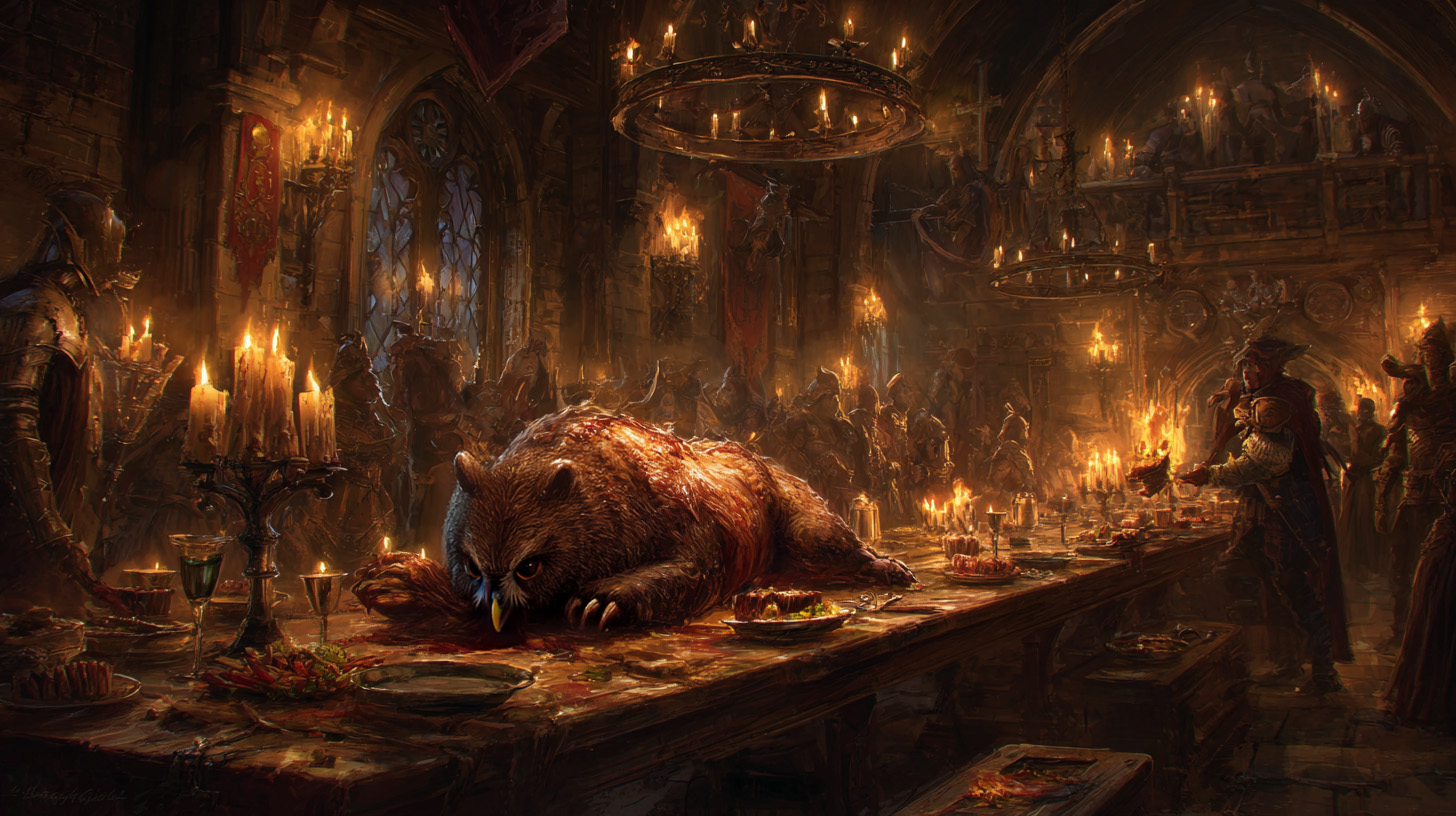
Foods of Faerûn
Food in the Forgotten Realms is as varied as its peoples. Some meals are humble staples, eaten across many regions, while others are delicacies tied to culture, wealth, and geography. Below is a regional guide you can expand upon.
Common Staples Across Faerûn
Though each region has its own culinary identity, centuries of trade and conquest have carried certain foods far beyond their origins. The result is a shared Realmswide pantry—dishes and ingredients so common that even the poorest farmsteads recognize them.
- Chultan Addictions: Coffee and cocoa, once luxuries of Port Nyanzaru, have become near-universal. Even dockworkers in the North sip bitter jungle brews in the morning, while nobles demand elaborate spiced chocolates at their feasts. Chultan peppers and spices now flavor kitchens as far away as Cormyr and the Moonshaes.
- Amnian Influence: Baked pastries—flaky, honey-drenched, or almond-filled—spread outward with Amnian merchants. To this day, a tray of “Amnish pastries” is shorthand for sophistication at any banquet. Amnish wines, too, are found in cellars across Faerûn, rivaling Cormyrean brandy in prestige.
- Underdark Prestige: Rothé meat, once considered the plain fare of deep caverns, is raised aboveground on grains to create a milder, richer cut. Nobles tout it as “exotic,” much as Waterdhavian lords boast of wagyu-style cattle, even though it is no stranger than beef. Serving rothé has become a subtle way for hosts to flaunt wealth and “cosmopolitan taste.”
- Universal Grains: Barley, oats, and rye remain everyday staples, but maize from Maztica has become increasingly common in tavern fare. Simple griddlecakes or maize porridges are now eaten from Luskan to Calimport.
- Sea Bounty: Salted cod, herring, and shellfish are as close to a universal food as Faerûn allows. Coastal cities live on them, and even inland markets find barrels of dried fish arriving by caravan.
- Everyday Drinks: Ale is drunk daily by laborers and farmers, while wine—whether Amnian, Cormyrean, or Sembian—remains the drink of nobles. Coffee and chocolate, however, are quickly eroding that divide, their demand crossing class and coin alike.
Waterdeep
Waterdeep’s food has always been hearty and practical, rooted in its cold northern climate and seafaring traditions. Salted cod, oat porridges, stewed mutton, and dark rye breads once defined the city’s diet. But in recent centuries, trade with Chult and the southern lands transformed Waterdhavian cuisine. Spices, peppers, cocoa, and tropical fruits flooded its markets, changing not just noble tables but the appetites of the common folk. Today, even dockworkers expect their fish stews to come with a side of spiced plantains, and taverns compete over who can serve the hottest peppered eel.
This fusion— Northern staples invigorated with Chultan heat and flavor—defines Waterdeep’s identity. The city’s cooks are known for experimentation: mushroom pies seasoned with cinnamon and clove, seafood chowders thickened with cassava, and roasted boar glazed with molasses and pepper. Nobles still cling to imported wines and elaborate banquets, but it is the food of the streets and docks that carries the city’s true voice: a rich, spicy, working-class fusion born of trade.
Beneath the city, Skullport feeds a different hunger. Inns and eateries tucked into its shadowed alleys serve dishes more at home in Menzoberranzan: zurkhwood bread, spiced insect skewers, and rothé stews. To locals, they are oddities, but to exiles and spies they are reminders of home. Savvy Watch agents know this well—a taste for rothé cheese in the wrong tavern might mark someone as more than they seem.
Common Fare:
- Peppered eel stew with cassava bread.
- Fried fish with spiced plantains.
- Mushroom and meat pies with cloves or cinnamon.
- Dark rye breads and oat porridges, still staples of the poor.
Delicacies:
- Roasted boar glazed with molasses and peppers.
- Exotic fruit tarts made with Chultan mangoes or guava.
- Imported wines paired with spiced seafood banquets.
- Skullport “Underdark plates” featuring rothé stews or insect skewers, rare and risky.
In Waterdeep, even the humblest pie can taste of distant jungles — and sometimes of secrets best left uneaten
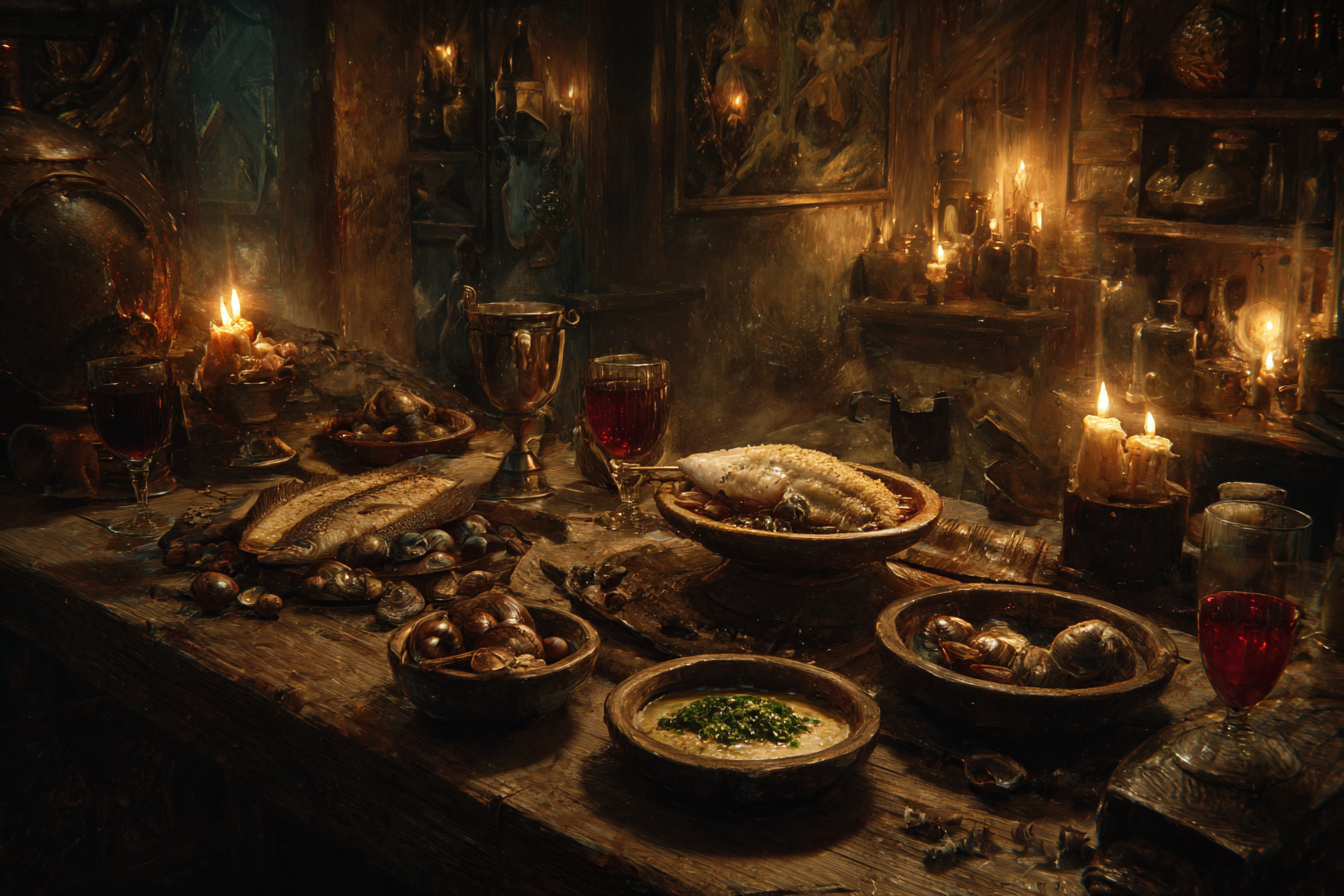
Waterdeep Tavern Food
Neverwinter
Neverwinter’s climate is warmed by the fire beneath Mount Hotenow, giving it longer growing seasons than most northern cities. Its cuisine feels deeply Scandinavian—simple, hearty, and seasonal—but with a touch of the uncanny. The common folk eat smoked fish, rye breads, root vegetables, and thick stews flavored with herbs from sheltered valleys. Fermentation is an art here: pickled herring, sour cabbage, and brined root vegetables keep tables stocked through the harshest winters.
Where Waterdeep is defined by its spice-fueled fusion, Neverwinter prides itself on purity of flavor and preservation of tradition. A cod stew seasoned with dill and juniper, or a roasted carrot drizzled with honey from local hives, speaks to the city’s values: restraint, care, and resilience. Fire-heated greenhouses and volcanic soil even allow for fruits unusual this far north—apples, pears, and berries—though they are treasured more for drying and preserving than fresh indulgence.
On noble tables, however, exotic fare takes center stage. The hunting of displacer beasts is both a mark of status and a dangerous sport. Their meat, rich and sinewy, is prepared like a cross between tiger and escargot—sliced thin, marinated, and served in buttered shells or roasted bone plates, meant to emphasize the strangeness of the kill. Even rarer are dryad-treated fruits, grown in enchanted groves under fey blessing. These apples, pears, and plums are said to sing with flavor and glow faintly when freshly picked—gifts of alliance between grove and court.
Common Fare:
- Smoked cod, herring, and trout with rye bread.
- Root vegetable stews flavored with juniper, dill, or caraway.
- Pickled cabbage, onions, and carrots, stored in clay crocks.
- Berry preserves and honey as prized sweeteners.
Delicacies:
- Displacer beast prepared in escargot-like fashion, roasted in shells or marinated in butter.
- Dryad-treated fruits—enchanted apples, pears, and plums—reserved for gifts and banquets.
- Greenhouse-raised pears poached in honeyed mead.
- Hearty meads and berry wines brewed for long feasts.
Neverwinter’s table is set with smoke and stone, but its fruits are warmed by fire and touched by the fey
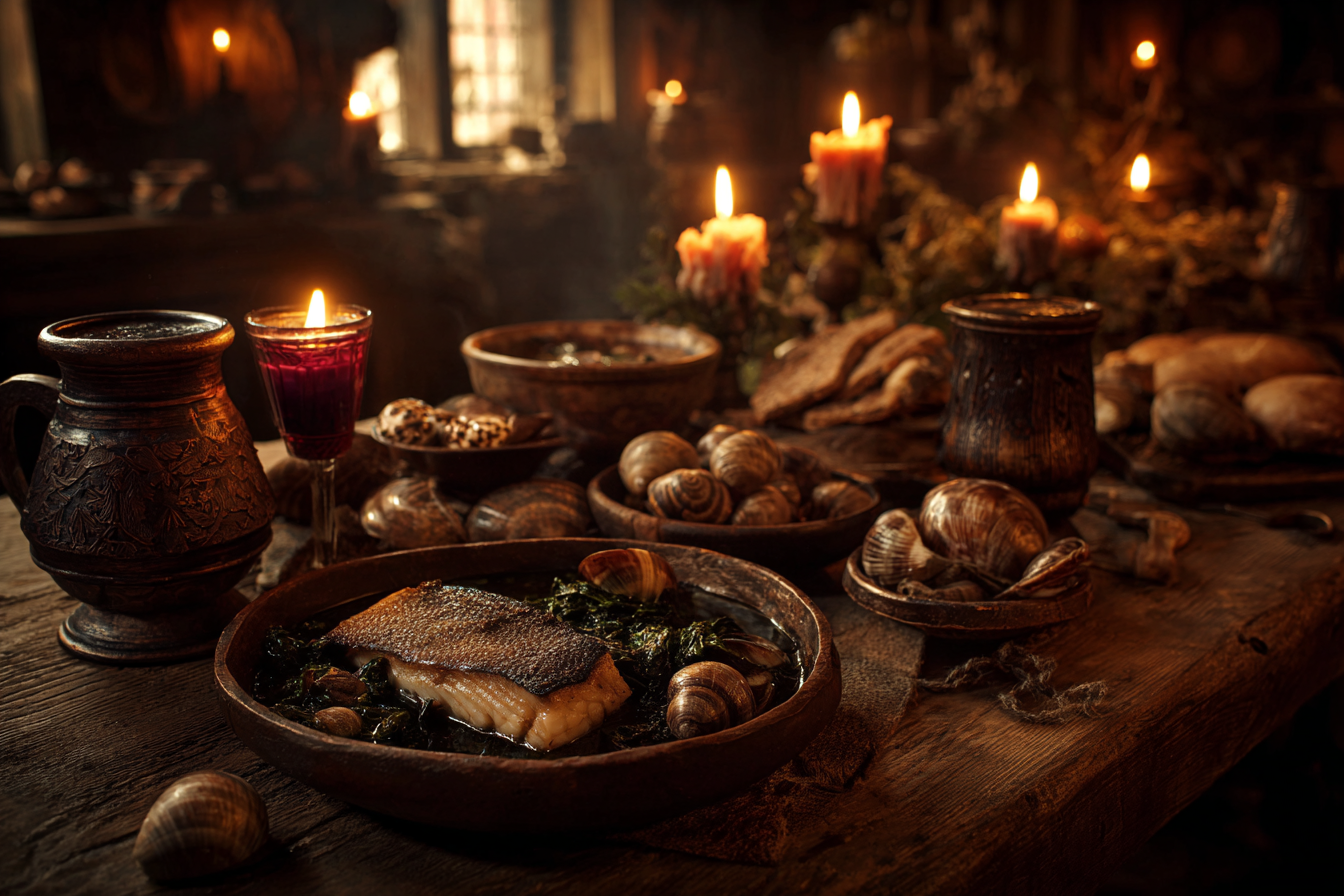
Neverwinter Tavern Food
Cormyr
Cormyr’s food reflects both its deep forests and fertile farmlands as well as its position on the Sea of Fallen Stars. On the surface, it is a land of venison, boar, and pheasant, roasted over open flames and paired with dark ales and brandies. Bread is thick and rye-heavy, often eaten with sharp cheeses or sour cherry preserves. Root vegetables, cabbages, and mushrooms are staples, especially in the highlands.
Yet Cormyr is also a seafaring kingdom, and the coast brings in whitefish chowders, mussels, and squid that make their way into tavern fare. From across the sea and overland trade routes flow exotic flavors: saffron and cardamom from the Shining South, chickpeas and sesame from the east, olives and citrus from the Turmish coast. Over time, these ingredients have become woven into Cormyrean kitchens—spiced lamb skewers sold on city streets, honey-drenched pastries at noble banquets, and strong coffee served in the morning alongside heavy rye bread.
The nobility in Suzail and Arabel prize refined banquets that blend these influences. A single feast might serve roasted venison with sour cherry sauce, followed by saffron rice with mussels, and end with almond-filled pastries dripping in honey. Wines and brandies are points of pride, often gifted abroad as symbols of Cormyr’s refinement, while the common folk cling more closely to their alehouses and hearty stews.
Common Fare:
- Venison, boar, pheasant, and game stews.
- Rye and barley breads with cheese or cherry jam.
- Whitefish chowders and mussels from the coast.
- Chickpea stews and grilled lamb skewers, adapted from southern trade.
Delicacies:
- Roasted venison in sour cherry sauce, a noble favorite.
- Almond and honey pastries served at courtly banquets.
- Saffron rice with mussels or squid, rare but fashionable among nobles.
- Cormyrean brandy and deep red wines, exported across the Realms.
Ale fills the belly, brandy fills the heart — but only venison fills the table.
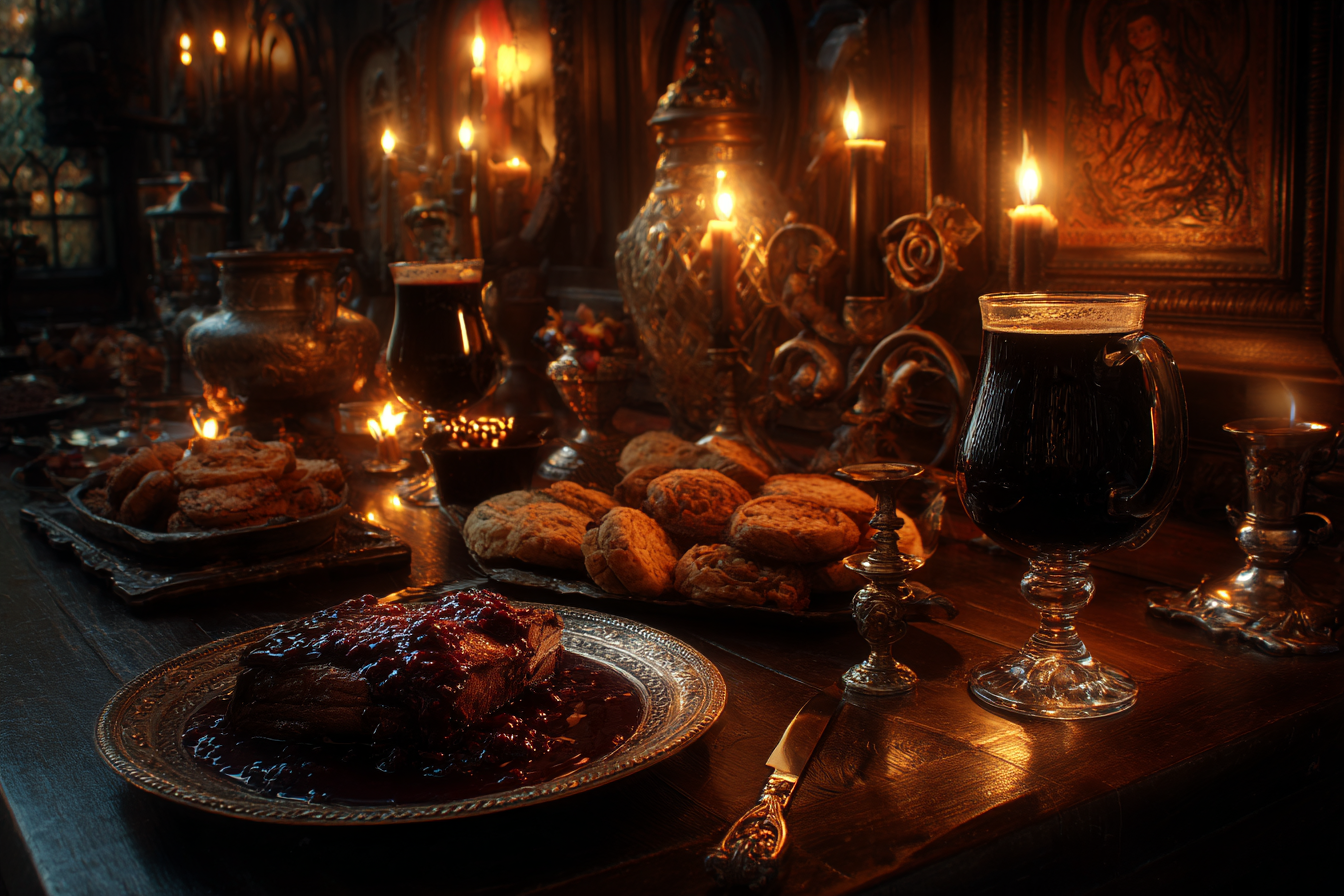
Suzail Feast Plate
Chult
Chult is the origin of many of Faerûn’s peppers and other primeval crops, and its food culture reflects this bounty. Nearly every dish is rich in spice: meals are either covered in chiles or accompanied by bowls of salsa-like sauces for dipping or tempering the heat. The jungle’s abundance also means caffeine and cocoa are everyday ingredients, not luxuries—locals brew strong, bitter drinks to keep alert, and use cacao in complex savory sauces rather than sweets. Chocolate in Chult is rarely eaten with sugar; instead, it enriches hearty stews and gamey meats, while fruits like mango, guava, and papaya serve as the natural source of sweetness at the table.
Cooking methods lean toward fire and clay rather than large stone ovens: clay pots, earthen pits, and flat griddles are common, producing breads and cakes that differ greatly from the leavened loaves of the North. Expect thick maize flatbreads, cassava cakes, and roasted tubers served alongside pepper-heavy curries or mole-like sauces. Chultan dining is a sensory experience: smoky, spicy, and rich, with bright fruit to cleanse the tongue.
Common Fare:
- Cassava flatbreads, maize griddlecakes, and roasted plantains.
- Stews of tropical birds, giant lizards, or jungle boar, thickened with ground seeds and nuts.
- Fresh fruits (mango, papaya, guava, lime) served at nearly every meal.
Delicacies:
- Dinosaur roasts, with nobles favoring large herbivores for tender cuts. Hunts for predators such as velociraptors or young tyrannosaurs are more a matter of prestige than taste — their meat is tough, oily, and disliked by most common folk.
- Pepper-heavy curries and mole-style sauces blending cacao, nuts, and dozens of spices.
- Bitter jungle brews made from roasted beans: one resembles coffee, the other a strong cacao drink whipped to a froth.
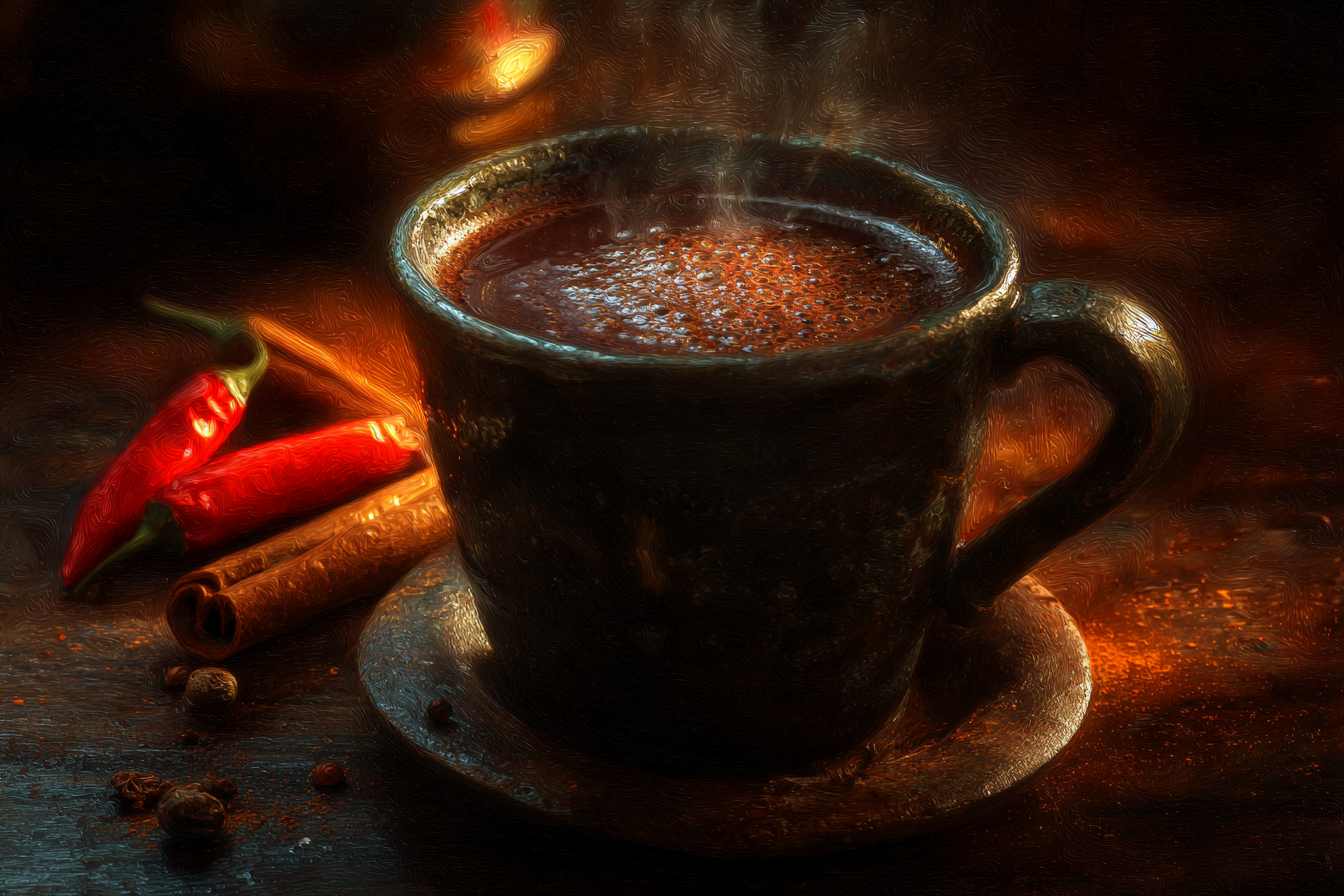
Chultan Firebrew
Leilon
Leilon sits between Neverwinter and Waterdeep, a small but stubborn settlement clinging to the coast. Its food reflects that borderland character: practical, hearty, and shaped more by necessity than by fashion. The Mere of Dead Men makes farming treacherous — fields are limited, and crops are often stunted by poor soil or spoiled by blight. What farmland survives produces rye, barley, and hardy root vegetables, but these staples are costly compared to the plentiful bounty of forest and sea.
Hunting is central to Leilon’s table. The surrounding forests provide venison, wild boar, and game birds, often preserved in smokehouses for lean months. The coast provides more still: cod, herring, mussels, and crabs are staples, cooked into chowders and fried into simple cakes. Sailors and fishers alike live on oatcakes, dried fish, and sour beer—the kind of food that can be carried on long voyages or into the field.
Imports from Neverwinter and Waterdeep occasionally make their way into Leilon’s taverns, though rarely in abundance. A keg of berry wine from the north, a shipment of Chultan peppers from the south, or a wheel of goat cheese from the Moonshaes might arrive in port—and vanish in days as inns compete to serve the exotic flavor. More often, Leilon’s meals are defined by salt, smoke, and the sea: survival food that has its own kind of pride.
Common Fare:
- Chowders of cod, herring, or shellfish.
- Venison or boar roasted over open fires.
- Rye and oat breads with smoked fish.
- Simple berry preserves, when trade or harvest allows.
Delicacies:
- Forest game prepared with Chultan pepper or imported honey.
- Crab pies, sold only on festival days.
- Imported berry wines or pepper sauces, rare and expensive.
- Salted fish smoked with aromatic forest woods, traded north and south.
In Leilon, the sea fills our nets, the forest fills our pots, and the Mere takes the rest.
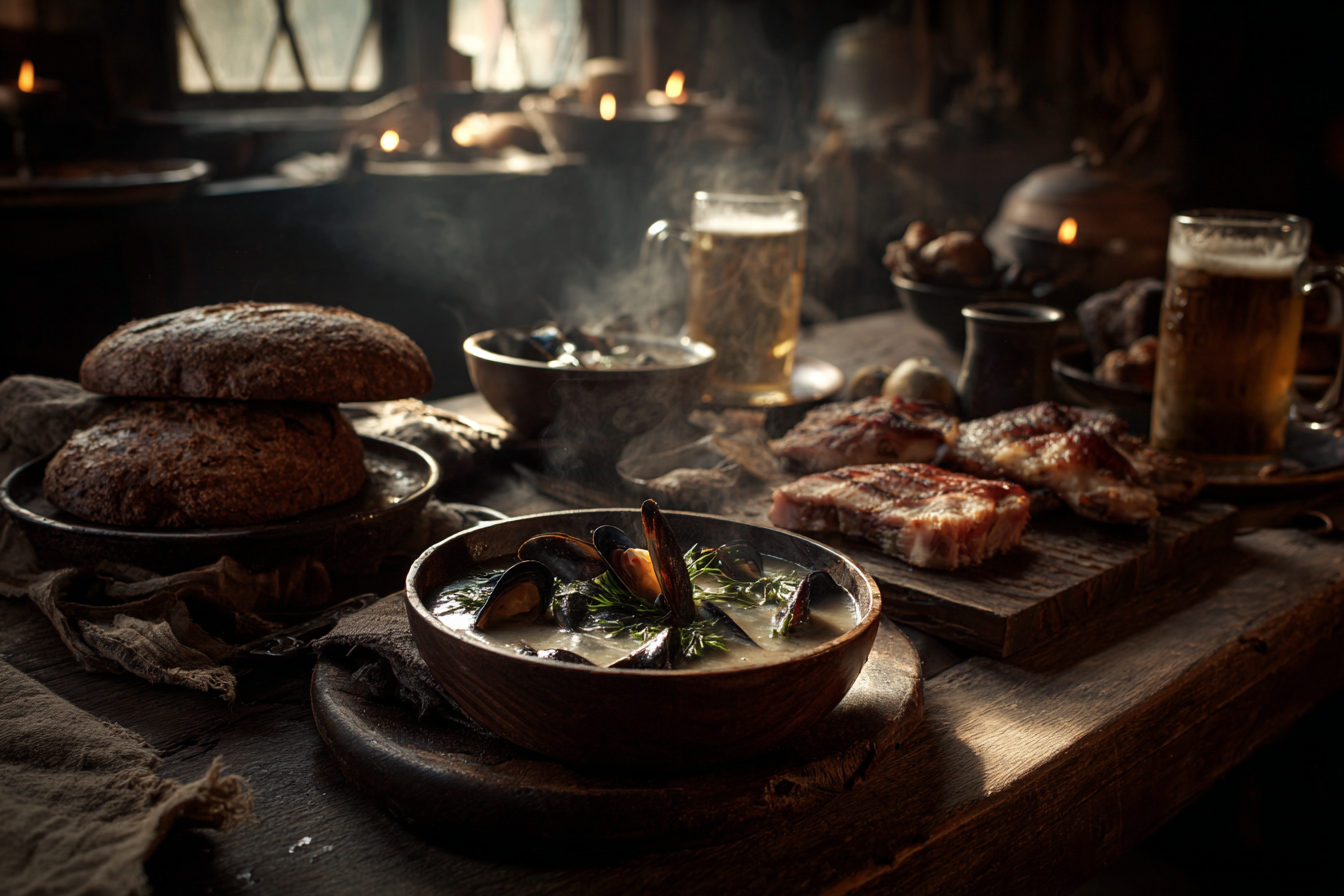
Leilon Surf and Hearth
Moonshae Isles
The Moonshaes are cold, damp, and windswept, and their food reflects a life spent battling the sea and the rocky soil. Meals are heavy, nourishing, and simple, built on salted fish, smoked meats, oats, and root vegetables that withstand the climate. Bread is most often oatcakes or dense barley loaves, served with tangy goat cheese or a smear of seaweed butter. Preserving food for long winters is a necessity—smoking, salting, and pickling are as much a part of the cuisine as the cooking itself.
Noble feasts in the Moonshaes are another matter. With griffons nesting on cliffsides and herds of hippogriffs patrolling the skies, the hunt is a noble’s glory. Their meat, rare and difficult to acquire, finds its way onto high tables where it is treated like venison or exotic fowl—lean, gamey, and often roasted with strong herbs. Owlbear stews are said to be so rich that even a small portion can sate a warrior for hours. Nobles pair such dishes with spiced mead or berry wines, and often lace their courses with local herbs: some mildly euphoric, others believed to reveal truth or banish lies.
Everyday folk stick closer to the sea: herring, cod, mussels, and limpets boiled with onions, leeks, or kelp. Thick stews, flavored with wild herbs like sorrel and meadowsweet, are the backbone of island cooking. Mead and honey beer flow freely, while milk from hardy goats is churned into strong, crumbly cheeses.
Common Fare:
- Oatcakes, barley loaves, and smoked fish.
- Goat cheese and seaweed butter.
- Mussel stews with leeks and kelp.
- Mead, honey beer, and sour berry cordials.
Delicacies:
- Roasted hippogriff, rich and slightly sweet, prized for feasts.
- Griffon or owlbear stews, slow-cooked with root vegetables and herbs.
- Mead infused with hallucinogenic or truth-inducing herbs, drunk ritually in some isles.
- Rare seaweed-wrapped lamb roasts, a festival specialty.
To eat as a commoner of the Moonshaes is to taste the sea. To eat as a noble is to taste its monsters.
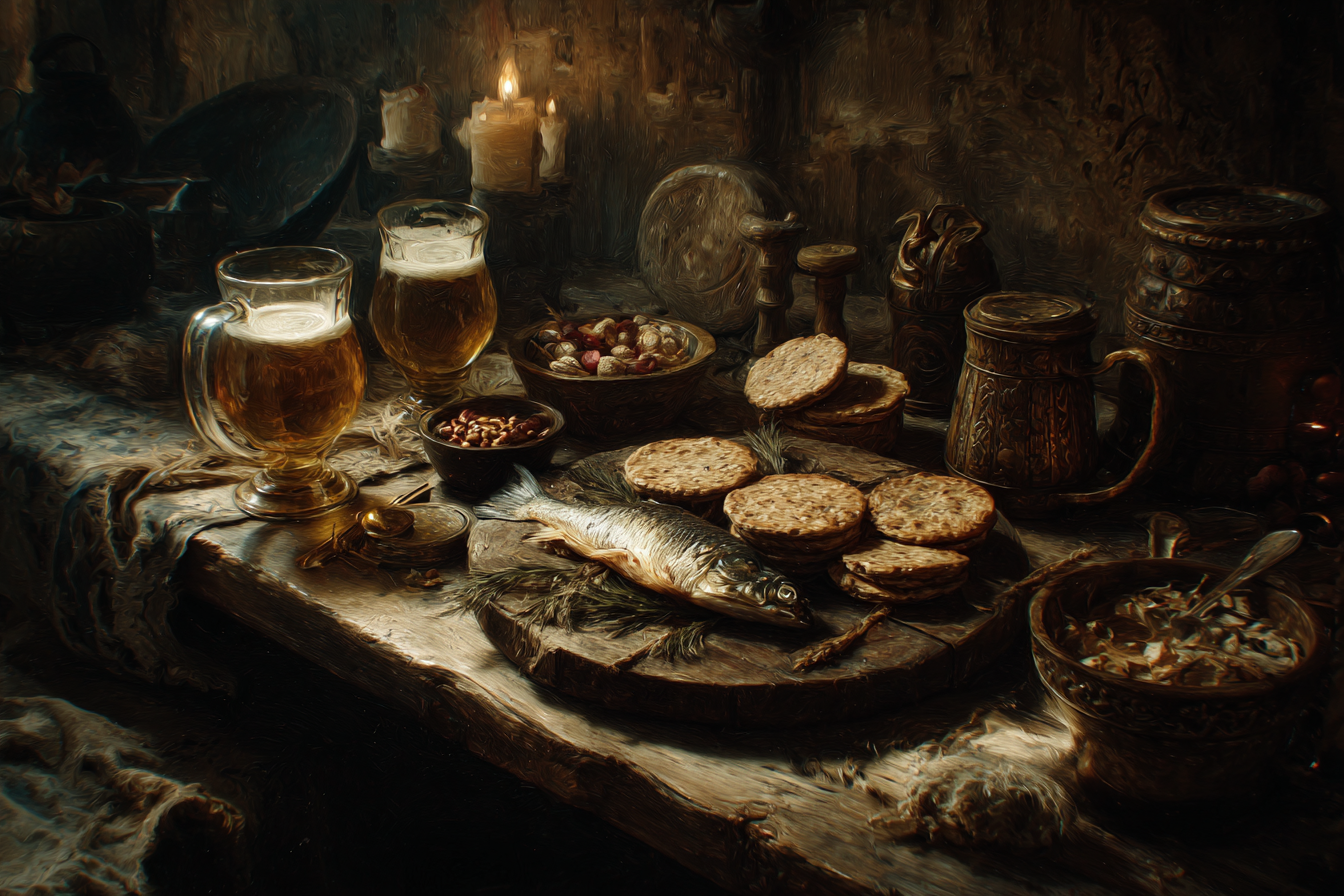
Moonshae Fisher’s Supper
Selgaunt (Sembia)
Selgaunt’s dining tables glitter with the same wealth and excess as its merchant houses. Located on the Sea of Fallen Stars and controlling some of Faerûn’s busiest trade routes, Selgaunt imports ingredients from every corner of the world and transforms them into sophisticated cuisine. Where Cormyr might roast venison with sour cherries, Selgaunt’s chefs will serve a saffron risotto crowned with lobster-like crustaceans or an octopus stew simmered in Amnian wine. Meals here are not simply to nourish—they are displays of power and prestige.
Seafood dominates the cuisine. Traders and nobles alike dine on delicate shellfish, giant octopus braised in herbs, and even the rare flesh of dragon turtles when hunting is successful. Freshwater fish and river eels are common on the tables of the less wealthy, while the nobility turn to fantastical substitutions: hippogriff cutlets treated as veal, griffon wings fried crisp, and wyvern marrow baked into savory pies.
Wine culture in Selgaunt is a matter of pride—Sembian wines are exported across the Realms, and a noble’s cellar is a sign of both wealth and taste. Long trading voyages also demand durable fare, so preserved foods are a tradition: spiced pickles, salted meats, dried fruits, and pressed seed cakes that last months at sea. Even these “simple” foods are crafted with elegance and seasoning, proof that Selgaunt can turn necessity into sophistication.
Common Fare:
- River eel stews thickened with barley.
- Flatbreads with pickled vegetables and spiced cheese.
- Salted meats and pressed seed cakes made for voyages.
- Local grain porridges, often dressed with imported spices.
Delicacies:
- Seafood risottos with giant shrimp, lobster, or octopus.
- Hippogriff cutlets prepared like veal scaloppini.
- Roasted griffon or wyvern marrow pies, rare and expensive.
- Dragon turtle steaks, a trophy dish of extreme luxury.
- Sembian wines, ranging from crisp whites to rich, dark reds.
In Selgaunt, a dinner is not eaten — it is staged. The audience leaves full, but the hosts leave victorious
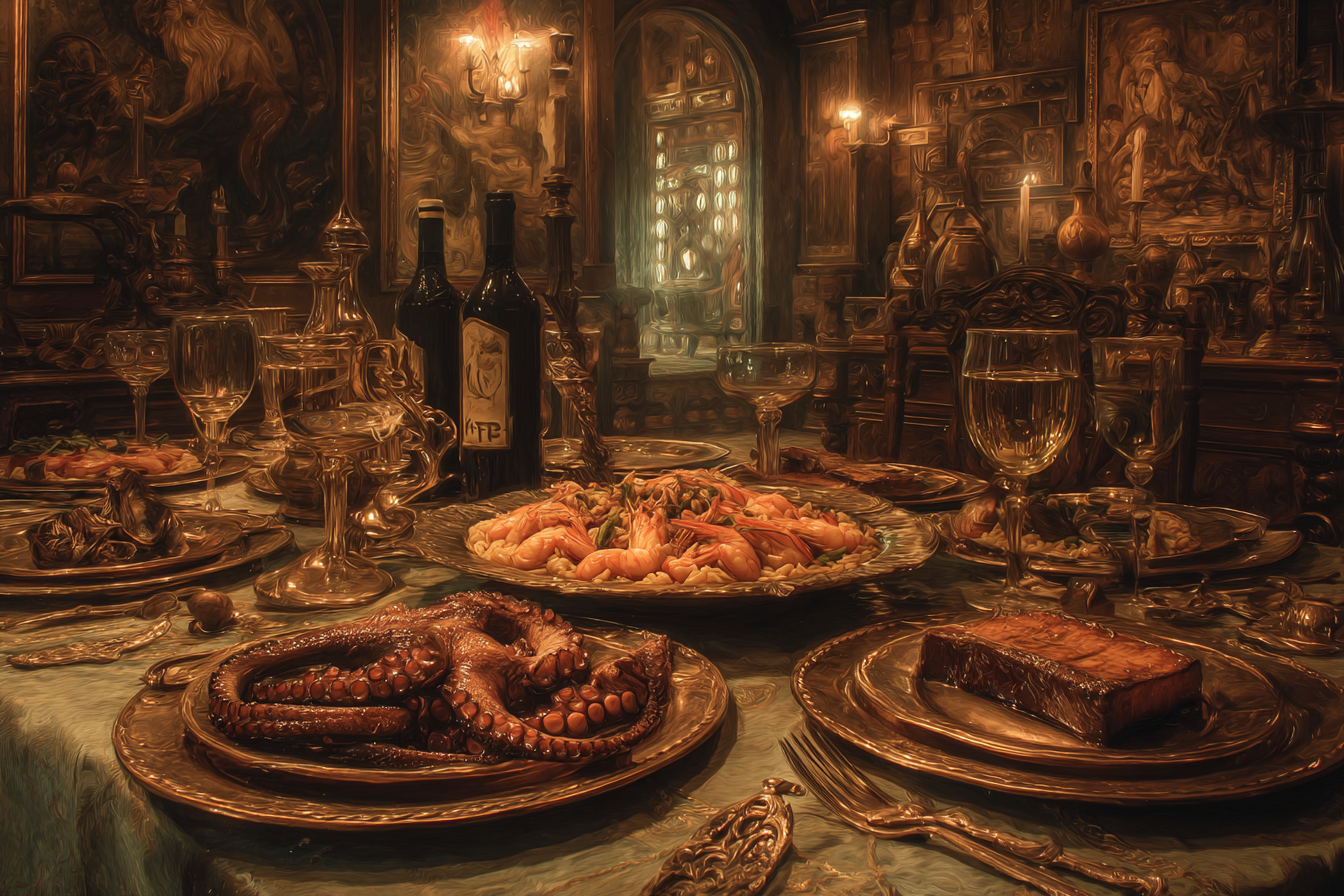
Selgaunt Merchant’s Banquet
Nyelath’s Grace (Sea Elf Colony)
Dining in Nyelath’s Grace is unlike eating anywhere else in Faerûn. To sea elves, food is both sustenance and an extension of their artistry — prepared with reverence for the ocean and presented with a sophistication that would seem like alchemy to most surface dwellers. The colony’s kelp forests are cultivated like underwater orchards, providing both staple food and raw material for inventive cooking. Sea grapes and other marine “fruits” are treated like berries, often fermented into wines or pressed into jellies.
Surface fruits, grown in magical air bubbles, are among the colony’s most precious delicacies. A single apple might be sliced into translucent ribbons, marinated in sea-salt brine, and presented with coral-powder garnish as though it were treasure. Guests are expected to understand the significance of being offered such foods — they are both gifts and symbols of trust.
The marine diet itself is diverse and highly sophisticated. Fish is eaten in countless preparations: raw sashimi-style cuts served with kelp vinegars, fillets smoked over underwater thermal vents, or fermented in sea salt for months to develop flavors. Seal and whale meat are honored foods, every part used respectfully, with specific cuts reserved for ceremonies. Shellfish, meanwhile, form the daily staple — mussels, sea snails, and urchins prepared not as garnish but as central components of meals.
Whale milk, when gathered from trusted leviathans, is churned into a tangy cream that surfaces might mistake for cheese. Combined with seaweed flours and mineral powders, it forms airy foams, translucent sheets, or delicate pearls of flavor — culinary feats that evoke surface-world molecular gastronomy but are simply an extension of elven patience and magic.
Common Fare:
- Shellfish stews thickened with kelp starch.
- Fermented fish served with sea grape salad.
- Whale-milk cheese with smoked mussels.
Delicacies:
- Sashimi of deep-sea fish, accented with coral-dust seasoning.
- Seal prepared in ceremonial cuts, often with fermented kelp sauce.
- Surface fruits sliced and transformed into shimmering, jewel-like presentations.
- Seaweed pearls and foams crafted with arcane culinary techniques.
To taste the sea as the elves do is to learn it has more flavors than the tongue has words

Pearls of the Mythal
Skullport
Skullport, the “Port of Shadows,” festers beneath Waterdeep like a hungry stomach. Its food is as lawless as its streets—eclectic, unsettling, and often forbidden. With no true farmland of its own, the city relies on smuggling, theft, and trade with Underdark and surface alike. A market stall might offer dried mushrooms next to Chultan spices, salted rothé beside surface beef, or a pie stuffed with something you’d rather not identify.
Unlike Menzoberranzan, where taboo dining is the hidden indulgence of nobles, in Skullport those same taboos fill common bowls. Myconid flesh is carved and fried like cheap cutlets. Kobold tails and deep gnome “potted meat” appear in alleyside stews. Some of these dishes are practical—protein is protein, and hunger knows no law—but others are indulgent displays of Skullport’s cynicism: to eat the thinking and the strange is to prove one belongs here.
The influence of the sea is unavoidable. Salted fish, octopus stews, and clam chowders are staples, flavored with cheap pepper or smuggled spices. Street vendors roast skewers of grubs and sell mugs of fermented mushroom beer. Nobles and crime lords go further: dragon turtle steaks, intellect devourer brains, even the occasional displacer beast carcass bought from adventurers. Food here is a language of power — eat what others fear, and show the shadows you are unafraid.
Common Fare:
- Fried myconid cutlets and zurkhwood flatbread.
- Stews of salted rothé, kobold tails, or mystery meats.
- Octopus chowder with smuggled spices.
- Fermented mushroom beer and cheap brandy knock-offs.
Delicacies:
- Dragon turtle steaks, roasted over driftwood fires.
- Intellect devourer brains, fried crisp and served with pepper oil.
- Surface wines poured over Underdark insect dishes.
- Displacer beast haunches, smuggled from Neverwinter hunts.
In Skullport, you don’t ask what’s on your plate. You eat it — or you might end up on the menu.
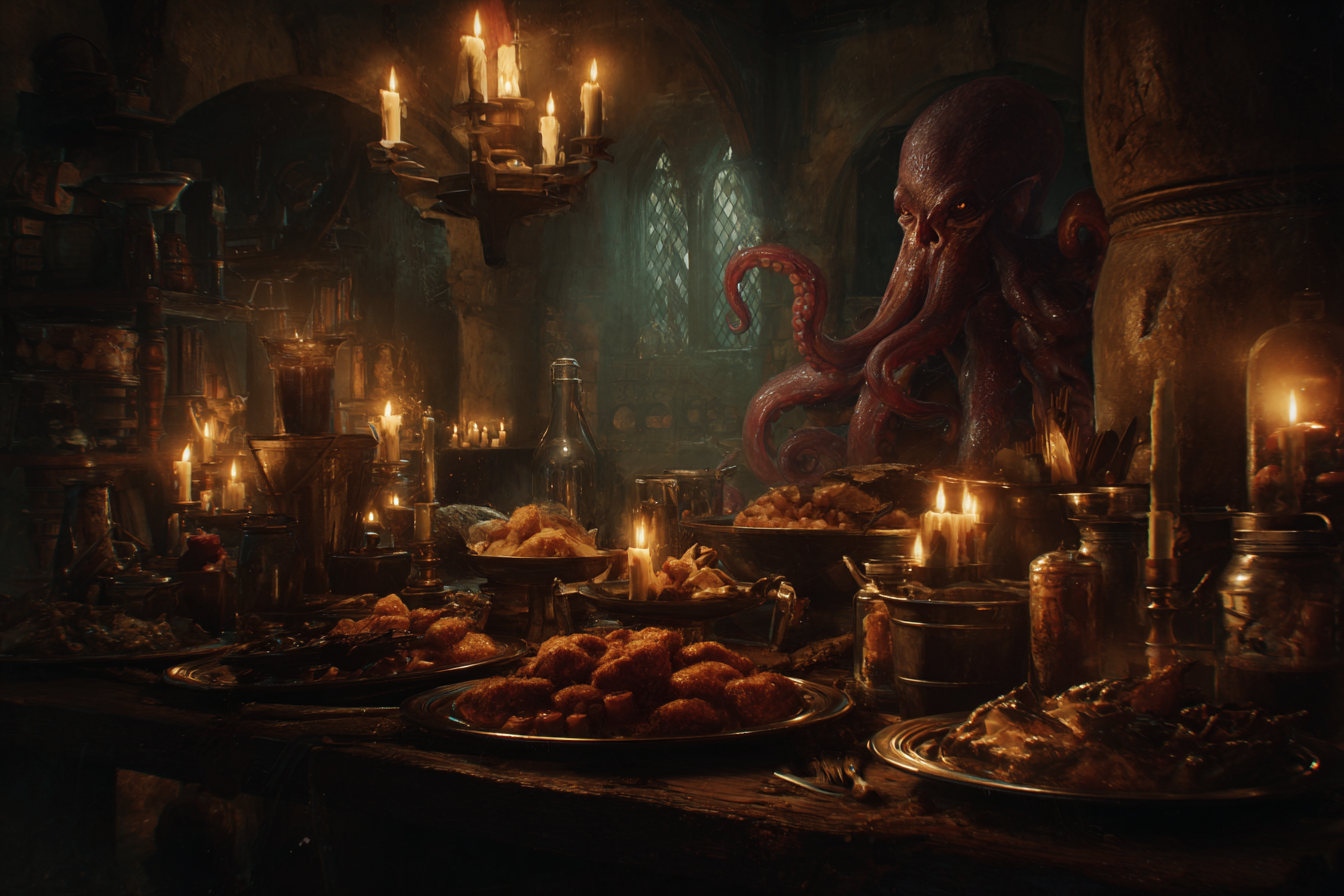
Skullport Shadow Banquet
Menzoberranzan
Menzoberranzan is a city without sunlight, and its food culture reflects that reality. Grains and surface fruits are absent, replaced by the vast bounty of the Underdark. Zurkhwood mushrooms grow to the size of trees and are ground into flour for dense, spongy breads. Other fungi—edible or alchemically treated to become edible—provide everything from soups and stews to sweetened cakes flavored with spore honey. Rothé herds supply milk, cheese, and meat, their musk-heavy flavor considered an acquired taste but central to drow sustenance.
The Darklake, an immense underground body of water, sustains fishing fleets that bring in blind cave fish, albino eels, and strange crustaceans. Salted and dried, they make their way into nearly every household. Insects, both farmed and hunted, form another major protein source: crickets roasted with Underdark herbs, centipedes stewed in rich broths, and spiced beetle larvae considered a delicacy when stuffed and fried.
Trade and conquest keep the noble tables varied. Merchant houses import surface luxuries at staggering prices—wines, spices, rare fruits—both to flaunt wealth and to remind rivals that their reach extends aboveground. Among the most unsettling of noble indulgences are feasts featuring intelligent Underdark beings: myconid flesh roasted and seasoned, or intellect devourer brains fried in oil. Such dishes are whispered of rather than openly admitted, reinforcing the drow reputation for cruelty cloaked in refinement.
Common Fare:
- Zurkhwood mushroom bread and spore cakes.
- Rothé meat stews and sharp goatlike cheeses.
- Blind cave fish, albino eels, and salted crayfish from the Darklake.
- Roasted insects seasoned with ground fungi and herbs.
Delicacies:
- Stuffed beetle larvae fried in rothé fat.
- Spiced giant centipede stews.
- Imported surface wines, fruits, and exotic spices—consumed ostentatiously.
- Whispered feasts of myconid flesh or other taboo creatures, reserved for noble banquets.
To dine in Menzoberranzan is to taste the Underdark itself — rich, strange, and always touched with danger.
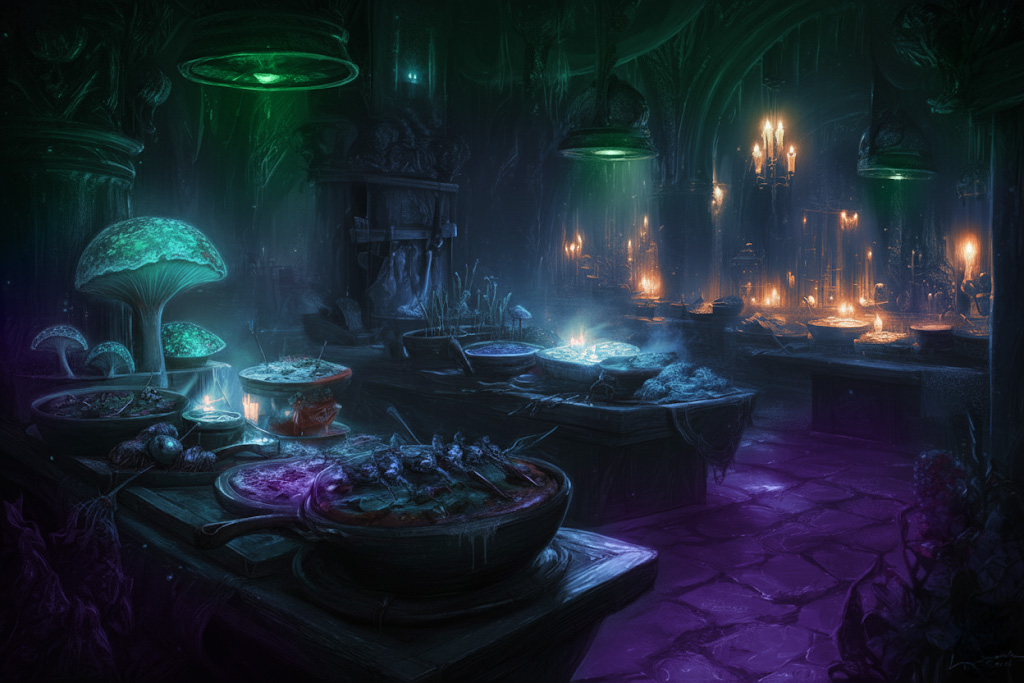
Feast of the Spider Queen
Sources
- Volo’s Guide to Waterdeep
- Volo’s Guide to Cormyr
- City of Splendors: Waterdeep
- Elminster’s Forgotten Realms
- Menzoberranzan: City of Intrigue
- Forgotten Realms novels and Dragon Magazine Realmslore
The Price of a Meal in Faerûn
Food and drink are more than sustenance — they shape moods, forge bonds, and open doors. The following costs are broad guidelines, with quality and availability varying by region.
Common Prices
- Poor Meal (1–3 cp): Gruel, crusts of bread, salted fish, weak ale.
- Modest Meal (1–2 sp): Stew with bread, cheese, smoked fish, or a simple roast.
- Comfortable Meal (3–6 sp): Multiple courses, spiced dishes, fresh fruits, good ale or wine.
- Expensive Meal (1–2 gp): Noble tables, imported wine, exotic spices, rare meats.
- Extravagant Feast (10+ gp): Dragon turtle steak in Selgaunt, displacer beast hunts in Neverwinter, noble banquets in Cormyr.
Optional DM Rule
- Eating Well: A day of comfortable or better meals may grant Inspiration or a “Well Fed” condition (advantage on one saving throw, or temporary hit points at the DM’s discretion).
- Eating Poorly: A day of poor meals may impose disadvantage on Constitution checks or exhaustion saves until a proper meal is taken.
- Narrative Flavor: Expensive meals don’t always yield better contacts — they simply open different doors. Nobles, merchants, and diplomats dine richly, while sailors, hunters, and smugglers break bread in humble taverns. The kind of information gained often depends more on where you’re eating than how much you’re paying.
Coin buys your supper, but the company buys your fate.”

Comments