
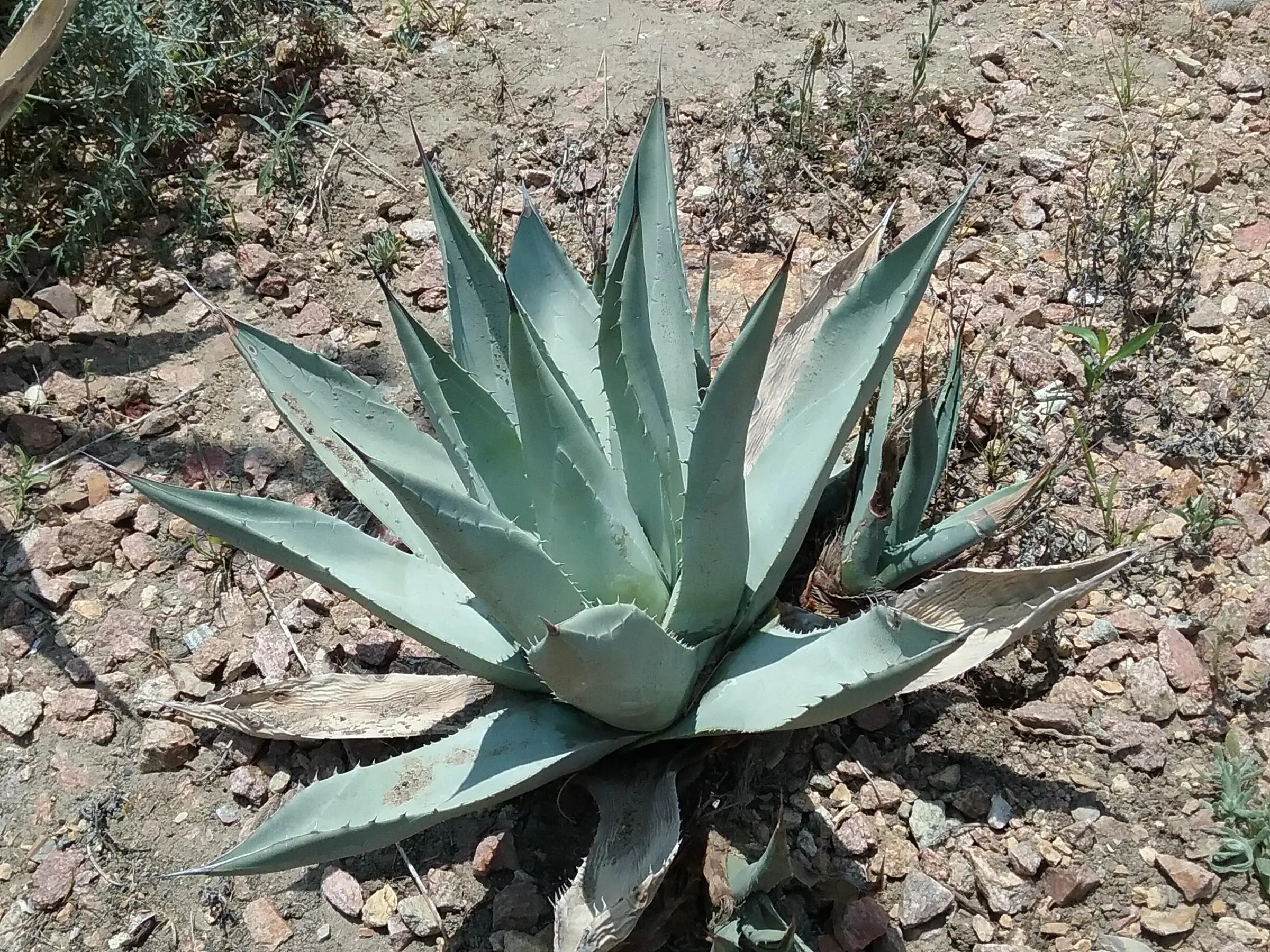
Agave
In the Death Valley region, agave is not just a plant; it is a cornerstone of survival for the Saltfolk, a multi-purpose resource that provides food, fibre, and even tools. Its role is so crucial that the Saltfolk's calendar revolves around its harvest.
The primary species are Desert Agave (Agave deserti) and Utah Agave (Agave utahensis), found on the rocky, well-drained slopes and canyons at mid-elevations—well above The Badwater Basin floor. Utilizing agave is a labour-intensive, communal effort, but the payoff in calories and materials make it one of the most valuable resources in the desert.
Food Source
The single most important part of the agave for food is its heart, or "piña." This dense core, hidden at the base of the spiky leaves, is a massive store of carbohydrates. However, it's inedible raw due to caustic saponins and complex carbohydrates (inulin). The key to unlocking its nutritional value is a multi-day pit-roasting process.
The Harvest and Roasting Process
The harvest timing is critical. Saltfolk need to identify plants that are mature but have not yet begun to send up their flowering stalk (quiote). Once the plant begins to flower, it uses up all the sugars stored in its heart, leaving it withered and useless for food. This creates a seasonal, late winter/early spring harvesting window.
Harvesting the heart is brutal work. It requires heavy-duty tools (like sharpened stone axes or salvaged metal) to chop off the formidable, spiky leaves, exposing the pineapple-like heart which can weigh anywhere from 10 to 50+ pounds.
A large pit, about 3-4 feet deep and several feet across is dug. A massive bonfire is built in the pit to heat a layer of rocks that are placed at the bottom until they are glowing hot. The agave hearts are placed on the hot rocks, then covered with a thick layer of moist green vegetation (like cattail leaves or damp brush) to create steam. The entire pit is then buried with soil and left to slow-roast for 2-3 days. This long, slow, steaming process breaks down the complex carbohydrates and saponins, converting them into sweet, digestible fructose.
The resulting product is a dark, syrupy, fibrous, and incredibly sweet food. It's calorie-dense and rich in nutrients. It is eaten immediately or processed for long-term storage by pounding it into thin sheets and drying it in the sun, creating a stable, transportable food source that lasts for months.
Materials
The long, tough leaves of the agave are a source of some of the strongest natural fibre available to the Saltfolk. This fibre, or sisal, is indispensable.
The process involves soaking the agave leaves (a process called retting) or simply pounding a fresh leaf with a rock to break down the pulp, then scraping the pulp away to release the long, durable fibres within. These fibres are then twisted together to create cordage of varying thicknesses. This rope and string is the building block of other Saltfolk technologies:
- Hunting: Making snares for small game (rabbits, rodents), bowstrings, and netting for catching birds or fish (in the rare places water exists).
- Clothing/Gear: Weaving the fibre to make durable sandals, belts, and bags.
- Tools & Shelter: Lashing together tools (e.g., attaching a stone point to a spear shaft) and binding together materials for constructing simple shelters.
Tools and Other Uses
Beyond food and fibre, nearly every part of the agave is repurposed:
- Needle and Thread: The sharp, black terminal spine on the tip of the agave leaves are snapped off with the leaf fibres still attached, creating a ready-made needle and thread for sewing and repairs.
- Fire: The tall, woody flower stalk, which grows rapidly at the end of the plant's life, is very lightweight and dry. It is an excellent material for the hand drill or bow drill method for fire-making. Its lightweight strength also makes it useful for construction poles in shelters.
- Water: In an absolute emergency, a small amount of liquid called aguamiel or "honey water," can collect in the hollowed-out heart of a freshly cut agave. This would be a precious, if limited, source of hydration.
Additional Information
Geographic Origin and Distribution
The Panamint Range
This would be the most productive and resource-rich area to search for agave groves. It's higher and wetter than the mountain ranges to the east. The slopes and canyons leading up from the valley floor, such as Hanaupah Canyon, Wildrose Canyon, and Surprise Canyon areas have reliable springs (in a relative sense) and the right kind of rocky terrain to support large populations of both Desert Agave (Agave deserti) and Utah Agave (Agave utahensis).
The Amargosa Range
This range includes the Black Mountains and the Funeral Mountains. It's generally drier than the Panamints, but still holds significant agave populations. The canyons cutting into this range, such as Blackwater Canyon and Dante's View Road, take Saltfolk into the necessary elevations to find agave groves. The slopes below Dante's View, for instance, are a known habitat.
The Grapevine Mountains
This area also contains the right elevation and rocky limestone slopes for agave. Vaultmen from the northern part of the region were taught how to harvest and process agave by Sylvia Langford and Milan Langford, and is transported into Espera for trade.

Comments