

Ceres
"A world wrapped in water, walled by money. Every wave hides a vault, every vault holds the future. Ceres is not defended by fleets or armies—it is defended by the fact that no one dares to imagine what happens if it falls."
World of Oceans and Vaults
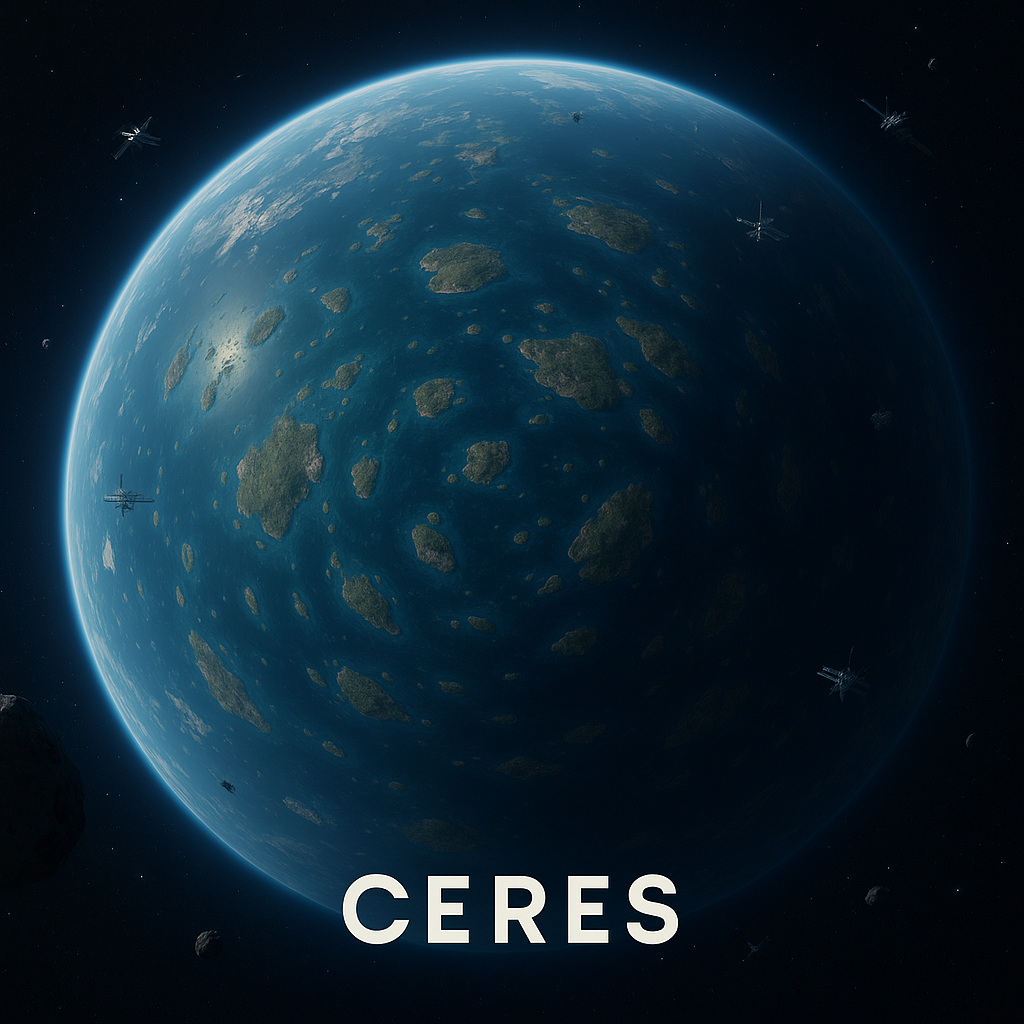
Ceres is the financial heart of the Pan-Solar Consortium, a dwarf planet transformed from barren ice and rock into a living oceanic world. Its surface is covered almost entirely by saltwater seas, dotted with small island chains that once were mountain peaks or asteroids deliberately pressed down into place. Above it hang orbital pressors that regulate climate, provide artificial sunlight, and generate surface gravity close to Earth normal. These same systems also sweep away errant asteroids and enforce an exospheric shield, making unauthorized approach nearly impossible.
Unlike Ixion or Eris, Ceres is not a world of chaos or horror. It is a world of stability and control, the foundation on which the Consortium’s economy rests. Beneath its oceans lie the vaults of Unionhouse Veylan—the mint of the Carbon Standard. Here, the Chit currency is printed, verified, stored, and recycled. To attack Ceres is to threaten the currency of civilization itself, and so its defenses are subtle, layered, and absolute.
Origins Under the Premier
The world’s transformation began in the Solar Commonwealth Era. The immortal Premier initiated several secret projects in the Belt to meet the demands of a swelling population. On Ceres, she envisioned vast kelp and algae farms, powered by orbital lenses and atmospheric processors. The oceans were seeded with plankton, algae, and fish. To tend them, the Premier Uplifted orcas, chosen for their intelligence and kelping behaviors, and transplanted them into the new ecosystem as its guardians and harvesters.
For centuries, the experiment thrived. Orca pods bartered kelp and algae with human islanders who maintained the machinery, pushing pallets of dried biomass into processing chutes in exchange for tools, goods, and luxuries. By the time the Cozine Disaster boiled away much of their world’s security, the orcas and humans had built a pastoral, symbiotic society.
From Farms to Fort Knox of the Belt
The kelp economy became obsolete in the centuries following, replaced by more efficient food production elsewhere. Rather than abandon the world, Unionhouse Veylan stepped in. The oceans were no longer farms—they became fortresses. Orca pods traded their agricultural role for that of clannish militias and guardians of the vaults, while human Ceresians evolved into administrators, accountants, and logisticians. Tankbrains, the Uplifted octopus, completed the triad, serving as managers, analysts, and supervisors of the vast minting systems.
Unionhouse Veylan transformed Ceres into a three-sapient world: human, cetacean, and cephalopod, all tied together in an unranked but functional caste system. The balance between them ensures not only prosperity, but vigilance. Few criminals survive long in the oceans of Ceres, and those who try to infiltrate the vaults are swiftly exposed and punished.
The Bacchani Massacre
The closest anyone has ever come to breaching the vaults was during the Bacchani Massacre, when Tayzia Makai and her brother Mako led a conspiracy of human, Orca, Tankbrain, and synthetic criminals against Unionhouse Veylan. Their plan to install a cybernetic backdoor into the vault servers nearly succeeded, but a single investigating Tankbrain caught the anomaly. Within minutes, the oceans themselves rose against the conspirators.
Tayzia was captured and made into a permanent memorial—her mind plumbed into a ghost emulation and her cryopod put on public display as a cautionary tale of betrayal. Her brother Mako fled, reinventing himself as a pirate king aboard the Tizuna Bey, trading on false stories of having backdoor access to the mint. The massacre remains the defining event of modern Ceresian history, shaping both its governance and the ironclad paranoia of Unionhouse Veylan.
Ceres Today
In the Age of Convergence, Ceres is more than a financial hub—it is a symbol of trust and continuity. To visit Ceres is to be reminded of what wealth means in Human Space: not fleets, not palaces, but stability itself. Islands leased to corporations float across the oceans, their towers gleaming in the artificial sun, while the permanent islands of Unionhouse Veylan hold the mechanisms of global finance.
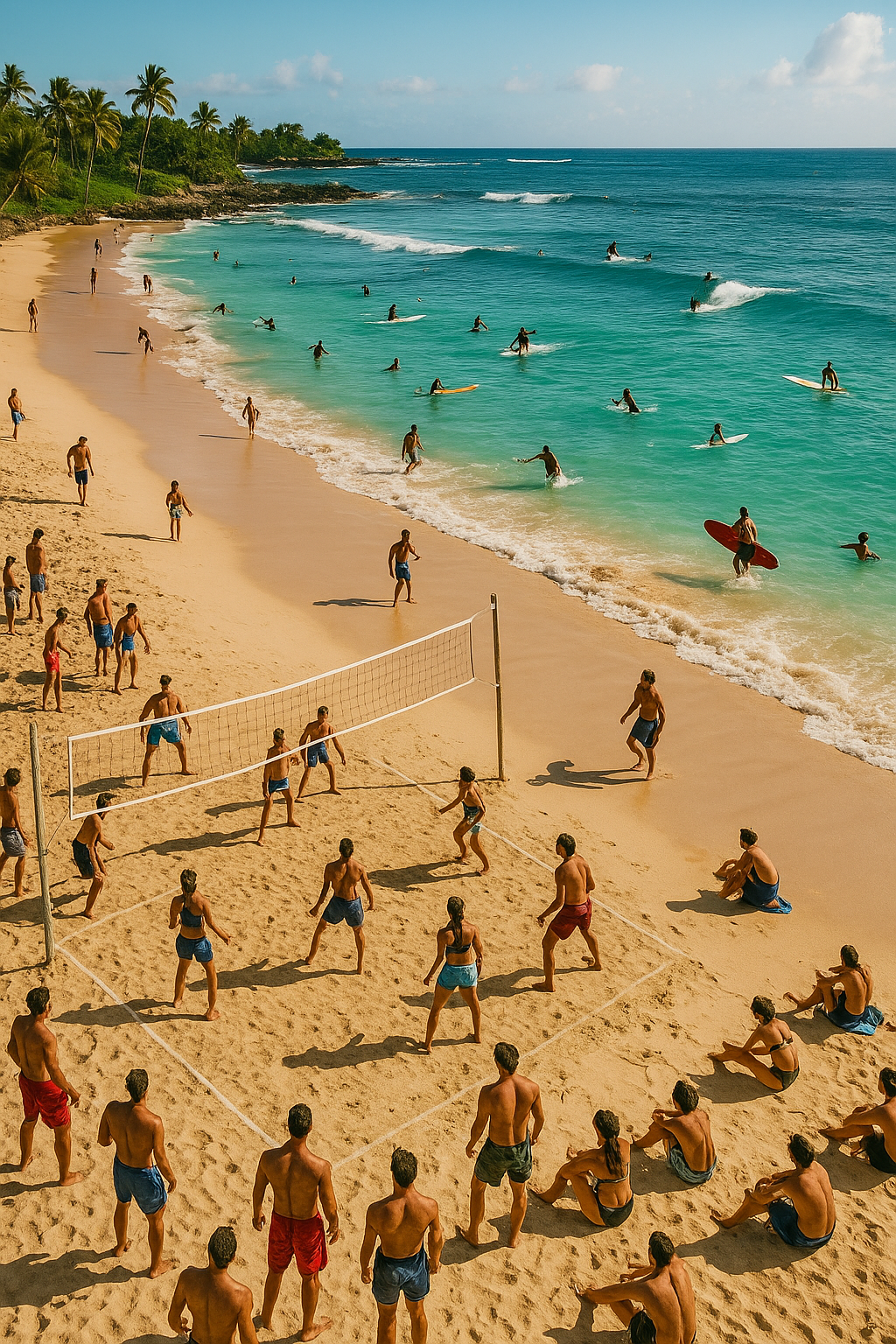
Life for ordinary Ceresians is comfortable, if controlled. Every citizen swims, every beach thrums with music and relaxation, and every child grows up knowing that their world is both a paradise and a fortress. Orcas in their HOOKs patrol the skies and shores, while tankbrains manage the vault servers deep below. Above it all sits Unionhouse Veylan, never boasting of power but quietly holding the reins of civilization’s economy.


Comments