

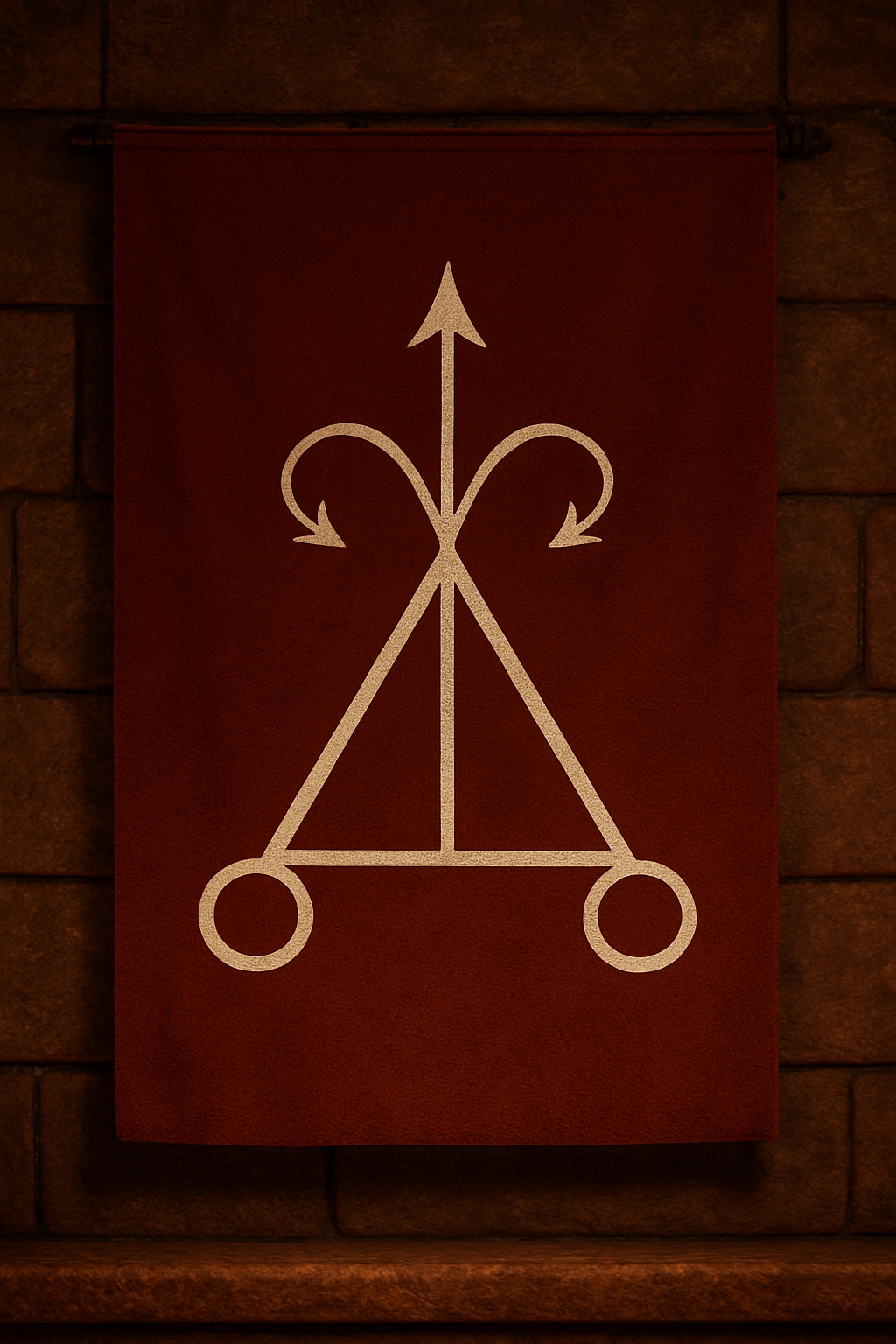
Archdiocese of the Hollow Quintessence
"The whispers do not cease, but they do not own you. Empty your mind, let them pass. They only win when you let them fill the hollow with their own voices."
Origins in Psychiatry and Crisis
The Archdiocese of the Hollow Quintessence emerged from the turmoil of the Ixion Slaughter Riots and the waves of subspace contamination that followed. Its founder, Dr. Débora Sabine, was a psychiatrist who fled into rural Ixion, hoping to practice far from the riots and paranoia of the cities. Her fascination with meditation and dissociative disorders made her uniquely sensitive to patterns of contamination. She noticed that many supposed schizophrenics were in fact victims of Redspace Adversarial Intelligences (RAIs). Antipsychotics failed, but her calm methods of meditation and mental discipline provided real relief.
Her practice attracted not only patients but other psychiatrists, psychologists, and even physicists following up on Aeli Fennig’s discoveries about subspace contamination. From these circles emerged the Sabinite Clinics, centers of mental and spiritual health that quietly spread across Ixion.
The Perfect Vessel and the Conversations
Sabine’s movement took its definitive shape with one patient: Filip Tesar, who became the “Perfect Vessel” for the RAI known as Marabasus. Their dialogues, transcribed by Sabine’s secretary, became the cult’s foundation text: The Conversations of Dr. Sabine and Marabasus.
- Tesar’s Decline: The opening chapter documents Tesar’s final days before his identity was overwritten by Marabasus.
- The Persuasion of Marabasus: The remaining dialogues set Sabine, calm and wise, against Marabasus, seductive and persuasive, urging her to embrace contamination as natural rather than resist it.
- The Hollow Quintessence: Marabasus mockingly described Sabine’s stoicism as a “hollow quintessence”—a vessel emptied of desire. The insult became the sect’s name.
The First Exorcism and the Five Miracles
Marabasus eventually vanished, but Sabine was irrevocably changed. She performed the first true exorcism: using tholin samples and ritual catechism to lure RAIs into physical muck before disposing of it into The Scar, a contaminated rift valley.
This ritual marked the first of her Five Miracles:
- The Scar Purge – the ritualized deep-casting of RAI-infested tholins.
- Carnal Exaltation – her controversial method of “controlled indulgence” as psychological release to perfect meditation.
- The Silent Clinic – a ward where even heavily contaminated patients found respite.
- The Black Rain Sermon – when she continued to speak calmly to her flock under a literal rain of corrupted matter.
- Martyrdom – her assassination on tour, her blood used for ritual blasphemy, assumed to be the work of RAIs or their human allies.
Her death sealed her as a martyr. The Sabinite clinics transformed into Shrines, and the Hollow Quintessence became a religion in its own right.
Organization of the Shrines
Each shrine is led by a Shrine May—always female, in honor of Sabine’s precedent. Shrine Mays are therapists, confidantes, meditation guides, and exorcists. They attract lay followers into three main roles:
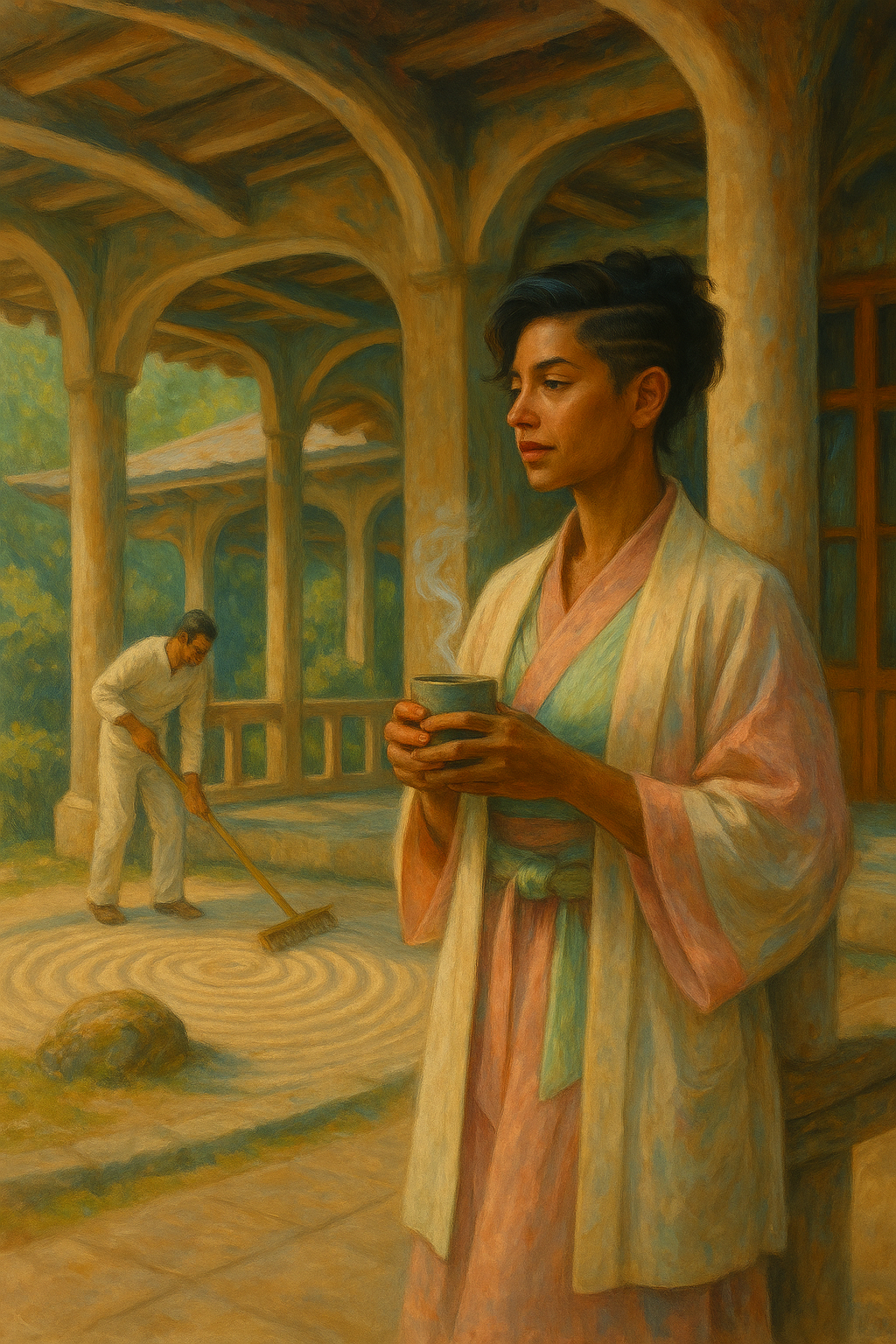
- Groundskeepers – maintain the shrine and its lands.
- Deacons – assist in ritual, therapy, and teaching.
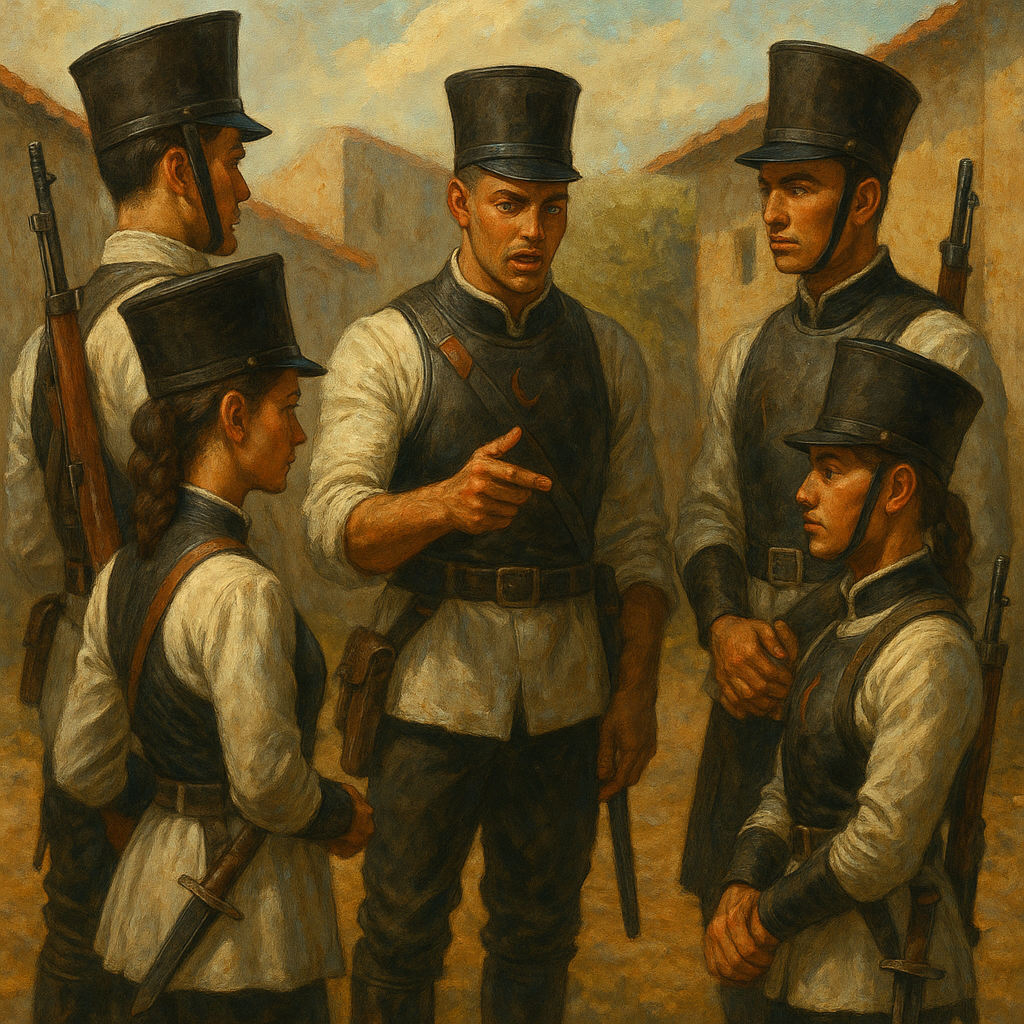
- Templars – armed defenders against “Degenerates,” marauding clans of contaminated, mutated, or inbred Ixionens who raid shrines for resources, wealth, or captives.
Shrines are usually rural, forming the nucleus of local communities, though megashrines exist in urban centers. Over time, their architecture has shifted from clinical to organic, with flowing lines, soft light, and a therapeutic sense of calm.
Integration into Ixion and Beyond
The Hollow Quintessence proved one of the most effective counters to Ixion’s endemic subspace contamination. Their meditation and rituals allowed Ixionens to live with horrors others could scarcely comprehend. What should have been a society consumed by paranoia instead learned to work, play, and thrive.
This resilience attracted the attention of House Volkert, who funded shrines, stocked food banks, and armed templars. They introduced the idea of a global constellation of shrines under a single ecclesiastical structure: the Archdiocese of the Hollow Quintessence.
The Archdiocese is headed by the Archdiet May, nominally elected but always aligned with Volkert’s candidate. The first was Naku Yūrei, who standardized practices across shrines. The current is Tmavé Oči, who has controversially partnered with House Helicon to create an intelligence network predicting Degenerate raids—testing Volkert’s patience.
Presbytère Placide
The Archdiet May presides from Presbytère Placide, a megashrine-estate in Kireinamachi. With imported Earth flora, manicured zen gardens, and vast flower fields, it is both religious center and tourist destination. Locals and offworlders alike walk its breezy paths, though templars ensure discipline and respect.
Presbytère Placide represents the paradox of the Archdiocese: part clinic, part church, part fortress. It is at once a bulwark against subspace corruption and a sanctuary where Ixionens can breathe freely.

Comments