

Professions Related to Bone Tools
The Bone Grinder
The bone grinder processes bone pieces from hunting or large animals. Depending on specialization, a distinction is made between coarse grinders and fine grinders. Coarse grinders work primarily for technical purposes: they cut bones to size, drill precise holes, carve grooves, and fit pieces together – often for boat builders or toolmakers. They use grindstones, crystal saw blades, or simple lever drills. Fine grinders focus on the surface: they polish, shape thin plates, or produce discs for later engraving. The work takes anywhere from several hours to days depending on complexity – a simple shield requires about half a day, while a load-bearing joint takes much longer. Bone dust often leads to dry skin, and fine ridges on the fingertips become permanent; some wear leather strips as finger protection. The profession is respected but not considered particularly prestigious.The Bone Engraver
The bone engraver takes prepared bone pieces and decorates them with script or ornamentation. They use fine carving knives for lines and letters, as well as planing tools for broader engravings. For large or particularly deep motifs, bone chisels and small hammers are used. Engraving requires steady hands, sharp eyes, and a clear vision of the final pattern. After engraving, the pieces are treated with special liquids – usually oils, resin solutions, or algae-based mixtures, whose exact composition often remains secret. This sealing protects the surface and visually enhances the engraving. A simple nameplate takes about one to two hours, while larger artworks require several days. The most taxing aspects are the tense posture and the delicate work, which strain the eyes and shoulders. Residues from the sealants often cause permanently darkened fingertips. The reputation of the profession varies greatly depending on individual artistry and craftsmanship.The Weapon and Tool Maker
The weapon and tool maker uses bone pieces, usually prepared by coarse grinders. They can often see the potential function in the shape of the bone – whether it becomes a dagger, stylus, or tongs. Using frostglass saw blades, filing rods, and pressure tools, they shape the material as needed. Tools such as hammers, spoons, and tweezers are crafted alongside weapons like clubs, spearheads, or small cutting blades. A dagger takes about two days to complete, while more complex tools may require up to five days. The work is precise and demands experience to avoid material breakage. Bone dust irritates the respiratory system, so many work with cloths over their mouth and nose. Skin cracks are common, especially in dry weather. Depending on talent and craftsmanship, the profession is highly regarded – especially when a bone piece is shaped into exactly what its form already suggested.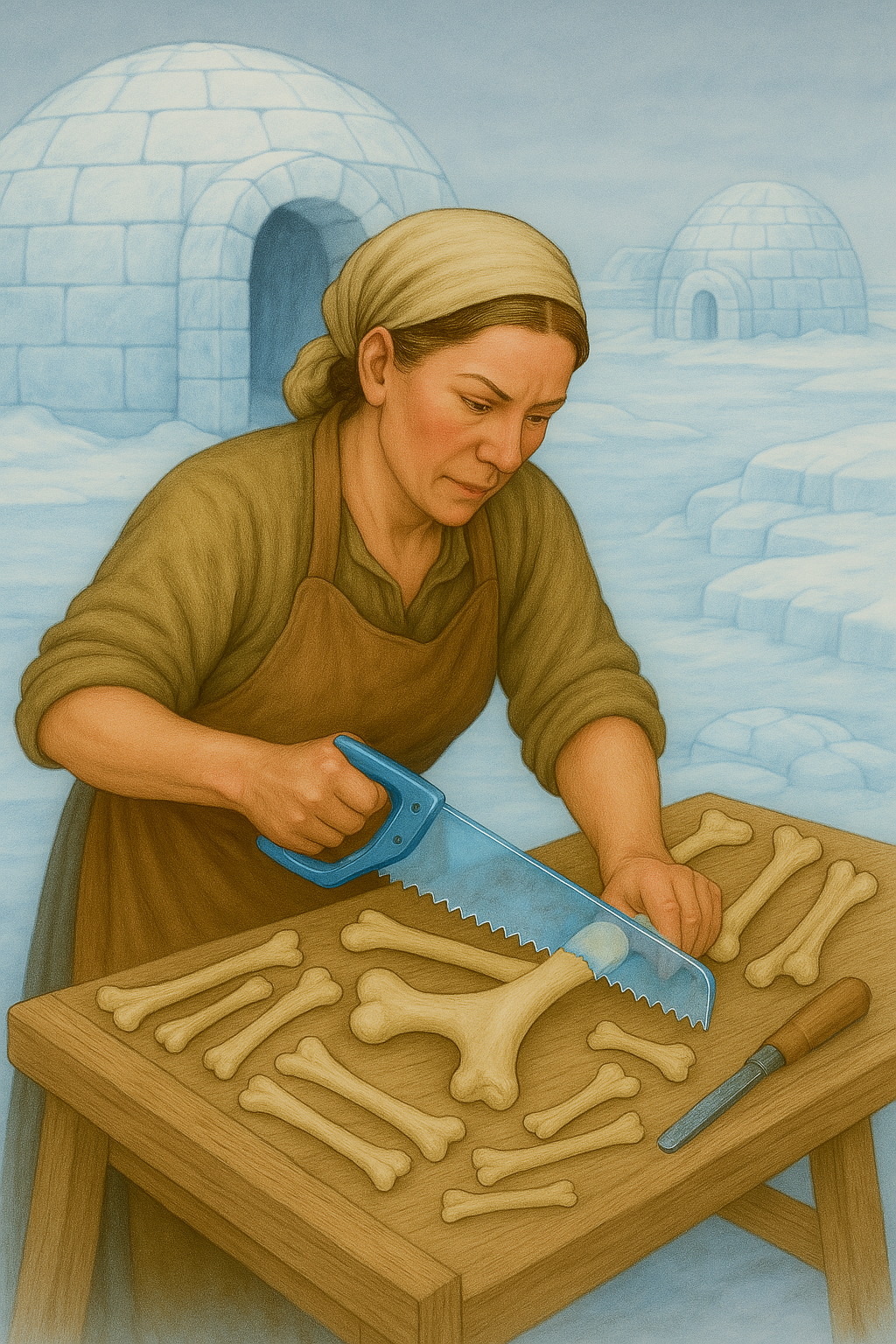
by Microsoft Copilot
Created by Selibaque 2025

Kommentare