
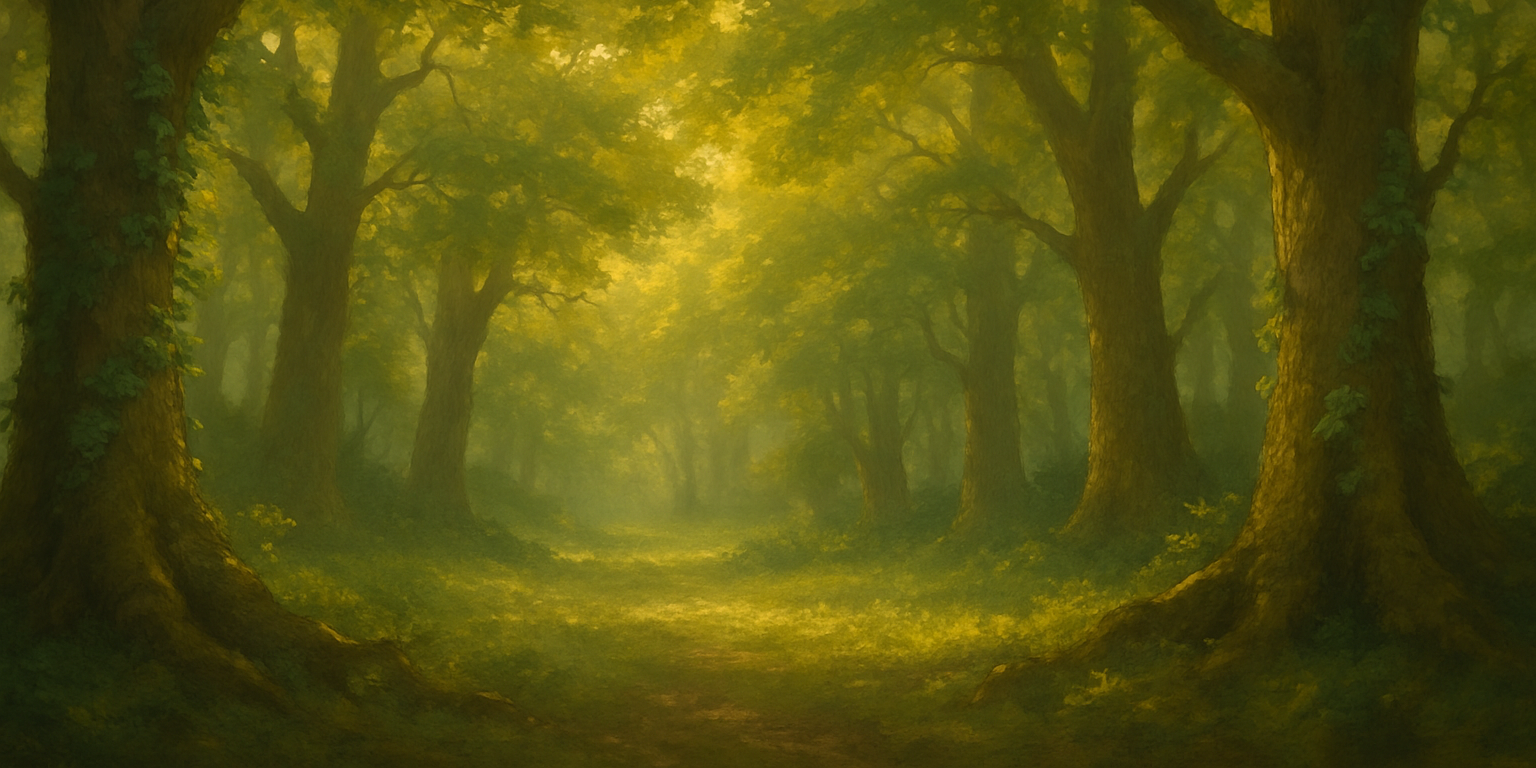
The Offering of the Green Shrine
For generations, the villages surrounding Wren’s forest have lived in quiet harmony with the wilds, guided by old stories of the Forest Keeper — a horned guardian who protects the balance of life. But when crops begin to fail, livestock vanish, and predators behave strangely, fear spreads through the region. Unable to explain the growing imbalance, the villagers turn to myth for answers. They decide Wren must be displeased, and in a desperate attempt to appease him, they choose a young woman to offer at the ancient shrine where gifts are left each season.
Left alone for two days, the woman expects doom, punishment, or transformation, but Wren’s arrival brings none of those. Instead, he is confused, even irritated by the offering, and reveals that he is not the source of the land’s suffering. Something deeper and more dangerous is taking root beneath the forest, something even he cannot fully sense.
Realizing the woman possesses a rare affinity for nature, whether through druidic training, latent magic, or a connection she has never understood, Wren reluctantly accepts her help. Together, they form an unlikely partnership: the wildborn guardian and the mortal offered in fear. As they search for the cause of the corruption spreading through the land, they must navigate the fragile trust between them, the growing unrest in the villages, and the ancient forces stirring in the heart of the forest.
This arc explores themes of balance, superstition, partnership, and the blurred line between myth and reality, giving Wren a narrative that is both deeply personal and profoundly tied to the land he protects.
Plot points/Scenes
- Strange Signs in the Forest Animals behave unpredictably, streams run shallow, and hunters report eerie silence beneath the canopy. Wren senses imbalance but cannot yet find its source.
- Fear Takes Root in the Villages Crops begin to fail and livestock disappear. Old myths resurface, and villagers argue over the cause. Rumors spread that the Forest Keeper is displeased.
- The Desperate Council Elders and farmers gather to discuss a solution. Panic sways reason, and they decide a human offering may appease the Keeper. A young woman is chosen — either unwilling or volunteering to protect others.
- The Shrine at the Forest’s Edge She is brought to the ancient moss-covered shrine where seasonal gifts are usually left. Villagers leave her with whispered prayers and flee before nightfall.
- Two Days Alone The forest watches her silently. Hunger, fear, or resolve test her spirit. Pine appears briefly, curious but distant. Still, Wren does not show.
- The Keeper Appears On the second night, Wren finally emerges. He does not approach immediately, confused by her presence. His blunt questions reveal he had nothing to do with the forest’s misfortune.
- The Truth of the Imbalance He explains that something unnatural stirs deeper in the wood, something he can feel but cannot locate. Her emerging connection to nature reacts to the disturbance.
- An Unlikely Partnership Recognizing her affinity, Wren reluctantly agrees to let her accompany him. Pine approves, acting unusually friendly toward her.
- Into the Heart of the Forest Their search begins. She learns of the forest’s rhythms and dangers, while Wren slowly adapts to working with a mortal partner for the first time.
- Whispers of a Deeper Threat They encounter corrupted wildlife, dying groves, or ancient spirits giving cryptic warnings, hinting that the cause is older and darker than either expected.
Themes
- Harmony vs. Imbalance The story centers on the fragile balance between humans and nature. When that balance falters, fear drives people toward superstition, but healing requires understanding.
- Fear Creates False Gods The villagers project blame and meaning onto Wren, revealing how myth fills the gaps left by fear, ignorance, and desperation.
- The Burden of Guardianship Wren’s role is not divine punishment or wrath, it is responsibility, vigilance, and the weight of trying to protect something much larger than himself.
- Human Vulnerability to Nature The failing crops, vanished livestock, and prowling predators remind the villages that civilization depends entirely on the land’s goodwill.
- Bridging Two Worlds The young woman becomes a bridge between villagers and the forest, and between mortal misunderstanding and the truth of the wilds. Her partnership with Wren unites instinct and insight.
- Identity and Misinterpretation Wren is mythologized beyond recognition. The arc challenges assumptions about who he is versus who people believe him to be.
- Courage Through Compassion The woman’s bravery isn’t loud or violent — it’s in her willingness to listen, to offer help instead of fear, and to trust a being others see as dangerous.
- The Wild Isn’t Cruel — It’s Honest Wren’s forest isn’t malicious; it’s reacting to a deeper wound. The story reframes nature not as an enemy, but as a force that must be understood and respected.
- Chosen Partnership Neither Wren nor the woman is bound by superstition or obligation. Their alliance forms by genuine choice, a theme mirrored by the villagers’ misunderstanding.
- The Cost of Desperation The villagers’ decision to offer a human life reflects how quickly fear can twist good people into harmful actions, especially when the stakes are survival.
Components
Goals
Wren’s goals are shaped entirely by his role as the Forest Keeper and his instinctive duty to maintain the balance of the wilds. Above all else, he seeks to identify and eliminate whatever force is disrupting the natural order, even if doing so forces him into conflict with mortals, spirits, or ancient powers. Though he does not care for human politics or superstition, he wants to prevent the surrounding villages from destroying themselves out of fear. Protecting the forest means protecting them too, even when he resents their short-sightedness. As he grows closer to the young woman left as an offering, Wren develops a new, more personal goal: ensuring her safety, especially as her presence reveals that the disturbance in the forest is older and more dangerous than he realized. Over time, his objectives shift from simple preservation to a deeper desire to guide, teach, and—grudgingly—trust someone who sees the forest the way he does.
Her Goals
At first, her goals are painfully simple: survive being abandoned in the forest and prove she is not the cause of the villages’ misfortune. Though chosen as an offering, willingly or not, she refuses to believe that appeasing a mythical guardian will fix anything. What she truly wants is to find the real source of the imbalance and stop the suffering that pushed her people into desperation. Once she meets Wren and realizes he is neither monster nor deity, her goals shift. She wants to understand the land’s sickness, its fading streams, restless animals, and dying roots, and use her own emerging connection to nature to help heal it. She also aims to earn Wren’s trust, not out of fear but because she recognizes how deeply he feels the forest’s pain. As the threat deepens, her broader goals emerge: to bridge the widening divide between humans and the wild, to prove the villagers wrong about Wren, and to return not as a victim or sacrifice but as someone who helped save the land they all rely on. In time, she develops a more personal goal: to stay by Wren’s side long enough to understand the truth of who he is, and perhaps who she is meant to become.
At first, her goals are painfully simple: survive being abandoned in the forest and prove she is not the cause of the villages’ misfortune. Though chosen as an offering, willingly or not, she refuses to believe that appeasing a mythical guardian will fix anything. What she truly wants is to find the real source of the imbalance and stop the suffering that pushed her people into desperation. Once she meets Wren and realizes he is neither monster nor deity, her goals shift. She wants to understand the land’s sickness, its fading streams, restless animals, and dying roots, and use her own emerging connection to nature to help heal it. She also aims to earn Wren’s trust, not out of fear but because she recognizes how deeply he feels the forest’s pain. As the threat deepens, her broader goals emerge: to bridge the widening divide between humans and the wild, to prove the villagers wrong about Wren, and to return not as a victim or sacrifice but as someone who helped save the land they all rely on. In time, she develops a more personal goal: to stay by Wren’s side long enough to understand the truth of who he is, and perhaps who she is meant to become.
Hooks
- Unnatural Blight Strange rot spreads through the forest, resisting all known remedies. Plants wither overnight, and animals flee long-established territories. Villagers fear a curse, but Wren senses a deeper disturbance beneath the soil.
- Vanishing Livestock Farm animals disappear without sound or struggle, leaving only disturbed earth behind. Tracks change shape mid-stride, as if something is wearing the forest’s creatures like a mask.
- A Misguided Offering Driven by panic, villagers leave a young woman at Wren’s shrine, believing she will appease the Forest Keeper. Her unexpected survival, and her encounter with Wren, become the first clue that their assumptions are dangerously wrong.
- The Forest Grows Silent Birdsong fades. Insects vanish. Predators roam at odd hours. The forest behaves as though it’s holding its breath, bracing against something unseen.
- Dreams of Shaking Trees Children in multiple villages begin sharing the same dream, ancient roots groaning, branches cracking, and a voice calling for help. Some claim Pine appears at their windows right after these nightmares.
- Old Myths Stir Grandparents recall ancient versions of the Forest Keeper legend, stories of a deeper power sealed within the woods, one that awakens only when balance is threatened.
- A Forest Keeper Unmoored Wren appears at the edge of the woods unexpectedly, disoriented and on edge. Those few who glimpse him swear he looks weakened, as though something is draining the forest through him.
- Nature Responds to Her The young woman’s presence stirs odd reactions: vines shift subtly toward her, animals approach without fear, and dying plants briefly revive when she touches them. Her connection may be the key—or the cause.
- Poachers Whisper of a Shadow Illegal hunters report seeing a creature with Wren’s horns and eyes, but twisted and wrong, stalking them at night. Some say they shot it, but found no body… only bark and blackened leaves.
- The Villagers’ Guilt Once they realize the offering hasn’t returned, tension rises. Some want to search for her; others fear angering the Keeper further. The village teeters on the edge of panic and regret.
- Return Without Redemption If the young woman comes back before the forest is healed, the villagers turn on her. Some accuse her of failing to “appease the Keeper,” others claim she fled her duty, and a few whisper that she brought something dark back with her. Fear twists gratitude into suspicion, and she becomes the scapegoat for everything still going wrong. Her only proof of innocence—and of the true danger—may be Wren himself, if he chooses to reveal his presence.
Moral Quandaries
- Is the Offering a Sacrifice or a Scapegoat? Villagers claim they are honoring old traditions by offering the young woman, but deep down, many know they are simply afraid. The line between devotion and cowardice blurs, raising the question: are they trying to save the forest or shift blame away from themselves?
- Is Fear a Justification for Harm? Faced with starvation and failing harvests, the villagers choose to endanger an innocent person. Their desperation is real—but does necessity excuse cruelty?
- Should She Return to the Villages at All? If she goes back before the forest is healed, she risks humiliation, punishment, or exile. Staying with Wren means abandoning her community. Where does her duty truly lie?
- What Does Wren Owe Humanity? Wren protects the forest, not people. Yet the villages rely on the land to survive. When their fear drives them to harm, does he have any responsibility to help them—or protect her from them?
- Can the Forest Be Saved Without Punishing the Guilty? If poachers, loggers, or others caused the imbalance, justice might demand consequences. But balancing the ecosystem may not align with human ideas of punishment or mercy.
- Does She Keep Wren’s Existence Secret? Revealing him could stop the villagers’ fear… or turn him into a target of worship, manipulation, or control. Protecting Wren might mean lying to her people.
- Is the Imbalance Natural or Supernatural? If the forest is suffering due to natural cycles or climate shifts, is it right to intervene? Or should nature be allowed to heal on its own, even if humans suffer in the meantime?
- What If She Is Part of the Problem? Her nature magic might be tied to the disturbance. If her presence worsens the imbalance, does she stay and help, or leave and risk abandoning Wren?
- How Much Should Wren Trust a Mortal? Working with her may save the forest—but opening himself to her could expose him to betrayal, exploitation, or emotional vulnerability he has never allowed himself to feel.
- When the Forest Chooses Her, Does She Get a Choice? If the forest begins responding to her more than the villagers or even Wren, she may become something between mortal and spirit. Would embracing that power mean losing herself… and is that sacrifice noble or tragic?


I love this.
Explore Etrea | WorldEmber 2025