
Dwarf
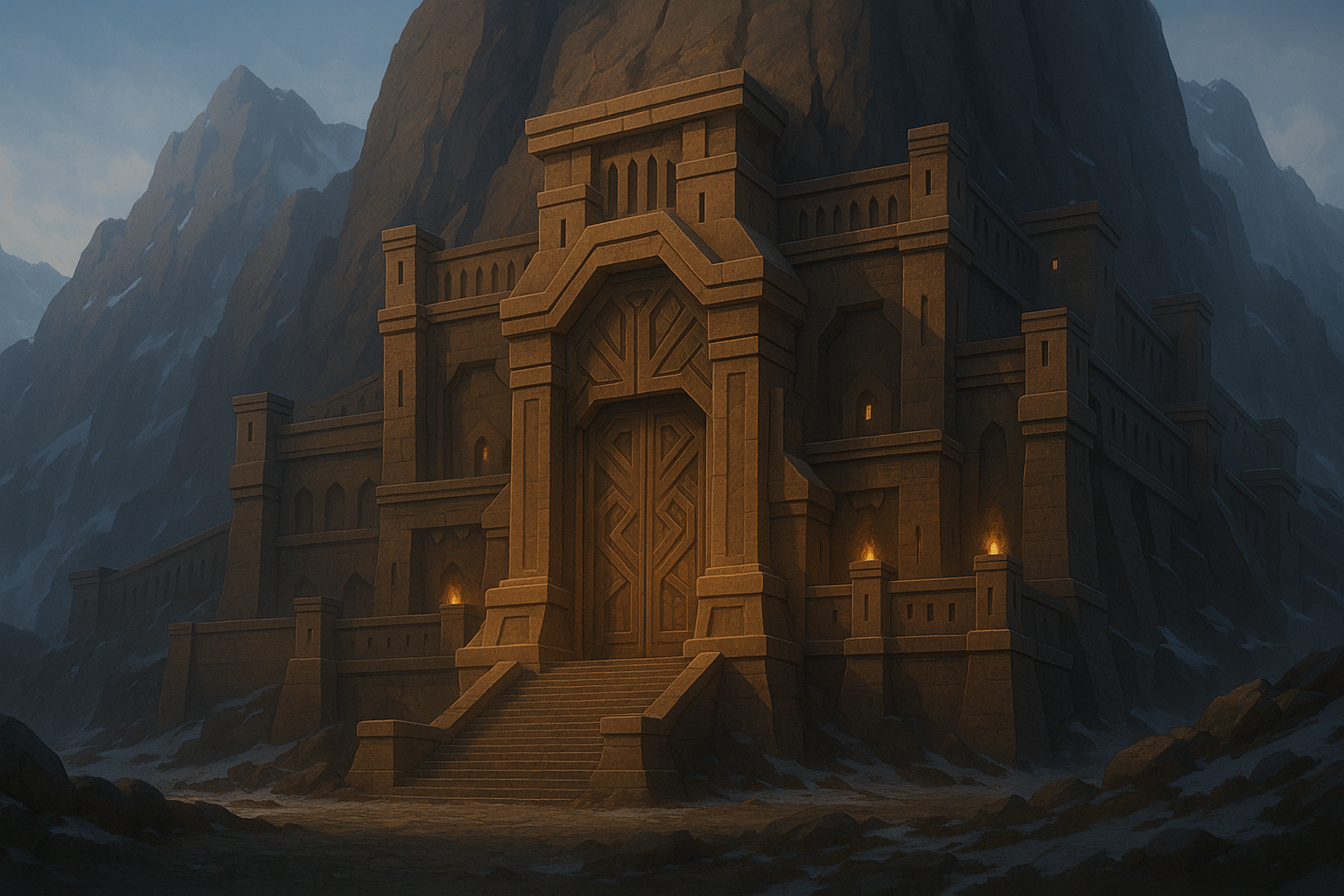
The dwarves of Tanaria are an ancient people shaped by stone, fire, and unyielding will. Their origins are traced, at least in their own mythology, to the Primordial Titan Terranis, whose domain over mountains gave form to the first dwarves. Whether divine or symbolic, this connection is reflected in dwarven culture: endurance, craft, ancestry, and the belief that legacy must be carved into the world with one’s own hands. While their major strongholds lie in the Zandari Mountains, the Stoneback Range, and the volcanic forges of southern Arandor, dwarves can be found across the continents as miners, architects, soldiers, and artisans.
Dwarven society is defined by a strong clan structure, with each clan tied to a Hold, an underground or mountainside city built around a central forge, archive, or mining complex. Stonecraft is more than a trade; it is a cultural ethos. A dwarf who creates nothing is considered spiritually stagnant. Their forges are famous for alloy-blended metals, rune-infused tools, and intricate architectural designs that other cultures imitate but rarely match. While humans build fast and elves build beautifully, dwarves build permanently. Their cities are meant to last for millennia.
Dwarves are a proud, industrious people shaped by the twin forces of stone and innovation. Though their earliest myths tie them to the Primordial Titan Terranis, it is Molgrin, the God of Creation, Craft, and Invention, who defines their identity in the modern age. Dwarven culture is built on the belief that to create is to honor one’s ancestors, and to innovate is to honor Molgrin himself. A dwarf’s worth is measured not only by the skill of their hands, but by the courage to push beyond tradition and forge something truly new.
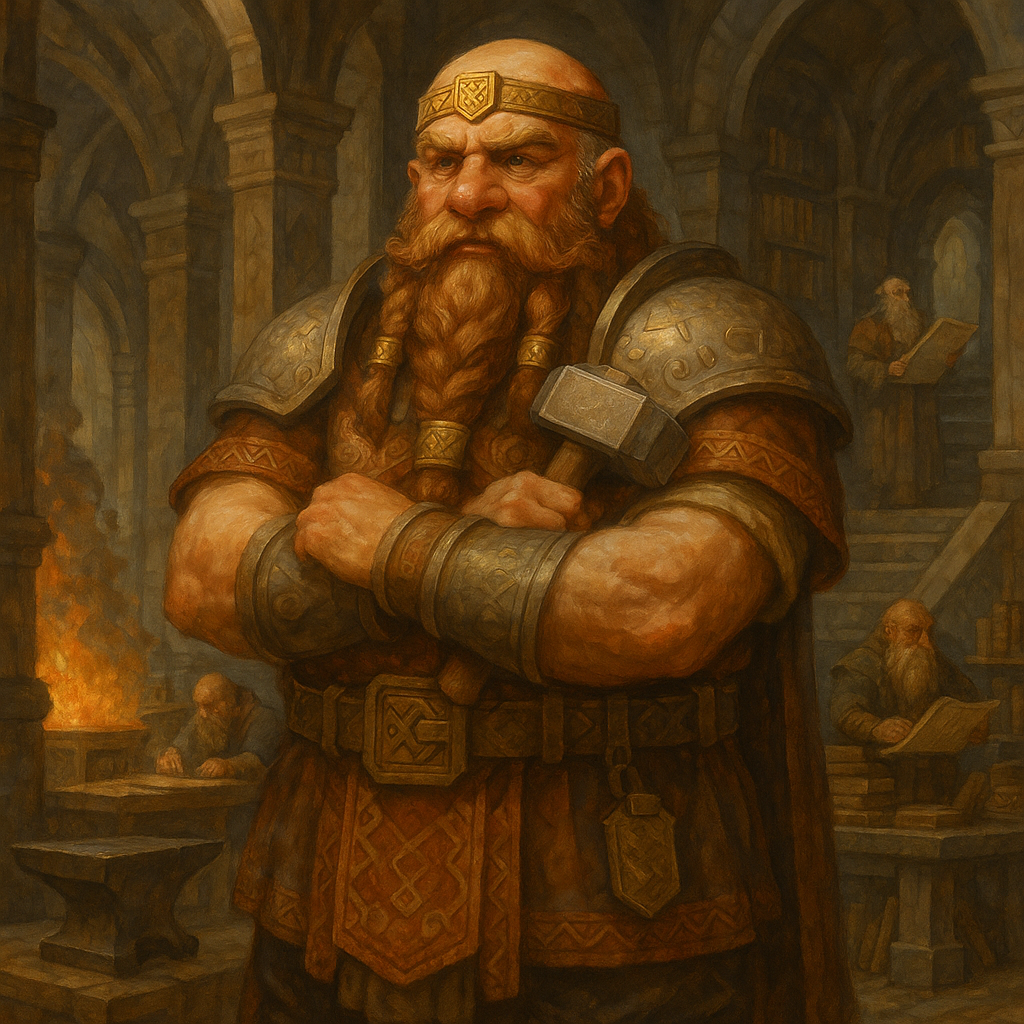
Their mountain strongholds are marvels of engineering, seamlessly blending ancient stonecraft with ever-advancing technologies. Forges burn beside libraries; workshops overlook vast archive halls; rune-etched machinery hums with steady purpose deep beneath the earth. Knowledge is preserved with near-religious devotion, yet never allowed to stagnate. In dwarven eyes, tradition is a foundation, not a cage.
Known for their stoicism, sharp wit, and relentless work ethic, dwarves are valued across Tanaria as artisans, engineers, scholars, and warriors. While practical by nature, they are far from the stubborn traditionalists many outsiders assume. Under Molgrin’s guidance, dwarven society prizes innovation, responsible advancement, and craftsmanship that stands the test of ages. Whether shaping steel, carving stone, or designing intricate rune-tech, the dwarves of Tanaria remain steadfast in their pursuit of mastery, and in their belief that creation itself is a sacred act.
Basic Information
Anatomy
The dwarves of Tanaria, collectively known as the Durakmir, are a hardy mortal species shaped by deep ancestry, subterranean environments, and divine influence attributed to Molgrin. Though biologically aligned with the broader humanoid families of Tanaria, dwarves diverge significantly through their exceptional bone density, mineral-rich physiology, and innate resistance to environmental strain. Scholars of Enkira classify them as a distinct branch of humanoids whose evolutionary path reflects long-term adaptation to darkness, pressure, and the hazards of volcanic and mountain ecosystems. Their longevity and resilience are often cited as evidence of Molgrin’s guiding hand, marking them as a unique intersection between natural evolution and divine craftsmanship.
Dwarves are compact, powerful humanoids with physiques built for endurance rather than speed. Their bodies exhibit high muscle density and thick, reinforced skeletal structures that allow them to withstand impacts, long hours of labor, and the environmental extremes of deep-earth living. Their stature is notably short, typically ranging between four and five feet, yet their broad frames and low centers of gravity make them incredibly stable.
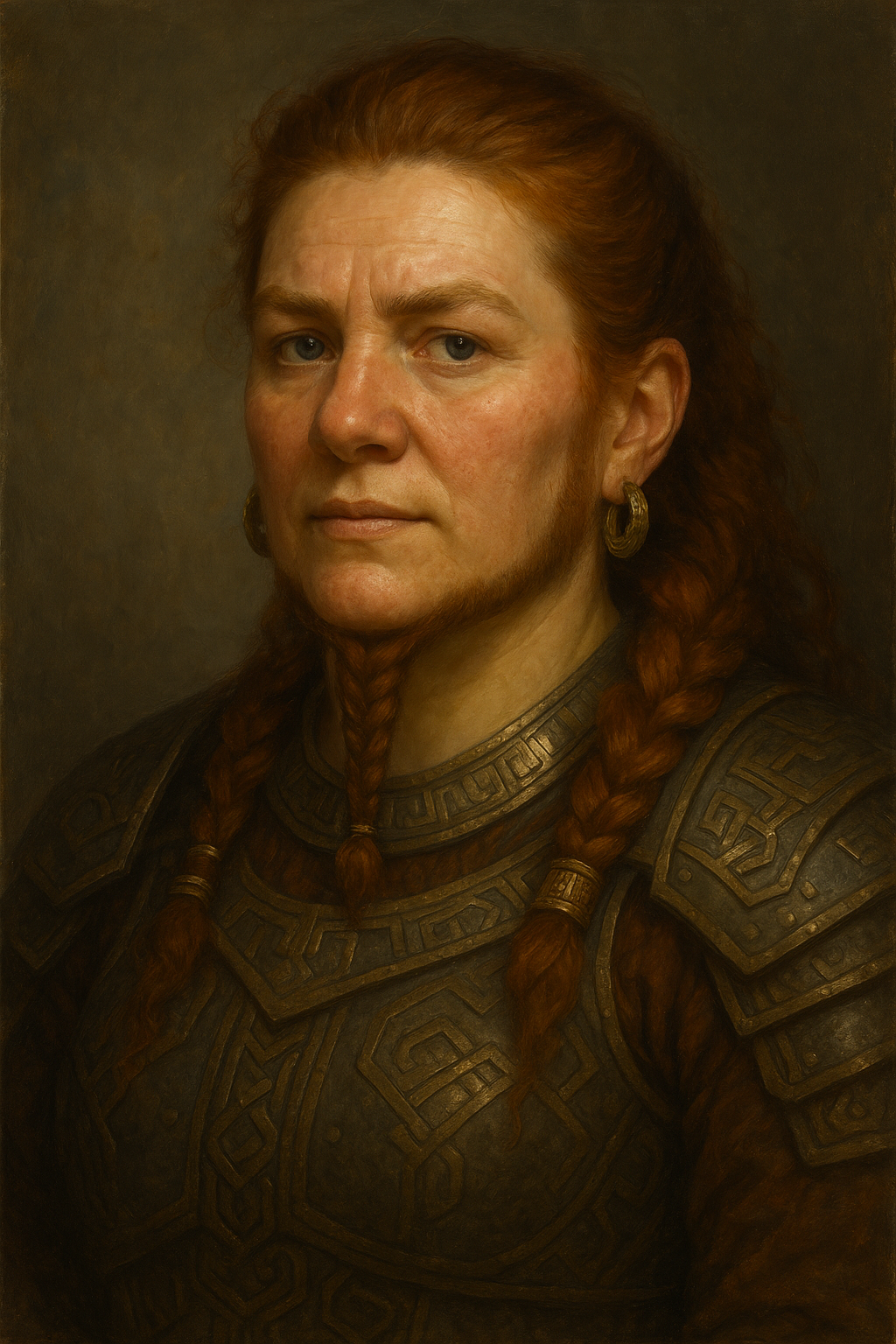
Facial features tend to be angular and pronounced, with strong brows, prominent noses, and heavy jawlines. Beards—regardless of gender—hold cultural significance, though their growth patterns stem from actual biological predisposition toward dense follicular development. Their skin tones range across earthy palettes: deep umbers, stone greys, warm bronzes, and rare ruddy hues influenced by certain mountain-born clans.
Internally, dwarves possess exceptional lung capacity and efficient oxygen retention, an adaptation to mining environments where air quality may fluctuate. Their resistance to toxins and natural poisons, often attributed to both biology and Molgrin’s blessing, is well documented. Despite their stocky frames, dwarves boast surprising manual dexterity, with strong, precise hands capable of delicate craftsmanship as easily as they wield war hammers.
Biological Traits
Dwarves of Tanaria possess remarkably resilient physiologies adapted to subterranean and high-altitude living. Their average lifespan ranges between 350 to 450 years, though individuals devoted to divine service or arcane craft have been recorded surpassing five centuries due to enchantments, diet, or divine favor from Molgrin. Maturity is reached by age 30, with dwarves remaining physically capable well into their third century.
In terms of stature, dwarves typically stand between 4’2” and 4’8” (127–142 cm), with a dense muscular build that can make them weigh 160–230 lbs (72–104 kg) despite their short height. Their compact musculature grants them immense strength and endurance, allowing them to perform feats of labor or combat far beyond what their size suggests.
Genetics and Reproduction
Dwarven genetics are defined by durability, slow maturation, and strong hereditary stability. Most physical traits; including dense bone structure, broad musculature, low-light adaptive eyes, and characteristic facial morphology, pass reliably from parent to child, resulting in relatively low variation between clans compared to other humanoid species. Hair and beard traits are strongly heritable; even clans with atypical coloration maintain those patterns for many generations.
Dwarves reproduce sexually and have a notably low fertility rate, a long-standing biological trait rather than a cultural choice. Pregnancies are rare but generally stable, with gestation lasting nearly a full year. Because of this, dwarven families tend to be small, often producing only one or two children across a lifetime unless the clan actively prioritizes population growth.
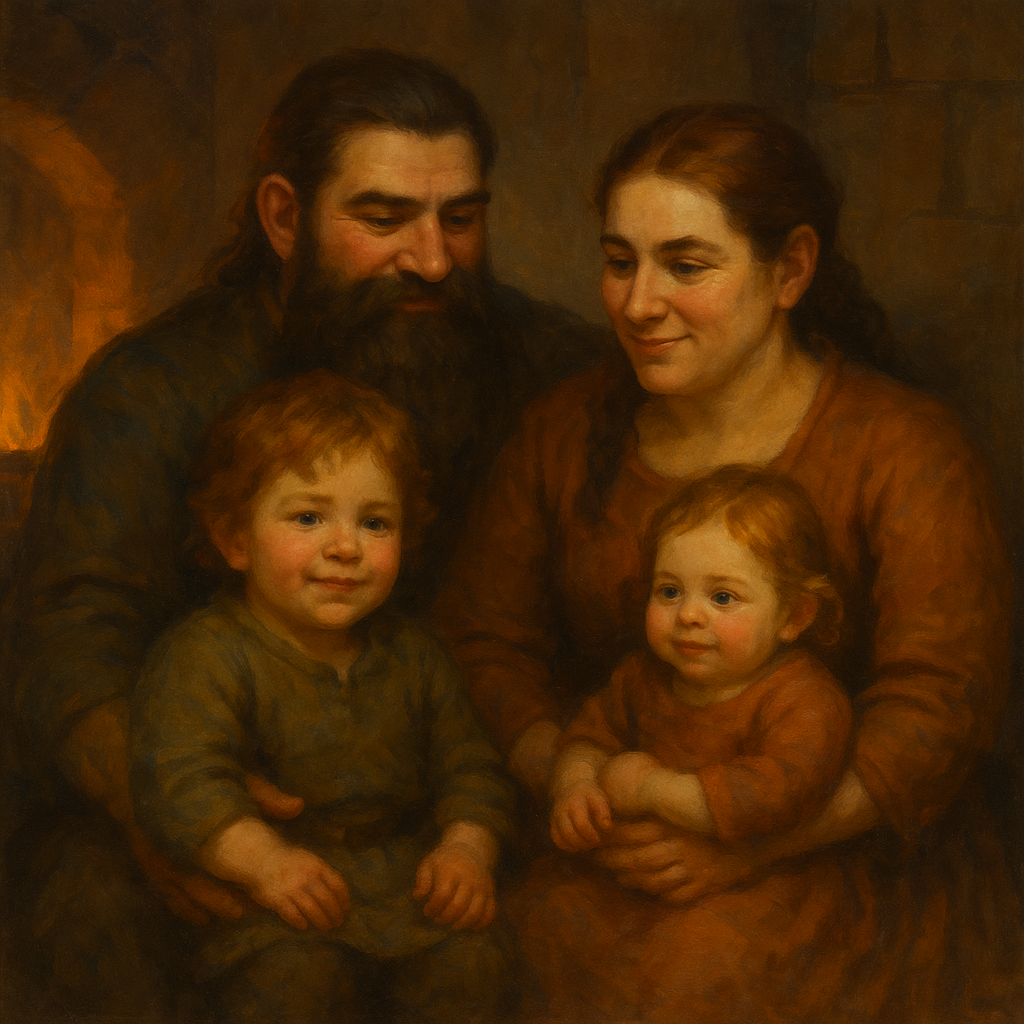 Maturation is slow. Dwarven children grow gradually, reaching physical adulthood around fifty years of age, though they are considered socially mature only after completing apprenticeship or proving their craft competence. Genetic resilience contributes to their impressive lifespans, as cellular degeneration occurs at a significantly reduced rate compared to humans. This same resilience also results in exceptionally low rates of congenital illness.
Cross-species reproduction is theoretically possible but extremely uncommon due to chromosomal incompatibilities. Successful hybrids are rare and often exhibit reduced fertility. Even so, dwarven traits tend to dominate in such cases, passing on their characteristic durability and stocky build.
Overall, dwarven genetics reinforce the species’ stability, longevity, and enduring cultural continuity.
Maturation is slow. Dwarven children grow gradually, reaching physical adulthood around fifty years of age, though they are considered socially mature only after completing apprenticeship or proving their craft competence. Genetic resilience contributes to their impressive lifespans, as cellular degeneration occurs at a significantly reduced rate compared to humans. This same resilience also results in exceptionally low rates of congenital illness.
Cross-species reproduction is theoretically possible but extremely uncommon due to chromosomal incompatibilities. Successful hybrids are rare and often exhibit reduced fertility. Even so, dwarven traits tend to dominate in such cases, passing on their characteristic durability and stocky build.
Overall, dwarven genetics reinforce the species’ stability, longevity, and enduring cultural continuity.
Ecology and Habitats
Dwarves of Tanaria are a subterranean-adapted people whose culture and physiology are shaped by the mountains that cradle their great holds. Most live within sprawling under-mountain cities carved through layers of granite, basalt, and ore-rich stone, where heat from deep magma vents provides natural warmth and powers their forges. These environments are intentionally engineered, with air-shafts, geothermal channels, and underground aqueducts that allow large populations to thrive where other species would suffocate or freeze. Surface settlements do exist, but they are usually trade outposts or mining stations built near abundant resources rather than permanent homeland centers.
Dwarves prefer regions marked by geological stability, rich mineral deposits, and long-standing mountain ranges such as the Zandari Mountains of Kamulos and certain peaks of Drakoria. Their societies are structured to coexist with the land rather than dominate it. They track fault lines, catalog stone strata, and maintain detailed records of mountain behavior. This constant study allows them to predict shifts, cave-ins, and volcanic rumblings with exceptional accuracy. Many dwarven holds lie near leyline knots where their runesmiths and architects can use arcane currents to reinforce stone, power machinery, or stabilize hostile terrain.
Their presence creates subtle ecological shifts: dwarves manage fungal forests, luminescent lichen fields, subterranean livestock, and cavern-adapted crops that form the backbone of their food supply. They maintain strict environmental balance—over-mining is considered a cultural sin—ensuring that abandoned shafts are shored, flooded, or repurposed rather than left to collapse. Wildlife around dwarven territory often includes stone-eating beetles, cavern wolves, magma-born salamanders, and deep-burrowing arthropods, many of which dwarves either domesticate or tolerate as part of the natural order.
Dietary Needs and Habits
Dwarves possess dense musculature and high caloric demands, requiring diets rich in proteins, fats, and mineral-heavy foods to sustain their robust physiology. Their subterranean lifestyle shaped a culinary tradition built on practicality, preservation, and the resources available within the mountains. While capable of eating a wide variety of surface foods, dwarves thrive best on hearty, nutrient-dense meals that fuel long hours of labor and maintain their natural resilience.
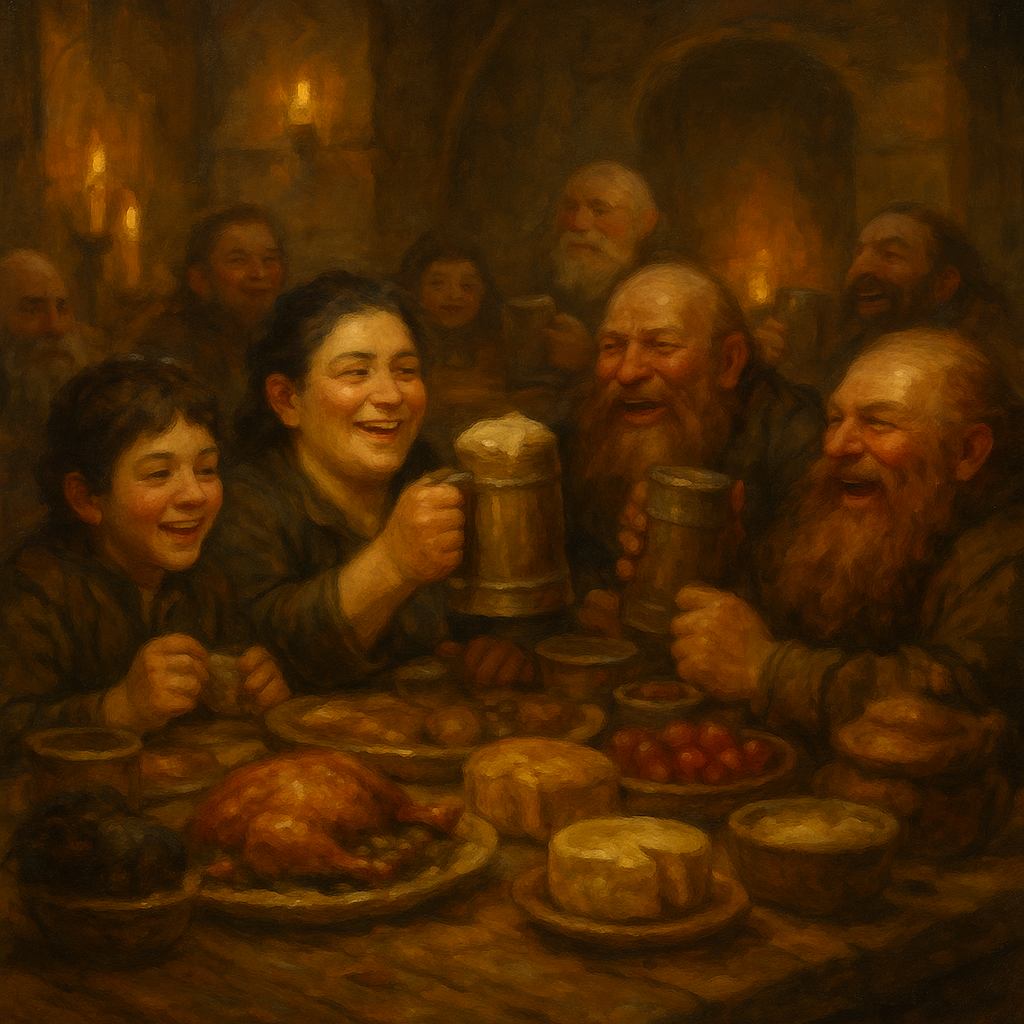 Underground agriculture forms the backbone of their diet. Vast fungal gardens, nutrient towers, and cavern-grown tubers provide reliable staples year-round. Bioluminescent lichen, stone moss, and mineral-rich roots are prized for their ability to replenish electrolytes and maintain bone strength. These plants are often stewed, roasted, or fermented, forming the base of most meals.
Protein comes from subterranean livestock such as cave goats, stone sheep, burrowing boars, and cavern fowl. Many holds also maintain fishing operations in underground lakes, harvesting blind trout and shelled cave crabs. Surface meats—particularly beef, venison, and mountain hare—are considered luxuries and often reserved for festivals or trade occasions.
Fermentation is central to dwarven food culture. Their breads are dense, sour, and intended to last for weeks; their cheeses sharp and mineral-heavy; their ales and spirits potent enough to warm the body in the coldest tunnels. Alcohol itself holds cultural and ceremonial weight, symbolizing both labor and celebration, though dwarves are not reckless drinkers—they brew for sustenance as much as enjoyment.
Despite their reputation for heavy meals, dwarves maintain strict discipline in how they ration and balance food. Feasting occurs during major accomplishments, clan milestones, or the completion of masterwork projects, but everyday meals remain efficient, filling, and perfectly suited to a life carved out of stone.
Underground agriculture forms the backbone of their diet. Vast fungal gardens, nutrient towers, and cavern-grown tubers provide reliable staples year-round. Bioluminescent lichen, stone moss, and mineral-rich roots are prized for their ability to replenish electrolytes and maintain bone strength. These plants are often stewed, roasted, or fermented, forming the base of most meals.
Protein comes from subterranean livestock such as cave goats, stone sheep, burrowing boars, and cavern fowl. Many holds also maintain fishing operations in underground lakes, harvesting blind trout and shelled cave crabs. Surface meats—particularly beef, venison, and mountain hare—are considered luxuries and often reserved for festivals or trade occasions.
Fermentation is central to dwarven food culture. Their breads are dense, sour, and intended to last for weeks; their cheeses sharp and mineral-heavy; their ales and spirits potent enough to warm the body in the coldest tunnels. Alcohol itself holds cultural and ceremonial weight, symbolizing both labor and celebration, though dwarves are not reckless drinkers—they brew for sustenance as much as enjoyment.
Despite their reputation for heavy meals, dwarves maintain strict discipline in how they ration and balance food. Feasting occurs during major accomplishments, clan milestones, or the completion of masterwork projects, but everyday meals remain efficient, filling, and perfectly suited to a life carved out of stone.
Behaviour
Dwarven behavior is shaped by a blend of instinct, culture, and the hard realities of subterranean life. At their core, dwarves are steady, pragmatic, and purpose-driven. Their psychology leans toward long-term thinking rather than impulse, and they tend to evaluate choices based on durability, legacy, and communal benefit. Because they mature slowly and live long lives, dwarves naturally value consistency and reliability in both people and routines. Sudden change is tolerated, not embraced, unless necessity forces it.
Emotionally, dwarves feel deeply but express themselves sparingly. Outbursts are uncommon; dwarven restraint is a cultural norm, and most prefer to show affection, pride, or anger through action instead of words. Bonds form slowly, but once made they are unshakeable. Loyalty is less a virtue and more a psychological instinct, betrayal is almost unthinkable to a dwarf and deeply traumatic when it occurs.
Socially, dwarves thrive in structured communities. Hierarchy, roles, and expectations anchor their sense of identity. Craftsmanship and labor are powerful psychological needs; idleness is uncomfortable for most dwarves, and many experience unease or irritability when they cannot work with their hands. Creation, whether forging, carving, engineering, or brewing, is one of the most grounding forces in their mental health.
Conflict among dwarves tends to be quiet, persistent, and stubborn rather than explosive. Grudges can last years, and reconciliation is typically achieved through mediated discussion or cooperative labor rather than emotional confrontation. Despite this stubborn streak, dwarves are rarely cruel. They simply prefer order, clarity, and honest expectations.
Spiritually, dwarves gravitate toward deities and philosophies of creation, stability, craft, and perseverance. Molgrin’s presence in their cultural psyche reinforces their drive toward innovation tempered by discipline. Even dwarves who are not religious tend to treat their crafts with reverence bordering on spiritual devotion.
“You can always count on a dwarf to build something that’ll outlive you, your grandchildren, and probably the mountain it’s carved into. Just don’t expect them to admit you're right about anything unless it involves stone, steel, or stubbornness. That said… I wouldn’t trade my forge-mate for all the gears in Gnomereach.”
Additional Information
Social Structure
- Clans as Pillars of Society: At the core of dwarven civilization are the clans, tight-knit, multi-generational families bound by blood, honor, and craft. Each clan specializes in a particular trade or craft, such as metallurgy, stonecutting, brewing, or rune magic. Clans often maintain ancestral halls and family forges passed down through generations.
- Guilds and Artisan Circles: Beyond familial lines, dwarves form guilds based on profession and skill. Guilds hold immense power in dwarven settlements, setting standards, overseeing apprenticeships, and preserving trade secrets. They often work in tandem with the clans, but are distinct entities with their own hierarchies.
- Thanes and High Councils: Most strongholds are ruled by a council of Thanes, respected leaders elected or inherited from the major clans. The High Thane, often the most venerated or diplomatically skilled among them, acts as the speaker for the council and arbitrator in disputes.
- Merit and Craft Above All: Status in dwarven society is earned through skill, contribution, and innovation rather than mere birthright. A brilliant young smith can earn more respect than a lazy noble-born, though legacy and ancestry still carry weight in politics and marriage.
- Faith and Forge: Temples dedicated to Molgrin are interwoven with public life, often acting as neutral spaces for resolving disputes, recording clan histories, and educating the young. Priests are often master artisans themselves, overseeing not just faith but the continuity of cultural knowledge.
- Inter-Clan Rivalries and Alliances: While dwarves prize unity, rivalries between clans, especially those in similar crafts, are common and occasionally fierce. These rivalries fuel innovation and excellence, though they are kept in check by codes of conduct and honor duels if tensions flare.
- The Hearth as a Microcosm: The family unit, while subservient to the clan, is sacred in dwarven life. Shared meals, apprenticeships under one’s parents, and oral storytelling at the hearth reinforce identity and belonging from a young age.
- Elder Councils and Lorekeepers: In some regions, clans maintain Lorekeepers, respected elders who act as historians, genealogists, and judges. Their word can rival even the Thane in weight when it comes to matters of tradition or inheritance.
- Outcast Castes and Redeemers: Dwarves who commit serious crimes, betray their clan, or forsake the forge may be cast out and declared “Stonebroken.” Some spend their lives seeking redemption, either through valorous deeds or founding new settlements in Molgrin’s name.
- Social Cohesion Through Ritual: Dwarven society reinforces structure through seasonal rites, ancestor festivals, and forging ceremonies. These rituals, whether tied to Molgrin, the mountain, or the forge, bind individuals to the community and remind them of their place in a greater whole.
Geographic Origin and Distribution
Dwarves are predominantly concentrated in the mountainous regions of Tanaria, where stone, ore, and geothermal activity provide both sustenance and purpose. Their largest and oldest settlements, called Holds, are found throughout the Zandari Mountains of Kamulos, serving as the cultural and industrial heart of dwarven civilization. Other major populations are scattered across Arandor, particularly in the Stoneback Range of Drakoria and the volcanic Ashen Peaks near Dhuma.
Smaller surface enclaves exist along major trade routes, acting as outposts for ore exchange, rune-tech trade, and engineering consultancy. These enclaves often form the backbone of human and orcish trade cities, their influence extending through craftsmanship, mining, and architecture.
While most dwarves prefer subterranean or cliffside homes, a few clans have migrated to coastal and frontier regions, adapting their engineering to different terrains. Sea-facing dwarves, often shipwrights or metal traders, maintain strong cultural ties to the mountain Holds, returning for seasonal festivals or material shipments.
Despite this spread, dwarves remain territorial by heritage. Each Hold considers itself autonomous but linked through shared reverence for Molgrin and a unified sense of ancestry. Collectively, these scattered fortresses form a vast subterranean network that runs beneath much of central and western Tanaria, connecting the heart of the continent with its outer realms through tunnels, trade, and tradition.
Average Intelligence
Dwarves possess above-average intelligence among mortal species, averaging an IQ equivalent of 110–120 in comparative humanoid terms. Their intellect leans strongly toward 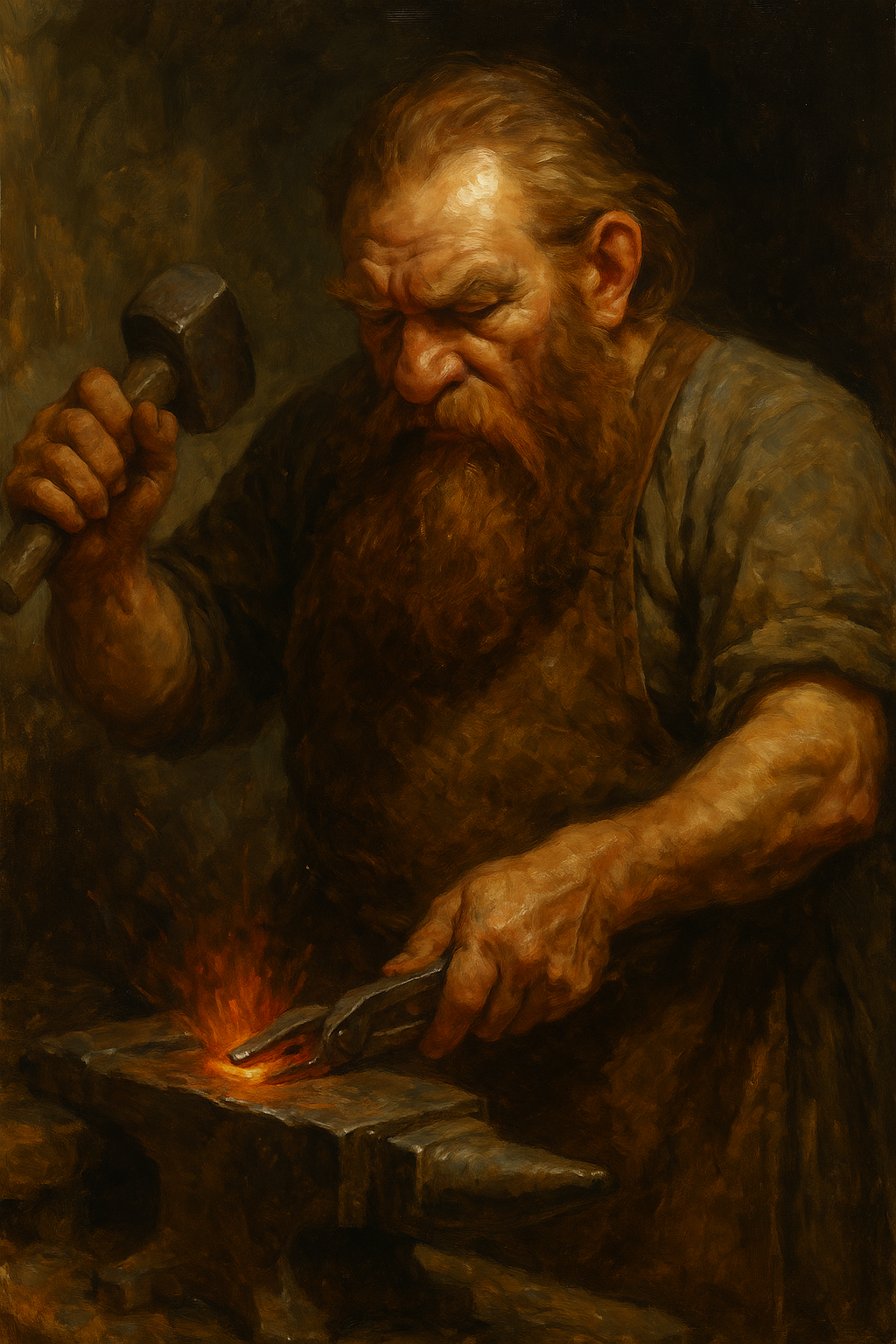 practical and technical reasoning rather than abstract philosophy. Most dwarves demonstrate exceptional spatial awareness, mechanical intuition, and problem-solving ability, particularly in fields involving engineering, metallurgy, and runecraft.
While they may appear slow to outsiders, dwarves process information deliberately, valuing precision and thoroughness over speed. Their memory retention is remarkable—many can recall tool schematics, ore patterns, or entire songs of lineage passed down over centuries. Magic-users among them tend to specialize in applied enchantment and structural reinforcement rather than raw arcana, a reflection of their cultural focus on creation over destruction.
In short, dwarven intelligence manifests through craftsmanship, discipline, and methodical thought—practical genius shaped by stone, sweat, and the teachings of Molgrin.
practical and technical reasoning rather than abstract philosophy. Most dwarves demonstrate exceptional spatial awareness, mechanical intuition, and problem-solving ability, particularly in fields involving engineering, metallurgy, and runecraft.
While they may appear slow to outsiders, dwarves process information deliberately, valuing precision and thoroughness over speed. Their memory retention is remarkable—many can recall tool schematics, ore patterns, or entire songs of lineage passed down over centuries. Magic-users among them tend to specialize in applied enchantment and structural reinforcement rather than raw arcana, a reflection of their cultural focus on creation over destruction.
In short, dwarven intelligence manifests through craftsmanship, discipline, and methodical thought—practical genius shaped by stone, sweat, and the teachings of Molgrin.
Perception and Sensory Capabilities
Dwarves possess exceptionally acute tactile and vibrational sensitivity, a trait developed from millennia spent in subterranean environments. Their bones and musculature transmit subtle ground tremors with remarkable clarity, allowing them to sense structural shifts, distant footsteps, or changes in stone integrity long before they become dangerous. This sense is not magical but highly refined instinct and physiology, often referred to as “stone awareness” among the clans.
Their eyesight is adapted for low-light conditions, granting excellent vision underground while remaining slightly less sensitive to bright, direct sunlight. This is not true darkvision, but dwarves can distinguish shapes, movement, and texture in dim environments far better than most humanoids.
Their hearing favors lower frequencies, enabling them to detect echo patterns, machinery hum, or cavern acoustics with precision. This contributes both to their engineering talent and their awareness of approaching threats in tunnels.
Dwarves exhibit mild resistance to magical interference, not through innate arcana but through the stabilizing nature of their physiology and Molgrin’s ancestral influence. Illusions, compulsions, and disorienting magic tend to affect them less intensely, as their grounded senses anchor them to physical reality. While they are not immune to such effects, dwarves often recover faster or perceive subtle flaws that others overlook.
Together, these capabilities create a species deeply attuned to stone, structure, and the physical world — an awareness that forms the foundation of dwarven craft, architecture, and survival.
Civilization and Culture
Naming Traditions
Dwarven names carry deep meaning, tied to clan, craft, and legacy. A dwarf’s name is not merely an identifier—it is a declaration of ancestry, worth, and the values they are expected to uphold.
Dwarves are typically given a first name at birth, followed by a clan name. The first name often honors a revered ancestor or reflects a desired trait (e.g., Durka "steadfast", Bromm "unyielding", Thryna "clever", Volda "bright-forged"). These names are selected by the parents, often after consulting the clan's elders, runes, or ancestral records.
Clan names are inherited patrilineally or matrilineally depending on the region, and reflect both familial heritage and ancestral homeland—e.g., Stonebraid, Ironmantle, Varraksson, or Deephearth. In formal settings, dwarves often include their titles or honorifics, such as Forgewarden, Gemseer, or Runesworn.
A third, less formal naming tradition exists among those who have completed a major life-defining deed. These earned names are known as Stone-names, granted by the clan or community in recognition of a feat of craftsmanship, battle, or leadership. For example, a dwarf might become known as Tharka Flamebinder after mastering fire-runes, or Brog Ironfall after surviving a collapse and saving others.
Nicknames among close friends are rare and usually affectionate insults—meant to show comfort, not mockery. Outsiders using these names without permission is deeply frowned upon.
In summary:
- First Name – Chosen for virtue, legacy, or omen.
- Clan Name – Inherited; tied to family and geography.
- Stone-name – Earned; tied to great deeds.
Beauty Ideals
Common Etiquette Rules
- Respect the Craft: Skill in one's trade is a source of pride. Mocking or dismissing another dwarf’s work is deeply offensive.
- Formal Greetings: Dwarves prefer direct, firm greetings. A solid handshake or hand-to-forearm clasp is customary.
- Beards Are Sacred: Touching another’s beard—especially uninvited—is highly inappropriate unless one is family or bonded.
- Honor the Forge: When entering a forge or workshop, a respectful nod or small offering (like a coin or gear) to the hearth is traditional.
- Titles Matter: Addressing someone by their full name or title shows respect, especially for elders, clan leaders, or master crafters.
- Silence in Stonehalls: In ancestral halls or tombs, silence is observed unless performing a ritual or recounting lineage.
- Oaths Are Binding: Dwarves take promises seriously—breaking one is not just dishonorable but can result in exile or a blood-debt.
- Shared Meals Bind Bonds: Eating together signifies trust. Refusing a meal, especially when offered in hospitality, is rude.
- Gifts Must Be Earned: Unsolicited gifts are often turned down unless given with clear intent and humility. The phrase “May this hold weight” often accompanies such exchanges.
History
The origins of the dwarves trace back to the earliest centuries of the Calamity Era, though some dwarven legends claim their people were shaped long before that—carved from the bones of the mountains by Terranis himself. Whether divine truth or ancestral myth, most dwarves believe they were not born of gods, but forged alongside them, emerging from stone and fire already knowing the crafts that define them.
The first great dwarven strongholds—Weldenkont, Varrak-Dûm, and Khazdravahl—rose in the Zandari and Taranhul Mountains. Built during the First Age of Forge, these bastions of stone and steel became cultural centers that shaped dwarven identity. Each stronghold developed its own clan structures, dialects, and trade specialties, yet all shared reverence for Molgrin, Father of the Forge, and the doctrine of the Anvil Path: toil, temperance, and tenacity.
During the Expansion Wars of the 2nd century HE, dwarves were instrumental in building infrastructure across Tanaria. Their engineering prowess earned them contracts and alliances with kingdoms like Kamulos and Dhuma, but also painted targets on their mines. Several conflicts with Orc clans, deep elves, and greed-driven humans sparked the Age of Collapse, when many surface-linked dwarven holds fell or were sealed.
In response, the dwarves entered the Age of Stonebinding, turning inward. They refined their artifice, crafted defensive automatons, and deepened their kinship with the earth. Subterranean cities grew labyrinthine and self-sufficient, with powerful rune-masters shaping entire caverns through geomantic rituals. It was during this era that the Ember Pact was signed—a legendary alliance between dwarves, fire giants, and salamanders, granting access to deep magma veins in exchange for powerful armaments.
The modern age sees dwarves more scattered. Some strongholds remain insular, keeping to ancestral ways, while others have emerged as major political forces. Weldenkont, nestled at the heart of Kamulos, has become both an economic engine and a cultural melting pot, its gates open to trade and diplomacy. Meanwhile, more conservative holds eye this openness with distrust, fearing it dilutes dwarven legacy.
Throughout the centuries, one constant remains: dwarves endure. Their cities may fall and rise again, their alliances shift, but their identity—shaped in stone and sealed in fire—remains unbroken.
Interspecies Relations and Assumptions
Dwarves in Tanaria maintain generally respectful but measured relations with other species, shaped by their pragmatic worldview and strong cultural values. Trust is earned, not given, and while they are not quick to embrace outsiders, long-standing partnerships are honored and maintained with fierce loyalty once forged.
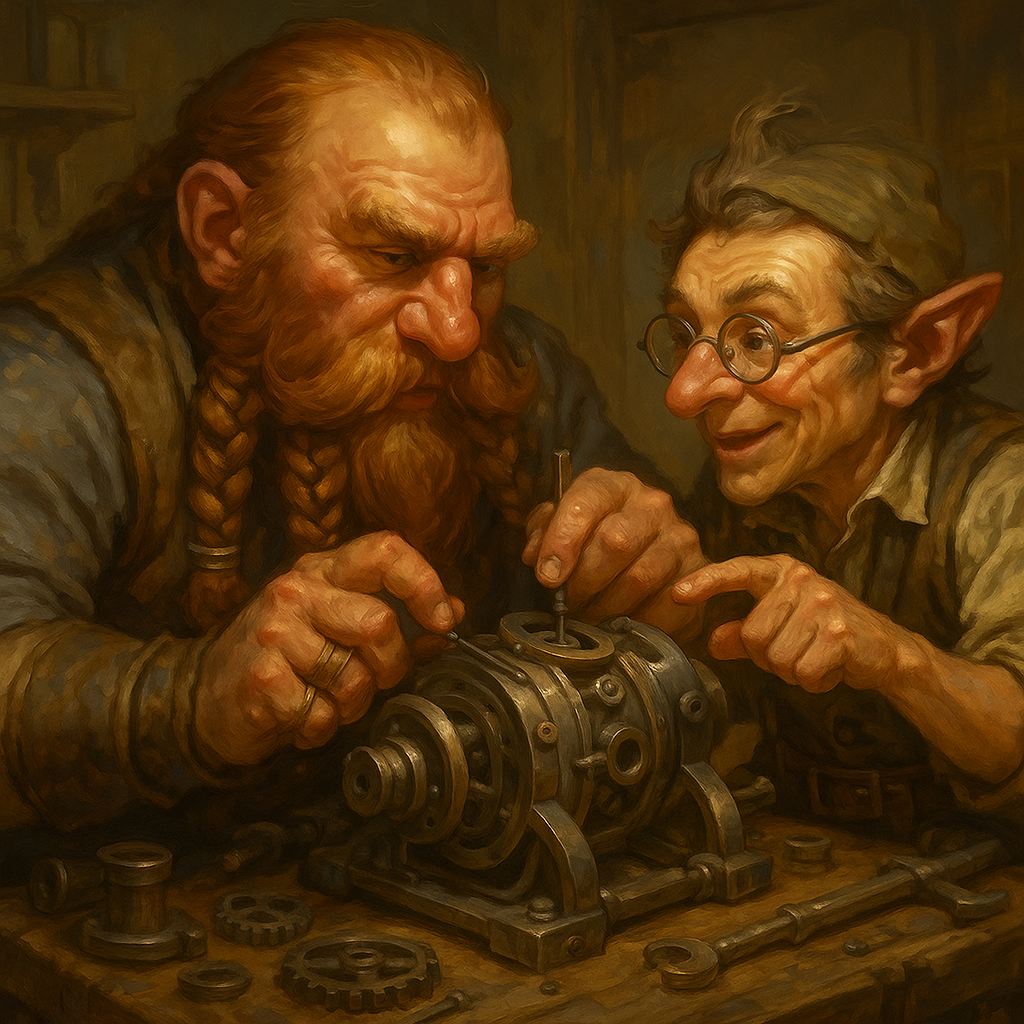 Their closest allies are Gnomes, with whom they share an ancient alliance rooted in mutual innovation, underground living, and complementary skillsets. While dwarves favor solid, functional craftsmanship, gnomes bring creativity and eccentric brilliance to shared projects. The two peoples often cohabitate in mixed settlements or neighboring tunnels, with dwarves handling structural integrity and metallurgy, and gnomes contributing alchemical knowledge, intricate mechanisms, or magical enhancements. Some dwarves joke that gnomes make the mess and dwarves make it last.
Relations with Elves tend to be polite but distant. Dwarves often view elven aesthetics and magical philosophy as impractical or frivolous, while elves sometimes see dwarves as rigid or outdated. However, where mutual respect is found—often through long-term trade or shared battlefields—genuine friendships can form.
Humans are seen as unpredictable but useful. Their short lifespans and ever-changing politics can frustrate dwarves, but those who prove reliable are welcomed. Dwarves tend to get along best with humans who embrace tradition, honor, and hard work—traits they consider respectable regardless of race.
They remain wary of orcs and goblinoid kin, often due to centuries of territorial disputes and historical raids on dwarven mines and strongholds. However, individual exceptions are made, especially in modern times where joint settlements or wartime alliances have fostered reluctant camaraderie.
In general, dwarves value competence, loyalty, and shared purpose over bloodlines. While slow to trust, they do not judge based on species alone—only whether someone can carry their weight and hold to their word.
Their closest allies are Gnomes, with whom they share an ancient alliance rooted in mutual innovation, underground living, and complementary skillsets. While dwarves favor solid, functional craftsmanship, gnomes bring creativity and eccentric brilliance to shared projects. The two peoples often cohabitate in mixed settlements or neighboring tunnels, with dwarves handling structural integrity and metallurgy, and gnomes contributing alchemical knowledge, intricate mechanisms, or magical enhancements. Some dwarves joke that gnomes make the mess and dwarves make it last.
Relations with Elves tend to be polite but distant. Dwarves often view elven aesthetics and magical philosophy as impractical or frivolous, while elves sometimes see dwarves as rigid or outdated. However, where mutual respect is found—often through long-term trade or shared battlefields—genuine friendships can form.
Humans are seen as unpredictable but useful. Their short lifespans and ever-changing politics can frustrate dwarves, but those who prove reliable are welcomed. Dwarves tend to get along best with humans who embrace tradition, honor, and hard work—traits they consider respectable regardless of race.
They remain wary of orcs and goblinoid kin, often due to centuries of territorial disputes and historical raids on dwarven mines and strongholds. However, individual exceptions are made, especially in modern times where joint settlements or wartime alliances have fostered reluctant camaraderie.
In general, dwarves value competence, loyalty, and shared purpose over bloodlines. While slow to trust, they do not judge based on species alone—only whether someone can carry their weight and hold to their word.
Known to Themselves As:
Durakmir (DOO-rahk-meer)
Durakmir (DOO-rahk-meer)
Scientific Name
Duraki sapiens
Lifespan
350–450 years
Conservation Status
Stable and widespread
Average Height
4’0” – 4’8” (122–142 cm)
Average Weight
160–230 lbs (72–104 kg)
Geographic Distribution
Related Organizations
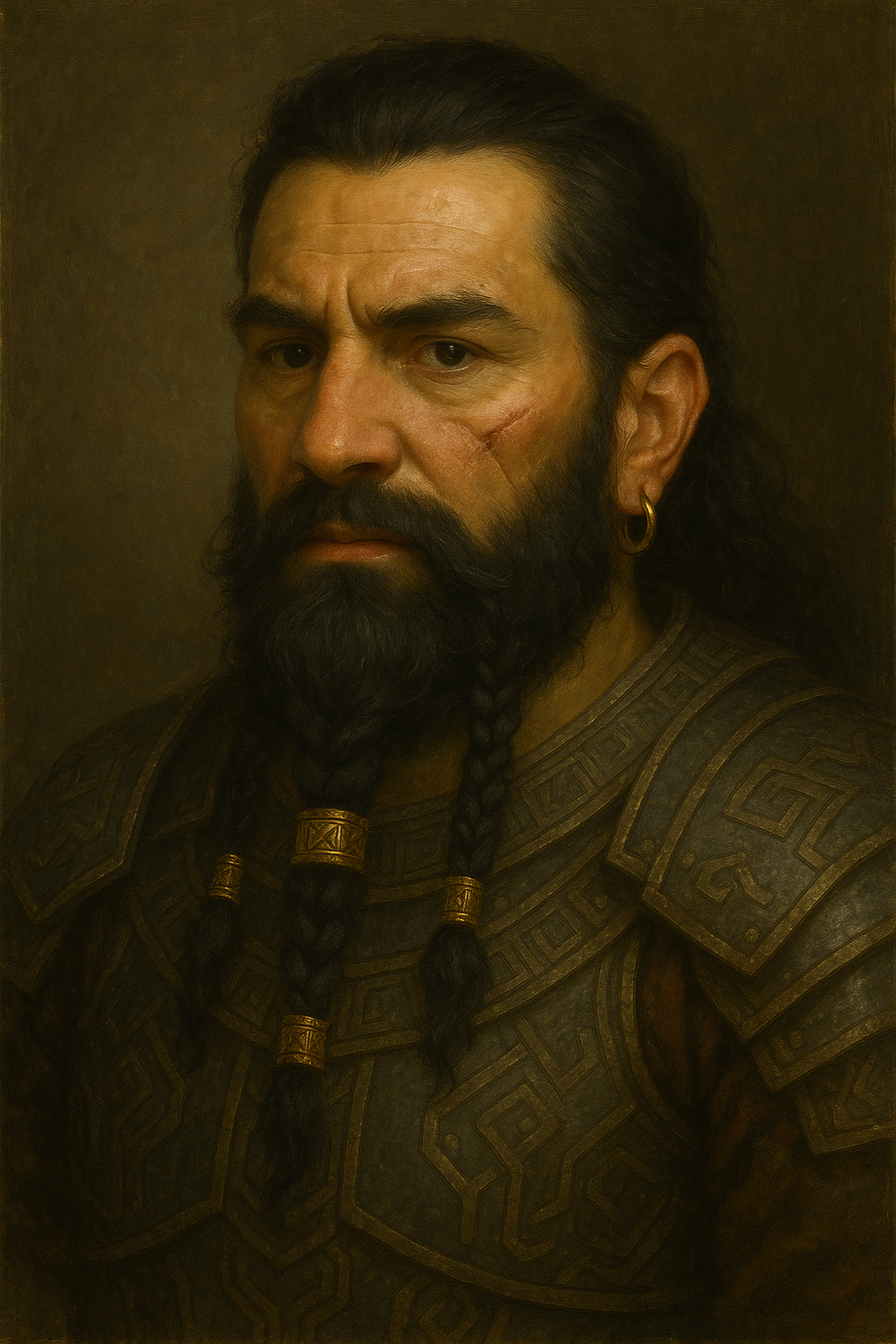
"Aye, dwarves are stubborn, loud, and smell of iron and sweat—but I’d trust one at my back in a cave full of demons over a dozen elven archers. Just don’t ever challenge ‘em to a drinking contest. Or arm wrestling. Or beard braiding."


I think this might be my favourite article I've read in Tanaria this WE. I love how *scientific* all the anatomy/biology/genetics stuff is, that always brings me so much joy. I love your take on dwarven culture too, especially how gifts have weight and must be earnt.
Explore Etrea | WorldEmber 2025
Thanks so much! I won't lie I look forward to your comments when I post articles. The race articles are beefy, but I'm trying to get all the classic TTRPG races in here this WE
"Every story is a thread, and together we weave worlds."
The Origin of Tanaria