
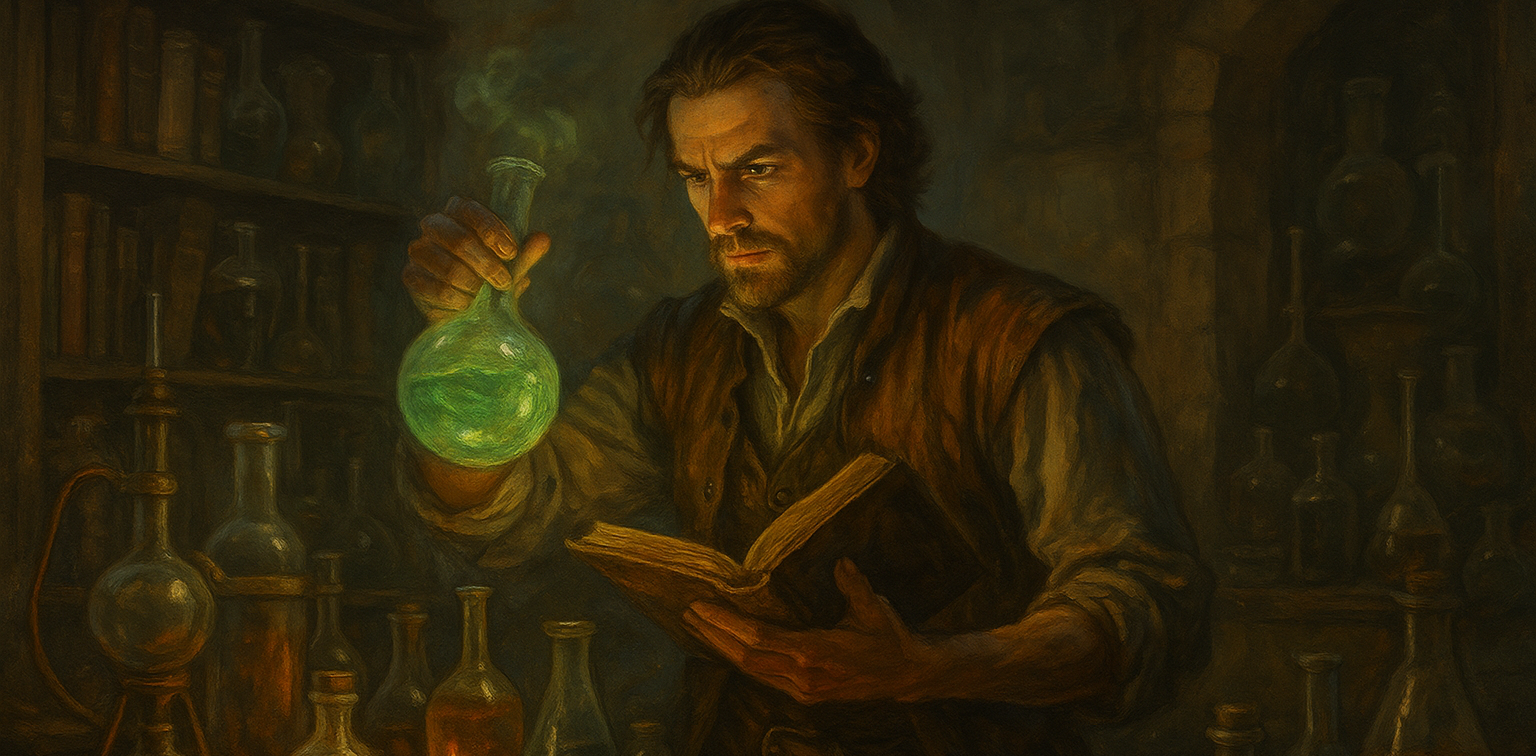
Alchemist

Alchemists in Tanaria are scholars of the Arcane Material, the unseen thread binding matter and magic. Unlike mages who draw directly from leylines or divine energy, alchemists bottle the impossible. They refine fragments of the Weave into tangible form, distilled spells, bottled vitality, or volatile destruction. Where a wizard bends reality with willpower, the alchemist forces it to comply through formula, reaction, and sacrifice.   Alchemy is considered a half-art and half-science, occupying the intersection of invention, chemistry, and metaphysics. Its practitioners are driven by obsession and discovery rather than faith or tradition. Each alchemist views the world as a grand experiment, every plant, beast, and mineral a potential key to unlocking the nature of creation itself.   In Tanaria, the discipline’s perception depends greatly on region and culture. In Kamulos, alchemists are respected as engineers and physicians, often employed by guilds or universities. In Valoria, they walk a dangerous line between magecraft and heresy; many of their formulas are banned, their labs hidden behind apothecaries and trade halls. Dhuma’s alchemists are survivalists, desert poisoners and dust-brewers who turn venom, sand, and bone into elixirs that defy death. Among the Thrukka of Kalros, alchemy borders on spirituality, mixing ritual bloodwork and primal reagents to channel the strength of beast and storm alike. The Aelvaren and Sylvaren practice alchemy as a philosophical art, favoring transformation, healing, and the perfection of body and mind.   At its heart, Tanarian alchemy pursues three intertwined paths:  
  • Transmutation , The art of altering essence and substance, reshaping the material world to mirror the will of its maker. From metals and minerals to flesh and spirit, transmutative alchemists believe the secret to divinity lies in the perfect formula.
  • Vitae Manipulation , The mastery of life itself. These alchemists craft extracts that heal, mutate, or reanimate, walking the line between medicine and blasphemy. Their work is prized by healers and feared by the devout.
  • Elemental Distillation , The practice of binding raw elemental energy, fire, lightning, frost, into portable catalysts. Their concoctions mimic the fury of storms and the calm of oceans, often weaponized by soldiers and explorers alike.
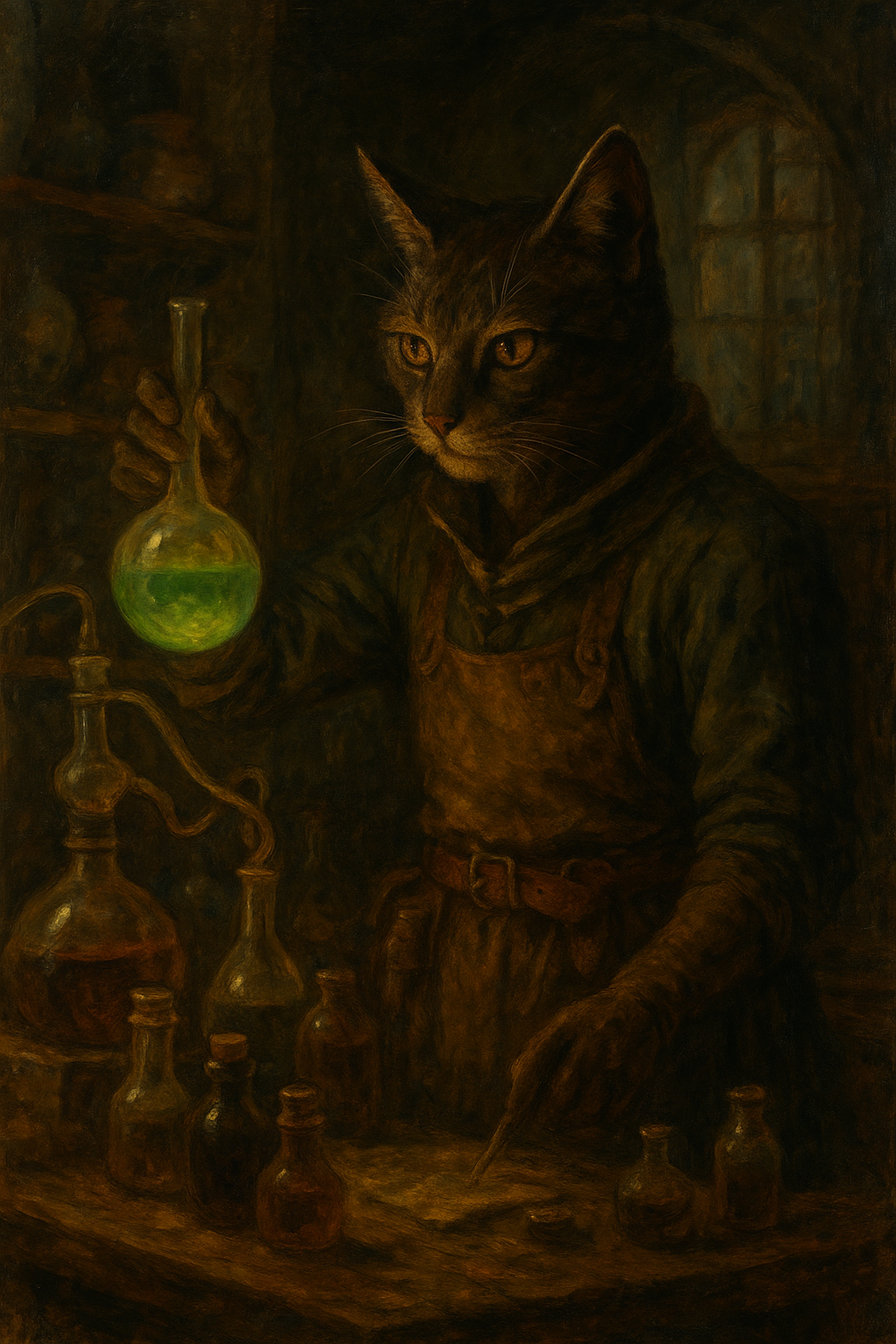
  Despite the diversity of practice, every alchemist shares one truth: power demands control. Extracts, bombs, and mutagens are unstable by nature, requiring preparation and precision. Their potency fades quickly, and their misuse can warp the body or soul. Many legendary alchemists were undone by their own genius, victims of toxic ambition or flawed creation. Yet those who endure stand on the edge of godhood, chasing the mythical Philosopher’s Stone, the perfect synthesis of magic and matter.   In Tanaria’s ever-shifting age of discovery, the alchemist represents both progress and peril, the mind that invents miracles and the hand that may someday unmake them.
This class is based on The Alchemist class created by Dragonshard
Type
Arcane

Playing an Alchemist in Tanaria: Pros & Cons

  Alchemists in Tanaria occupy a unique niche between mage, inventor, and mad scientist. They are not arcane casters in the traditional sense; instead, they distill, refine, and weaponize the raw essence of magic through reagents, extracts, and volatile mixtures. This makes them invaluable to adventuring parties, particularly in regions where magic is scarce or tightly regulated. In a world where leylines surge and the gods themselves have altered the flow of magic, alchemists stand as innovators who craft miracles through intellect rather than faith or innate gift.   Their role often reflects the culture they come from — a Kamulosi alchemist might be a respected engineer, while a Dhuman counterpart could be a desert survivalist blending venom and dust into potent elixirs. In Valoria, their work borders on heresy; in Kalros, they are shamanic experimenters fusing natural and mystical energies. Regardless of origin, an alchemist in Tanaria embodies the relentless pursuit of discovery — and the peril that comes with it.  

Pros (Why play an Alchemist?)

  1. Unmatched Versatility: You can mimic both arcane and divine magic through your extracts, offering healing, support, and offense without needing to be a full caster.
  2. Explosive Power: Alchemical bombs provide a flexible and scalable damage option that can adapt to a wide range of encounters.
  3. Utility for Every Situation: Between toxins, mutagens, and discoveries, you can always craft a solution—literally—for almost any problem.
  4. Strong Roleplay Potential: Alchemists fit seamlessly into Tanaria’s lore-rich world, from scholarly guilds in Kamulos to wandering hedge-brewers in Dhuma.
  5. Crafting and Experimentation: You can create tangible items that last beyond combat—potions, salves, explosives, and more—encouraging creativity and player agency.
  6. Self-Sufficiency: Through mutagens and resistances, you can become surprisingly durable and independent compared to most half-casters.
  7. Science Over Faith: You don’t rely on divine favor or unstable Weave currents, giving narrative freedom and thematic distinction.

Cons (Challenges of playing an Alchemist)

  1. Preparation Over Spontaneity: Extracts must be prepared in advance, requiring foresight and limiting adaptability mid-adventure.
  2. Resource Management: Maintaining reagents, extract slots, and bomb components demands careful tracking and planning.
  3. Dependent on Rest Cycles: Extract potency fades after eight hours, making timing critical for long journeys or multi-day dungeons.
  4. High Complexity: Managing extracts, mutagens, and discoveries can overwhelm newer players or those wanting straightforward gameplay.
  5. Material Costs: Alchemy consumes components and gold, which may strain resources, especially in survival-based campaigns.
  6. Social Stigma: In certain regions (notably Valoria), alchemy is seen as dangerous or unholy, potentially causing friction with authorities or clerics.
  7. Half-Caster Limitations: You’ll never match the raw magical power of full casters like wizards or sorcerers.
Final Verdict: Should You Play an Alchemist? You should play an Alchemist if:  
  • You enjoy creative problem-solving and crafting your own solutions to every challenge.
  • You want a class that balances intellect, danger, and adaptability.
  • You like the flavor of a scholar, tinkerer, or experimenter operating on the edge of science and magic.
  • You want a mechanically rich class with layers of customization and invention.
  Avoid Alchemist if:  
  • You prefer simple, straightforward combat mechanics.
  • You dislike managing multiple resources or tracking limited-duration effects.
  • You want immediate, reactive magic rather than pre-planned concoctions.
  • You find bookkeeping and item crafting tedious rather than rewarding.

Comments

Please Login in order to comment!
Nov 11, 2025 15:42

Aside from the fact that this is about when one should play an alchemist in your world, this could also be used as a kind of job description for one's own professions in a world. I should definitely remember that.

I'm a Comment Caroler! Click to learn more

Dive with me into the depths of the oceans and see what I have prepared for Worldember.
Here are my Entries for the water continent Ulűri̋qi̋
.
Nov 11, 2025 15:51 by Alikzander Wulfe

That is how I used it with other professions/Classes like Bard, Ranger etc. I plan to elaborate this one eventually

Architect of Tanaria
"Every story is a thread, and together we weave worlds."
The Origin of Tanaria