

Martyr
Squalid masses draw close around a young dwarf in spotless clothing. He touches each person in turn, healing injuries, curing illnesses, and restoring hope.
A ragged tiefling speaks in a crowded square. As if in response, dark clouds gather over her head and the earth trembles at her words.
A mad king spits and swears from his throne at imperial guards who have fled or been slain. A lone dragonborn stands before him, solemnly preparing herself for divinely demanded regicide.
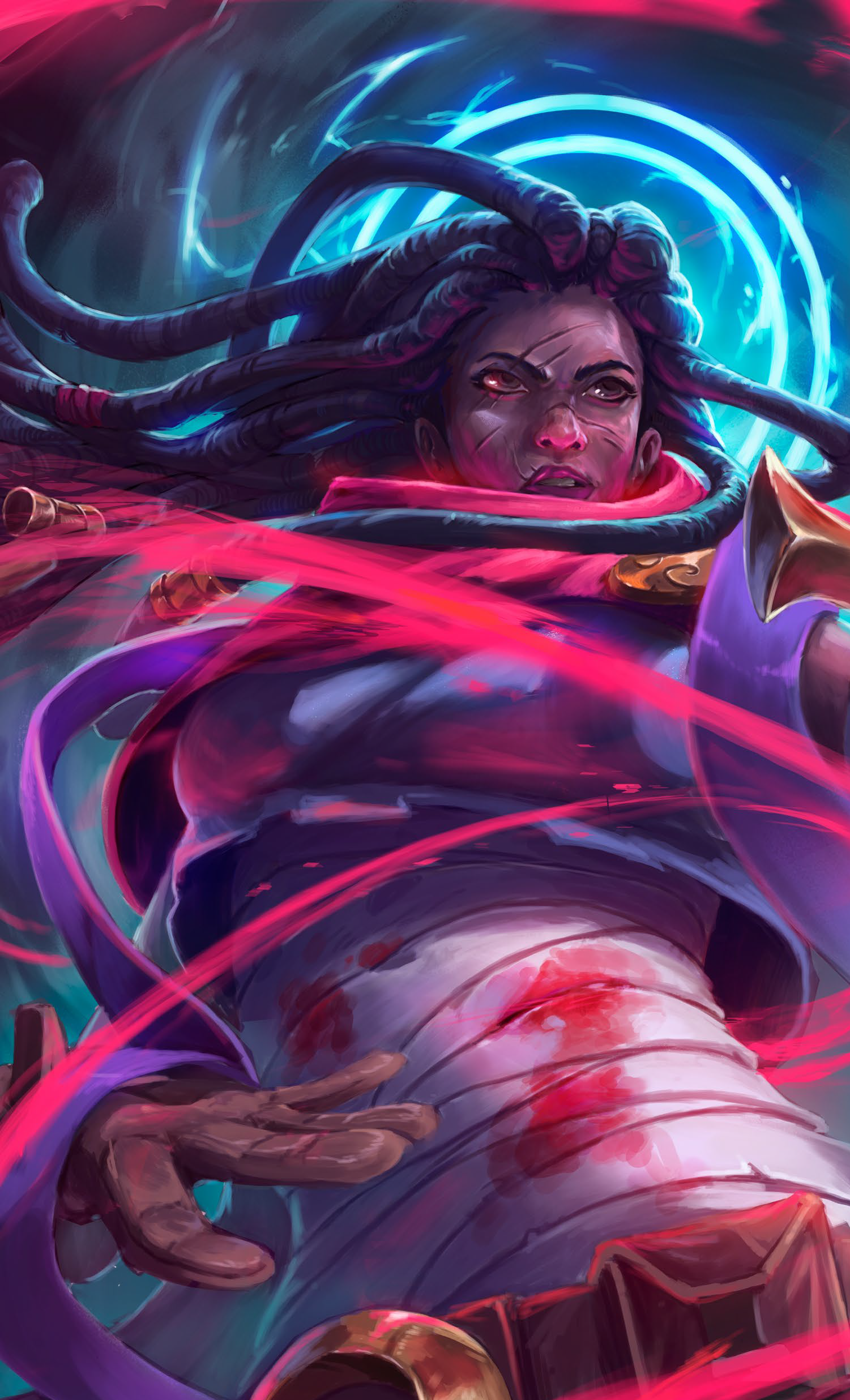
Martyrs are implements of the gods, handpicked to spill their blood in service of a divine cause. Such an end is inevitable, for once a martyr is chosen, their fate is fixed in the heavens.
Fated to Die
Martyrs are chosen by the gods, predestined to speed forth to a final destination: they are ordained to die for a great cause. They are prophets and oracles, great priests and liberators. Regardless of how much good they might accomplish in their lives, the end must always be the same: a glorious death, to be remembered in legend.
No matter the circumstance, a martyr cannot avoid their destiny. While some martyrs gladly accept their holy approbation, others struggle against it. However, from the moment the gods choose their martyr, they shall intervene in the martyr’s fate, pulling them inexorably towards their cause. The gods will settle for a lesser martyr if they must—if the one chosen is unwilling to follow their path— but they always prefer to uplift their martyr to the heights of sainthood before their inevitable death.
Blood of the Martyr
As martyrs are ordained by the gods to die, their suffering is holy sacrament. Martyrs brought close to death grow more powerful, not less, and those that spill their own blood evoke waves of divine energy. In the view of the gods, such hardship only heightens martyrdom and hastens the martyr to their destiny.
Paradoxically, martyrs are protected from death’s precipice even as they are edged closer towards it. Every torment and persecution suffered by them is weighed with equal moments of respite offered by the gods. The gods do not mean to kill their charge early; a martyr should meet their fate only at the preordained time and place.
Creating a Martyr
As you create a martyr, think about the moment you were chosen by the gods and your burden was placed upon you. Were you visited by an angelic host or a god disguised as a mortal? Did you quietly hear a divine voice in your ear, as stigmata formed on your body? Was your soul violently dragged to the Upper (or Lower) Planes for an audience with the gods?
Consider the life you led before you were ordained for martyrdom. Were you a wicked soul, purified and redeemed to undergo this task? Were you already a warrior, adventurer, or cleric in service of the gods? Also consider how you reacted. Did you accept the task and your inevitable destiny, or did you run from it? Are you still running?
Martyr Class Features
As an martyr, you gain the following class features when you reach the specified martyr levelsLevel 1: Mortal Burden
You are fated to perish in the name of a great ideal, cementing your name alongside others who have done the same. Choose a Mortal Burden, detailed at the end of the class description. Your choice grants you features at 1st level, and again at 6th, 14th, and 18th level.
Burden Spells
Each burden has a list of associated spells that you gain at the martyr levels specified in the burden description. Once you gain access to a burden spell, you always have it prepared, and it doesn’t count against the number of spells you can prepare each day.
If you gain a burden spell that doesn’t appear on the martyr spell list, the spell is nonetheless a martyr spell for you.
Level 1: Ordained Death
As a martyr, you have been predestined by the gods to perish for a great cause; there is no greater glory in death, and no greater joy in the afterlife. However, it is not yet your time. When you fall to 0 hit points and begin to make death saving throws, you must fail 5 saving throws to die. Additionally, if a spell has the sole effect of restoring you to life (but not undeath), the caster doesn’t need material components to cast the spell on you.
Level 2: Mark of the Herald
Your divine cause manifests itself upon you, forming a special mark or stigmata for all to see. You have advantage on ability checks you make to convince other creatures to assist you in service of your holy cause.
Level 2: Spellcasting
You can leverage the power of your suffering to cast divine magic.
Casting Spells
To cast one of your martyr spells of 1st level or higher, you must lose hit points to create and expend a spell slot greater than or equal to that spell’s level. The number of hit points is listed on the Hit Points Spellcasting table and can’t be reduced or avoided. You don’t make Constitution saving throws to maintain concentration on spells as a result of losing these hit points.
The Martyr table shows the maximum level of spell slot you can create.
The Spell Uses column of the Martyr table shows how many spells you can cast. When you expend hit points to cast a spell, you expend one of these uses. You regain all expended uses when you finish a long rest.
| Spell Level | Point Cost |
|---|---|
| 1st | 5 |
| 2nd | 10 |
| 3rd | 20 |
| 4th | 30 |
| 5th | 45 |
Preparing Spells
You prepare the list of martyr spells that are available for you to cast, choosing from the martyr spell list. When you do so, choose a number of martyr spells equal to your Wisdom modifier + half your martyr level, rounded down (minimum of one spell). Spells you choose must be of a level no higher than what’s shown in the Max Spell Level column for your level. You can change your list of prepared spells when you finish a long rest.
Healing Magic
Because your power is derived from mortal suffering, you can’t regain hit points from any spell you cast.
Spellcasting Ability
Wisdom is your spellcasting ability for your martyr spells, since your power originates in the devotion used to overcome your trials and tribulations. You use your Wisdom whenever a spell refers to your spellcasting ability. In addition, you use your Wisdom modifier when setting the saving throw DC for a martyr spell you cast and when making an attack roll with one.
Spell save DC = 8 + your proficiency bonus + your Wisdom modifier
Spell attack modifier = your proficiency bonus + your Wisdom modifier
Spellcasting Focus
You can use a holy symbol as a spellcasting focus for your martyr spells.
Level 2: Sainted Reprisal
You can reprimand those who draw your blood. When a creature you can see within 5 feet of you hits you with a melee attack, you can use your reaction to deal that creature 1d6 necrotic or radiant damage (your choice).
The damage increases by 1d6 when you reach 5th level (2d6), 11th level (3d6), and 17th level (4d6).
Level 3: Divine Healing
You can utter a prayer to the gods for mercy. As an action, you can spend Hit Dice and regain hit points as if you had just finished a short rest. When you use this ability, you can spend a number of Hit Dice up to your proficiency bonus.
Level 3: Torment
You have learned to curry the gods’ favor through anguish and mortal trials. Once on each of your turns when you hit a creature with a melee weapon attack, you can lose 5 hit points to deal an extra +10 bonus necrotic or radiant damage (your choice) to the target. You don’t make Constitution saving throws to maintain concentration on spells as a result of losing these hit points.
Starting at 11th level, you can choose to lose 10 hit points to deal an extra +20 damage to the target.
Level 4: Ability Score Improvement
When you reach 4th level, and again at 8th, 12th, and 16th, you can increase one ability score of your choice by 2, or you can increase two ability scores of your choice by 1. As normal, you can’t increase an ability score above 20 using this feature.
Level 5: Extra Attack
You can attack twice, instead of once, whenever you take the Attack action on your turn.
Level 7: Respite
You regain all spent Hit Dice when you finish a long rest, instead of only half of them.
Level 10: Undying Conviction
When you drop to 0 hit points and aren’t killed outright, you can choose to drop to 1 hit point instead. Once you use this ability, you can’t use it again until you finish a long rest.
Level 15: March Unto Destiny
Your inevitable end draws nearer, and nothing can hold you from it. You do not need to eat or drink, and can’t be paralyzed, petrified, or stunned.
Level 19: Epic Boon
You gain an Epic Boon feat or another feat of your choice for which qualify. Boon of Truesight is recommended.
Level 20: Final Martyrdom
You have at last reached your predestination: you will die in eternal glory. You can use your action to become immune to all damage for 10 minutes. During this duration, you can’t be blinded, charmed, deafened, exhausted, frightened, incapacitated, poisoned, restrained, or rendered unconscious. You have advantage on all ability checks, attack rolls, and saving throws.
Additionally, during this duration, you can cast the wish spell once, without spending a spell slot or hit points. If you use the spell to produce any effect other than duplicating another spell, the stress of casting it doesn’t reduce your Strength or cause you to take necrotic damage.
At the end of this duration, you die. No force short of divine intervention can prevent your death, and you can’t be returned to life by any means.

Comments