
The Children of Harlak
Account submitted by Captain Tejin Sutrapala to the Court Chroniclers of His Imperial Majesty of the Empire of Syama
The peoples whom the Varenthiya call The Children of Harlak inhabit the southern peninsula beyond the Browntail Range. To the fractured peoples of the Varenthiya they are feared, cursed and painted as the remnants of a dead god's host. In truth, they are an insular but self sufficient people, ordered by a philosophy of cycles of life and death, of decay and renewal. I have spoken with them under truce, in a fortress town overlooking a river delta, where the terraces ran green above old graves. Their elders bore scars in circles upon their arms, each mark a grief endured, each wound worn openly as memory. They did not hide their losses, but bore them like banners. In my estimation, they are a grief-stricken people. Grief for their fallen God, and grief for their estrangement from the peoples of the O'yunta.Territorial Situation
Their land is bounded on three sides by sea and marsh, and by the Browntail Range to the north. These natural barriers have sheltered them from conquest, allowing them to endure when more open realms might have been overrun. The marshes are pestilent and difficult to cross, the mountains jagged and narrow, the sea rough with storms. Within these confines, the Children have carved out a realm that is not the wasteland described by the Varenthiya, but one of careful order. I observed terraces cut into hillsides, their soils blackened by rot yet yielding abundant harvest. Irrigation channels ran dark with silt but were cleanly maintained, and granaries were raised upon stone to guard against floods. The land itself bore the scent of decay, but here decay is cultivated, not feared. It is turned to use.Manners and Rites
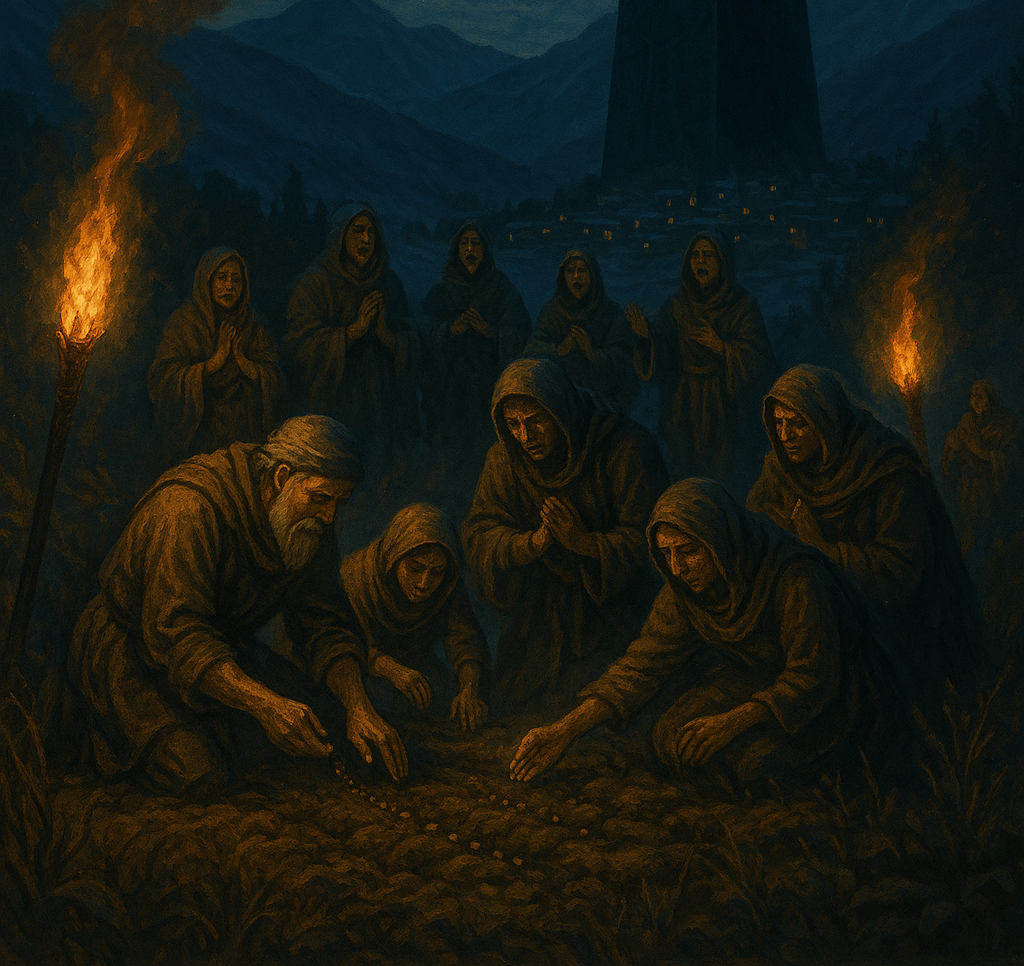
The Children’s creed is bound to grief, and their customs make this plain. They hold that all endings nourish beginnings, that death is but a passage through which life returns. Their funerary rites speak to this belief. The dead are buried shallow with seed, while their kin keep vigil in song until their voices break, a chorus of grief that binds the living to the departed. I was told that families remain in mourning until green shoots rise from the soil above the grave, a sign that the cycle has been fulfilled. The living bear grief on their flesh. Circular scars are carved into their arms, each marking a loss endured. Elders showed me arms ringed like the growth lines of a tree, their entire lives recorded in wounds worn openly rather than concealed. To the Varenthiya such practices are grotesque, but to my eye they are cohesive and practical. The Children do not hide loss in silence, they give it form, witness, and place.Civil Order and Rule
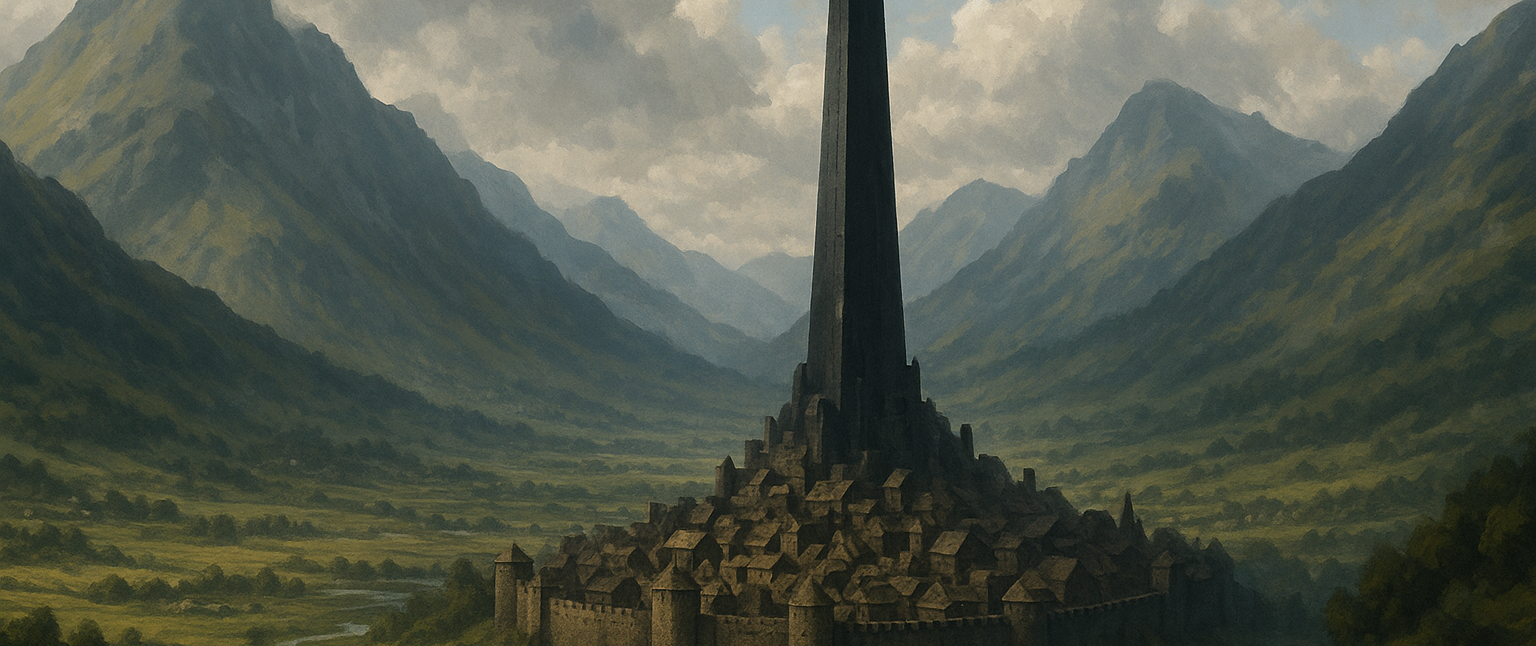
Authority among the Children is concentrated at High Roost, a fortress set near the mountain passes. I was not granted entry within its walls, but from without I saw the citadel rise about a black pillar that pierced the sky, vast and seamless, as though carved not by mortal hand but by gods. The Children call it the Mourning Spire, and treat it as sacred. Their funerals are held within sight of its shadow, and they believe the stone itself drinks the sound of their laments. To them it is grief made manifest, grief eternal. Whether they understand its true nature is doubtful. I have studied records of other such pillars in the holdings of the Varenthiya, and even one in Juro where their dynasty claims it as the source of their right to rule. If High Roost is of the same kind, then the Children of Harlak may dwell upon a thing of rare and immense consequence. The governance conducted at High Roost is strict but consistent. Village stewards administer justice without preference, and trade sworn under oath is honoured without deceit. Their warriors are disciplined, equipped with curved blades and light shields, drilled to defend their land rather than expand beyond it. Where others waste their strength upon banners and rivalries, the Children find unity in their grief and in the silent permanence of their blackstone tower.Reputation Among the Varenthiya
The Varenthiya speak of the Children of Harlak with one voice, though their realms are divided. In their telling, the Children are cursed, forever tainted by the shadow of their fallen god. They are described as oathbreakers, plague-bearers, and heretics who should be shunned lest they infect others. Maps drawn in the north mark their land in black, their name written only in warnings. Yet I found this reputation built on fear rather than fact. If the Varenthiya can visit such cruelty and barbarism upon others over such piddling differences as some religion, clearly they are no less detestable and backwards as our northern neighbours.Imperial Assessment
In my judgment, the peninsula is fertile, its forests dense with timber, and its people disciplined and united. While they do not seek foreign dealings, the trade I witnessed was fair and reliably honoured. They are insular, but when they extend trust it is not broken. Their grief, far from being a weakness, gives them unity. This alone distinguishes them from the quarrelsome Varenthiya, who spill blood for banners and claim mandates already lost. The Children endure, and endurance is a quality Syama should value. The presence of the Tower at High Roost increases the significance of their land, though they seem neither to understand nor leverage its nature.Recommendations
Further study of the Mourning Spire at High Roost is advised, conducted with caution and under truce. Limited and controlled timber and grain trade should be explored, ensuring fair return without entanglement. Diplomatic posture should remain neutral. The Children present no immediate threat, but their endurance may render them valuable allies or stabilisers in future conflicts among the Varenthiya. Monitoring of western slanders is unnecessary, they reveal more of Varenthiya prejudice than of the Children themselves.Filed Conclusion
The Children of Harlak present no threat to the Empire, but they may in time present opportunity. Their peninsula is well defended, their people ordered, their creed stabilising rather than destabilising. Where the Varenthiya waste themselves on superstition, Syama may find profit. I departed their lands beneath the same truce that granted me entry. As I left, a child pressed a seed into my hand, a token I was told is given to every guest. Grief shared, life renewed. I have kept it, though it will not grow in Syama’s soil. To me it is reminder enough that these people are not of death, as their neighbours claim, but of cycles. Their grief is not curse, but law. Filed and sealed, in honour of our Imperial Majesty, by my hand.Captain Tejin Sutrapala
Location: The Mourning Peninsula
Population: Approx: 1.2 million
Capital: High Roost
Government System: Elders’ Council
Deity: Harlak
Official Languages: Old Varinthaya Dialect

Comments