

Cliff Wyverns
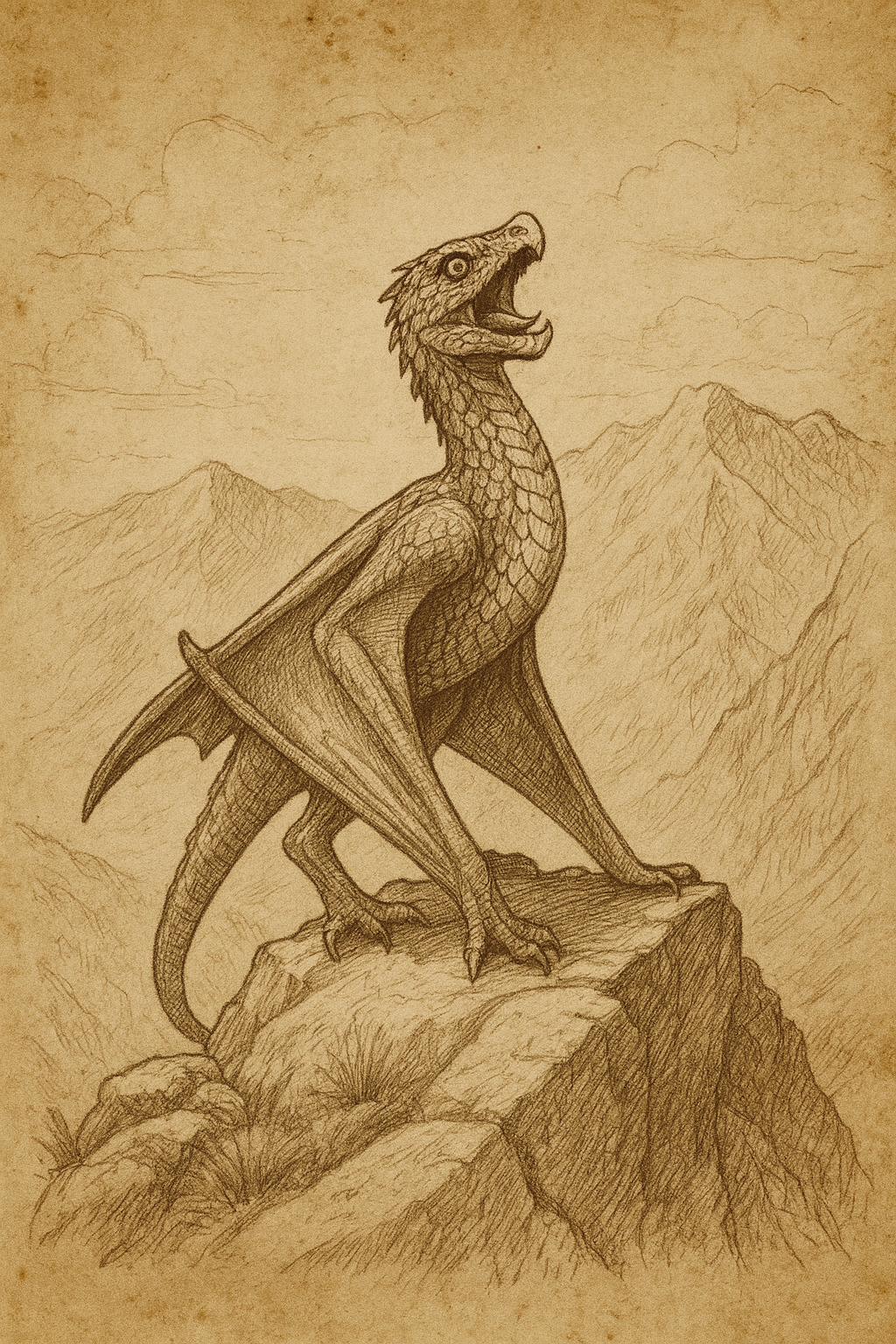
Cliff Wyverns are leathery aerial creatures rumoured to descend distantly from the great dragons of myth. They infest the ridgelines and peaks around Solova, nesting in shallow cliffside caves and crevices. Roughly the size of a large horse, they lack the strength, majesty, or intelligence of their legendary kin, yet they remain among the most feared hazards of the mountain passes of the northern Velvet Coast.
What they lack in grandeur they more than compensate with relentless aggression. Wyverns hunt in packs, wheeling above the switchbacks and caravan roads. They dive shrieking from the heights, harrying pack animals and drovers alike, before retreating to circle and strike again. To caravaners, their screech is the herald of disaster. To the Solovan Pass Guard, they are a perpetual nuisance.
Basic Information
Anatomy
Growth Rate & Stages
Cliff Wyverns hatch from leathery eggs laid in clutches of two to four, usually hidden deep within cliffside hollows. Hatchlings are roughly the size of a large crow, covered in slick, pale scales, and are flightless for their first season. By the end of their first year, they are ravenous and capable of short, clumsy flights.
Year 1: Fledgling stage, dependent on carrion provided by adults.
Years 2–3: Rapid growth; wings lengthen disproportionately, and they begin to harry small animals and lone travelers.
Years 4–5: Reach near-adult size, fully integrated into pack hunts.
Year 6+: Considered mature. Adults live 15–20 years.
Because they grow quickly and breed steadily, eradication is nearly impossible. For every nest destroyed by hunters, three more linger.
Ecology and Habitats
Cliff Wyverns favour sheer cliffs where the wind allow easy gliding, nesting in shallow caves or crevices high above caravan routes. From these vantage points, they can swoop freely upon prey while remaining largely out of reach.
Their diet consists primarily of live pack animals and cattle, though they readily scavenge carrion. In leaner months, they subsist on mountain goats, deer, and even large rodents. Solovan herders curse them as a scourge greater than wolves, for no stable or paddock in the hills is safe from their raids.
Wyverns are territorial, with each pack claiming a stretch of cliff and road. Rival packs fight savagely when territories overlap, their screeches echoing for miles through the passes. Despite this, their populations endure thanks to their hardiness, their capacity to exploit both wild prey and caravan livestock, and the inaccessibility of their nests.

Comments