Valespeak is the native language of the
Vale Verdial people. As a language developed in an environment known for its tree-sized fungi, Valespeak is notable in that it is typically spoken softly, de-emphasizing 'breathy' sounds and open vowels to reduce the inhalation of spores. At the same time, Valespeak features an inventory of rounded and back vowels more expansive than
Iuxat or
Tae na Lepidesn.
Writing System
Valescript, the written form of Valespeak, is a semi-featural, unicameral alphabet. Valescript writing may be written horizontally and read right-to-left, then top-to-bottom, but it may also be written vertically and read from top-to-bottom, then left-to-right for reasons of aesthetics or compactness. Spaces between words are marked with an interpunct. Sentences are separated by a triangular cluster of three interpuncts, and often this triangle is oriented so that one point is oriented in the broad direction of the next sentence or, if the sentence stands alone, directly upwards.
The curvy symbols of Valespeak are traditionally finger-painted on surfaces in colored (sometimes glowing) inks or powders, but modern writers prefer small, cylindrical brushes dipped in ink derived from the bluish secretions of bruising fungi. Because all Valescript glyphs can be written with a single stroke, the script is well-suited to neon signage as part of larger Forgist Deco installations and, as such, has a prominent influence on the broader Manifold architectural community.
Numbers & Mathematics
Valespeak features a bijective base 5 (quintal) number system. This numbering system is traditionally said to have arisen out of the fact that five is the highest number that one could count to on one's left hand when the right was occupied with a tool or container. Valescript does have a zero numeral, but it is typically only used in contexts where working with zero or an empty set is necessary. Numbers up to 25 have unique names and symbols, but, in mathematical contexts, Valescript uses zero and the first five symbols in little-endian positional notation; numerals are read left-to-right from the least significant radix to the most. This order allows addition, multiplication, and radix sorting operations to be handled in the same order as the symbols would be read as written across the page.
Though Valespeak speakers did have a developed mathematical culture before contact with the rest of the
Manifold, this developent was accelerated by with exposure to concepts from the
Rostran world. As such, some concepts in their mathematical system are expressed using
Iuxat loanwords and notation. For example, the Iuxataba symbols for derivation and integration, along with their associated notational conventions, are widely taught in calculus courses at
Petalcap Vale University.
Spoken Valespeak handles numbers differently from Valescript in that it uses an additive system for numbers at a 'personal' scale. Speakers additively stack iterations of the words for 125, 25, and smaller number words using 'and' to arrive at specific numbers via addition, ordering each 'numerical unit' from greatest to least contribution. Smaller number words preceding larger number words indicate that the larger unit is stacked into the total more than once. For example, the value "179" might be expressed as "vegavako min fes kafako min fethe," meaning "125 and two 25 and four." Note that this expression is in the order opposite that of the written notation system and uses words for glyphs not typically used in the written mathematical notation.
Consonants in Valespeak are constructed CV(N or F). In this structure, N indicates a nasal (/n/ and /m/) while F indicates a fricative (/f/, /θ/, /s/, or /ʃ/), both of which are optional. Proper names can start with a vowel or end with a non-fricative consonant, but must otherwise obey the usual construction rules. Nouns are constructed (verity)(agent/patient)(noun root)(gender)(plurality). Adjectives and adverbs are constructed (verity)(root). Verbs are constructed (verity)(root)(tense)(agent gender)(agent number). Emphasis tends to be put on the root, specifically on the second syllable if the root has two or more of them, but can fall on one of the grammatical markers if the speaker wants to emphasize or clarify something about what that marker represents in context.
In general, Valespeak uses an SVO (i.e. "I pet the dog") word order and features agentive-patientive alignment. As an example of this alignment, the difference between "the explorer ate the
flenser" and "the explorer was eaten by the flenser" is realized by grammatical markers on the nouns and the conjugation of the verb to reflect the declensions (see below) of which creature is doing the eating - in other words, which noun is acting on the other rather than strictly the subject or object of the sentence. It is usually safe to assume that the subject of a given sentence is the agent and that there is only one agent in a given sentence, the rest of the nouns being patients, but grammatical markers serve to clarify when these assumptions are not correct.
Nouns in Valespeak decline for verity (false by observation/false by belief/uncertain/true by belief/true by observation), agentive (acting participant) or patientive (participant being acted upon) status, gender (male/female/neuter), and number (single/paucal/plural/general). The verity and agentive/patientive declensions are included as a prefix - often realized as a particle followed by a non-phonemic pause or as a suffix to the preceding determiner or article - while the gender and number are appended as a suffix. The gender of a noun with more than plural number is determined by majority group composition or neuter when the gender of a mixed-sex group is nearly evenly split; objects and most non-humanoid animals, unless their actual sex is known and relevant to the conversation, default towards neuter. When a subject is the passive recipient of an action in the absence of a clear agent (i.e. "The man was humbled"), then that subject declines as a patient and the verb is conjugated for the neuter gender and the general number - as though the universe itself was a multitude acting on the subject. Proper nouns (i.e. names) do not need case declension markers unless the given case needs to be clarified for some reason - verity when identity is at question, gender during personal introductions, and so forth.
Pronouns are declined like regular nouns, but their roots come in indicative (I, you, they, one) and possessive (my/mine, your/yours, their/theirs, one's), reflexive (myself, yourself, themself, oneself), and reflexive possessive (mine own, your own, their own, one's own) forms. Reflexive forms allow for situations where an individual can take the agentive and patientive case within the same context (i.e. "I resolved myself to act"). Valespeak features 'fourth person' pronouns, analogous to 'one' or the 'royal you,' for talking about concepts for the general audience.
Adjectives and adverbs precede the words they modify, but only decline with a prefix if they aren't true by belief as usual. If not, they agree with the word they modify in terms of agentive or patientive case, but may disagree in terms of verity if this differs (i.e. when an item is not in question, but its color is). Because of verity declension, the copula can be dropped when describing something using an adjective or adverb by applying the appropriate verity declension to that adjective or adverb. For example, to say "this apple is not red, but is round," it would be sufficient to describe the apple as "this apple(single/neuter) (false by observation/agent)red but (true by observation/agent)round." Question words can either precede the word they ask about in the manner of adjectives or adverbs (as in the construction "Bob went to which well?") or replace the noun being questioned completely with the addition of standard noun declensions (as in the construction "who wrote this story?").
Definite (the) and indefinite (a) articles, as well as indicatives (this/that/one), come before all adjectives and optionally decline for verity with prefixes like adjectives, but come in different forms for the levels of plurality (these/those/several) and do not decline for gender. Concept like "here" and "there" are typically constructed as "(indicative) place"to allow for these additional nuances with regard to number (i.e. in cases like "these places (general number) that are close to me").
The true-by-belief verity declension or conjugation is considered the default state for all words in Valespeak and requires no additional markers; speakers are generally assumed to be speaking from a position of believing what they are saying is true from their own perspective or of stating something that is self-evident in the world around them. The agentive declension also does not need to be included on the object of a simple sentence where that object is the agent (i.e. "She sings"). The true- and false-by-observation declensions can also serve as emphasis or superlatives in some contexts, (uch as in "I
sure did pet the dog" or "It
surely wasn't the delivery man at the door this afternoon." Using the uncertain declension is important in disambiguating which specific elements of a sentence are being asked about in the construction of question words, such as in phrases like "Did the
veterinarian feed the dog?" versus "Did the veterinarian
feed the dog?" versus "Did the veterinarian feed
the dog?" For this reason, verity agreement is not required between the parts of a sentence when other forms of agreement might otherwise be required.
Because of it's origins among the Verdials, Valespeak contains the most exhaustive vocabulary for botanical, horticultural, and agricultural terms among all languages in the Manifold, making it the preferred scientific language for researchers in these fields; when a Vale Verdial employs 'flowery prose,' the idiom is apt to be taken literally. The language also contains a number of difficult to translate terms for creatures and concepts unique to the
Distal Tesseract.
Valespeak sorts its consonants into categories as shown:
- Voiceless: p, t, tʃ (ch), k
- Voiced: b, d, dʒ (j), g
- Nasal: m, n, *, *
- Lateral: l (orthograph l), *, *, *
- Fricative: f, θ (orthograph th), s, ʃ (orthograph sh)
- Approximant: ʋ (orthograph v), *, *, *
Note: Asterisks are used to indicate relative placement on the script chart.
The purpose of this categorization is to establish the relative location of articulation within the mouth, as Valescript is somewhat featural in nature. Sounds appearing earlier in each set are interpreted by speakers as being articulated closer to the lips while latter sounds are interpreted as being articulated closer to the glottis. The difference between Group 1 (unvoiced) and Group 2 (voiced) is shown by the presence or absence of the 'voice' diacritic in the script; the difference between Group 5 (unvoiced) and Group 6 (voiced) is similarly denoted.
Valespeak sorts its vowels into categores as shown:
- e, i, j (orthograph y), u, ɚ (orthograph r)
- æ (orthograph a/ah), *, *, o, ʌ (orthograph uh)
Note: Asterisks are used to indicate relative placement on the script chart.
As with consonants, the purpose of this categorization is to establish the relative location of articulation within the mouth. Vowels appearing earlier in the list are more front-oriented, while later vowels are more back-oriented. Group 1 vowels are more closed, while Group 2 vowels are more open. Group 2 vowels are denoted with an 'open' diacritic in Valescript. Note that, in the eyes of Vale Verdials, the rhotic is generally realized as an r-colored vowel because it does not obstruct the flow of air through the mouth with contact between surfaces (unlike the ʋ or l in many cases), though there are irregularities in how Valespeak handles rhotics within its phonology (i.e. as a consonant in feminine verb conjugations).
Valespeak verbs have tenses for past, past imperfect, present, present imperfect, and future. Verbs are conjugated for the tense, gender, and number of the agent if present and also decline for verity in the same manner as nouns (albeit always agentive). As with nouns, verity markers on verbs take the form of prefixes, but always take the agentive case because of the language's alignment. All other conjugations take the form of suffixes.

Petalcap Vale Flag by BCGR_Wurth
Common Phrases
"Juhni nes rude." - "I love you." (lit. "(1pos.) (def.)(pauc.) heart(sin.)," or "the two hearts of ours are one")

by BCGR_Wurth

by BCGR_Wurth
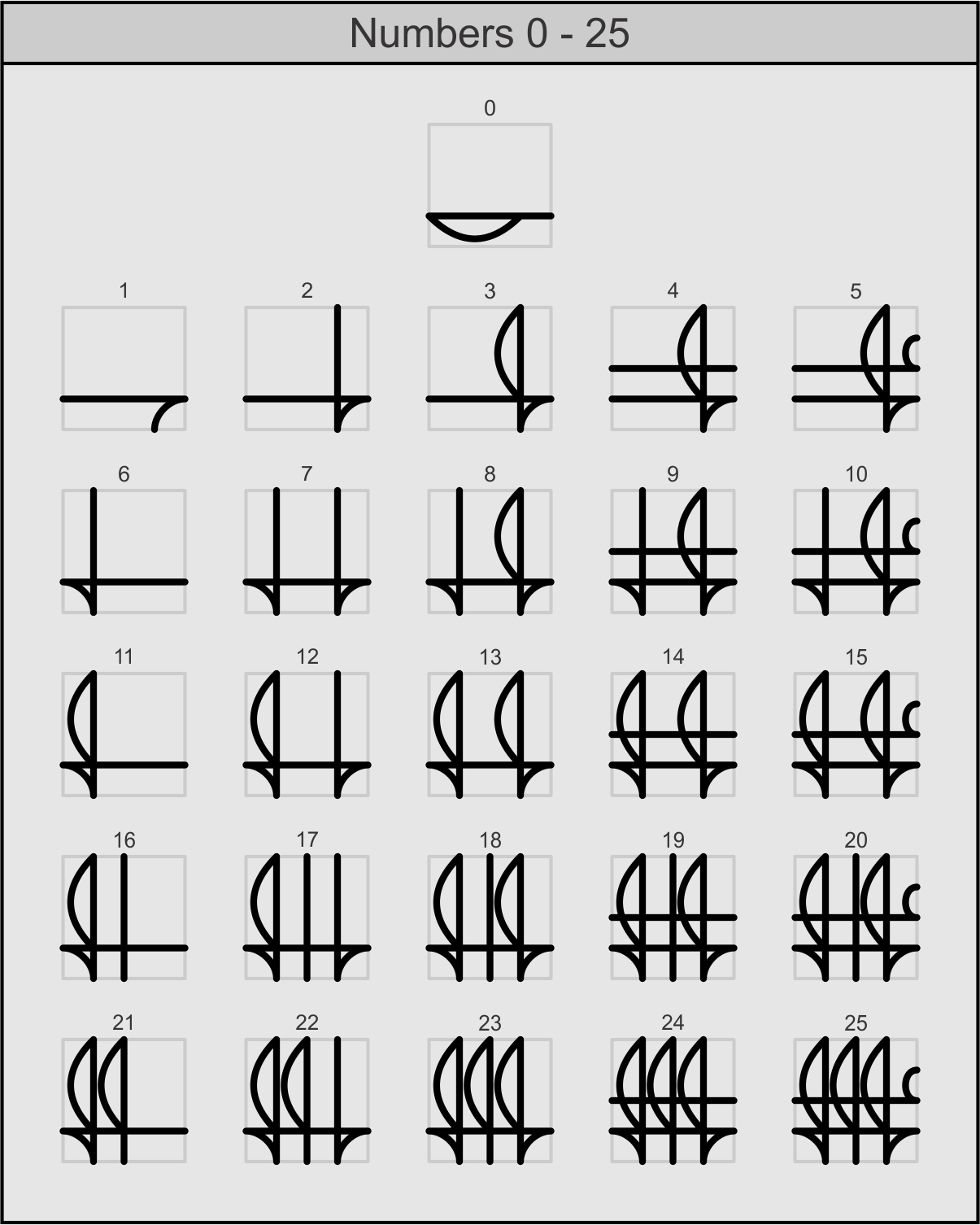
Valescript Numerals by BCGR_Wurth




Comments