
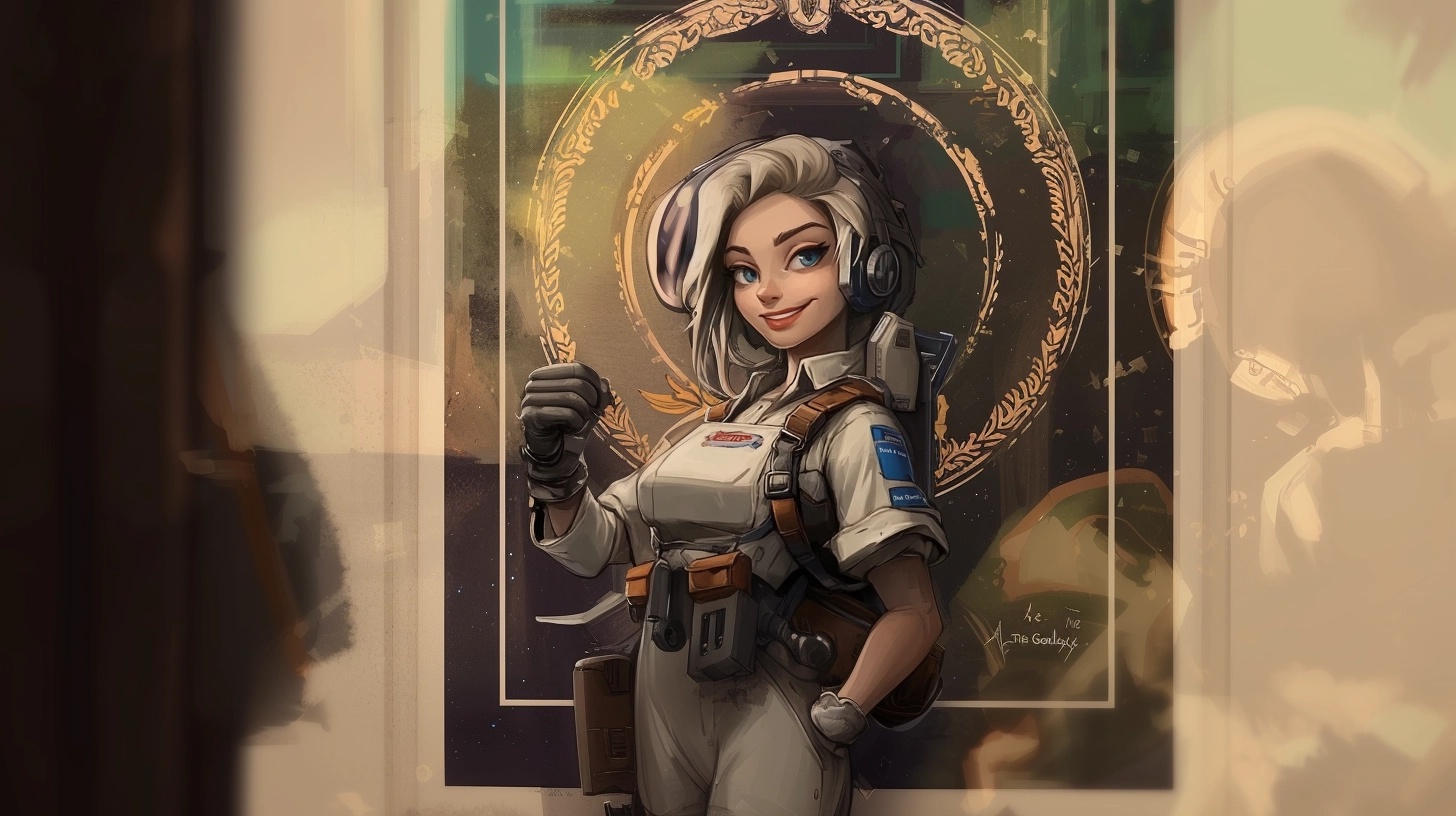
Human
Brought to the good people of the Procyon Sector by the Galactic Hegemony.
Humanity in the Procyon Sector occupies a strange and unstable position — simultaneously dominant, fragmented, and increasingly precarious. When the jump gates were first discovered and cracked open by early Ur archaeotechnologists, humans were among the first to spread through them, borne on a tide of reckless ambition, divine conviction, and military supremacy. The Stellar Hegemony, once centered on humanity’s home systems in the Core, extended its reach through these gates, bringing with it civilization, law, doctrine — and domination. Procyon was one of many sectors "brought into the light," its native cultures suppressed or subsumed, its worlds colonized and assimilated. And yet, despite the Hegemony’s human face, the sector itself is far from exclusively human.
Basic Information
Anatomy
Humans in the Procyon Sector exhibit a wide range of anatomical variation, far more than their Core-world ancestors might recognize. Millennia of expansion through the jump gates, exposure to alien environments, low-gravity worlds, biotech augmentation, and gene-engineering have fractured baseline humanity into dozens — perhaps hundreds — of distinct morphotypes. While most still fall under the broad umbrella of Homo sapiens, the average Procyon-born human is no longer a simple Terran transplant.
Baseline humans — those without significant genetic or cybernetic deviation — are still the most numerous in major population centers like Warren, Nightfall, and Rin. These humans remain within standard height and weight ranges, though minor adaptations like light-enhanced vision, modified lung capacity, or metabolically efficient musculature are common even among them. Cosmetic and superficial modifications are ubiquitous: dermal implants that shimmer like starlight, hair that fluoresces under UV, or skin tones altered to match clan affiliations, aesthetic trends, or planetary allegiances.
Beyond the baseline lie the adapted morphs. On low-gravity moons like Iota or Nomad, long-limbed, hollow-boned humans—sometimes nicknamed “Spindles” or “Floaters”—have become common, bred or modified for life in orbital habitats. On radiation-scorched worlds or near fusion mines, human populations develop dermal plating, mirrored eyes, or heat-shedding subdermal arrays, some through slow evolutionary drift, others by deliberate gene-crafting. Aquatic morphs, atmospheric dwellers, and partial symbiotes exist as well, often the legacy of long-forgotten projects or lost biotech from Ur ruins. Most are still recognizably human in face and form, but many cross a line — socially or physiologically — that others consider posthuman.
What binds them all is cultural identity more than biology. The Hegemony legally defines "human" in sociopolitical terms — as someone loyal to the Flame, integrated into imperial society, and not possessing forbidden levels of deviation. But in Procyon’s underworlds, on forgotten colonies, and among the xeno enclaves, that definition is regularly challenged. Out in the Rim, the difference between “human” and “other” is often just a matter of dialect, doctrine, or how threatening your shadow looks in someone else’s light.

Comments