
Poisoncraft:
in Potionmaking:"There are poisons for every kind of hunger, and some that teach you new ones."
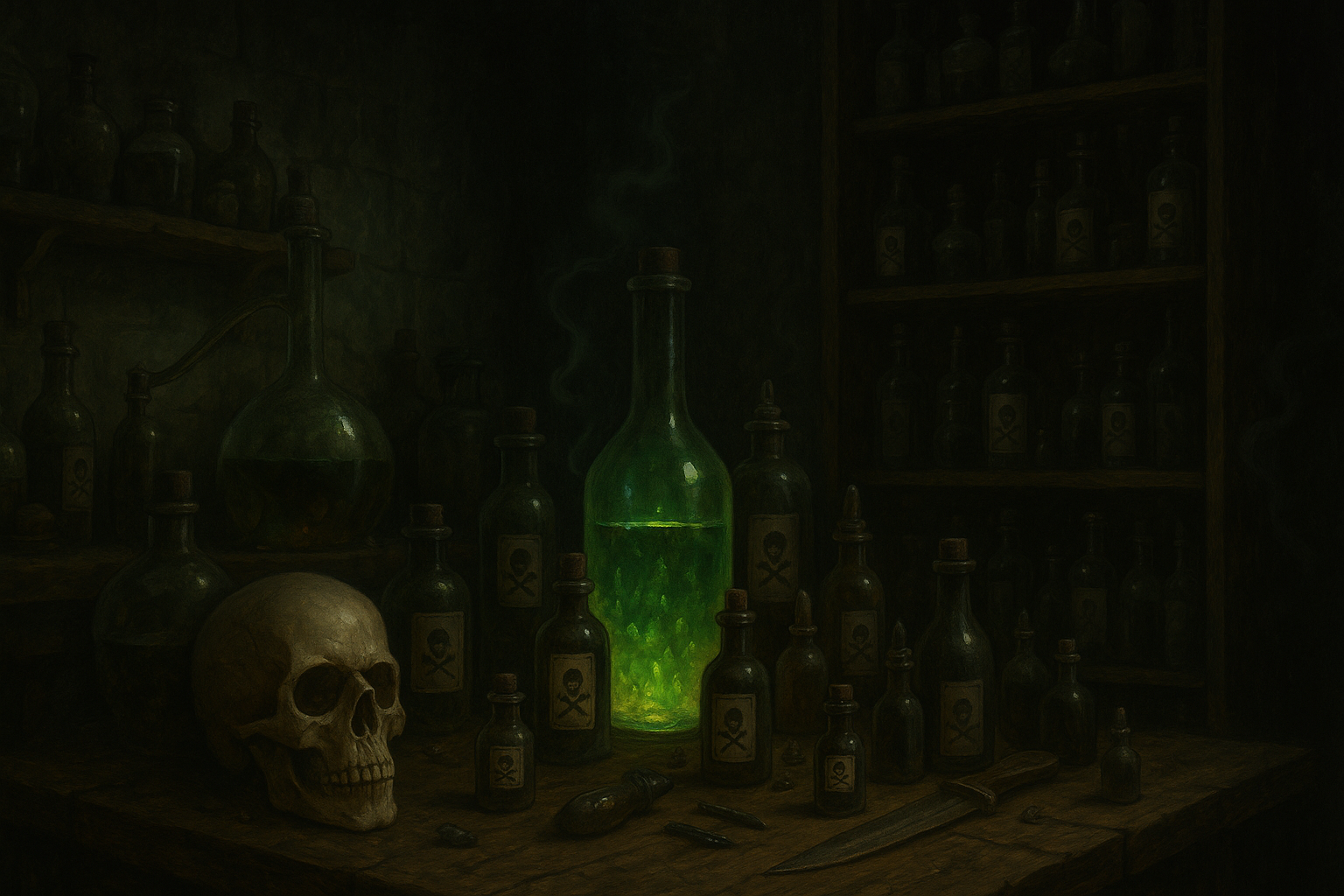
Poisoncraft and mutageny live in the same glasshouse as Vitae, but they are the panes that cut. If Vitae is the desperate art of borrowing life, poisons and mutagens are the ledger that keeps the books honest, instruments designed to take, to twist, to punish. Craftsmen and charlatans both practice them; one crafts subtle death for assassins and the other sells miracle serums that splice muscle to madness. In Everwealth these trades are not quaint curiosities but necessities of power, nobles keep vials for private justice, cartels grease hands with bitter blends, and frontier surgeons barter mutagen samples for grain. The bottles glitter like temptation, and everyone who drinks knows the risk that the price will be greater than advertised. Poisoncraft is old as hatred and as refined as any late-age science. It is not merely the bitter draught slipped into a cup; It is smoke that eats lungs, a slow-acting canker that unravels memory, a compound that mimics fever so well physicians mistake it for plague. Master poisoners harvest venom, distill gravefungi, and temper reagents with rune-etched salts until the effect is predictable and deniable. Some blends are weapons of spectacle, clouds that strip flesh from bone in a market square, while others are surgical: untraceable strands that wither a rival’s hands over months. Trade in these brews runs in shadow markets, guarded by guilds who value secrecy above coin; a single recipe lost to rumor is worth more than an acre of fields. Where law touches them, it is either blunt or corrupt, punishments bought off, contracts inked in blood.
World Codex
Timelines
All writing and lore by author Patrick Enger; All art done by Chat-GPT (for now).