
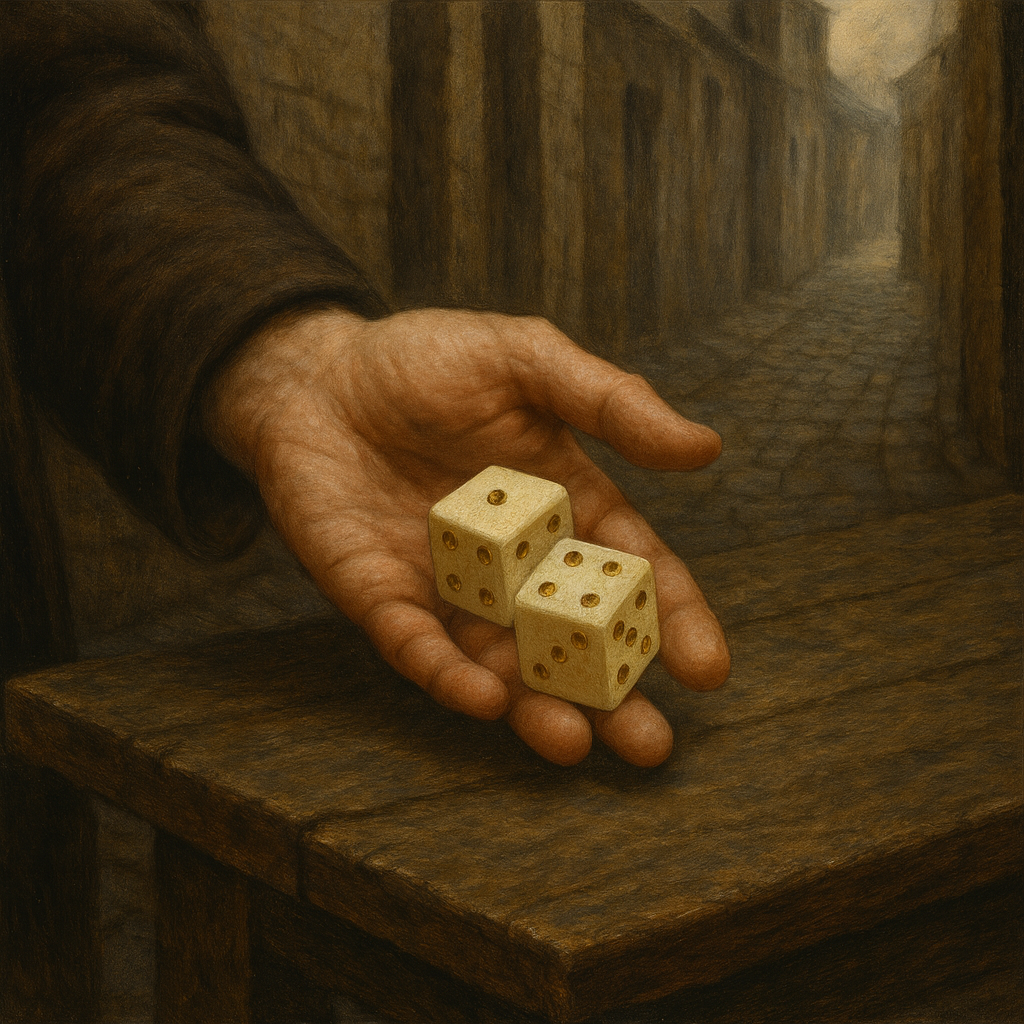
The Dice of Woesome Wagers
"Roll them once and fortune leans. Roll them twice and death leans harder."
The Dice of Woesome Wagers are among the most infamous relics whispered of in Everwealth’s taverns and tombs, a pair of ivory cubes that shimmer with golden pips bright as molten coin. They are relics of risk, conduits of fate, and traps for the arrogant. The die carry a legacy of both majesty and revulsion, the reaction to their origin itself a deadly gamble before its nature is ever discussed; The Tuskites, the race credited for their creation, despise these dice, for to them ivory tooling, the process from which they were made, is absolute sacrilege, a theft of life and memory. Yet beyond their culture, many covet them, believing the dice hold the power to coax destiny itself to heel. Likely a contributing factor to how they ended up here, so far from the southern coasts of Kathar where the Tuskites call home. It is said their maker was a great Tuskite mage of old, who allegedly gave his own tusk to make the instruments, a gambler of both coin and soul who believed that fate was not meant to be tamed but tested. He shaped his own ivory into a set of powerful magick dice as an act of defiance and devotion, what he called his “ultimate wager,” a relic meant to spread the philosophy of risk across all generations. And so they endured, surviving sackings, shipwrecks, and centuries of bloody dice games where stakes climbed higher than kingdoms. Those who play with them do not merely gamble coin or assets. They gamble themselves. To roll the dice is to strike a bargain with chance itself. Sometimes they bless, sometimes they curse, but always they tally. Too many wagers made, too many rolls placed, and the dice remember, until they claim what was always theirs.Mechanics & Inner Workings
The Dice of Woesome Wagers alter fate according to the numbers cast. Their ivory hums with a faint warmth when shaken, and their gold inlays sparkle brighter when results approach extremes.
- Snake Eyes (1+1): The roller is granted immense fortune for one hour, every blow finds its mark, every step avoids misstep, every risk yields gain. But when the hour ends, that same balance crashes back with cruel symmetry. Disaster befalls the roller, not random, but crafted to strike at their deepest fear.
- Double Sixes (6+6): The roller is given a vision of the future, unfiltered and undeniable. A single choice is shown to them with clarity, but the outcome cannot be altered without blood-price. To resist the vision is to draw ruin into their bones.
- Odd Totals (any odd sum): The roller’s words drip with unnatural persuasion. Enemies relent, merchants fold, and even lovers forgive. But once the gift passes, the tongue betrays them: blood seeps into their mouth for three nights, and truth sounds like lies in the ears of others.
- Even Totals (any even sum): A spectral hand delivers a boon into the roller’s possession, a coin, a key, a hidden trinket, but at the same instant, a cherished possession of equal value vanishes, carried into the unseen.
- Any Pair but Ones or Sixes: The roller’s next great gamble, trial, or combat is bent in their favor, weighted as if destiny itself leaned toward them. But every such “tilt” is marked. Three marks, and the dice claim their due, dragging the roller’s soul into the void between wagers, leaving only the cubes behind.
Manufacturing process
Though no living smith could replicate them, fragments of Tuskite lore speak of their making. The tusk of a sacred elder-beast was taken at the behest of a gambler-mage who slaughtered it under eclipse light. The ivory was then etched with molten gold, sealed in wagers of blood, breath, and bone. For three days, the mage cast and recast them until the numbers aligned, each roll fed by his own lifeblood. On the seventh day, he was gone, and only the dice remained, gleaming with gold, warm to the touch, and forever hungry for wagers.
History
The dice first appeared in the courts of Kathar, where warlords threw them to decide the fate of prisoners and borders alike. One roll built empires. Another razed them. Later, they passed through the hands of smugglers, kings, and cutthroats alike. Every wielder claimed to have mastered them. None endured. Some were blessed for years, never knowing misfortune, only to be swallowed whole when the tally closed. Others met ruin in their very first cast. Legends say the Tuskite mage who made them believed he would gamble with the gods themselves in their creation, that the dice were a key to wagers beyond mortal comprehension. If true, he never won. His name is not remembered, only his dice.
Significance
The Dice of Woesome Wagers are coveted as potentially the greatest gamble ever created, the promise of wealth, power, and fortune balanced against inevitable ruin. Tuskites revile them, outsiders covet them, and kings hide them away in vaults too deep to tempt their own heirs. But still they resurface, rolled again and again by hands desperate enough to believe fate can be played with and won.
Creation Date
Believed to have been made during the mid-Lost Ages, centuries before the Fall.
Rarity
Unique. There is only one set.
Weight
Light, as any dice. Yet impossibly heavy in consequence.
Dimensions
Two cubes, each small enough to fit in the palm of a hand. Gleaming ivory with golden pips that glimmer faintly even in darkness.
Base Price
They are not sold, only stolen, gambled, or inherited through bloodshed.
Raw materials & Components
- Tuskite ivory carved from the tusk of its maker, sanctified under the light of a solar eclipse, a chance encounter written even in the skies above it's first days.
- Molten gold for the inlays, each dot inscription made from a sliver of a different coin earned in a gamble that could have cost him his life; The weight of these 'woesome wagers' in every number on the dice
- Blood and wagers of the creator.
Tools
Carved with sacrificial chisels, etched with gold inlays fed by breath and blood, and sealed in chance itself.

Comments