
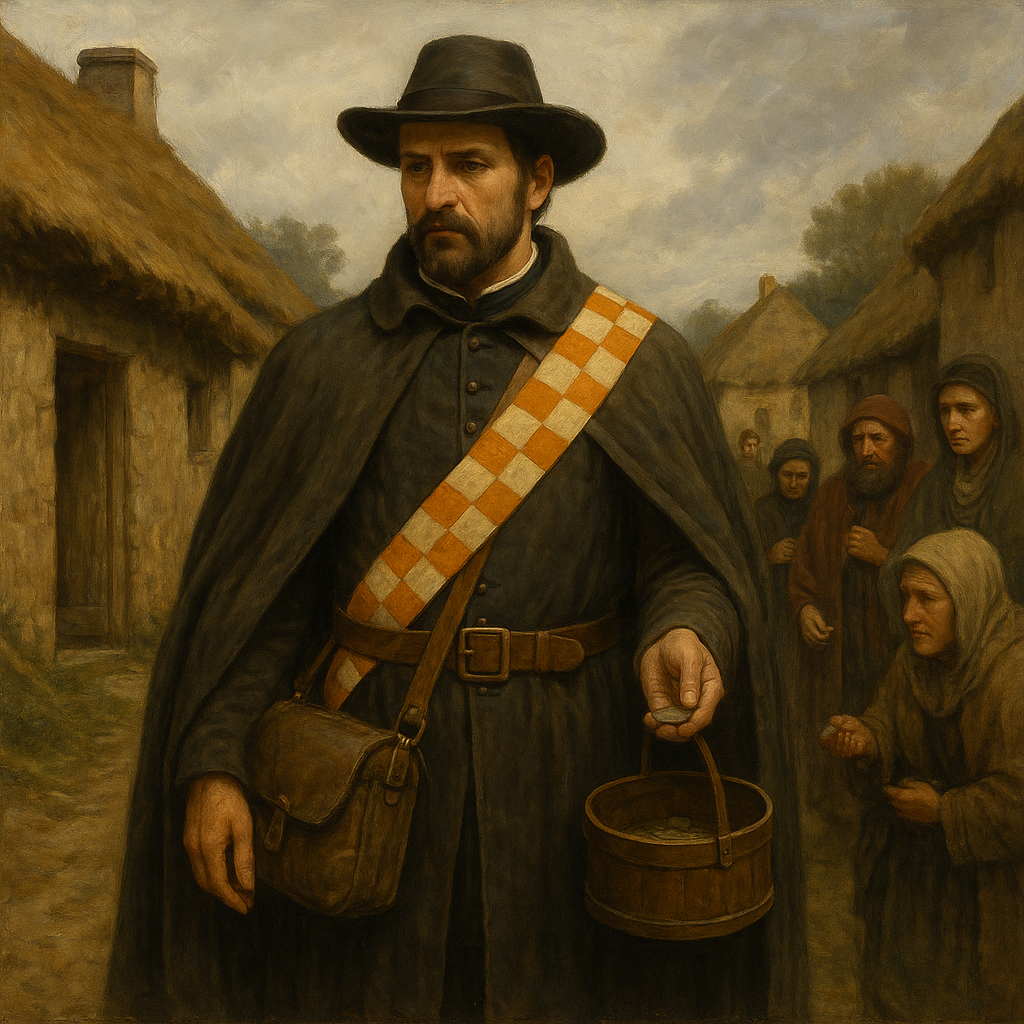
Taxation and Tithes
“The Crown’s weight is borne not only in steel and blood, but in grain, coin, and sweat.”
In Everwealth, tribute is the truest prayer. Every field, every forge, every prayer spoken above an empty bowl bends toward the same altar, the coffers of the Crown. The Monarchy does not govern by sword alone; it governs by hunger. To be born within its borders is to owe, to labor beneath the unblinking eye of collectors who tally devotion in grain, in coin, in marrow. The kingdom calls this order prosperity. The people call it tax season that never ends. Where war once drained blood, now levies drain spirit. A man’s worth is measured not in courage but in what remains after the tithe. When famine comes, the Crown blames the fields. When revolt stirs, it blames the faith. But it is taxation, the slow bleeding of the living for the luxury of the few, that has built the Monarchy’s peace brick by miserable brick.
The Crown’s Due
The Monarchy sustains itself on a tangle of taxes so ancient even the collectors forget which are law and which are habit. They persist because no one survives long enough to untangle them.
- Hearth Tax (“Smoke Capras”) - Every home that burns a fire pays for the privilege of warmth. Assessors travel with the thaw, counting chimney smoke at dawn. Families without coin smother their fires in ash when they hear the horns, shivering through spring to keep their hunger private.
- Land and Crop Tax - Each harvest season, one in ten sheaves of grain and one in ten heads of livestock are seized in the name of the Ram. The King’s wagons arrive with banners unfurled, flanked by guards who take their share and more. Those who cannot pay in wheat pay in sons, indentured to serve the levy.
- Trade and Market Fees - Every bridge, gate, and road bears a toll, collected by guards whose scales are never balanced. The Crown receives what trickles past the Barons’ pockets, and Barons keep what trickles past the guards’. Merchants call it “the long tax” because it grows heavier the farther one travels.
If the Crown bleeds the body, the Church bleeds the soul. The Knights of All-Faith enforce a divine tithe of one in ten, the sacred share of every man’s earnings or harvest. Temples promise that the donation buys one’s place in the afterlife, or at least, a gentler road to the gallows. During famine, the Faith redistributes grain from its vaults, yet most of what it gives was taken from the same starving hands months before. Peasants endure this second tax because priests preach that disobedience invites divine retribution, and few dare test whether gods starve slower than kings. The Church and the Monarchy claim to act in harmony. In truth, they share a single ledger, one takes coin, the other confession. Both spend it the same. Corruption and Collection
Collectors are not soldiers but scavengers in uniform. They travel in caravans guarded by armed clerks, weighing grain, measuring wine, and pocketing “inspection fees.” Their ledgers are waterproofed in blood and bile. Those who underpay vanish quietly; those who overpay are remembered until the next collection. Every city has its favorite sin:
- Opulence invents new tariffs for luxury, taxing even perfume and laughter at festivals.
- Twinpeak taxes life itself, charging miners for the air pumped into their tunnels.
- Wardsea launders smuggling as “harbor compliance”, tide-dues, lantern fees, bilge duties, and “transfer writs” that turn kidnappings into cargo. Auctions are surtaxed by pier-foot and tide-height, and during the Tideback Surge a “nesting levy” is added to every hull that dares to dock.
A farmer in the lowlands pays one-third of his yield before tasting a single crust. One share for the Count, one for the King, one for the gods. The remainder keeps his family alive, if winter is merciful. Merchants lose half their profit before their carts even reach the next gate. Craftsmen work under oaths of “patriotic contribution,” which often mean unpaid labor for noble patrons. In truth, there are only three kinds of debtors in Everwealth, those who pay with coin, those who pay with blood, and those who pay with silence. The collectors make no distinction.

Comments