
Spirit-Pulling
“If the head feels heavy, lighten the jaw.”
Spirit-Pulling is among the most common and quietly dreaded practices in Everwealth’s long tradition of folk remedies. It is neither outlawed nor wholly accepted, merely endured, the way one endures cold or hunger. Rooted in the belief that ailments of mind and soul are caused by unseen forces clutching the skull through the teeth, spirit-pulling remains the treatment of choice wherever proper medicine is scarce. Across taverns, mines, and village greens, it is as ordinary as bleeding or binding, a cure that no one trusts, but everyone eventually tries.
Procedure:
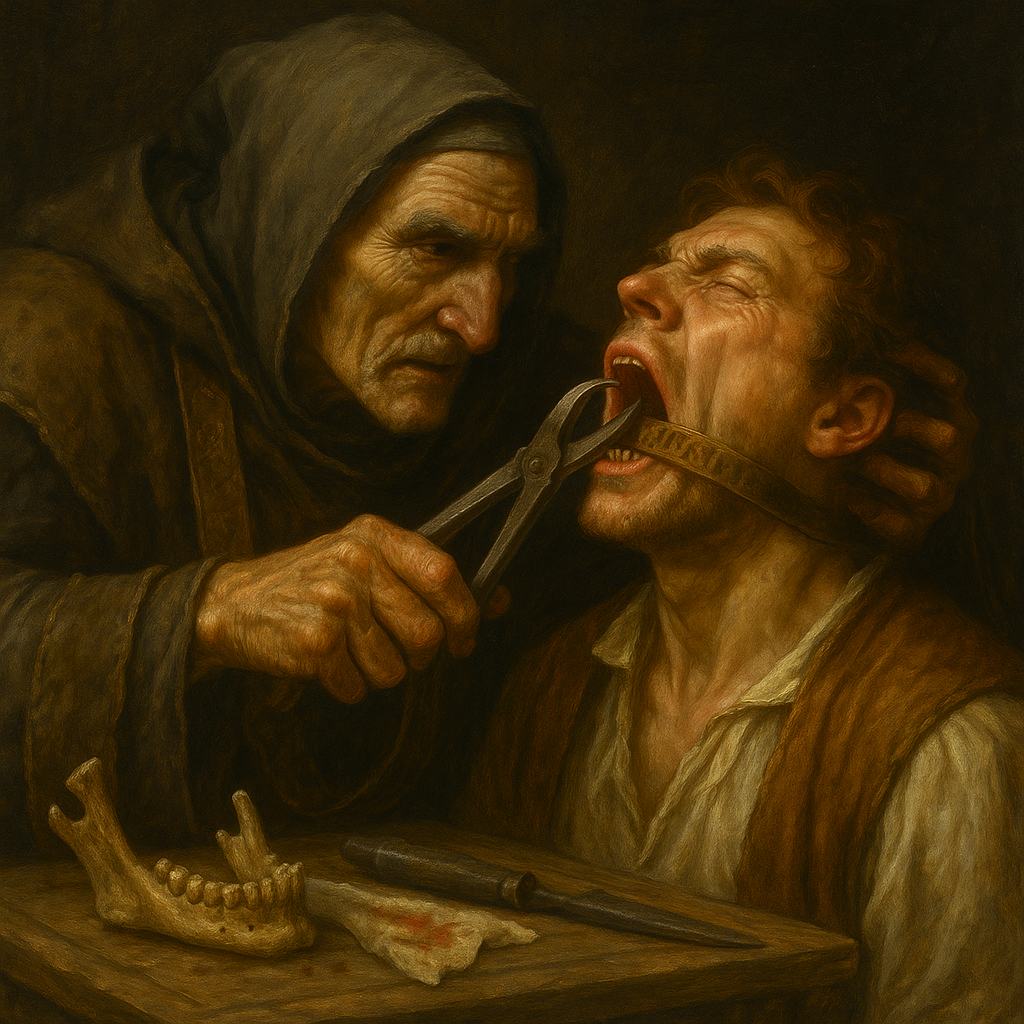
In Everwealth’s poorer quarters, spirit-pulling sits at the border between medicine and superstition. When fever raves, when grief festers into madness, when dreams curdle into voices, folk turn to the bone-pullers. The act is simple, the “anchor tooth” is seized and torn loose, freeing the spirit’s hold upon the head. The patient is told to spit until the blood runs clear, lest the malady creep back in. Some burn the tooth in lamp oil; others bury it at the threshold or toss it into running water to carry the sickness away. The devout add murmured prayers, the practical add whiskey. Those who survive often claim to feel lighter, clearer, as if a fog had lifted, whether from faith, shock, or relief, none can say. Tools of the Trade:
Bone-pullers use a variety of crude and often unsanitary tools:
- Iron chisels and wedges - Driven between gum and tooth with a mallet or heel of the hand.
- Jawbone pliers - Carved from animal bone, their inner teeth sharpened to grip human enamel. Favored by marshfolk for their “spirit-biting” symbolism.
- Hooked spirit tongs - Forged with a backwards curve, said to pull the spirit out by the root along with the tooth.
- Charm-straps - Leather straps bitten during extraction, often inscribed with runes or wards against “soul-screams.”
It is said that each tooth holds a whisper of the soul, too many whispers, and the spirit cannot rest. To pull a tooth is to grant silence to the mind. Among marshfolk, the tooth is nailed to the doorpost to keep the sickness from returning; mountain folk hang them on twine above the hearth, believing the fire keeps the freed spirit warm and docile. The worst mistake, it is said, is to throw the tooth into still water. Spirits dislike mirrors, and stagnant pools remember. Risks and Outcomes:
Few emerge unscarred. Teeth shatter, jaws crack, infections bloom beneath the tongue. Some die within days, their faces swelling shut as if the spirit truly fought to reclaim its home. Others live on half-toothed and proud, the gap a badge of survival. For many, it is less a cure than a test of will, proof that one has stared into their own sickness and torn it free. In the taverns and trenches of Everwealth, it is said that every pulled tooth is a promise, better a hole in the mouth than a ghost in the head. Cultural Standing:
While outlawed in most major cities under The Scholar's Guild’s medical codes, enforcement in rural areas is rare. In the poorer quarters of Opulence, the practice has evolved into a kind of grim street performance, with bone-pullers drawing crowds to watch extractions in exchange for coin, food, or barter. Among borderfolk, being missing a few teeth from spirit-pulling can be a badge of resilience, proof you faced the grip of an unseen hand and lived to tell of it.
Notes from the Field
- The Hollow Lanterns: Some remote inns hang strings of extracted teeth around their doorframes to “lighten the air.” Locals say the wind through them drives off nightmares. Travelers say it sounds like whispering glass.
- The Gilder’s Joke: A wealthy merchant in Opulence once paid to have all his teeth pulled and replaced with gold, claiming no spirit could grip him now. His body was found weeks later, his mouth empty, the gilded teeth found in various shops around the city.
- The Tithe of Three: Among soldiers of the southern forts, losing three teeth to a bone-puller before a campaign is believed to buy a man’s luck in battle. Veterans say those who return with four missing were bought too dearly.
- Mud-tooth Markets: In some border towns, pulled teeth are traded as charms against curses. The oldest ones, blackened with age, fetch the highest price, said to “remember” stronger spirits.
- The Whisper Pot: Midwives in the lowlands keep jars of infant teeth sealed with wax. When a child falls ill, the lid is cracked so the spirit inside can “breathe for them.” Few survive the week, but the jars are always resealed.
- Old Miner’s Remedy: Tunnel workers chew on bits of coal to “weaken the spirit’s bite” before descending. It blackens the mouth and poisons the gums, but no one who does so ever complains of ghosts again.

Comments