
Folkshare
"We share this bread because once there was none.
We sit as kin because once we were alone." - Traditional Folkshare recitation, attributed to the first feast.
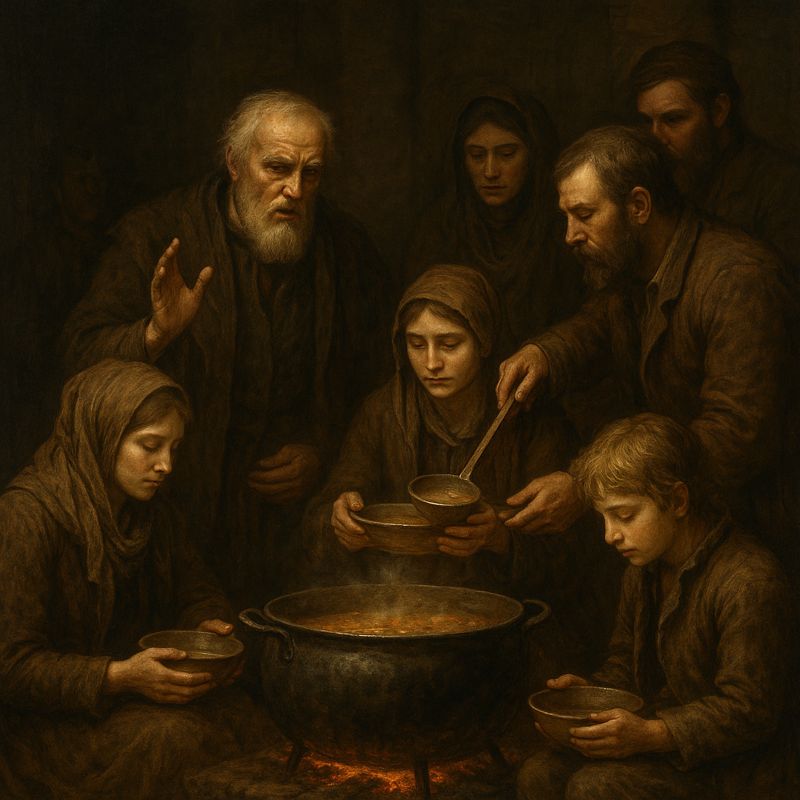
Folkshare is a solemn, almost fearful harvest holiday observed each 14th of Peridot, marking what Everwealth believes was the first true feast after The Great Schism, an act of shared desperation that kept the newborn kingdom from collapsing under famine, frost, and despair. Though now celebrated with stews, hearth-fires, and quiet togetherness, the holiday’s bones are dark, a reminder of salted fields, emptied granaries, and families who boiled leather when nothing else remained. Every Everwealthy household, from Opulence manors to mud-soaked shack, contributes whatever they can spare. vegetables, broth, slivers of meat, believing that to neglect the ritual is to invite back the hunger that once slaughtered half the realm. Folkshare is less a celebration than a yearly warding, a collective vow never to forget how close the kingdom came to dying, and how survival was won only when the living chose to share or starve together.
History
Folkshare’s origins reach into the earliest, bleakest winters of the Civil Age, when famine devoured half the fledgling kingdom and survivors survived through barter, grave-robbing, or sheer stubbornness. Grain stores were ashes. Fields lay salted. Entire villages starved with their gates still shut. Then came the First Feast, a gathering of thirteen starving families from three broken settlements. They brought what scraps remained, a handful of potatoes, a stringy rabbit, bitter cabbage, stale barley, handfuls of frostbitten carrots. It should not have been enough. Yet when the meal was stirred together over a single fire, it fed them all. Word spread. Hope flickered. Refugees from surrounding ruins followed the smoke. By the Feast’s end, over a hundred people ate from the same pot, bound by the unspoken oath that survival must be shared or it would not exist at all. In the decades that followed, Folkshare transformed into a kingdom-wide holiday, a ritual of remembrance, gratitude, and quiet fear. Villagers believed that failing to honor the Feast meant forgetting the Schism’s lessons, and forgetting would bring the suffering back.
Execution
- Folkshare Eve (Peridot 13th): Families gather simple ingredients for the next day’s stew, whatever they can afford or scavenge. Traditions forbid luxury, even nobles must offer humble fare.
- The Morning Boiling: At dawn, communities light a public cauldron, stirring vegetables and herbs donated by each household. Every contributor mutters the ancient line: “For the ones who had none.”
- The Passing of the Bowl: Each family takes a ladle of the communal stew, regardless of status. Those who refuse are quietly judged by their neighbors even if only done to stave off an allergy.
- The Silent Minute: At midday, all eating stops for sixty heartbeats to remember those who died the first winter. In cities, bells toll once for each district that lost its people during the Schism.
- The Giving of Scraps: Children leave a small portion of their own meal outside for passing animals or wandering hungry souls. Some claim spirits eat these offerings, others claim it’s only tradition. Neither group is eager to test the theory.
Components and tools
- The Sharepot: A communal iron cauldron, patched, dented, and ancient. Several towns like Axebreak say theirs is the original stew pot from the first feast, though none can prove it.
- Hearth-Bundles: Bunches of dried herbs (rosemary, pine, sage) tied with twine and tossed into the stew for purification and remembrance.
- Folkshare Knives: Kitchen blades passed down generations, used only once a year for the ceremony.
Participants
- The Hearthkeeper: Often the eldest or most respected figure in town, responsible for lighting the cauldron fire and overseeing the rites.
- Household Representatives: One person from each home must contribute something, even a single carrot slice is accepted.
- City Luminaries: In places like Opulence, officials and nobles attend publicly but eat privately, attempting to mimic humility while being quietly judged by the crowd.
Observance
- Date: Peridot 14th, when the first stable harvest arrives and the consequences of the year’s planting become clear.
- Folkshare Eve (13th): Ingredient collecting, humble dinners, and the extinguishing of personal hearths to “await the communal flame.”
- Folkshare Day (14th): Stewing, sharing, storytelling, memorial rites, and feasts.
- The Three Lean Nights (15th-17th): A tradition of restraint, meals are intentionally small to honor the famine that shaped the holiday. Many skip breakfast entirely.
Interesting Facts
- The Ghost Pot Tradition: Some remote villages claim that if the cauldron is stirred too early, before the Hearthkeeper’s blessing, a phantom smell of burning grain rises from the pot, a sign the spirits of the Schism still linger in the soil.
- Forbidden Ingredients: It is taboo to add luxury foods like wine or rare spices to the Sharepot. Doing so is believed to offend the dead, who starved on nothing but roots and thaw water. Nobles who attempt to "elevate" the stew are ridiculed harshly.
- Fire That Would Not Die: Some chronicles claim the First Feast fire burned for three days straight without fuel, fed by unseen forces or perhaps by the raw will of a people refusing to die.
- Shrines of Steam: Public cauldrons often leave a permanent circle of blackened soil beneath them, and so are often reused for the following years.
- A Holiday Without Wealth: Even the poorest beggar can participate fully in Folkshare. Some simply bring a pebble washed clean in a river. Tradition says it symbolizes the weight of surviving hardship, and the river that carried the past away.
- The Silent Mile: In some mountain towns, participants walk one mile in silence after the feast, retracing the steps their ancestors once took from their dead settlements toward the smoke rising from the First Feast’s fire.

Comments