
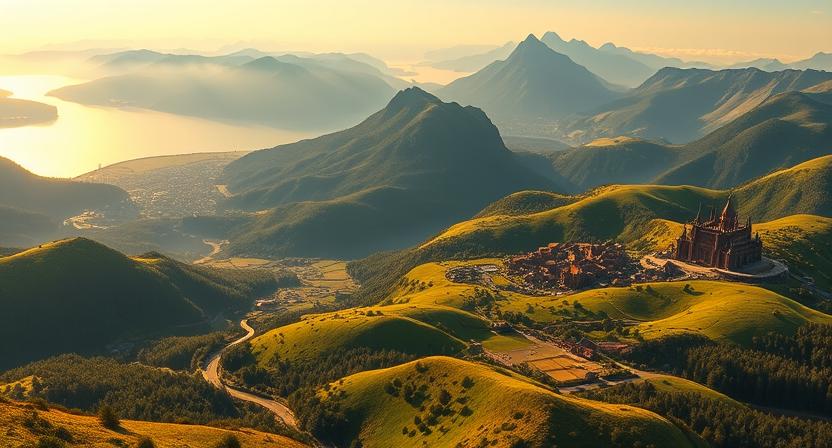
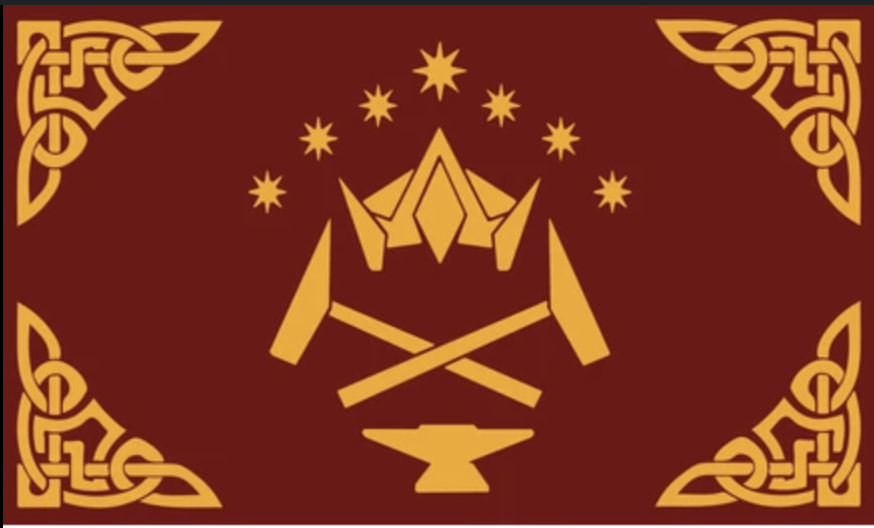
Jadeheart Kingdom
The Jadeheart Kingdom stands as Iroth’s oldest continuous monarchy; a land forged from separation, sustained through resilience, and guided by deep-rooted traditions older than many remember. Nestled between icy tundra, alpine forests, and rich mineral veins, the kingdom is a realm of stoic beauty and quiet strength. Its people endure bitter winters and unpredictable thaws, and from this harshness, they have crafted a kingdom of refined discipline and unwavering loyalty.
The kingdom shares borders with Wescovia to the north and the Tanarian Empire to the west. Unlike their brethren in Ironhold, the dwarves of the Jadeheart Kingdom are more open and welcoming to foreigners. Its leaders prefer diplomacy through stone-faced patience, and though the kingdom rarely initiates conflict, it never forgets an insult, nor does it fall easily.
The kingdom shares borders with Wescovia to the north and the Tanarian Empire to the west. Unlike their brethren in Ironhold, the dwarves of the Jadeheart Kingdom are more open and welcoming to foreigners. Its leaders prefer diplomacy through stone-faced patience, and though the kingdom rarely initiates conflict, it never forgets an insult, nor does it fall easily.
Structure
The Jadeheart Kingdom is ruled by High King Hazemi Jadeheart, a direct descendant of Emperor Thasgrid Jadeheart of the second Dwarven Empire from centuries ago. Advised by the Stone Assembly, a council of hereditary stewards, regional magistrates, and temple-appointed oracles. The monarchy is hereditary, but royal succession is confirmed by an ancient rite of recognition known as the Rite of Reflection, performed at the sacred mirror-lake of Kalthrar.
Local governance is conducted by clanwardens, margraves, or stone magistrates, depending on the region’s traditions. In the border cities, military governors play a larger role, blending civil law with military protocol.
Local governance is conducted by clanwardens, margraves, or stone magistrates, depending on the region’s traditions. In the border cities, military governors play a larger role, blending civil law with military protocol.
Defences
Though not an expansionist power, the kingdom's military is highly trained, heavily armored, and intimately familiar with its terrain. Fortresses are carved into mountain faces, and warriors are drilled from youth in shield formations, mountaineering, and siege defense. The Stoneguard, elite warriors clad in jade-inlaid armor, serve as the royal guard and last defenders of the Jadestone Throne.Culture
Jadeheart culture values stoicism, ancestry, and ritual order. Family lineages are preserved through oral traditions and memorial stonework. Temples and shrines are everywhere; carved into cliffs, hidden in forest clearings, and tucked beneath city foundations. The arts are solemn and meticulous: stonecarving, metallurgy, and high chant-singing dominate public festivals.
Most citizens believe in the Stoneborn Path, a spiritual philosophy that venerates the earth as a living will, not quite a god, but a shaping force that offers strength to those who endure and adapt. Clerics, called Echo-Wardens, act as both spiritual leaders and guardians of ancestral oaths.
Most citizens believe in the Stoneborn Path, a spiritual philosophy that venerates the earth as a living will, not quite a god, but a shaping force that offers strength to those who endure and adapt. Clerics, called Echo-Wardens, act as both spiritual leaders and guardians of ancestral oaths.

Comments