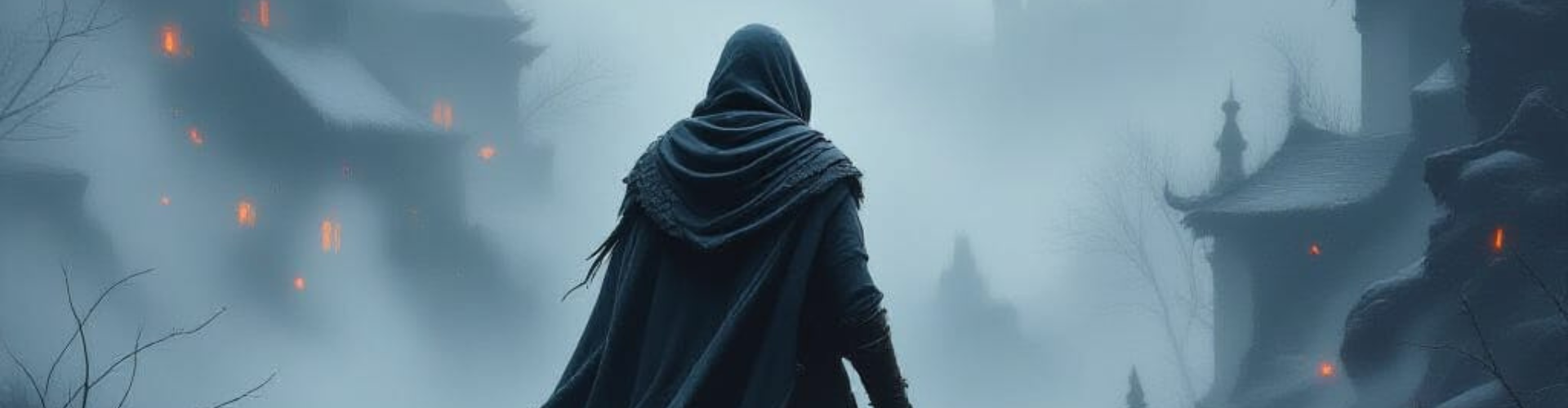
Ashwalkers
Identity Overview
The Ashwalkers are a fragmented, persecuted diaspora descending from the Iskashita, born from a schism so old that its origin survives only as a distorted set of myths. Unlike mainstream Iskashita, who revere the First Spark as a sacred, divine source, the Ashwalkers hold a forbidden belief. They believe the First Spark must evolve, not be preserved and that fire’s purpose is transformation, even destruction, when necessary. This doctrine is considered dangerously volatile, bordering on blasphemy.
Thus, the Ashwalkers live quietly… or not at all. Many hide their ancestry. Many have changed their names. Some burn their ritual marks at adulthood to survive.
But the belief? It refuses to die.
Origins of the Heresy
The schism began during the Age of Ember Reforms, when the High Flamekeepers declared that the First Spark was:
- Constant
- Fixed
- Sacred to preserve, never to alter
A minority of scholars and flame-smiths disagreed, arguing that:
- Fire changes everything it touches
- Therefore the First Spark must change too
- The true divine act is adaptation, not stasis
These “Reformers” were exiled after a catastrophic ritual accident destroyed a forge-temple, an event the orthodox blamed on their heresy. Thus began the diaspora.
Naming Traditions
Feminine names
Shorter, sharper, often based on embers cooling rather than flames: Vesha, Coaline, Smira, Hask, Kelra
Masculine names
Heavier, grounded, referencing stone, ash, or smoke: Bask, Char, Varn, Grit, Iskarin
Unisex names
Names taken from transitional states — half-light, dusk, cooling metal: Shade, Cinderfall, Aster, Fade, Mora
Family names
Ashwalker surnames often disguise their Iskashita roots. Traditional names exist, but many use false or “softened” versions in foreign lands.
Traditional forms: Ashenwyrd, Fadehammer, Coalfire, Emberchurn, Shatterslag
Modern/self-protective forms: Ashen, Cole, Emberlin, Shar, Fadewind
Culture
Major language groups and dialects
They speak the same Cosmic-rooted tongue as the Iskashita, but with a private coded dialect:
- shortened forge-terms
- metaphorical ritual references
- ways of speaking designed to “sound normal” to outsiders
Culture and cultural heritage
While the orthodox Iskashita protect the First Spark, the Ashwalkers teach that:
Fire teaches us by consuming what is old.
Their cultural heritage is one of:
- transformation
- improvisation
- hidden resilience
- belief that destruction can be mercy
- belief that adaptation is holiness
They honor ancestors who died in exile, forging a sense of unity across scattered enclaves.
Shared customary codes and values
Ashwalker values are harsher, shaped by displacement:
- Necessity above doctrine
- Change is survival
- Nothing sacred is static
- Reforging the self is the greatest trial
- You grow by what you lose
This contrasts sharply with the orthodox Iskashita, who see fire as a guide but not a judge.
Common Etiquette rules
Greetings involve tapping fingers to one’s chest: the “ember knock.”
Bowing is rare; they values directness.
Whispering the phrase “May your ash rise” is a sign of deep trust.
Common Dress code
Because they hide their identity, Ashwalkers rarely wear traditional ember-reds or volcanic blacks openly. Instead:
- dark muted earth tones
- ash-grey cloaks
- leather reinforced with cooled slag
- jewelry made from cracked obsidian or dead-forge remnants
In private, they still wear ember-thread wraps or glowing runic bands.
Art & Architecture
Art among Ashwalkers reflects loss:
- sculptures of cracked metal
- paintings in deliberate smudges
- carvings of half-burned wood
- architecture that incorporates broken pieces from older buildings
Their hidden forge-halls use narrow chimneys to conceal coal-smoke.
Foods & Cuisine
- smoked roots
- char-seasoned meats
- flatbreads baked on hot stone
- fermented ash-tea (bitter, energizing)
Cooking is ritualistic; burning food slightly is considered a blessing.
Birth & Baptismal Rites
Ashwalker newborns are brushed gently with cooled ash. The blessing is: “From ruin, rise.”
Coming of Age Rites
At adolescence, a young Ashwalker chooses something precious and destroys it — a harsh symbolic ritual:
- a tool
- a keepsake
- a crafted object
- sometimes even their birthname
The belief is that selfhood must be tested through loss.
Funerary and Memorial customs
Bodies are burned cold, a slow smolder rather than a blaze. The ashes are mixed with clay and used to craft small tokens carried by family members. This practice horrifies orthodox Iskashita.
Common Taboos
Speaking the First Spark’s true name (forbidden)
Creating fire without intent (wasteful, offensive)
Letting a flame die unattended
Refusing the destruction rite during adulthood
Common Myths and Legends
The Forbidden Myth: The Emberless One
A figure who embraced change so completely he shed his flame entirely. Orthodox Iskashita view the story as a warning; Ashwalkers view it as a hero’s tale.
The Fractured Forge
A myth explaining the diaspora’s exile. In Ashwalker lore, the fracturing was deliberate, an act meant to unshackle the Spark from stagnation.
Ideals
Beauty Ideals
Scars, especially burns, are seen as marks of truth. Many deliberately adopt asymmetrical hairstyles or scorched jewelry.
Gender Ideals
Roles are flexible; capability matters far more than gender. Historically, many women became forge-mothers, traveling experts who kept fragments of Ashwalker lore alive.
Courtship Ideals
Partners exchange a crafted item and then break it together, symbolizing trust through vulnerability.
Relationship Ideals
Partnerships are expected to survive adversity. Comfort is not part of the ideal. Strength, honesty, and mutual risk define marriage.
Table of Contents
The Emberless Choir: A philosophical sect that believes the First Spark must eventually be extinguished so it can be reborn.
Orthodox Iskashita consider them radicals among radicals.
Why They Are Feared
Orthodox Iskashita consider the Ashwalker belief system dangerous because:
- it encourages destructive rituals
- it reframes fire as a cleansing tool
- it promotes independence from priestly authority
- it suggests the First Spark could change or die
Thus, Ashwalkers face:
- social persecution
- forced assimilation
- accusations of arson or sabotage
- outlawing of their rites
- erasure from official history
Why Many Ashwalkers Hide…
Because exile turned into generational fear…
Because “heretic” is a death sentence in some places…
Because their rites look frightening to outsiders…
Because their culture is misunderstood and policed…
Yet they endure…
Quietly…
Soft-spoken…
Carrying their ember…
Waiting for their time to rise again.


Comments