The Pearlforge Artisan Circle
Structure
The Pearlforge Artisan Circle is a tiered guild with clear internal hierarchy:
- Circlemaster: Handles negotiations with the Magisterial Council, sets guild policy, and represents the Circle in disputes and festivals.
- Inner Ring (Council of Masters): 7–9 Master Artisans from different crafts (jewelry, textiles, wood, stone, scents). They vote on membership, standards, pricing guidelines, and sanctions.
- Masters: Run their own workshops, take apprentices, and maintain Circle quality marks.
- Journeymakers: Certified artisans who have completed at least one masterpiece and may travel or work under multiple Masters.
- Apprentices: Formally bound to a Master’s shop for a set term, trained in both craft and guild etiquette.
- Affiliates: Suppliers, frame-makers, and small stallholders who don’t make goods themselves but sell or service Circle products.
Culture
The Circle’s internal culture is:
- Proud and meticulous – shoddy work is treated as a moral failing, not just a technical one.
- Cooperative but competitive – artisans share techniques selectively but fiercely protect their own styles.
- Deeply local – they see themselves as guardians of Dovesport’s “true face,” the thing visitors remember.
Values:
- Quality over speed.
- Fair pay for skilled work.
- Mutual aid in hard times (illness, fires, storms).
Public Agenda
Officially, the Pearlforge Artisan Circle aims to:
- Maintain high standards for handcrafted goods in Dovesport.
- Protect local artisans from predatory traders and cheap imported knockoffs.
- Promote Dovesport as a center of fine craft and coastal luxury.
Assets
A guildhall in Pearlforge: A multi-story building with showrooms, committee rooms, and shared tools.
Shared workshops and kilns, including polishing wheels, mosaic ovens, and secure storage for pearls and rare materials.
A modest guild treasury used for:
- Widows’ and widowers’ stipends
- Apprentice aid
- Rebuilding after disasters
Exclusive trade contacts with inland timber suppliers, sea silk gatherers, and pearl divers.
History
Founded in 1879 AR when several independent pearl-workers, carvers, and weavers realized that unregulated competition and outside middlemen were driving prices down and quality with them.
In its early years, the Circle fought against unlicensed stalls selling poor-quality “pearl” goods, lobbying the Magisterial Council for trade protections.
During the Stormfire Years, when refugees poured into Dovesport, the Circle absorbed a wave of new talent and techniques, expanding beyond pearls into mosaics, textiles, and woodcraft.
After the plague in the early 1900s AR, the Circle helped rebuild the economy of Pearlforge by sponsoring apprentices from families who had lost their main earners.
Today, the Pearlforge Artisan Circle is one of the most respected guilds in Dovesport and a quiet power in local trade politics.
Demography and Population
The Circle includes:
- Dozens of Master artisans
- Several dozen journeymakers
- A steady body of apprentices
Territories
No territorial rule in a geopolitical sense, but the Circle has soft control over:
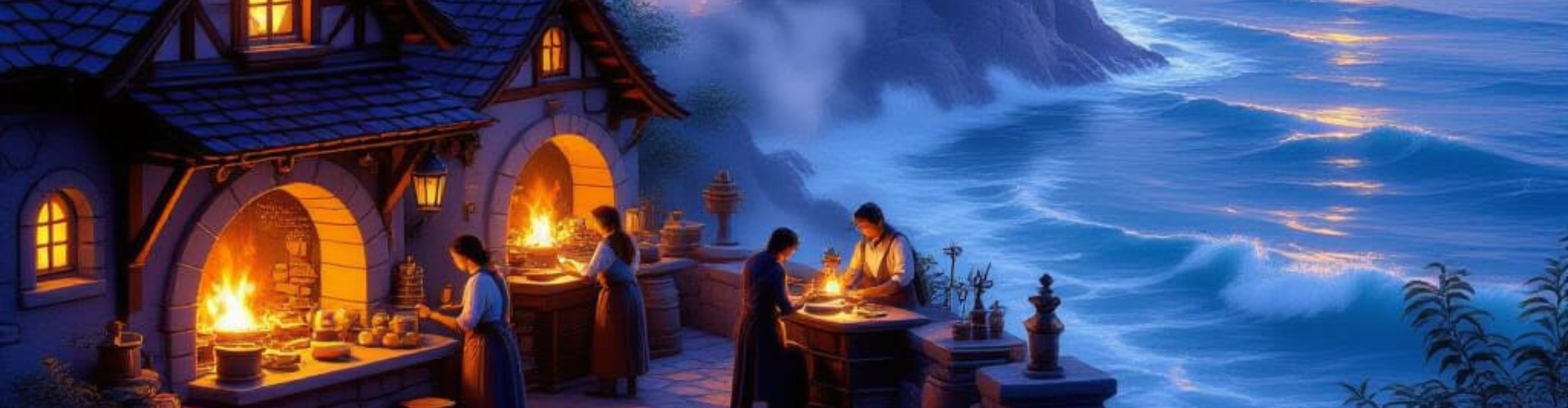
- Most prime workshop fronts in Pearlforge
- Several stalls in Old Dovesport’s markets
- Preferred vendor spots along The Docks for luxury export goods
Technological Level
The Circle uses:
- High-skill traditional techniques
- Some modern tools imported from Ozelsk and other tech centers (precision files, new polishing devices, improved dyes)
Agriculture & Industry
Industry focus:
- Pearls and related jewelry
- Sea silk weaving
- Mosaic tiles and ornamental stonework
- Carved wood, especially driftwood and coastal hardwoods
- Soap, oils, and scentcraft as luxury add-ons
Trade & Transport
Products move:
- From Pearlforge workshops to The Docks for export by ship.
- To Old Dovesport and South District for local trade.
Education
The Circle runs an informal but respected apprenticeship system:
- Training begins in early teens (sometimes earlier).
- Apprentices learn:
- Craft skills
- Basic math, contracts, and bookkeeping
- Customer etiquette


Comments