
Adventuring Guilds
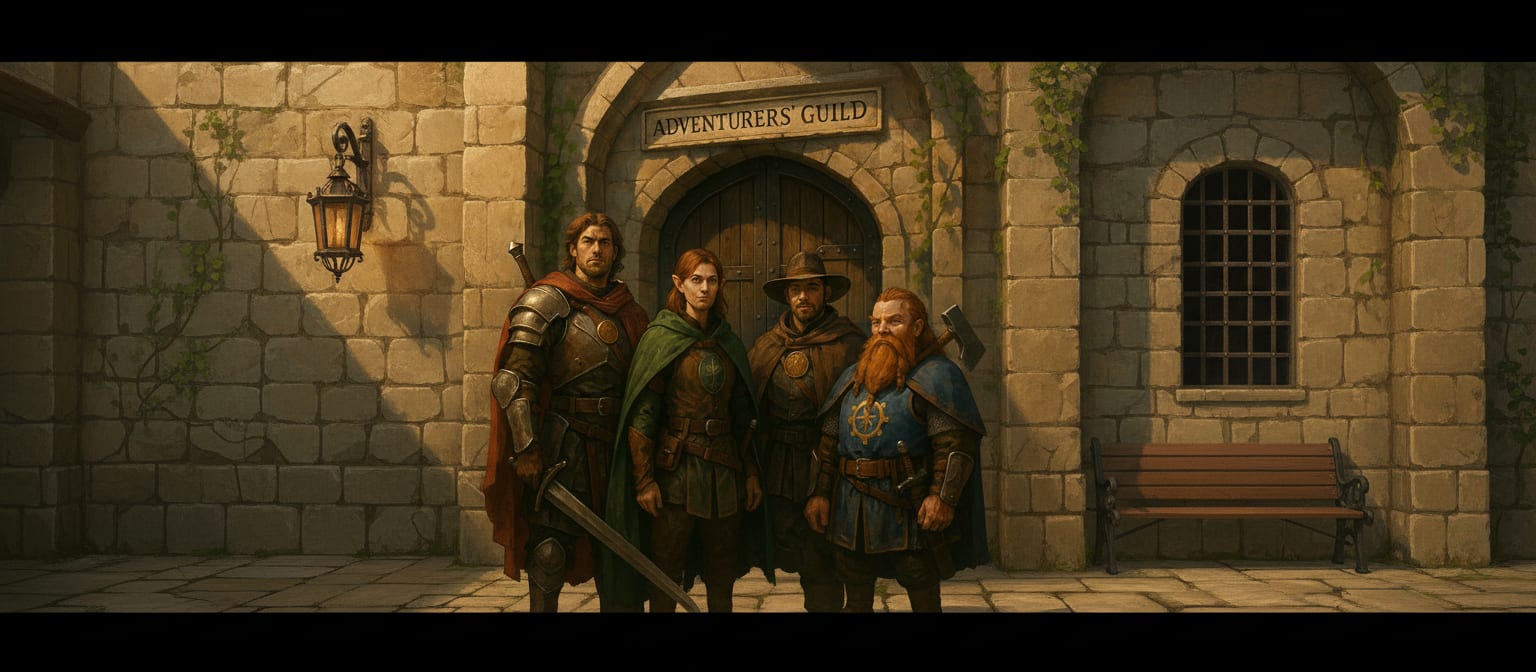
The Concordant Adventuring Guild stands as Aureth’s sanctioned instrument of controlled deviation; the only body granted the authority to act beyond the rigid harmony upheld by The Sanctioned Processes of Aureth. Born out of necessity, the Guild is both a guardian and a contradiction: it trains individuals to resist the world’s natural order so that they may defend it. Its halls are places where logic bends just enough to let ingenuity thrive, where the resonance of the Processes is studied not as doctrine but as a living force to be tested, harnessed, and sometimes disobeyed. Adventurers who pass through its gates are marked by this tension. They learn to become exceptions to the world’s rules without ever severing themselves from Processual purpose.
The Guild spans every Process territory through its Field Guilds—regional academies shaped by the philosophies, landscapes, and cultures of their Process of origin. These branches operate in uneasy synchrony, united by Concord law yet independently flavored by the beliefs and dangers of their homeland. In each hall the air hums with incense, whispered incantations, and the metallic scent of Stabilite brought back from Wounds. Every building is a crucible for would-be heroes, a place where bodies are hardened, minds sharpened, and souls tested against the pressures of corrupted resonance.
Structure
At the apex of each Field Guild is the Guild Master, the mortal authority responsible for administration, training doctrine, mission approval, and the safeguarding of their territory’s adventurers. Where a Process Liaison embodies the metaphysical and political oversight of the Concord, the Guild Master embodies the practical and martial heart of the Guild. The two work in constant tension—one representing the sanctity of the Process, the other the necessity of breaking it when circumstances demand. Beneath the Guild Master is a network of specialized instructors whose titles vary subtly between territories. In Hearth, trainers are called Stewards and focus on unity, survival, and interdependence. In Rest, they are known as Shepherds, guiding recruits through rituals of completion and renewal. Wildkeeping relies on Wardens, feral tacticians who teach unpredictability and adaptation, while Witness Guilds employ Archivists who drill observational precision and mental fortitude. Each Process territory shapes its instructors to mirror its philosophy, resulting in nine distinct pedagogical cultures bound under one law.
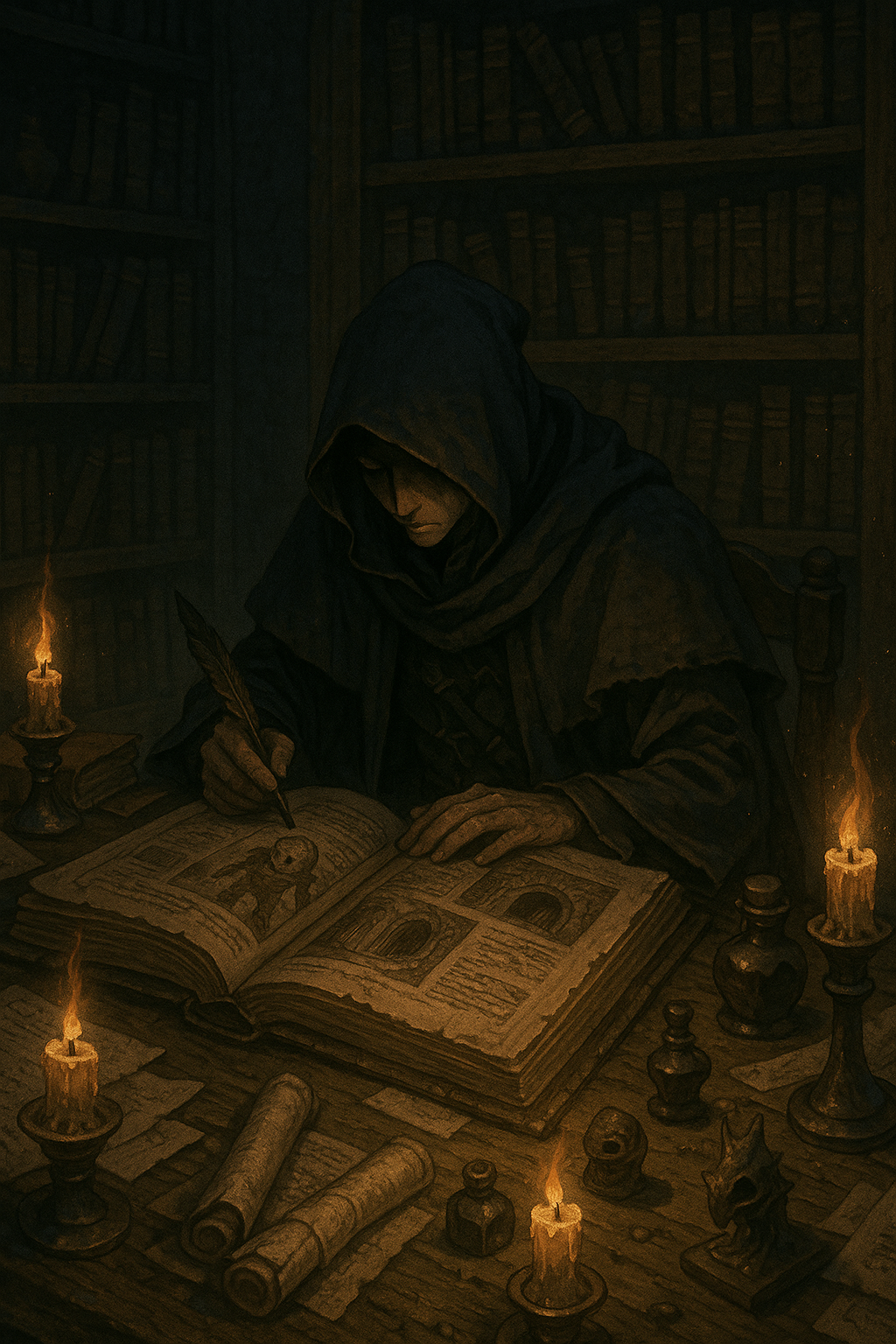
Supporting these trainers are Quartermasters, Resonance Readers, Expedition Captains, and Scribes of Charter, who handle logistics, stabilization rites, field missions, and record-keeping. At the lowest formal rank are the initiates, individuals who have been identified as “compatible with contradiction”—a phrase The Concord Academies use to describe souls capable of resisting Process dissolution while surviving Wound exposure. Their advancement through the ranks is determined jointly by the Guild Master and the Process Liaison. The Liaison ensures the initiate’s soul remains aligned within safe resonance; the Guild Master ensures the initiate can wield that alignment effectively in dangerous, mutable environments.
While each Field Guild functions independently day to day, all ultimately answer to the High Concordant Council, a deliberating body composed of senior Process Liaisons and veteran Guild Masters. This council authorizes large-scale expeditions, determines access to forbidden territory, and resolves disputes between Guilds whose differing interpretations of Process conflict—as they often do.
"Every soul who enters these halls begins as an initiate, still untested by the pressure of resonance and the weight of contradiction. In those first months you learn to breathe beside the Processes rather than beneath them, guided by your trainers and kept in line by the Liaison who watches the tremors of your spirit. When you finally step beyond the threshold and take your first assignment as a field adventurer, it is not skill alone that earns the title, but the proof that your mind will not shatter when the world forgets its own laws. With enough successful expeditions—and more importantly, with judgment that preserves both your party and the harmony of the Process—you may rise to captain, entrusted with leading others into the Wounds where even our maps refuse to hold their shape. And if you endure long enough to find balance in the chaos, carrying scars that no Process can fully mend, you may yet become a veteran of this Guild, one of the rare few whose name carries enough weight to steady younger minds and keep this world from slipping into Spiral. Those who survive the journey do so not through strength, but through resonance, discipline, and the stubborn refusal to be unmade.”
Culture
The culture of the Adventuring Guild is built on a paradox its members carry proudly: they uphold the law by knowing when to act outside it. Adventurers are taught not to obey blindly nor rebel recklessly, but to listen for the subtle fractures in the world where Process no longer suffices. Their customs reflect this liminal identity. Initiates perform resonance-binding rites under the guidance of the Liaison, then undergo practical trials under the trainers, learning to shift between reverence and rebellion with seamless instinct.
In the halls of Hearth, Guild members gather around communal fires, reaffirming connection before venturing into darkness. In Wildkeeping, they spar under storm-torn skies, embracing unpredictability as a strength. Witness Guilds maintain libraries of truthstones, where novices meditate upon recorded memories to strengthen their grasp on reality. River Guilds run endless motion drills, flowing through combat forms without pause, reminding themselves that stagnation is death. Every Field Guild cultivates unique rituals—from Threshold’s boundary-painting ceremonies to Craft’s forging of personal sigils—but all share a core belief: Process is a guide, not a cage.
Adventurers tend to perceive the world with sharper edges and softer boundaries than ordinary citizens. They have seen truth warp, gravity betray, and memory bleed when dungeons open. As a result, they move through life with wary reverence, knowing the world is beautiful, fragile, and always one wound away from becoming something unrecognizable. Among themselves, they hold fast to camaraderie. Only those who trust one another across collapsing realities survive.
Public Agenda
Outwardly, the Guild serves a single purpose: to stabilize Aureth by managing Wounds and preventing the spread of corruption. This public mission is clear, noble, and widely supported. Citizens see adventurers as necessary deviants—individuals whose impurity allows the rest of the world to remain stable. Internally, however, the motivations are more complex. The Guild moves not only to extinguish corruption but to study it, to understand the weaknesses of each Process, and to learn how resonance can fracture before it becomes catastrophic. Many Guild Masters quietly believe the Processes are less infallible than the Concord admits. They see their students not only as defenders of the world but as potential reformers of it.
The Process Liaisons, conversely, act to ensure that this dangerous curiosity never evolves into doctrinal disobedience. Their agenda is protective and conservative: maintain Process harmony, preserve the metaphysical lattice, prevent adventurers from becoming Unbound through overexposure or philosophical drift. The tension between preservation and exploration fuels much of the Guild’s internal debate. Yet despite their differences, both sides share an unspoken agreement: Aureth must endure, and the Wounds must never be allowed to spiral beyond control.
Assets
The organization commands immense physical, magical, and political resources. Each Field Guild controls a fortified hall designed to withstand Process instability, equipped with training grounds, ritual chambers, Stabilite forges, and resonance-monitoring apparatuses. Their armories contain relics recovered from collapsed dungeons, many of which possess unpredictable properties connected to the fractured Processes that birthed them. Stabilite—the crystallized form of healed resonance—is among their most valuable assets, used in both ritual alignment and the containment of Wounds.
The Guild maintains a vast network of couriers, scouts, and chartered transport routes to respond rapidly to emerging dungeons. They own libraries of restricted knowledge, maps of previously collapsed Wounds, and records of Process fluctuations that ordinary citizens never see. They command the loyalty of trained adventurers across all nine territories, forming a decentralized army capable of responding to existential threats before governments even realize danger has begun.
Though not wealthy in the mercantile sense, the Guild’s influence is incomparable. Few organizations in Aureth can claim authority over life, death, law, and chaos all at once.

"To wander is to test the boundaries of Process."
The brave carve paths through the world’s broken bones.
We follow the light we carry.
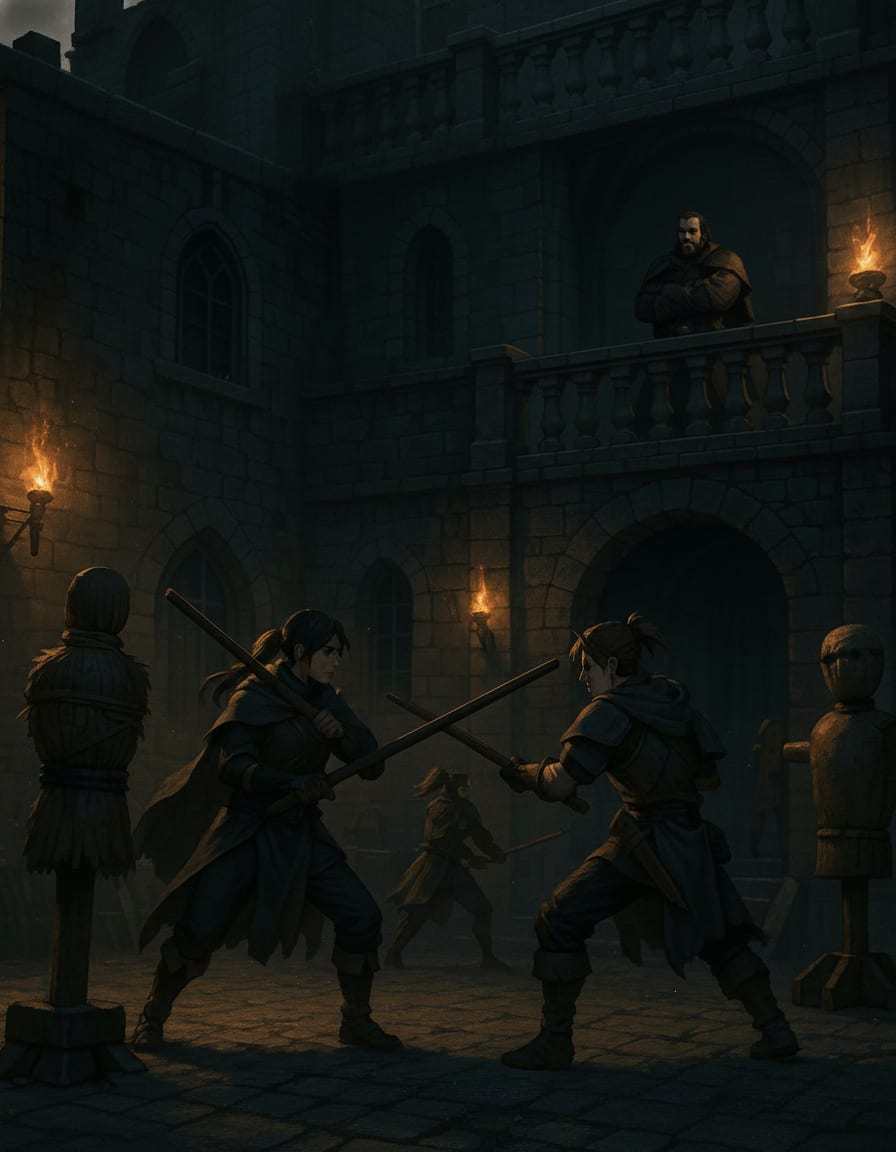
"You’ll hear it said that we are merely wanderers with paperwork, mercenaries with better manners, or fools who mistake courage for wisdom. Let them talk. Those who have never stepped into a living Wound cannot understand what we carry back with us. We walk into places where the world’s memory frays, where doors lead to echoes and shadows try on our faces like masks. We do this so the farmers can plant in peace, the scholars can argue in comfort, and the children can sleep without their dreams turning on them. We do this knowing that not all of us return, and that some who do return are never quite the same. But we walk anyway. Because if we do not — if no one does — then the cracks spread, and the quiet monsters grow bold. So, hold your torch high, adventurer. Let the darkness know your name first."
Comments