

Iskjin
The Iskjin people come from northern Jovin, north of the Jovin Divide. Most denizens of The Wildlands are Iskjin Humans. Their culture and way of life is very influenced by the harsh lands in which they come from.
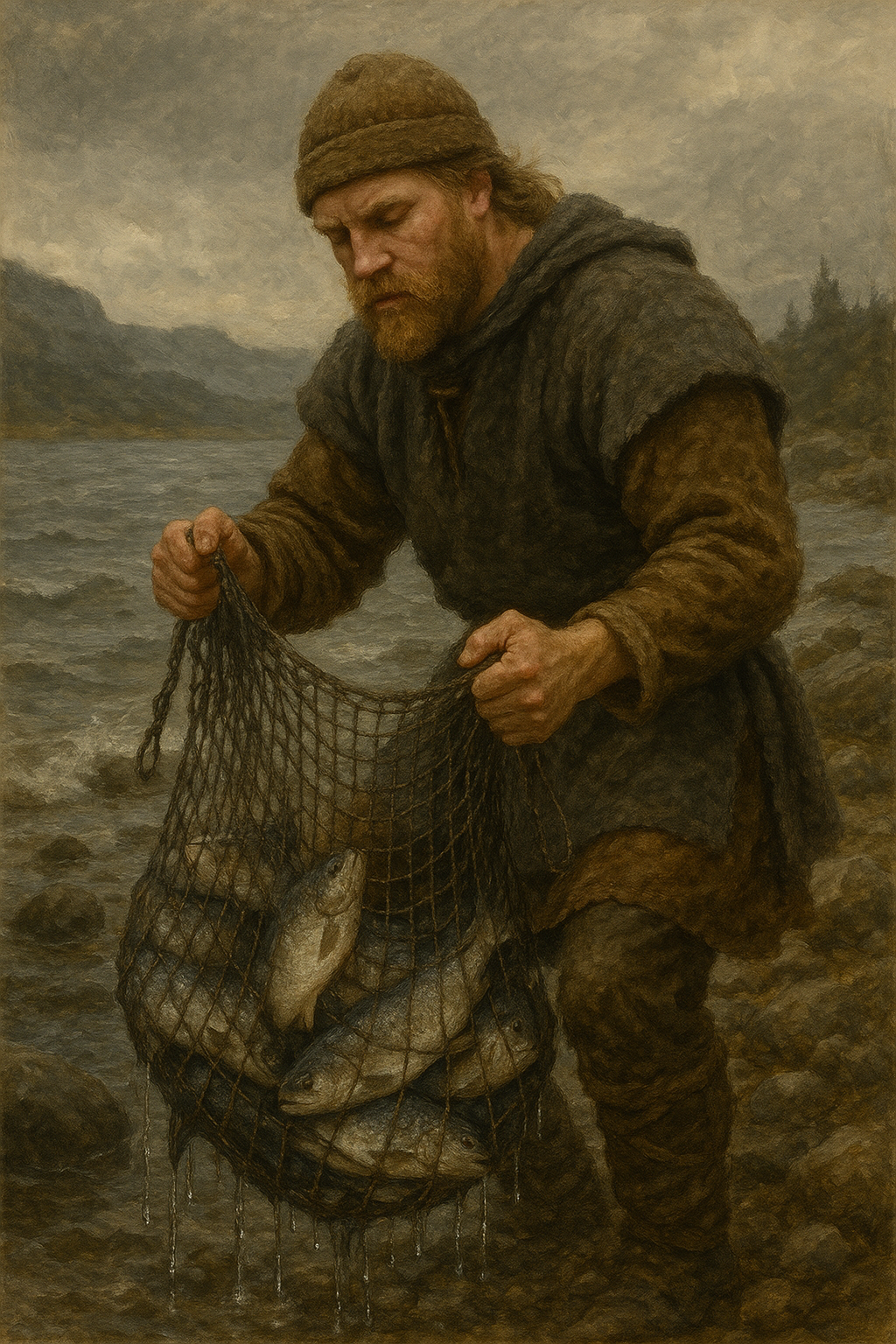
An Iskjin fisherman
Society, Cultural, and Cultural Inspiration
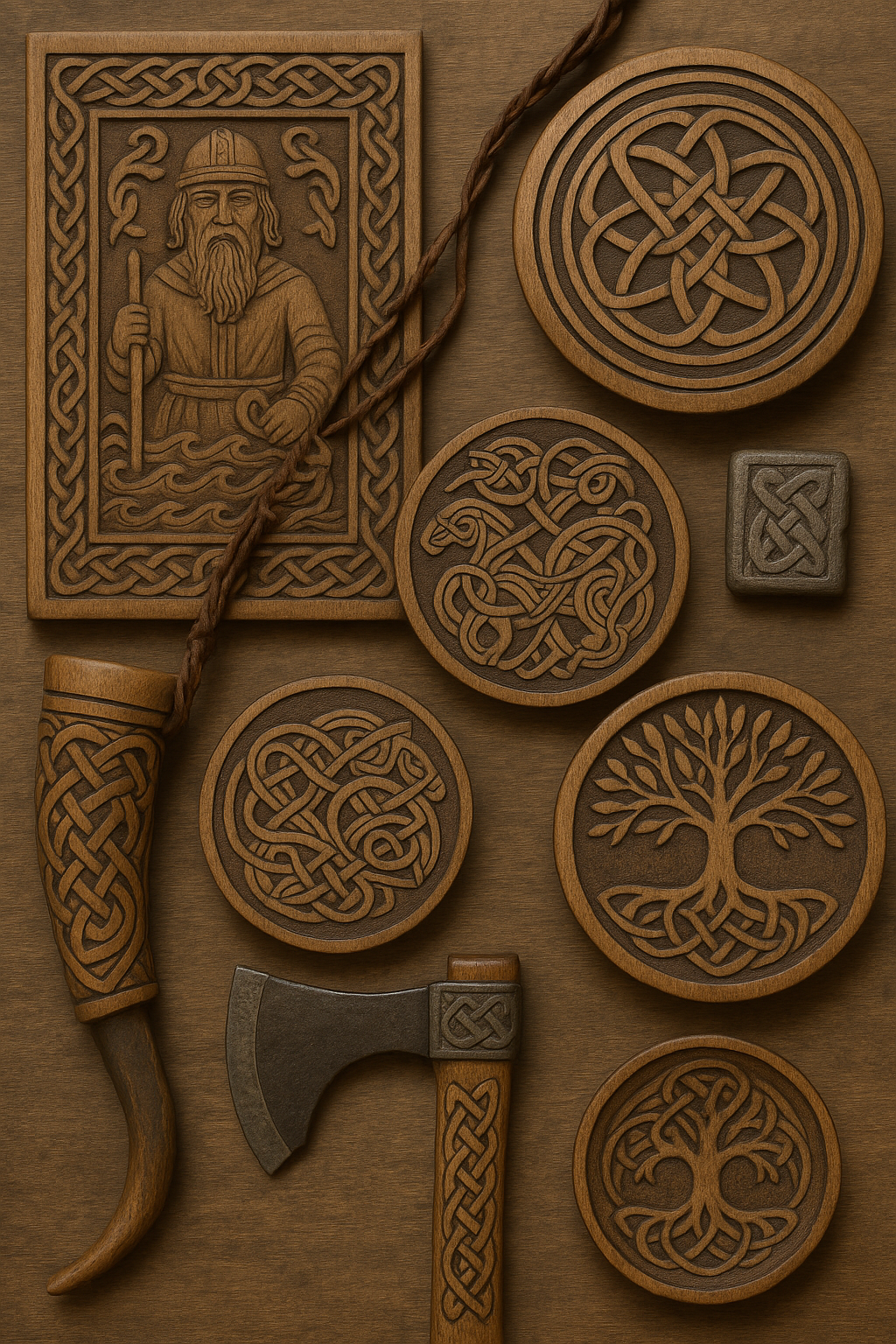
The Iskjin are largely inspired by real-world Norse/Scandinavian culture and aesthetics. They are river-sailing, costal, and highland folk who thrive in the frozen Wildlands of northern Jovin. Iskjins are by and large excellent hunters, fishermen, seafarers, and raiders, with regular raiding and pillaging of neighbors being a not uncommon practice.Various examples of Iskjin artwork
Jarls typically rule individual settlements, though power is negotiated through councils, favors, and reputation. Honor, strength, and oaths are major cultural values.Names & Clans
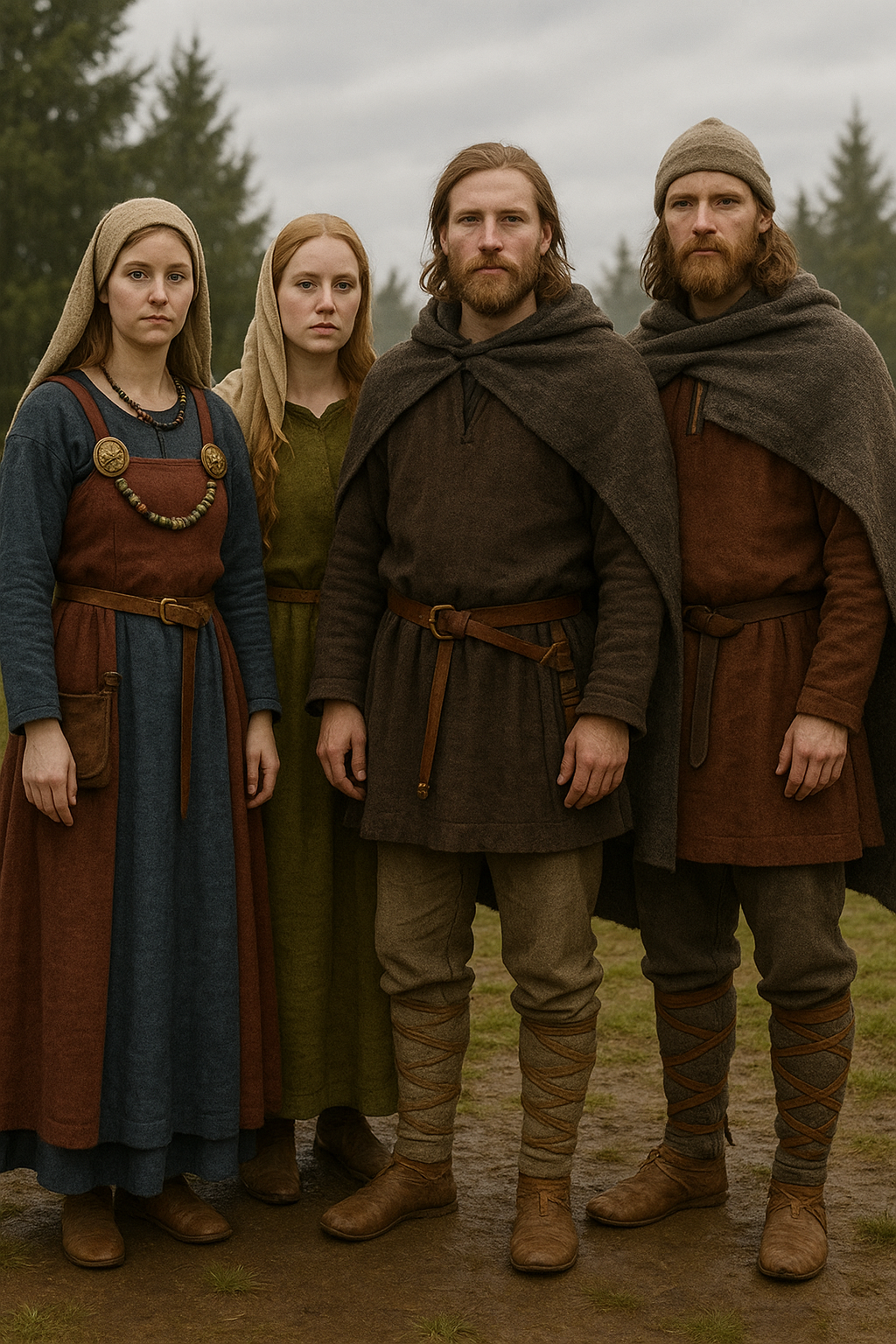
Iskjins families belong to clans. Many lesser families do not have a clan of their own and owe their allegiance to a more powerful clan. Typically a settlement only consists of one or two clans, though larger cities may have several. Each clan has a simple shield design consisting of a background field of a solid color and a foreground symbol reflecting their history, geography, or specific cultural heritage, such as Clan Render's steel gray axe on a green field.An Iskjin family in typical Iskjin clothing
Examples of Iskjin names are Hroald, Vargan, Ragnar, Stigr, Bjorn, Aestrid, Synra, and Brynia. Typically first names are rather short and strong. Clan names usually hold some sort of meaning, such as Clan Vatraskald named for the warrior poets of the clan's heritage. Lesser families typically take their father or mother's names as their surname. For example, Bjron and Brynia's son and daughter may be named Stigr Bjornnson and Aestrid Bryniasdottr.Appearance & Traits
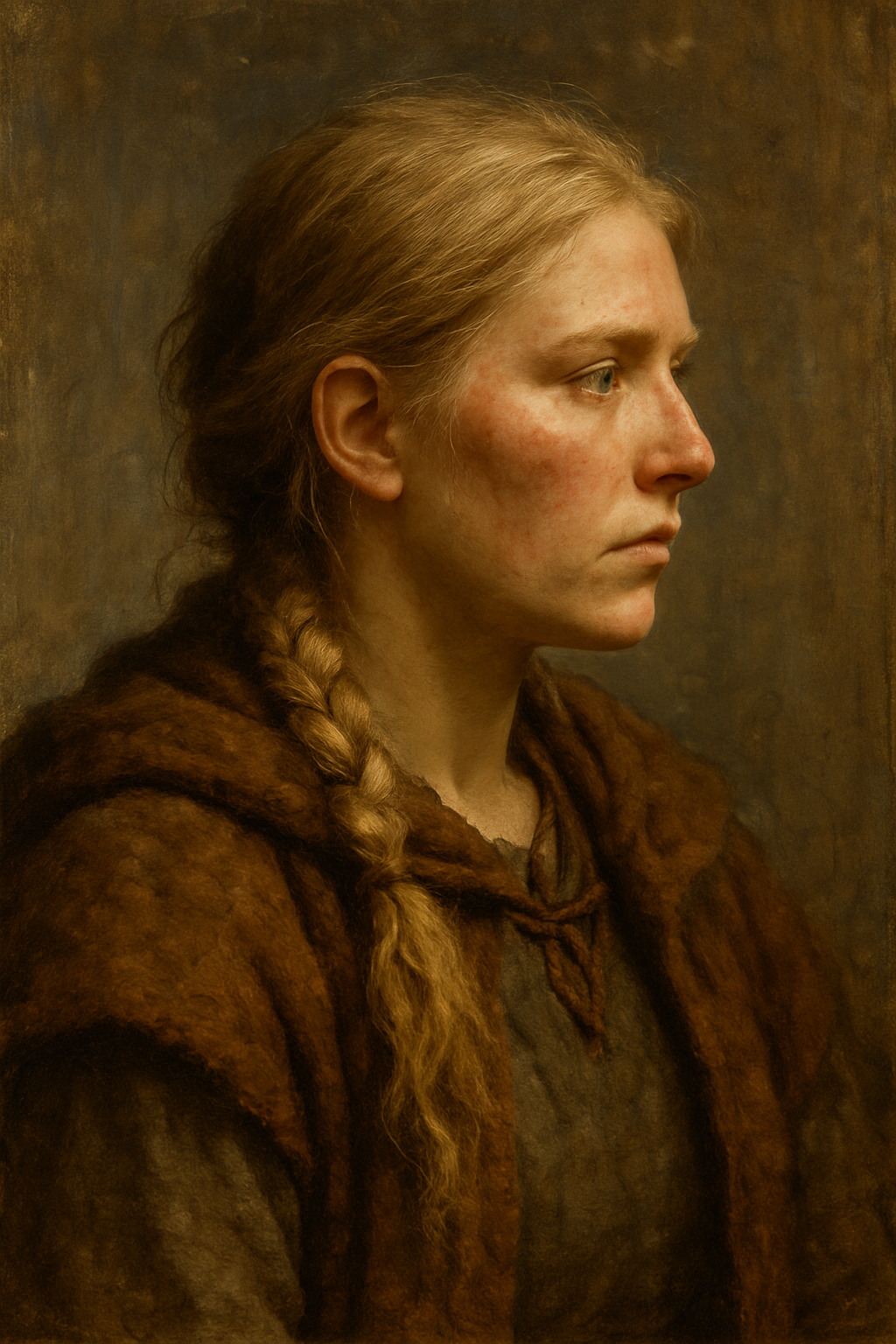
Iskjins are Humans. As such they appear much the same as any other Human with all the expected physical traits. They are typically tall, strong, and hardy with fair skin, pale eyes, and often blonde, light brown, or reddish hair. Iskjin men sport beards more often than not and braids are a common hairstyle for women and men alike, the latter sex braiding their beards regularly as well. Iskjin clothing is utilitarian with little flair. Furs and wool dominate their clothing, keeping them warm in the harsh cold of The Wildlands. Decorative touches are typically reserved to subtle braiding along the trim of tunics and small buckles on cloaks, belts, and armor. Wealthy warriors may sport braided iron chain mail and iron banded wooden shields, while most armor is made of leather.An Iskjin woman in profile
Faith
Being Human, Iskjins worship the seven deities of Arkellion. The Lady of Ice is the prominent deity of the Iskjin people, due mostly to their historical home in northern Jovin. Iskjins know the gods by their official names, but they also have Iskjin names for each of the gods.- Isfru, The Lady of Ice
- Solsgr, The Lord of the Sun
- Saelasar, The Prince of the Harvest
- Yiflongunar, The Lady of Desire
- Saekongr, The King of the Sea
- Glathis, The Giver of Joy
- Strithsvaldur, The Bringer of War
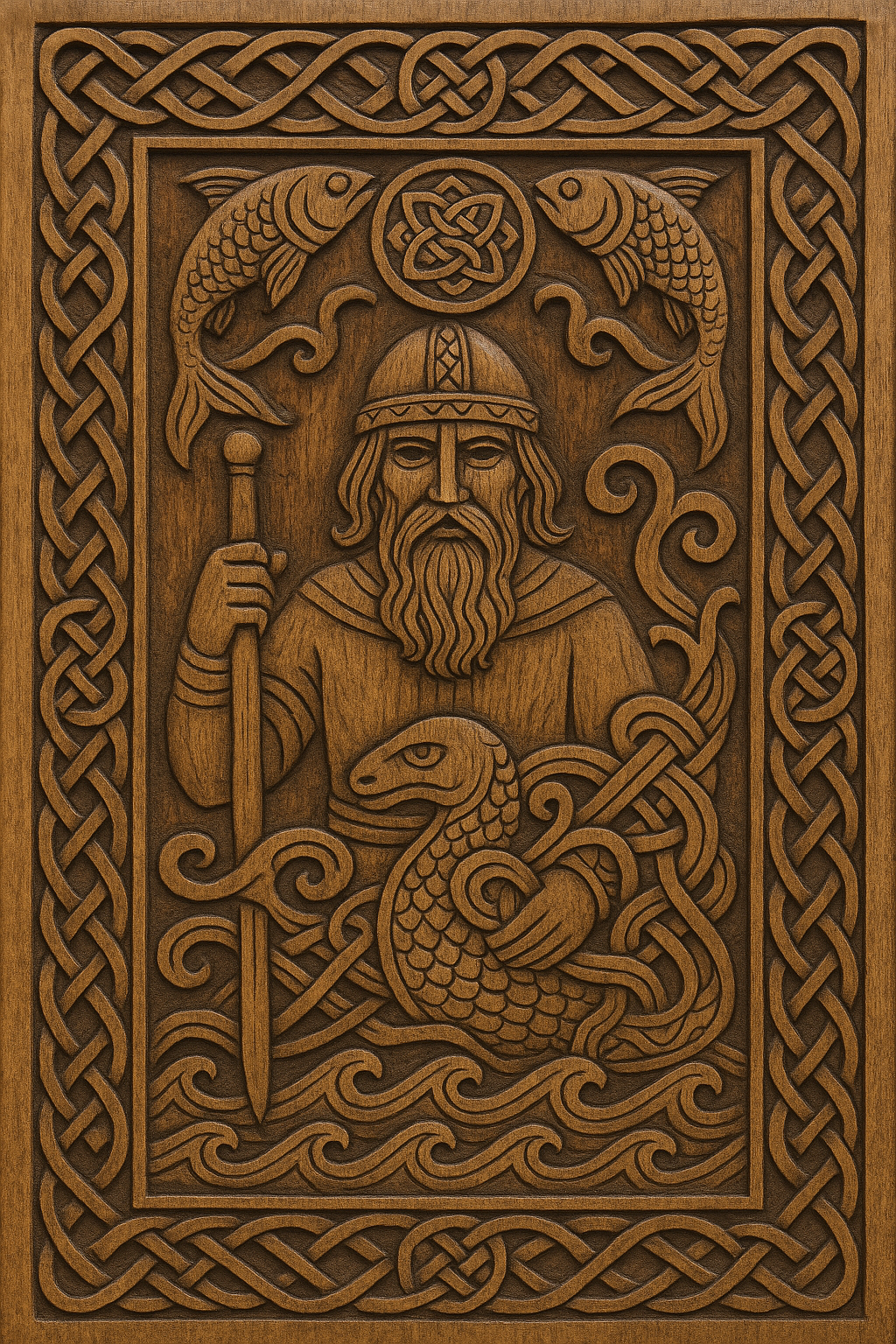
An Iskjin wooden panel carving of a warrior of Saekongr, The King of the Sea
Settlements
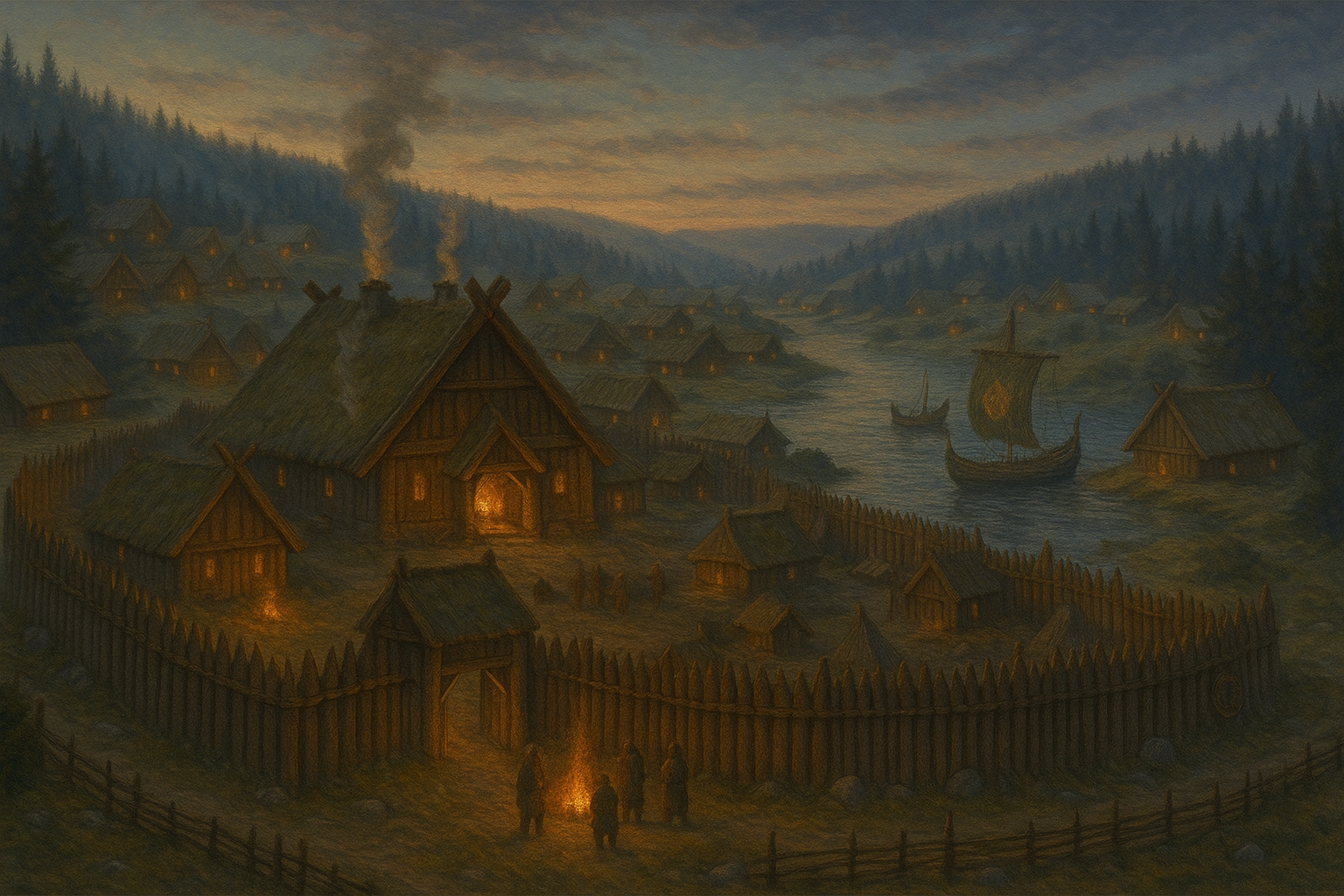
Iskjin settlements are much like their people - focused on utility over style. Architecture tends to sport timber, stone, and thatch, with halls and communal spaces playing a central role. Most settlements are rather small, though larger Iskjin cities do exist. Still, even the larger cities tend to be rather bare-bones and utilitarian in their function. All but the smallest and most remote of settlements tend to have a wooden palisade surrounding it.An example of a small Iskjin village
Related Organizations

Comments