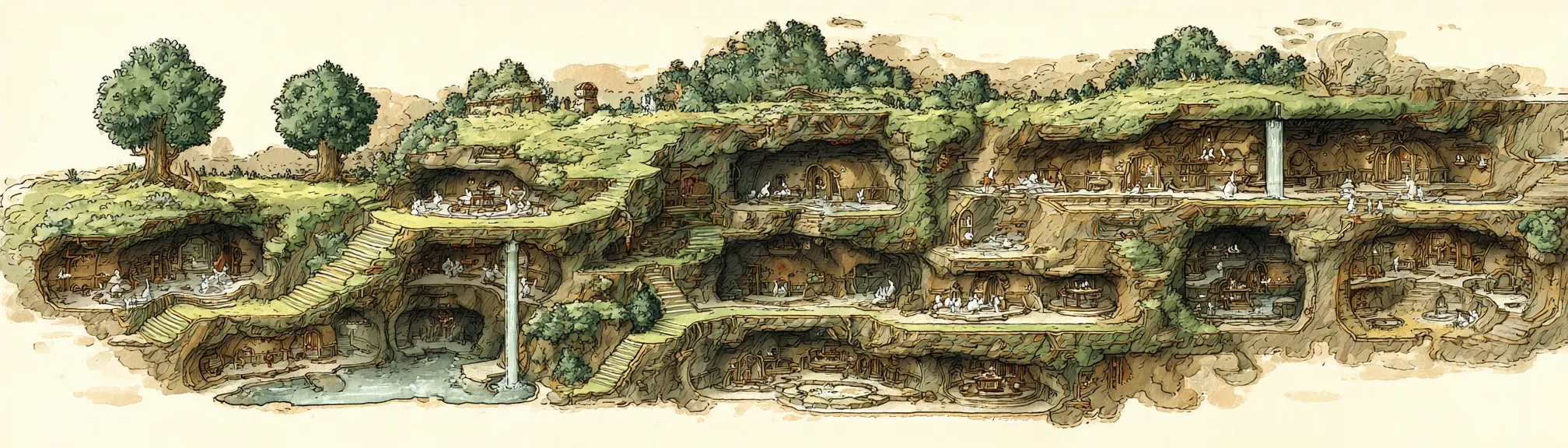
Hoppsala

Foundations and Setting
History
Hoppsala started as a small warren built around a freshwater spring where several families agreed to expand and maintain the tunnels together. These early settlers created the first hall around the spring and set rules for shared food storage, water usage, and defence. Their cooperation formed the basis for the city's later structure, and the spring is a central point of daily life. Trade growth started when nearby human farmers and foresters began buying Wildflower Sugar and the early forms of today's Honeycakes. Increased demand brought more contact with the neighbour regions, which encouraged the rabbitfolk to deepen the tunnels, build wider halls, and form a council chamber in a central location. The discovery of Aeum Infused Honey increased Hoppsala's economic importance. The bee-keepers who worked near the Terraverde Basin noticed that some hives reacted to natural traces in the soil, which produced a special honey that traders eagerly sought. This new product led to the creation of the Market Overseer, who controls supply and manages outside trade to protect the resource. During a period of severe flooding, the city learned that its lower tunnels faced greater risk than expected. Hoppsala answered by expanding upward and building stronger air shafts, escape routes, and new storage areas. This event also produced the role of Stock Warden, who monitors long-term supplies and prepares for shortages. Full Hoppsala timeline can be found here.
Politics and Trade
Hoppsala holds formal membership within the Farenian Empire. The city follows imperial law on matters that cover the whole province, but it keeps full control over its tunnels, storage rules, and local trade conduct. Imperial officials rely on Hoppsala's sugar and honey, so the council negotiates from a strong position during quota talks. Delegations travel to Emberfell twice a year to review shipments, road conditions, courier routes, and any tariff and quota proposals. The Empire accepts that Hoppsala sets its own limits on exports when harvest numbers fall. The kendric of Makari in Suncrest Shire enjoy the honeycake more than any other treat. Since the cakes do not travel well over the long road to Makari, the kendric often create reasons to visit Hoppsala instead and eat them the moment they come fresh from the oven. The elves of Lymyra sit southwest of Greenvale. Contacts stay polite but light. Trade focuses on herbs, wax, and small crafted goods in exchange for fine bows, woven cloth, and plant dyes. Lymyra offers information about weather patterns and forest conditions. Hoppsala offers runners who carry messages along safe paths. Both sides value predictable behaviour, so negotiations stay short and practical. Neither side pushes for political influence over the other. The dwarves of Magramine lie west of Greenvale. Dwarven caravans bring metal tools, lamp fittings, moisture-resistant beam brackets, and daily use items like pans or pots. Hoppsala provides sugar, honey, and vegetables aswell as messenger services. Political contact stays limited, but both sides respect each other's internal rules. Magramine values Hoppsala's clear communication. Hoppsala values Magramine's reliability and long-term agreements. Together they maintain a stable route that avoids troubled roads and keeps goods moving during harsh seasons. Lately the rabbitfolk learned about the gnomish pocketses and sent a small delegation to Bridgeport to examine them and prepare a trade offer.Trade Statistics
Trade focuses on three core products: Honeycakes, regular and Aeum Infused Honey, and Wildflower Sugar. Aeum Infused Honey is limited by the council to control price and prevent overharvesting. Secondary exports include herbs, dried roots, and reliable courier services. About 40 percent of all goods produced in Hoppsala stay in Greenvale, 60 percent leave the province. Hoppsala imports containers like clay jars and vials, livestock and hides, forged tools, cloth, and many other wares they do not produce themselves or only in insufficient numbers.Trade within Greenvale (Annual Volume)
Honeycakes: ~20,000 unitsWildflower Sugar: ~5,500 jars exported
Regular honey: ~2,000 jars exported
Aeum Infused Honey: ~450 jars
Vegetables: ~ 2,000 barrels
Herbs: ~ 800 jars
Wax: ~ 2,200 jars
Trade with others (Annual Volume)
Honeycakes: not exported in bulk due to perishability, only ~300 units sent on requestWildflower Sugar: ~8,000 jars
Regular honey: ~3,000 jars
Aeum Infused Honey: capped at ~200 jars per year
Vegetables: ~ 3,000 barrels
Herbs: ~ 1,200 jars
Wax: ~ 3,300 jars
Courier contracts: small but rising
| d12 | Merchant Sales Pitch Table |
|---|---|
| 1 | "Fresh batch today. Good colour, good weight. You will not find a cleaner jar." |
| 2 | "One sniff and you will know why travellers return. Go on, try it." |
| 3 | "Last units before the next cycle. Buy now or wait a week." |
| 4 | "I checked every piece myself. No cracks, no soft spots." |
| 5 | "If you want a gift, take this one. People remember the taste." |
| 6 | "Light to carry, strong in flavour. Good for long trips." |
| 7 | "You look like someone who knows value. This is a fair offer." |
| 8 | "Straight from Honeydeep. You will not get it any fresher." |
| 9 | "I have one jar with perfect clarity. You can have it if you take it now." |
| 10 | "If you want steady sweetness, this is the safest choice." |
| 11 | "People from Emberfell ask for this exact batch. You reached it first." |
| 12 | "No fuss, no tricks. The price is fair and the quality shows." |
The People and Their Structure
Demographics of Hoppsala
Total population: ~6,400 rabbitfolk Age Distribution
Children (0–12): 22 percent
Young adults (13–25): 26 percent
Adults (26–60): 39 percent
Elders (61+): 13 percent Household Structure
Average household size: 8
Married or partnered households: 64 percent
Multi-generational burrows: 30 percent
Single adults or elders: 6 percent
Food production and refinement: 28 percent
Tunnel maintenance and construction: 16 percent
Storage and supply: 14 percent
Scouting, courier work, and surface contacts: 12 percent
Education and support roles: 10 percent
Council, administration, and archive work: 6 percent
Artisans, cooks, small trade crafts: 14 percent
Rabbitfolk

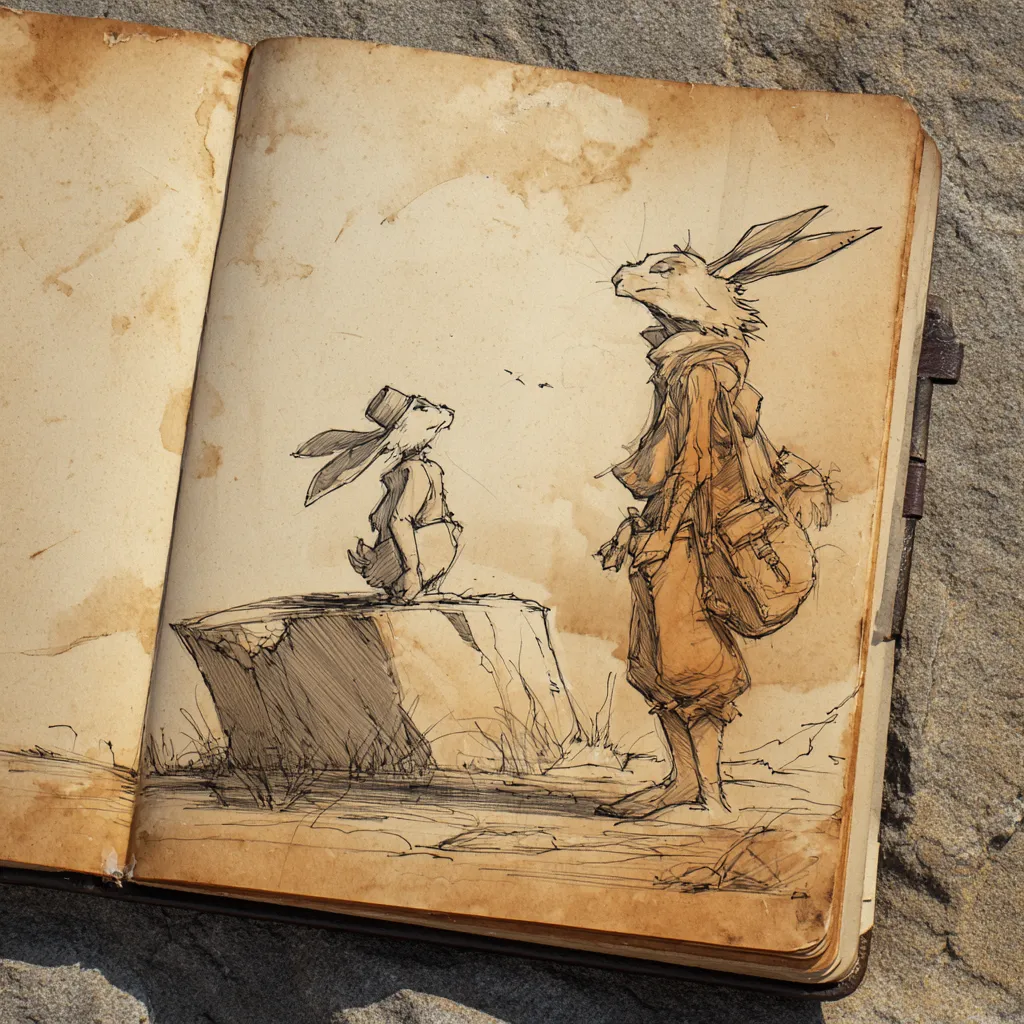
| d12 | Random Rabbitfolk NPC |
|---|---|
| 1 | Hasty runner with dust on their fur, always glancing toward the nearest tunnel, eager to deliver one more message. |
| 2 | Calm Honeydeep worker with sugar stains on their apron, speaks slowly and weighs every word before replying. |
| 3 | Young scribe from Burrowreach, ink on their paws, keen to ask questions about distant places. |
| 4 | Elder from Springhall, soft voice, sharp memory, carries a small carved token of their family line. |
| 5 | Tunnel guard with strong legs and a steady stare, checks supports by touch while speaking with visitors. |
| 6 | Storage worker from Hearthbank who counts everything twice and notices the party's exact pack weight. |
| 7 | Scout from Skytunnel Row, cloak smelling of leaves and wet earth, curious about foreign weather and roads. |
| 8 | Market assistant who recites prices from memory and watches for any break in queue order. |
| 9 | Apprentice beekeeper with faint stings on their hands, offers small wax chips as a casual gift. |
| 10 | Archivist-in-training who worries about smudged records and asks the party to confirm spellings of foreign names. |
| 11 | Retired runner with a limp, proud of old routes, eager to give unsolicited directions. |
| 12 | Visiting rabbitfolk from another Greenvale burrow, comparing Hoppsala's rules with their home customs. |
Rabbitfolk Names
Brin
Tallow
Merrin
Bram
Sedge
Pippin
Rowen
Tern
Elmira
Sable
Junia
Olla
Hilla
Wynna
Kessa
Lira
Softwhisk
Fernstep
Quickroot
Underbough
Longpaw
Graywhisk
Deepmark
Hollowstep
Reedbloom
Flintnose
Springleaf
Marshpaw
Dewfoot
Tallstem
Honeybloom
Seedwhisk
Rabbitfolk Scout
Typical surface scout or long-range runner from Skytunnel Row.
Movement: 5
Skills: Athletics 45, Perception 45, Stealth (Rural) 50, Outdoor Survival 40, Navigation 35, Charm 35, Gossip 35
Talents: Night Vision, Rover, Sure Footed, Orientation
Trappings: Light travelling clothes, short spear or staff, sling and stones, small pack with dried food, water skin, simple map of Greenvale Special Rule: Tunnel Sense
When in burrows, tunnels, or close underground structures, Rabbitfolk Scouts gain +10 to Perception Tests to notice unstable ground, bad airflow, or new digging.

Health: 9
Damage: 3 points (staff or spear), 2 points (sling)
Armor: 1 (leather and natural agility) Combat and Abilities
- Swift Runner: The scout moves a long distance as a single action if they do not attack that round.
- Tunnel Sense: The scout eases any task to detect unstable ground, hidden shafts, or new digging by one step.
- Forest and Field Training: Tasks involving tracking, foraging, or staying unseen in meadows and light woods are eased by one step.
Rabbitfolk Scouts stay open and polite but value clear purpose. They respond well to honest requests and detailed route questions.
Market Square Guard
Guard responsible for order at the surface market and tunnel choke points.Movement: 4
Skills: Athletics 40, Intimidate 35, Perception 40, Endurance 40, Melee (Basic) 45, Cool 45, Gamble 35
Talents: Strong Back, Strike to Stun, Resolute, Savvy
Trappings: Short spear or stout staff, padded armour, whistle token, set of wooden blocking bars, simple badge of office Special Rule: Calm Enforcement Guards gain +20 on Cool Tests to resist provocation while on duty. If they succeed, they can attempt a free Intimidate Test to restore order without violence.
Health: 12
Damage: 4 points (staff or spear), 2 points unarmed
Armor: 2 (padded armour and trained stance)
Combat and Abilities
- Block the Tunnel: Once per round, the guard can make a Speed-based task to block a narrow passage. On success, one chosen creature cannot pass that round.
- Hold the Line: When standing with at least one other guard, both gain +1 Armor from mutual support.
- Crowd Control: The guard eases any task to calm or direct crowds in tunnels or markets by one step.
Market Square Guards stay polite but firm. They explain rules once, then expect visitors to follow them. Those who keep paths clear and respect queues receive quick assistance.
Customs and Etiquette
Greetings and Courtesy
Rabbitfolk greet each other with a short nod and a direct look. Close friends and family touch shoulders briefly. Strangers receive a polite nod and a simple phrase such as "Clear tunnels" or "Full stores." Visitors who copy the nod and keep their hands visible earn quick trust. Loud displays, waving arms, or blocking a tunnel count as bad manners.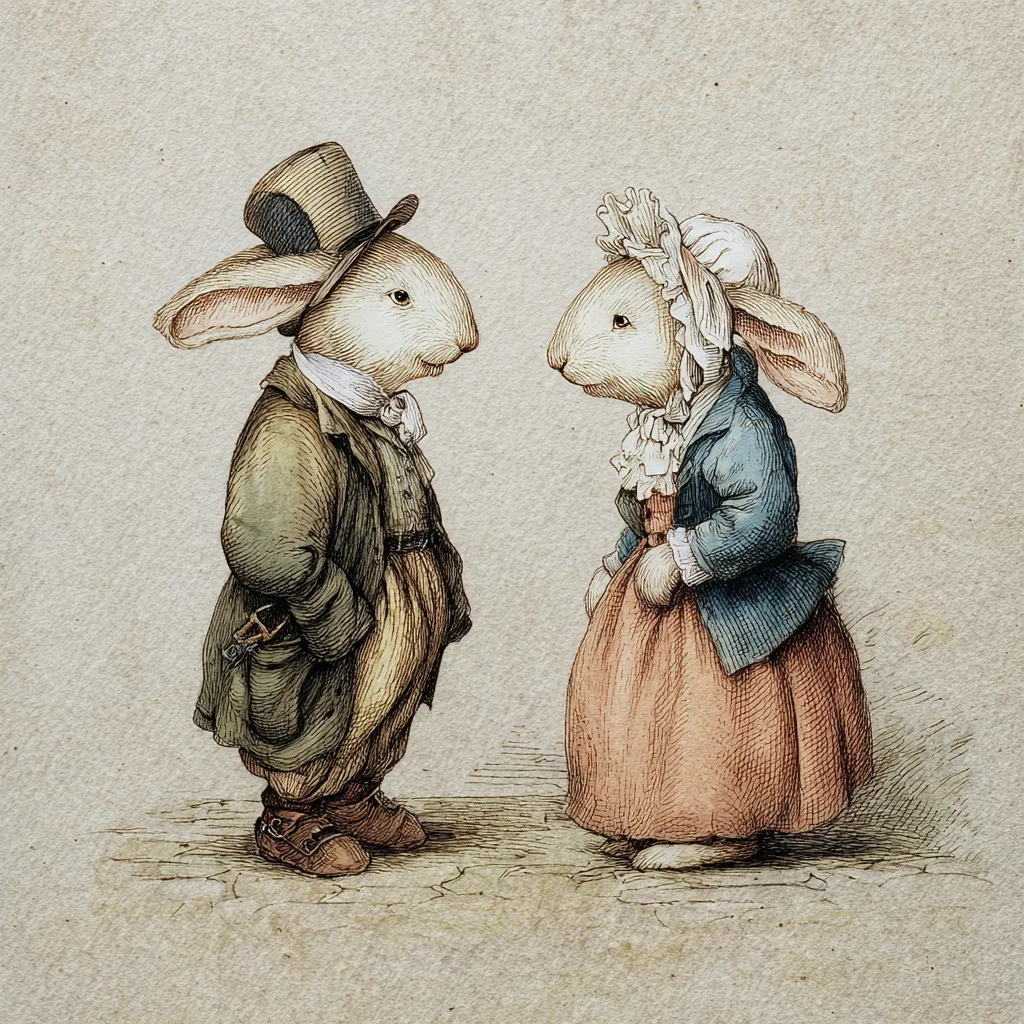
Queue and Market Behaviour
Queues mean safety. Everyone waits their turn without complaint. Cutting the line signals disrespect to the whole group, not just the next person. Bargaining is rare. Prices are public and written on boards. Questions stay welcome, but attempts to push for special treatment mark the asker as unreliable. Merchants remember such faces.Taboos
- Throwing or wasting food.
- Spitting near water channels.
- Scratching support beams or erasing wall markings.
- Shouting in narrow tunnels without cause.
Common Sayings
- "Count your jars before you brag." - Used when someone overstates their success.
- "Mind the beam above you." - A reminder to stay aware of risk and limits.
- "The spring hears more than you think." - Used to warn against careless talk.
- "Fast paws, steady heart." - Praise for reliable scouts and runners.
- "No crumbs in the tunnel." - Said to children and workers who leave messes in shared spaces.
Hospitality Rules
Hosts offer guests water first, then a small sweet or piece of bread. Even poor families keep a few stored treats for this purpose. Refusing the first offer without good reason signals distrust. Guests must accept at least one small task, such as sweeping a corner or carrying a message. This keeps visits balanced and respectful.Recent Crimes
Sugar Cask Theft involved a young worker who stole two jars of Wildflower Sugar. Punishment: Guards caught him, and he completed two seasons of storage duty. Unmarked Tunnel Dig occurred when a family expanded their burrow without approval. Punishment: They repaired the supports and lost trade rights for one season. False Weight Case involved a merchant from Emberfell who altered his scales. Punishment: The Market Overseer banned him for one year. Water Line Contamination happened when a brewer spoiled part of the spring flow. Punishment: He worked with the Spring Keeper for a season. Honeydeep Fight between two workers. Punishment: temporary exile above ground for three weeks.Beliefs and Rituals
Lumina the Moon-Spirit
Among the rabbitfolk, Lumina holds a quiet place as a guiding presence for beekeepers, healers, and those who work after dusk. During each Honeycake of Lumina, a small piece of cake is set on a windowsill so its scent drifts into the night air. Young couples visit old willow trees at twilight and place wreaths of Glowbloom at their roots, asking for a calm and lasting bond. Travelling merchants often carry a polished silver coin, kept clean to catch moonlight and serve as a talisman for safe travel. Even rabbitfolk who question Lumina’s presence pause on clear nights to watch the fields, waiting to see whether the moonlit hours still move in her favour.Respect for the Spring
The central spring is the foundation of Hoppsala's beliefs: water is life. Many rabbitfolk touch the stone rim before starting or ending a work shift. Silent thanks, small nods, and brief pauses are common. Once a month, the Spring Keeper leads a short observance. Workers bring a handful of herbs, dried petals, or clean sand. These small offerings scatter in a side channel that carries overflow away from the main basin.Ancestors and Records
Family records in the archives count as a link to the dead. Names written down with ink on paper keep memory alive. Elders visit the Archive Holder to recite old entries on birth days or after major events. Families also keep small carved tokens in their burrows that mark important ancestors. These tokens move with the family when they change districts.Seasonal Practices
Sweetrise Day begins before dawn. Beekeepers and runners share the first spoon of new honey in silence. Only after that do they carry jars to the city. Tunnelbright Eve turns the air shafts into lines of small lights. Young rabbitfolk carry lamps and small cleaning tools, supervised by elders who watch each step and check every vent. Seedvault Honour Day includes quiet walks through Hearthbank. Families place dry seeds in marked jars, then press their foreheads against the cool wall for a moment of reflection.Whispers of the River Pact
A few elders still leave a small sealed jar at the Applewash River Fork each year. They do not speak about it, but they make sure the jar never cracks and never leaks. Nosy young rabbitfolk get told to respect their elders without further explanation (see Secrets).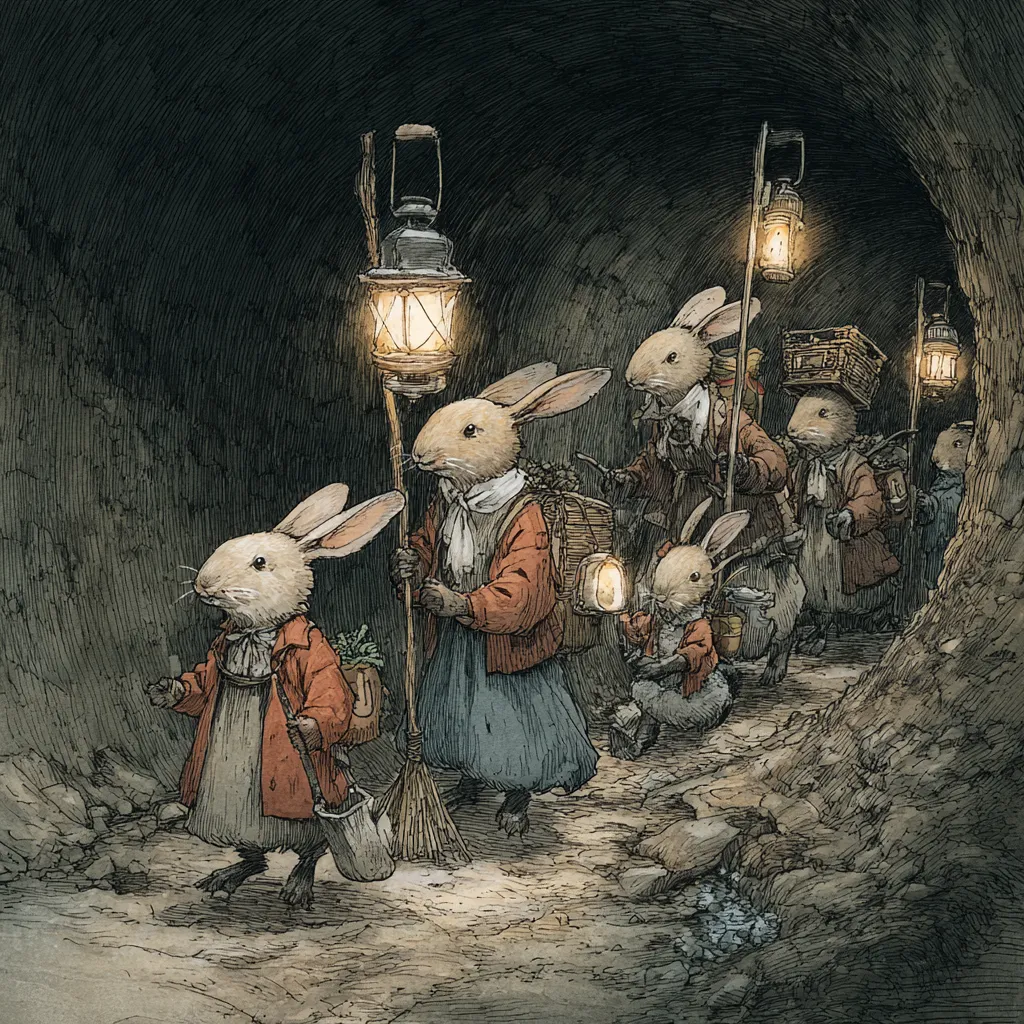
The Physical City
Districts and City Layout
Springhall
Springhall surrounds the original freshwater source. Long-standing families live here, and many elders teach young rabbitfolk reading, counting, foraging, and tunnel safety. Homes curve around the water basin, and the district keeps a quiet pace focused on shared routines, education, and family history.Honeydeep
Honeydeep lies in the lower layers where workers refine Aeum Infused Honey, shape Wildflower Sugar, and prepare ingredients for bakeries across the city. The air feels warm from constant cooking and refining work, and every chamber includes strong support beams due to its depth. Skilled workers with long training traditions live in this district.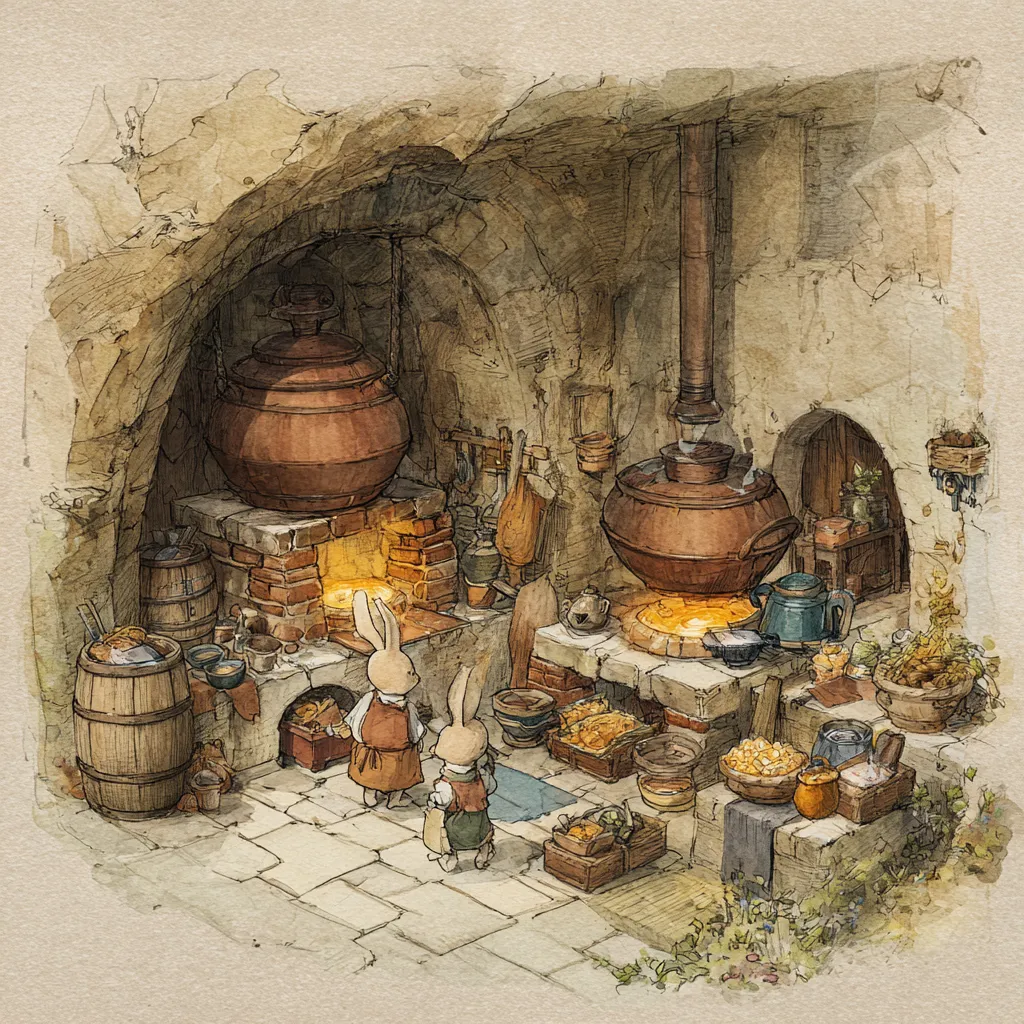
Burrowreach
Burrowreach functions as the transit hub of Hoppsala. Most major tunnels cross through it, and painted signs help rabbitfolk visitors and couriers find their way. The district hosts the council chamber, administrative offices, and several open halls used for votes, notices, and public gatherings. Many scribes, guides, and officials work here.Hearthbank
Hearthbank focuses on storage and preparedness. It holds the main food reserves, seed vaults, emergency tools, and large water cisterns. The Stock Warden works from this district, and guards monitor movement in and out of its tunnels. This district does not contain any residential areas.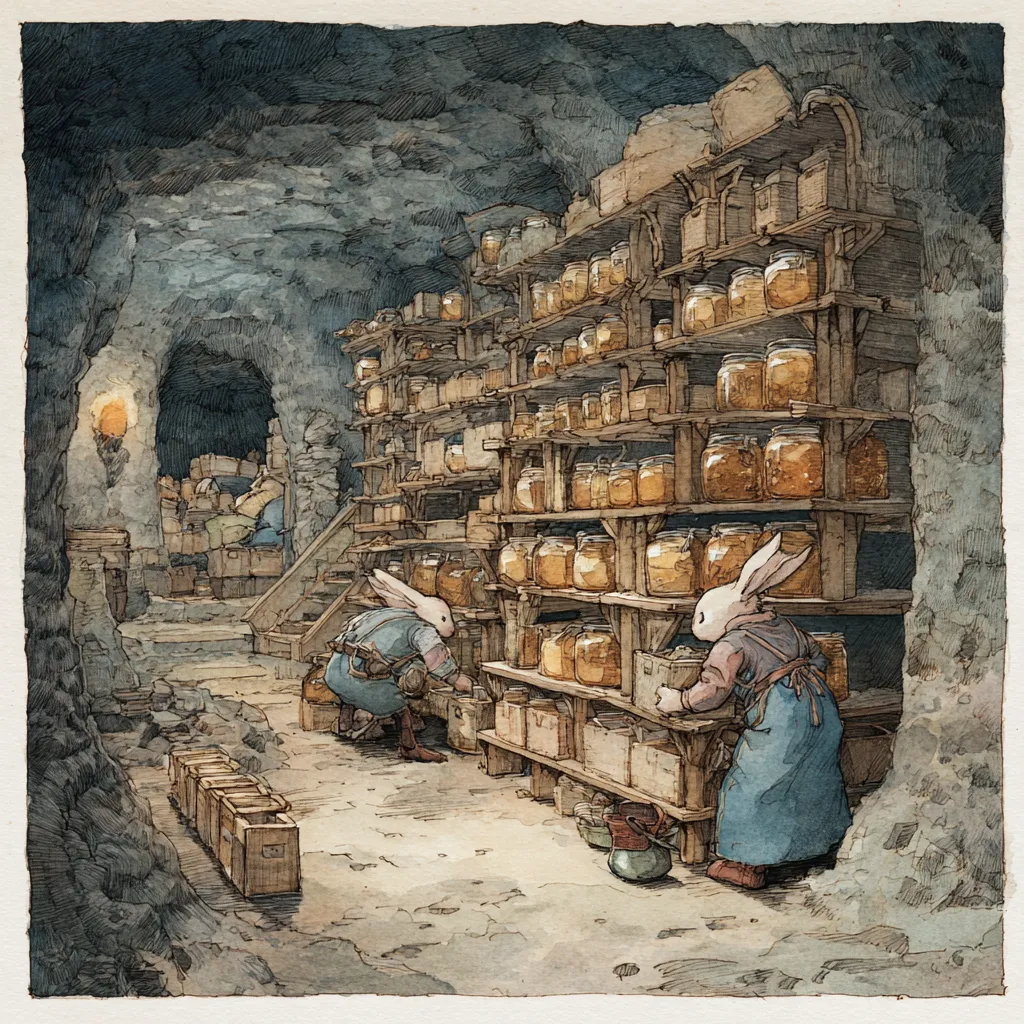
Skytunnel Row
Skytunnel Row connects the underground city to the surface. It contains air shafts, emergency exits, and training lanes used by scouts and runners. Families who prefer brighter living spaces choose this district, and many young rabbitfolk complete their physical training here before taking on roles in scouting or courier work.Points of Interest
Inside Hoppsala
- Central Spring Basin, used for daily gathering and water collection.
- Council Hall, site of votes and public announcements.
- Honeyworks Gallery, chambers where honey and sugar are processed.
- Seedvault Hall, huge halls for storing long-term food reserves.
- Training Lanes, circular burrow legs used by scouts and young runners.
Hoppsala Surface
- Visitor Market Square, the main trade site for foreigners close to the burrow.
- Wildflower Meadows, which support bee-keeping.
- North Ridge Path, a direct route to Emberfell (suitable for waggons).
- Hollow Stump Lookout, a key scout point at the highest elevation.
- Applewash River Fork, used for washing and work with cloth.
Outside of Hoppsala

Three-Branch Fork
Willowbreak Hollow
A deep hollow filled with heavy willow trees stretches along a small stream southwest of Hoppsala. Several roots form natural bridges. Rabbitfolk foragers use the area for herbs, yet they travel in groups because the hollow once held a camp of raiders.Mossbank Pool
A small round pool lies in a shaded dip near Greenvale's edge. Water seeps up from unseen cracks below. Birds visit at sunrise, and the still surface reflects the trees cleanly. People from nearby farms collect drinking water here when their wells run low. Possible location for a future settlement.Verdant Ring Stones
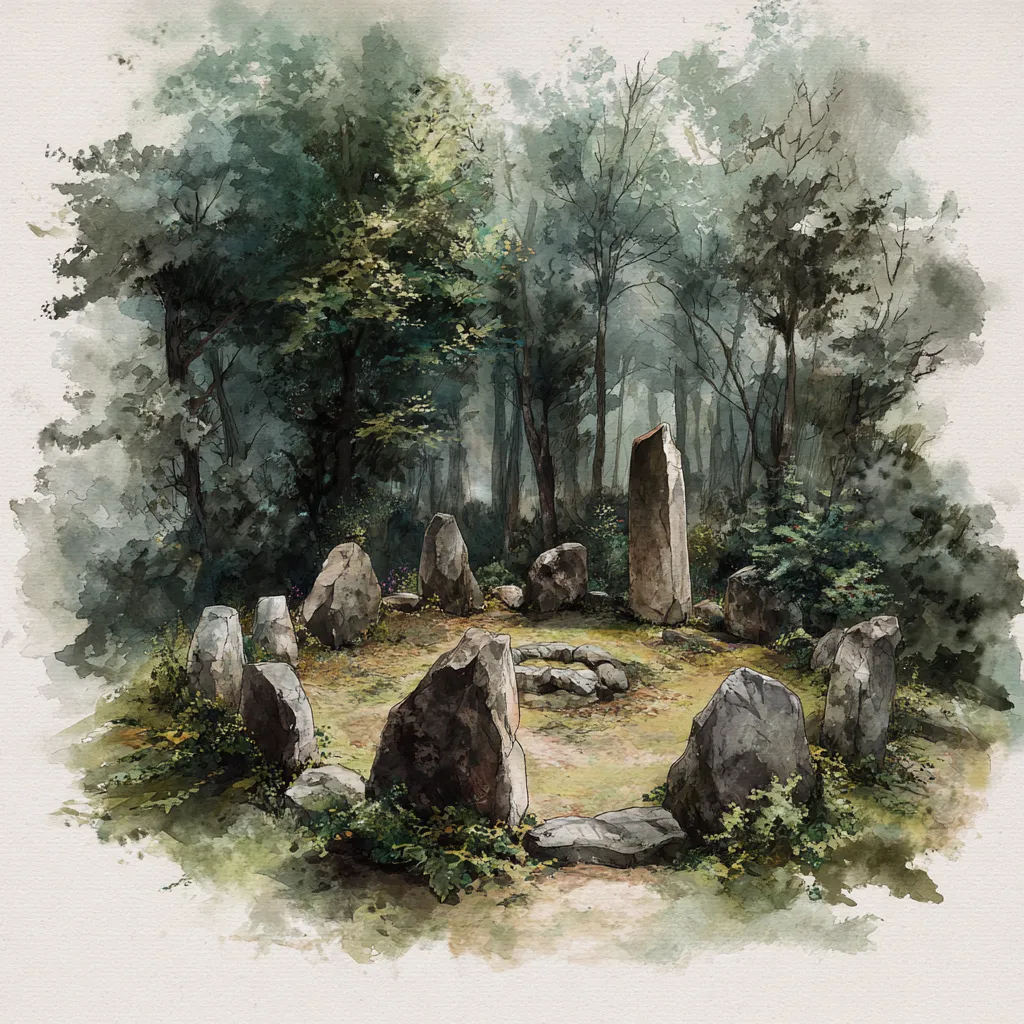
Shallowthorn Copse
A cluster of thorny brush and low trees sits close to Hoppsala. The soil stays soft and damp throughout the year. Residents believe an old storage pit lies beneath the ground. No one has attempted a full dig due to stories of cave-ins.Defence Structure and Emergency Procedures
Hoppsala relies on fast communication and clear routes to protect the population. Runners in each district stay on rotation and carry tokens that show their authority. Several tunnels include narrow points where guards can block access within seconds. Emergency lamps line key passages so residents can follow colour-marked routes during evacuations. Surface scouts monitor threats from predators, raiders, and natural catastrophes. If trouble approaches, they guide travellers away from the entrance buildings and redirect merchants to a waiting field until the alert clears. The city uses three types of alerts. A short signal prompts residents to move away from lower levels. A long signal orders everyone to shelters near Hearthbank. A repeated rhythm calls for immediate sealing of side tunnels. Drills occur monthly, and the council reviews performance through written reports. Many rabbitfolk are trained in Paw Fu.Daily Functioning
Daily Life in Hoppsala
Daily Rhythm
Morning begins at the spring and in the surface fields. Runners collect messages from Emberfell and nearby farms. Beekeepers check the hives. Families share a first meal, then split between tunnels, workshops, and meadow work. Burrowreach becomes active at midday with the "Midday Matters", with the council and other administative rabbitfolk discussing plans, results, requests, and complaints while keeping track in books and lists. Cooks in Honeydeep send fresh batches of Honeycakes and dried goods through the tunnels. Children attend teaching circles in Springhall, then practise running, climbing, and basic tool handling. Evening centres on shared halls. Many families eat together in small groups around warm lamps. Elders tell short stories or review records from the day. Scouts return through Skytunnel Row and deliver short spoken reports to the council, where they are recorded in writing for next day's Midday Matters. Night watch rotations keep scouts on the surface, while tunnel guards walk the narrow choke points and test lamps.Sounds, Smells, and Light
Most tunnels carry soft echoes of padded steps, low voices, and the scrape of tools on stone. Work districts add rhythmic chopping, careful hammering, and the faint hum of bees near ventilation shafts. Air in Springhall and Skytunnel Row smells of clean soil, fur, and simple cooking. Honeydeep adds thicker notes of warm sugar, wax, and spices. Hearthbank smells dry and cool, with a constant hint of stored grain. Light comes from oil lamps, polished reflectors, and a few Aeum crystals placed behind covers in larger areas. Most halls stay at a comfortable warm low light level. Workspaces use brighter lamps that hang high to avoid accidents.What Visitors Notice First
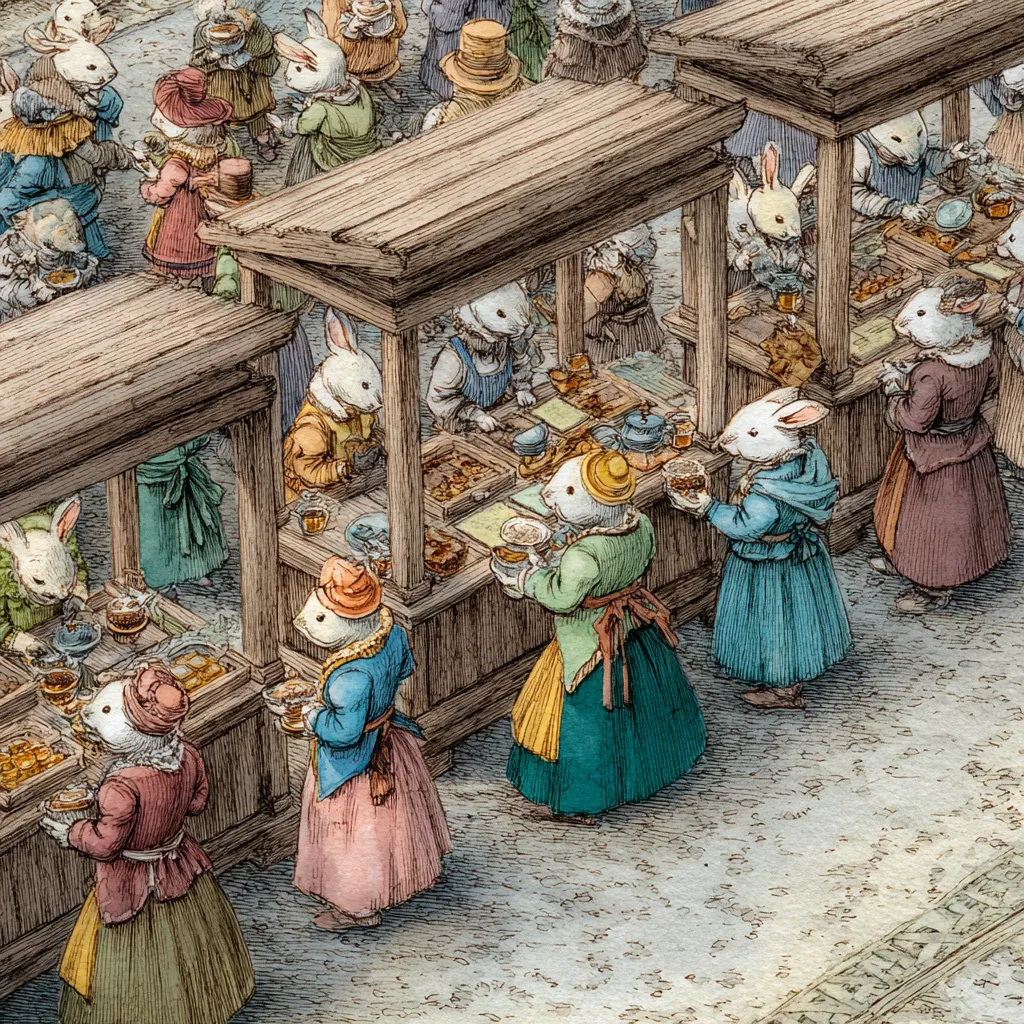
Visitors entering the surface market usually notice three things:- Rabbitfolk speak plainly and directly, with steady eye contact.
- Lines at stalls form naturally, and everyone respects the order without complaint.
- Children move fast, but they stay clear of trade paths and never touch goods without permission.
Everyday Work Patterns
Work shifts stay short and frequent. Rabbitfolk prefer focused bursts of labour followed by quick rest, water, and small snacks. Storage workers and tunnel crews track their tasks through simple tally marks on shared boards. Rest days follow a clear pattern. Each district staggers its rest schedule so that runners, guards, and cooks always keep the city supplied and ready.
Food Cycles and Long-Term Storage Planning
| d10 | Availability Result |
|---|---|
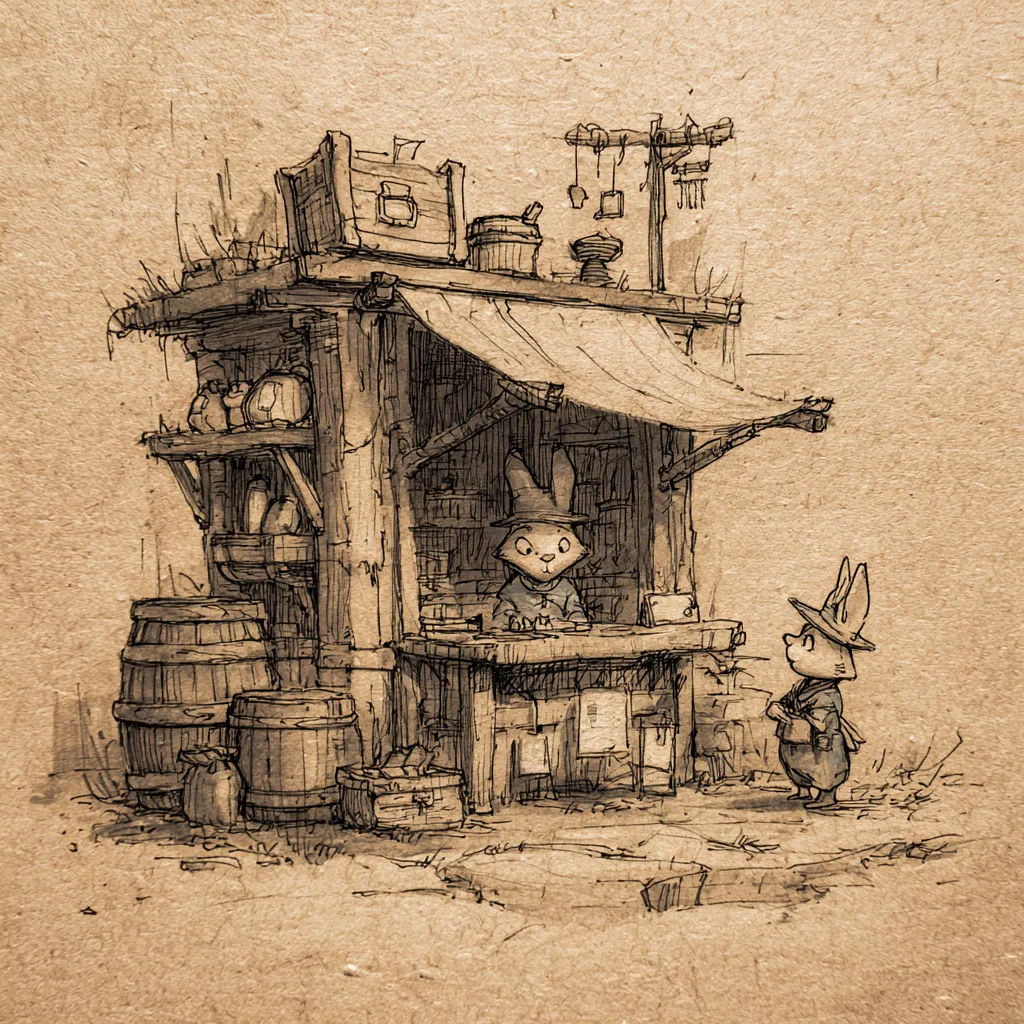
| 1 | The stall has a full batch ready. The merchant offers a fair price and invites the buyer to inspect the goods. |
| 2 | A fresh shipment arrived from Honeydeep. The merchant has limited stock and sells only one unit per customer. |
| 3 | The product is available but stored in Hearthbank. A runner must fetch it, which adds a short delay. |
| 4 | Only low-grade pieces are left. The merchant warns the buyer and lowers the price. |
| 5 | The merchant has exactly one unit left. They hold it aside for the first customer who pays in full. |
| 6 | Previous customers bought nearly everything. The merchant has only samples or crumbs. No full units for sale. |
| 7 | The last stock sold out an hour ago. The merchant expects new supplies tomorrow. |
| 8 | A storage mistake reduced the available batch. The merchant cannot sell any today. |
| 9 | Scouts reported weak harvest numbers. The council ordered a pause on sales until reserves rise. |
| 10 | A spill or breakage ruined what was left. The merchant apologises and offers directions to another stall that might still have stock. |
Governance and Roles
Notable Inhabitants and Offices
City Council
Each district elects a councillor. The council sets budgets, approves expansions, and settles disputes.- Elmira Softstep, Springhall. Focuses on education and family matters.
- Tallow Reedpaw, Honeydeep. Oversees food production and ingredient refinement.
- Pipkin Burrowmind, Burrowreach. Manages tunnel mapping and signage.
- Granite Whisks, Hearthbank. Works closely with the Stock Warden on supply strategy.
- Sable Quickwhisk, Skytunnel Row. Directs scouting routes and surface coordination.
Archive Holder
Oatwin Penroot, Springhall. Manages records on families, trade agreements, land claims, and traditional stories.Market Overseer
Merrit Flaxwhip, Honeydeep. Manages all trade entering and leaving Hoppsala, maintains stable prices, and coordinates contact with Emberfell and Rivermoor merchants.Spring Keeper
Hilla Reedwater, Hearthbank. Maintains the purity and flow of the central spring and supervises water distribution throughout the city.Stock Warden
Juniper Deepkeep, Hearthbank. Supervises stored goods and seed reserves, predicts future needs, and prevents shortages through planning and cooperation with the Market Overseer.Tunnel Ward
Bramble Underbar, Burrowreach. Leads teams who monitor structural safety, repair supports, and respond to cave-in risks or airflow problems.City Charta of Hoppsala
Citizenship and Residency
All rabbitfolk born in Hoppsala or registered by district elders receive full residency rights. Families must report every new birth within three days. Residents who move between districts must update their records before taking a new burrow. Foreigners cannot hold residency but may stay in the surface guest buildings.Education Duties
Young rabbitfolk complete core lessons in reading, counting, foraging, tunnel safety, and basic trade skills. Lessons begin once a child can follow simple instructions. Elders track progress and assign additional training when gaps appear. Districts share teaching duties so all children receive the same standard.Work Expectations
Every resident contributes steady labour to the city. Tasks include tunnel maintenance, food processing, storage work, surface patrols, childcare rotation, and cleaning of shared areas. Refusal to work leads to a review by district elders and loss of market access until compliance returns.Marriage and Household Formation
Partners declare their union before a district elder. They choose a shared burrow and register it with the council. This ensures accurate tracking of food needs, storage planning, and tunnel capacity. Partners may dissolve their union through a second declaration, which includes a review of shared belongings.Trade Conduct
All trade must use approved weights and measures. Traders must declare all goods upon entering the market square. Price changes require approval from the Market Overseer. Attempts to manipulate stock levels, hide goods, or influence prices result in controlled labour, fines, or loss of trading rights.Food and Storage Responsibilities
Families must maintain their own food reserves for at least one season. They must also contribute a share of harvests or processed goods to Hearthbank. Storage records must be accurate. Any attempt to alter storage data counts as a serious offence.Tunnel Safety Rules
Residents may not dig new chambers without submitting a request to the Tunnel Ward. All support beams, airflow vents, and wall markings must not be removed. Damaging or rearranging tunnels without permission counts as an offence. Regular inspections occur each season.Water Rights
The central spring belongs to all residents. No household may divert water for private use without approval from the Spring Keeper. Any contamination of water channels leads to immediate suspension of market access and mandatory repair work.Crime and Punishment
Minor offences include hoarding, false weights, obstruction of tunnels, and misuse of shared tools. Punishments include labour service, suspension of trade rights, and reassignment to storage duty. Serious offences include theft of stored goods, violence, and deliberate damage to tunnels or water sources. These lead to council hearings and may result in exile above ground for a set period. Crimes that place the city in danger, such as sabotage or repeated violence, result in permanent exile.Emergency Conduct
All residents must follow runner instructions during alerts. Movement must stay orderly. Families gather at assigned points in Hearthbank or Skytunnel Row. Residents who ignore emergency routes or block movement face punishment after the event.Relations with Outsiders
Visitors may stay only in surface buildings unless granted special access by the council. Residents must treat visitors with courtesy, but trade rules apply. No rabbitfolk may offer private tours of tunnels without written approval.Resource Stewardship
Beekeeping zones, wildflower fields, and grain areas are shared assets. Residents may not overharvest or damage these lands. Violations result in labour duty in the meadows until the area recovers.Public Behaviour
Shouting in narrow tunnels, leaving tools in travel routes, and causing unsafe crowding count as disruptions. Elders may assign corrective labour or restrict movement. Festivals, market days, and family events must avoid blocking major paths.Record Keeping
All districts submit monthly reports on food, births, repairs, and incidents. The Archive Holder maintains the official record. Anyone found removing or altering records faces severe punishment.Rights of Petition
Any resident may present concerns directly to the council during open days. Elders must schedule submissions in advance to keep meetings orderly.City Council of Hoppsala
Timeline
2735 - Several rabbitfolk families settle near the central spring. They begin digging the first shared burrows.
2741 - The families agree on the first shared rules for water access and food distribution. Early cooperation shapes the future city.
2748 - The settlement expands into connected tunnels that form the first organised district.
2753 - The first large storm season hits Greenvale. The settlers reinforce the spring chamber with timber supports.
2758 - Foragers locate strong wildflower fields southwest of the burrows. Early honey production increases.
2764 - Trade begins with local human farmers who buy sugar and herbs. The settlement gains steady income.
2770 - Scouts map the region around the valley. They identify Willowbreak Hollow and the Verdant Ring Stones for the first time in records.
2804 - The community registers its name as Hoppsala. A small council of three elders forms to coordinate tunnel work and food storage.
2808 - Early attempts at long-term storage fail due to humidity. This leads to the first controlled drying chambers.
2810 - A heavy rain period weakens the soil near the original entrance. Early warnings appear in records.
2811 - The Shallowthorn Collapse destroys part of the first burrows. A third of the settlement dies. Survivors move uphill and rebuild. Elders decide to hide details to protect morale.
2812 - New tunnel standards mandate stronger supports and separation of living and working tunnels.
2814 - Beekeepers discover a cluster of unusually productive hives in the wildflower meadows. This marks the start of steady honey exports.
2815 - Hoppsala completes the second ring of tunnels and expands into what later becomes Springhall.
2816 - Runners create formal surface paths to Emberfell. These paths become the main connection to the region.
2818 - A dispute with a local human landholder leads to the first recorded negotiation between Hoppsala and the Farenian Empire.
2819 - The Empire recognises Hoppsala's autonomy in exchange for modest yearly honey shipments.
2820 - The city establishes a permanent storage district to secure food reserves. This area becomes Hearthbank.
2821 - Flooding damages lower chambers. Residents build new air shafts and begin planning upper layers.
2824 - The first version of Honeydeep forms when sugar refinement chambers open near existing hives and ovens.
2825 - Hoppsala sends its first official delegation to Emberfell for trade regulation talks.
2826 - Tension rises when the Empire attempts to introduce a handling fee on honey exports. Hoppsala refuses and lowers its supply until talks stabilise.
2827 - Engineers test new tunnel beams that resist moisture. These beams become standard for all deeper burrows.
2828 - The council formalises the role of Tunnel Ward to prevent further collapses.
2829 - The first long-term seed storage rules take effect. Families record harvest numbers and store reserves.
2831 - A new bee strain reacts to Aeum traces in the soil. Production of Aeum Infused Honey begins on a small scale.
2832 - The Empire increases interest in Hoppsala's honey supply. Talks are tense but stable.
2834 - The first Market Overseer is elected to regulate prices and prevent resource misuse.
2835 - Hoppsala expands upward into what becomes Skytunnel Row. New escape routes improve safety.
2838 - A shift in wildflower growth patterns forces beekeepers to explore new fields. They map areas east of the Verdant Ring Stones.
2839 - The council introduces strict food cycle tracking. Every household submits monthly data to Hearthbank.
2840 - Rabbitfolk record a strong harvest cycle. Extra reserves allow the city to trade more widely across Greenvale.
2842 - A long drought affects southern Greenvale. Hoppsala releases part of its reserves to nearby farming villages to maintain good relations.
2844 - The Empire suggests a new tariff. Hoppsala responds with reduced shipments until the proposal is withdrawn.
2845 - Engineers strengthen all surface-linked burrows after increased soil movement in Greenvale.
2847 - Honeydeep workers begin controlled experiments with hive placement to increase Aeum Infused Honey yield.
2848 - A minor disease affects several colonies of bees. The city closes part of the meadows for recovery and introduces protective hive rotation rules.
2850 - The Stock Warden implements a multi-year storage plan that prepares for emergencies. The plan becomes central to Hoppsala's long-term security.
2851 - Trade with Emberfell increases after Greenvale improves its road network. Hoppsala gains broader access to tools and cloth.
2862 - Shipments to the Empire rise due to reduced production in other regions. Hoppsala renegotiates trade routes to secure better rates.
2863 - Tunnel inspections reveal airflow shifts in Skytunnel Row. Minor structural updates follow.
2864 - A minor cave-in near Willowbreak Hollow reveals old raider equipment. Scouts increase patrols during spring.
2865 - Current year.
- A tunnel renovation uncovers fragments of early settlement markers. Elders order the items archived without public notice due to their link to the collapse years.
- Fresh claw marks appear at the old watchpost ruins. Scouts request better weapons and training cycles.
- Runners report strange lights north of the ridge near the watchpost ruins. Patrols continue, but no source is found.
- Unusual temperature shifts appear at the Greenvale River Fork. Elders begin an internal investigation.
- A raiding band crosses Old Grainway Road. Scouts redirect them away from Hoppsala. The event strengthens surface patrol habits.



Hop, or should I say Hope, this is nowhere near Watership Down...
Hope dies last! \o/