
The Kingdom of Steplia
Established by King Boros The Conqueror , it’s the largest and wealthiest of the Oronai kingdoms; composed of much of the central and southern territories of the now dismembered Empire of Magas the Great and the fallen Sephenian Empire.
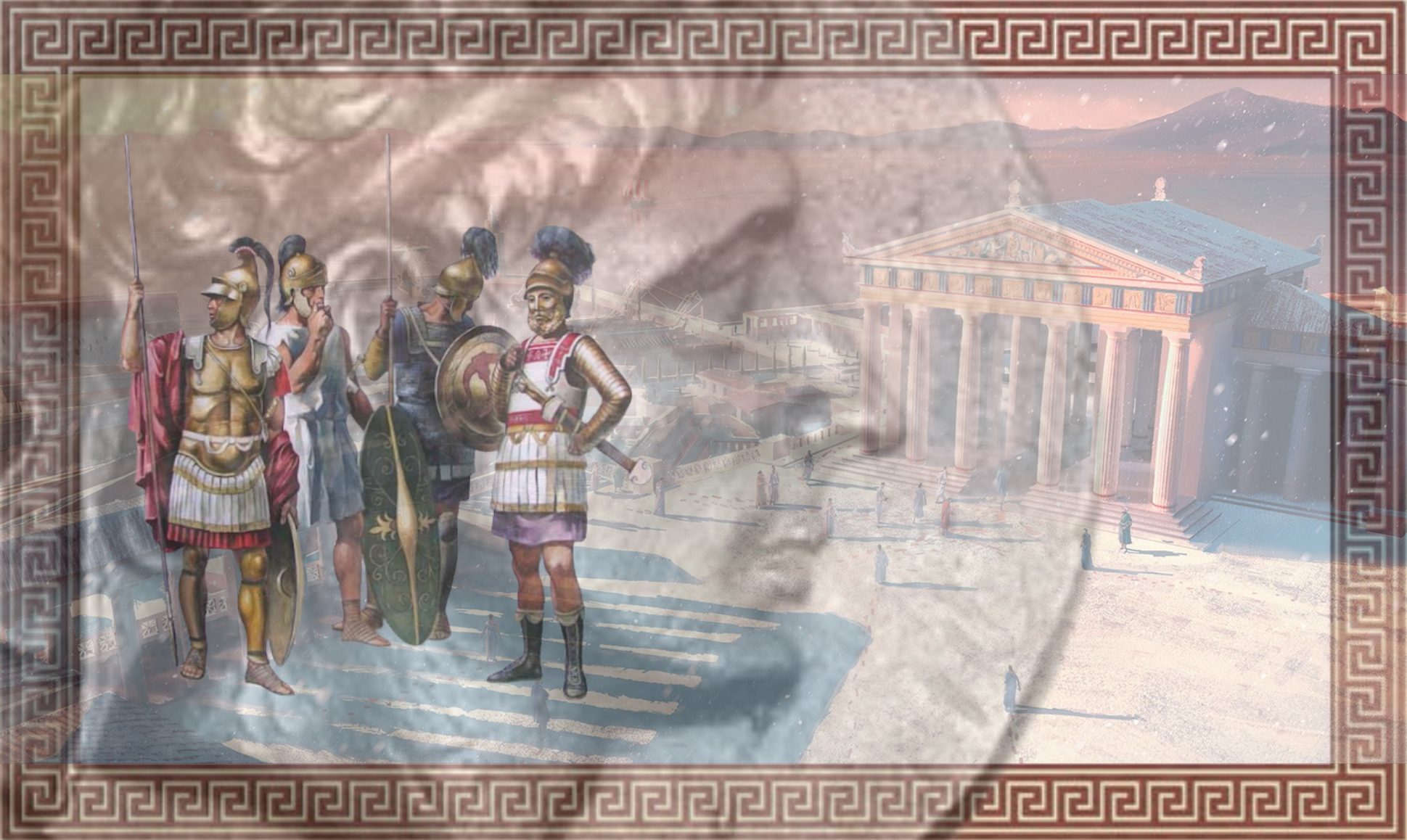
From their palaces on the top of the city of Evergetia, generations of kings have ruled this land claiming the legacy of the great King of Oronia and seeking to unified all Oronai realms.
 Since the 780s, there has been a relatively peace between the two nations (partially because of Blatian intervention since the Empire wants reliable and capable allies to fight the Crorai and the Nomads to the north). And the only thing that worries the Steplian kings nowadays is the rising expansionist policies of Wesdaland in central Teria, the increasing nomadic raids in the western provinces or the possibility of usurpers appearing in the family or among disloyal governors.
 Meanwhile, the Western parts of the country, with the exception of some Oronai colonies, are predominantly inhabited by Sephenians (many of them have undergone some process of "Oronization" but despite these they have preserved much of their culture and beliefs). The South on the other hand is very heterogeneous ethnically speaking. In the past, much of these lands were inhabited by the Tushpites, but after waves of migrations they have become a minority of some regions of their old homeland. They too have experienced a process of adoption of the Oronai culture (more strongly that their Sephenian cousins) but, like them, they have preserved many traditions, language and their warlike spirit! something that can be very useful or very dangerous for the great King of Steplia.
 Also, in the south there is the region of Lesser or Little Radalia, inhabited mainly by Radali peoples after their invasions of the 7th century and the treaty that they signed with the King. Many of these lands were previously part of Tushpite lands and their elites have adopted many elements of the civilized style of the Oronai ruling class, they drink wine on Oronai pottery, they watch Theatre plays, and many of their sons have been educated in the capital. Many of these chieftains even like to wear Oronai clothing and they have even shaved their beards and moustaches! The Radali who settled in this region of the Empire are divided into four tribes: Surri, Lectomi,Katosages and Andecombrogi. Each tribe has its chief and they have their own assembly in a Sacred Grove where they decide about internal politics, religious calendars, and how taxation would be carry on for the year in the King's name.
 In the South-eastern provinces, east of Tushpite lands, there is an strong minority of half elves, dated to the time of the conquest of the Sephenian Empire by Magas the Great, curiously this is the only region inhabited by Elvish-Oronai peoples that is not part of the well-known Elvish-Oronai kingdoms of Brire and Stormitia, although they shared a lot of cultural elements with them and trade between both regions is very important. Last but not least, there are also important communities of Tieflings of Lightliving inside the kingdom, they arrived in the mid-600s like many others of their race escaping from the destruction of their kingdom by the Dark Elves and their evil Tiefling brothers, and the Steplian kings soon realized that they would become a loyal element of the population that could quickly assimilate to Oronai culture and provide skilful workers and manpower for the army.
About their beliefs it can be said that the inhabitants of the kingdom follow the Oronai faith but they have incorporated many elements from the indigenous peoples they conquered. For example, they worship a syncretic god called Abbon Shabai- Phanias. Phanias seem to be the god of Light, Fire and the Sun in the indigenous religion, and the Oronai asociate him with the "King of the Gods" of their faith, Abbon Shabai.
In the South-eastern provinces, east of Tushpite lands, there is an strong minority of half elves, dated to the time of the conquest of the Sephenian Empire by Magas the Great, curiously this is the only region inhabited by Elvish-Oronai peoples that is not part of the well-known Elvish-Oronai kingdoms of Brire and Stormitia, although they shared a lot of cultural elements with them and trade between both regions is very important. Last but not least, there are also important communities of Tieflings of Lightliving inside the kingdom, they arrived in the mid-600s like many others of their race escaping from the destruction of their kingdom by the Dark Elves and their evil Tiefling brothers, and the Steplian kings soon realized that they would become a loyal element of the population that could quickly assimilate to Oronai culture and provide skilful workers and manpower for the army.
About their beliefs it can be said that the inhabitants of the kingdom follow the Oronai faith but they have incorporated many elements from the indigenous peoples they conquered. For example, they worship a syncretic god called Abbon Shabai- Phanias. Phanias seem to be the god of Light, Fire and the Sun in the indigenous religion, and the Oronai asociate him with the "King of the Gods" of their faith, Abbon Shabai.
History
Because of its size and wealth, it was clear that from the successor states of the Empire of Magas the Great, Steplia was the most powerful, destined for greatness, and King Boros was the man who would achieve that greatness. After his campaigns in the Southern Elvish lands Steplia became, alongside the Seris Empire, the biggest realm in all of Yeia (despite having less than a half of its population). Boros strengthened the royal administration and encouraged the migration of Oronai settlers to his realm. His prosperous reign was succeeded by that of this eldest son, Antiochos I, whose efforts to maintain the great empire united were titanic, but despite them he couldn't avoid the independence of the southern provinces, who proclaimed his younger brother Zoisos as the first king of the Kingdom of Brire, nor he could expel the Radali from the kingdom but instead, after severely defeating them, he allowed them to settle and swear loyalty to him. Antiochos fought successfully his cousins of Sylvania who wanted to expand southwards as well as taking the Island of Ikos from the Kingdom of Oronia. The island became a Steplian possession for a generation, risking the trade route between Oronia and the Kingdom of the Green Elves. Antiochos I was succeeded by his son Antiochus II, the last Steplian king who attempted to invade the South, though he was defeated by the Brirean King Menander I . Antiochus II most famous campaign was his Eastern Expedition when he successfully fought against nomadic incursions as well as a pretender to the throne called Pausanias. He fortified the northern frontier and fend off a Sylvanian-Oronai coalition though he lost the island of Ikos, who was reconquered by Oronia. The following reigns of Boros II and Demetrius I were quite peaceful, signing treaties of friendship with the Elvish-Oronai kingdoms as well as establishing very good relations with the Blatian Empire. The mid 700s though were a period of instability in the kingdom, first with the civil war between Demetrius II and his brother Antiochus "the young prince" and later on with the deposition of the young Boros III by the Three Sorcerers, who established a kind of Regency Council, making Steplia becoming briefly a Magocracy. Boros first sought refuge in Blati, and later in Brire, where, with money from the royal treasury and the help of loyalists, he invaded the southern provinces. There he was acclaimed king once more, and at the Battle of Taunion, he defeated and captured the Three Sorcerers. He returned to Evergetia, where he publicly executed them, and spent the rest of his reign restoring the kingdom's splendour, reforming the army, and creating new infrastructure. His purge of mages throughout the kingdom however, was somewhat controversial. The rest of the following 8th century witnessed a period of internal peace and prosperity thanks to the reforms of Boros III and his descendants as well as a period of renewed conflict with the Kingdom of Oronia, which at times, annexed Sylvania or made it a client state, thus threatening Steplia's northern border. Though not as big in scope as the wars of the Sons of Magas the Great two centuries earlier, the wars between Steplia and Oronia were one of the biggest conflicts in Yeia during that century. by Igor Dzis
Geography
Steplia is located west of the Thyssalis Sea , in the centre of the continent of Teria . A perfect location since it is located in the main trade routes that connect the Northern and Southern parts of the continent. The eastern regions of the country are very fertile, with a climate very similar to Lower Oronia, just on the other side of the sea. This is the region where the most populated cities are located, while parts of the centre and western parts of the country are more arid and the population is scattered among with little oasis settlements and cities near farmable land near the main rivers. The northern frontier with the Kingdom of Oronia is demarcated by the river Ethmon, the traditional border between Oronai lands and the former Sephenian Empire, while in the north-west Steplia is separated from the Kingdom of Sylvania by the Beryan mountains. The Southern Mountains have been the frontier between Steplia and the Kingdom of Brire since this kingdom achieved its independence. Finally to the west the kingdom borders with the nomads living in the steppes as well as Radali tribes inside and outside the Kingdom of Wesdaland.Culture and Demography
The main culture of the kingdom of Steplia (and the one that the state promotes) is the Oronai culture, brought by the successive waves of settlers and soldiers after the campaigns of King Magas the Great. They intermarried with the local population and also with the elvish communities to the south. The Oronai settlers and its descendants are mostly found in the central and eastern parts of the country, bordering the Thyssalis Sea. They are the dominant ethnic group, as the army and much of the Court and the Highest offices in the Royal bureaucracy are occupied by people of Oronai descent. by Callyxtus
Tushpites by Heroforge
by Peter Connolly
Government
Although the King reigns supreme in the country (if he has the support of the nobility and the army, of course) the cities of the Kingdom have autonomy for conducting their own affairs (electing magistrates aside from the town mayor or Episkopes, named by the King himself, create their own institutions and public offices, making laws..., they're also autonomous for collect the taxes in name of the King etc... .) At the top of the government of the country is the King and the Royal Court. This Royal Court has a complex hierarchy. After the King and his closest family are the "Philoi", the friends of the King, inside this circle of friends, that is a sort of "Private Council" where most of the important decisions of the Kingdom are debated and later adopted. To make things even more complicated, there are several ranks of Friends, for example you have the First Friend of the King (Einas Philos in Oronai) and also a Foster Brother (or Syngennes in Oronai). When a King dies, the Foster Brother of the previous King becomes a Foster Father (Tropheus) to the new King. This is of course a very influential position, akin to the Voice of the King in the Kingdom of the Sun Elves. And it is not the first time that some presumptuous and very powerful Tropheus rebels against the king becoming himself a Pretender to the Steplian Throne. And then, the survival of the legitimate king or the victory of the pretender depends on the real force behind the throne; the Royal army. So, having loyal troops and commanders is really important in order to have an stable government for the Kingdom.Economy
Agriculture is the most important sector of the Steplian economy, between 80 to 90% of the population is employed, in some form, in jobs related to agriculture or within the agriculture structure that the Oronai Steplian kings inherited from their Sephenian predecessors. There are three types of land, land belonging to temples, cities or the so-called Royal lands (the latter constitute most of the farmable lands of the kingdom). Temples lands usually produce barley, dates, wool and sesame, while cities produce grain, olives and their oil, wine...figs, cheese from sheep and goats and meat. Royal Lands are one of the most important sources of wealth extraction for the Kingdom (the kingdom needs a lot of wealth and money to maintain its sizable army!) and it's subject to direct tax by the state, based on the size of one's plot and it is collected by the local governor and sent to the capital.Land of the Wise and Feared
Founding Date
561
Type
Geopolitical, Kingdom
Capital
Predecessor Organization
Successor Organization
Demonym
Steplians, Southern Oronians
Founders
Government System
Monarchy, Absolute
Power Structure
Unitary state
Economic System
Traditional
Parent Organization
Official Languages
Related Traditions
Neighboring Nations
Notable Members
Related Ethnicities
Army
Numbering between 50 to 60.000 men, the Steplian army is one of the biggest armies in the world. It's core is formed by well drilled, discipline and deadly pikemen fighting in the Oronai fashion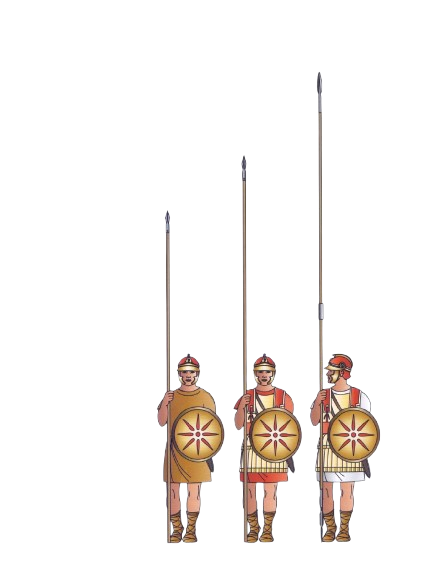
Steplian Phalangites by Stéphane Thion
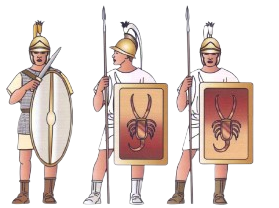
An Oronai swordsman and two "Oronized" Tushpite warriors by Stéphane Thion

Where is Gandalf of this civi