
Exapataosaurus
Exapataosaurus are one of the most common dragon birds in Yeia, present in both continents and it is the most famous exponent of a family of Dragon birds known as Expataosaurids. Its name means "Deceitful Lizard", though many people in Yeia will tell you it is more bird than a reptile like creature. The name, of course, does him justice, since Expataosaurus is an expert in the art of deception, as you will soon see.
 They have these body colours to better camouflage themselves with the vegetation and terrain where they live, both for hunting and for avoiding being hunted. These colour patterns often resemble those found on other birds like some duck species or partridges
While folded, their arms resemble bird wings, except they have clawed hands. Expataosaurus often swoop down on their prey or leap from rocks of relatively low heights, flapping their arms like bird wings. While they can't glide completely, this helps them slow and control their descent. They also use their wings for balance when climbing vertically up tree trunks, which they ascend to obtain fruit or even steal eggs from nests.
Another quality or advantage they have is their superior sight and smelling sense. They see perfectly both during day and night time. Because for hunting they have split schedules; if one member of the pair is taking care of the young during the day, it is their turn to hunt in the afternoon or evening, and vice versa, so having a good eyesight for all the times of the day is essential.
They have these body colours to better camouflage themselves with the vegetation and terrain where they live, both for hunting and for avoiding being hunted. These colour patterns often resemble those found on other birds like some duck species or partridges
While folded, their arms resemble bird wings, except they have clawed hands. Expataosaurus often swoop down on their prey or leap from rocks of relatively low heights, flapping their arms like bird wings. While they can't glide completely, this helps them slow and control their descent. They also use their wings for balance when climbing vertically up tree trunks, which they ascend to obtain fruit or even steal eggs from nests.
Another quality or advantage they have is their superior sight and smelling sense. They see perfectly both during day and night time. Because for hunting they have split schedules; if one member of the pair is taking care of the young during the day, it is their turn to hunt in the afternoon or evening, and vice versa, so having a good eyesight for all the times of the day is essential.
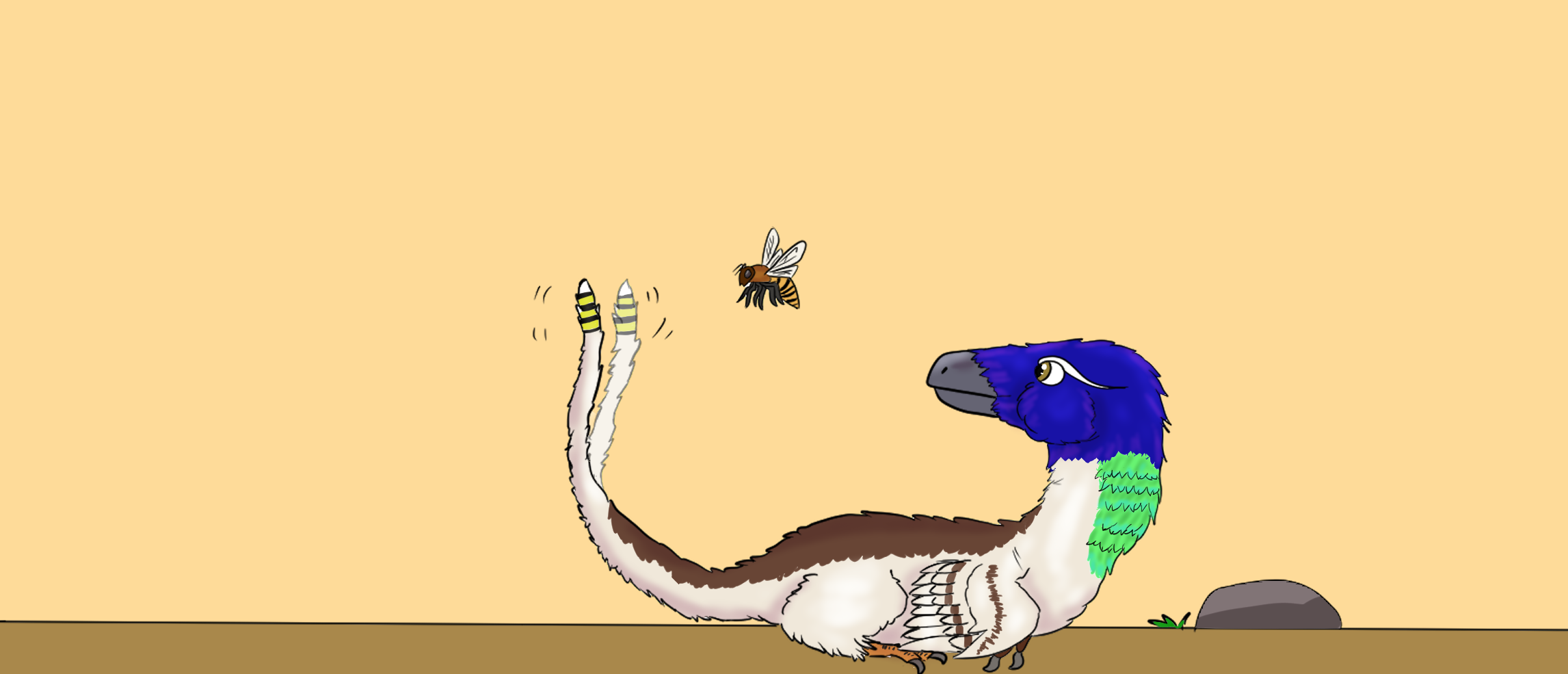 Once they've achieved the wasp's attention they have two ways of catching their prey, either by moving their tail simulating the flight of a bee and slowly bringing it closer to their face and with a quick gesture opening their jaws and eating them, or they have also been seen sometimes working in pairs, one distracting the wasp and the other taking the opportunity to open their mouth and eat it.
Description
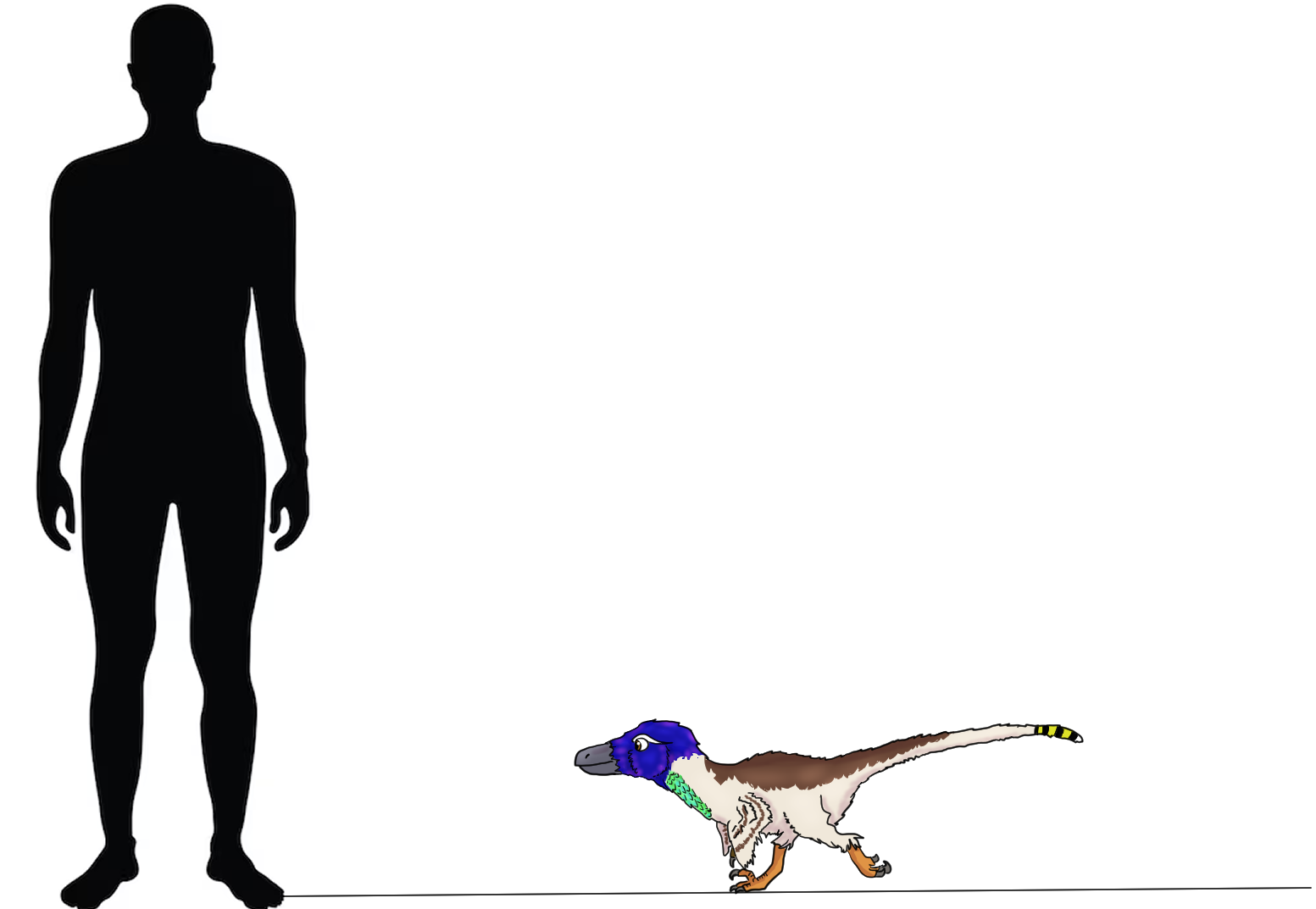
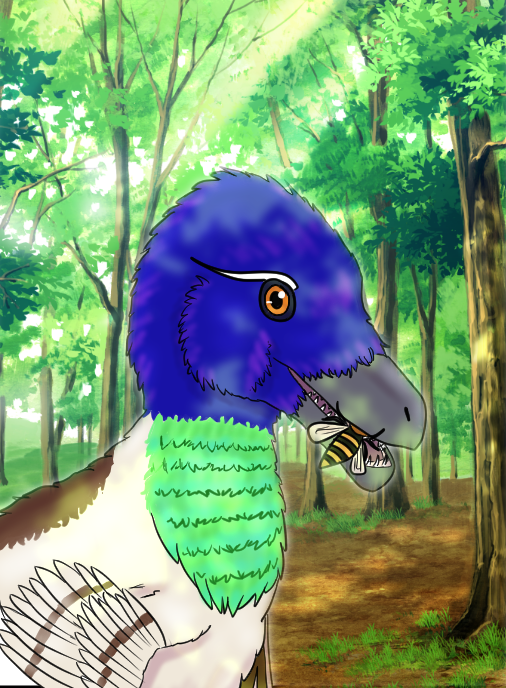
Expataosaurs are small size Dragon Birds, one of the most common types found in Yeia. They usually weigh between 15 and 20 kg, with a length of two meters and a height of 50 cm. Like most if not all of their dragon bird relatives they are covered in feathers and instead of a beak they have their mouth covered with sharp little teeth. Like all small dragon birds, they possess a very distinctive feature, its large, sickle-shaped claw on one of the toes of each paw, ideal for catching small prey like lizards or small mammals. They typically have greyish or brownish feathers along their bodies, except for the tip of their tails, as we will see later, their heads, which are dark blue with a distinctive white line above the eyes as if it were an eyebrow, and their necks, where they have iridescent feathers that they use to attract females during mating season.Comparison of height between a human and a Exapataosaurus by Callyxtus
Masters in the art of deception
Though they usually feed on lizards and small insects, their favourite food are hornets and wasps. It seems they're immune to their poison and their dense plumage also prevents them from being bitten. How they capture those insects? well.... the Exapataosaurids, not only Exapataosaurus have developed very interesting "tricks" to catch their prey. In Expataosaurus' case, they’ve a ringed tale, or better said, the tip of their tale is ringed like a bee to attract wasps. by Callyxtus
Habitat
Exaapataosaurus can be found in many regions of Yeia, across both continents. They live mostly in the forests in tropical and warm climates, like western and southern Teria and Western and South Eastern Karia. These are places where food is abundant and the vegetation is dense so they can easily camouflage to ambush prey or to hide themselves for predators. For example, they thrive in regions like the dense jungles of Southern Seria, where insects and small mammals and reptile are abundant and vegetation allows them to be somewhat unseen to prey and predators. They don't tend to live close to human settlements, because they're afraid of humans, so don't worry if they see you they'll run immediately, but it's true that, if they are hungry they might sneak into a town during the night or at dawn to catch insects or mice.Diet
Oh, those dragon birds with the ringed tail?, they're wonderful! they get rid of those ugly insects and they're quite afraid of people so they don't attack people, their presence means that whatever of those nasty wasps, hornets and even rats or mice have their days numbered, sometimes, they're even more effective than cats, one day I'm going to ask a wizard if they could cast a domestication spell on one of those little ones. Oh the feathers, I forgot about the feathers! they're so beautiful, I used to decorate my hats with some of their feathers when I was little!.
by Callyxtus
The diet of these little feathered creatures is very varied, mostly consisting on insects (wasps, hornets, spiders, dragonflies, crickets), worms, and small mammals (squirrels, rats, rabbits, mice, beavers in some occasions...) as it has been said, but fruits and eggs are also part of their diet. In the case of the eggs either by stealing them from a bird's nest or from another dragon bird's nest.
Eggs have lots of proteins and if not caught are an easy way to get food especially for feeding the younger ones.





What precious little friends these fellas are! I wouldn't mind them keeping wasps out of my house.
✏️ Add yourself to the World of Worlds
thank you for your comment! yes!! they're tiny cute fellas!! If you cast a spell on them or take care of them from a young age, they make excellent pets!