

Tessa Rynell
Second Handmaiden Tessa Rynell
Tessa Rynell (born October 14, 25 BFE) is an Alagorian court official, rapper, choreographer, and songwriter who serves as the Second Handmaiden of the Sapphire Throne. Known for her distinctive fusion of Seartoran rhythm traditions with modern rap and electronic forms, she first rose to prominence as a solo artist during the final years of the Reconnection Era, where her physical performance style and percussive delivery set her apart from her contemporaries. Born in the treetop capital of Tetherdeep in the Kingdom of Seartor, Rynell became one of the first artists from her realm to achieve broad interrealm recognition while retaining strong ties to her homeland’s identity.
Rynell began her professional career with the release of her debut album Rootfire in 5 BFE, a work that blended canopy-festival chants and Seartoran percussion with beat-driven backdrops, earning critical praise for its cultural authenticity. She followed with Ashtongue in 4 BFE, which expanded her sound through denser electronic production and confrontational lyricism, and Crownlight in 3 BFE, her commercial breakthrough, which established her as a defining voice of Seartoran modernity. That same year, she signed with Eclipsa Entertainment, positioning herself for a larger stage while continuing to perform as a cultural ambassador for her realm.
In early 2 BFE, Rynell was introduced as one of the three members of AURA, a cross-realm idol project alongside Seraphina Winters and Lyra Sterling. The group’s sole studio album, No Echo Returns, became a pan-realm phenomenon, and Rynell’s rapid-fire cadence and kinetic choreography were widely credited with giving the ensemble its rhythmic foundation. Critics frequently described her as the grounding force of the trio, a performer whose clarity and intensity balanced Winters’ theatrical presence and Sterling’s melodic sensibilities. AURA’s success solidified Rynell’s place in the cultural history of the era, though its run was cut short following the death of King Octavius Athomath and the subsequent dissolution of the group.
Following AURA’s disbandment, Rynell withdrew from the entertainment industry and later accepted direct appointment to the Sapphire Court. Upon the founding of the Sapphire Empire in 0 AFE, she was formally named Second Handmaiden of the Throne, a role that placed her in charge of palace logistics, ministerial coordination, and the execution of ceremonial protocol. Though her career shifted away from performance, she remains regarded as a central figure in Alagorian cultural memory: both as one of the pioneering Seartoran voices of the Reconnection Era and as a trusted
Early Life
Tessa Rynell was born on October 14, 25 BFE, in Tetherdeep, the treetop capital of the Kingdom of Seartor. Her father, Torven Rynell, worked as a structural ropewright, maintaining the woven skybridges that linked the city’s canopy settlements, while her mother, Mira Aven Rynell, was a midwife and herbalist. The youngest of three siblings, Rynell later recalled being “the loud one,” often humming or tapping rhythms on the wooden beams of the family’s dwelling as her father guided her across the bridges. Though her own childhood was stable, it unfolded in the shadow of The Emerald Queen's consolidation of Alagor. Seartor had been forced to capitulate when she was an infant, and stories of fire at the forest margins and shortages in the capital remained part of her family’s memory. At age seven she lived through the Alagorian Civil War of 18 BFE, when Octavius Athomath returned to depose his daughter. While Tetherdeep was spared direct fighting, contemporary accounts describe food rationing and evacuation drills in the canopy halls, events that left a lasting impression on her generation. In the years following the civil war, Seartor entered a period of accelerated modernization as Avalonian technologies began to flow into the kingdom. Rynell was among the first children in her district to attend the Tetherdeep Cultural School, an experimental program backed by the Seartoran Cultural Council that combined traditional literacy and ecological instruction with imported digitized modules. Teachers remembered her as bright and restless, excelling in movement-based activities and improvisational performance more than formal study. Her earliest interest in rhythm was shaped by Seartoran festival culture, where she frequently danced in community rites and was encouraged by her parents to join seasonal troupes. Exposure to Avalonian kiosks and broadcast streams in her preteens introduced her to rap and beat-driven performance, which she imitated with improvised loops on salvaged playback devices. Older siblings teased her for constant practice but supported her performances at local gatherings, where she became known for her energy and stage presence. By age 13 she was writing her own verses in Alagorian, fusing them with hand-clapped beats and folk chants drawn from canopy life. At 15 (10 BFE), she began appearing at regional festivals, where her blend of traditional cadence and modern delivery drew increasing attention. One of these performances brought her to the notice of independent scouts, setting the stage for her entry into professional music in the decade before the founding of the Sapphire Empire.Early Career and Rootfire (10 to 7 BFE)
Tessa Rynell began her professional career in 10 BFE, performing at community festivals and cultural showcases across Seartor. Her distinctive blend of percussive Seartoran rhythms with spoken–word lyricism quickly set her apart, earning her invitations to perform in neighboring kingdoms. By her mid–teens, she was regarded as one of the most promising young performers of Alagor’s new wave of postwar artists. In 8 BFE, Rynell organized a showcase at the Skybranch Pavilion in Tetherdeep, which drew several scouts from emerging music houses. Among them were representatives of Emberlane Records, a small Alagorian label experimenting with hybridized styles. Impressed by her control over both choreography and lyric delivery, the label offered her a recording agreement the following year. Rynell insisted on retaining creative control of her stage movement and lyrics, a stipulation that shaped her debut project. Her first studio album, Rootfire (7 BFE), was written primarily by Rynell herself, incorporating folk–chant cadences and forest–drum patterns into beat–driven structures. The album’s lead single, “Branchstep”, became her first charting track within Alagor, making her the first Seartoran artist to appear on the Alagorian Inter–Kingdom Charts. Critics praised her syncopated breathwork and improvisational flow, describing her sound as “rooted but restless.” Promotion for Rootfire included the Ember Tether Tour, a six–month circuit across Alagor’s seven kingdoms that marked one of the first state–approved live tours from Seartor since the postwar restrictions on cultural gatherings. The tour helped solidify her reputation as both a rapper and choreographer, known for high–intensity sets that balanced traditional dance with modern staging.5–4 BFE: Ashtongue
Rynell’s second studio album, Ashtongue, was released on February 12, 5 BFE, through Emberline Records. It debuted at number three on the Alagorian Kingdom Top 100, becoming her first top-five album and her breakthrough across the Seven Kingdoms. Its lead single, “Veins of Fire,” was the first rap-driven track from Seartor to reach the Top 10 of the chart, while its follow-up singles, “Ashflow” and “Hollow Steps,” peaked in the Top 20. The album spent 38 weeks in the Top 100 and was later certified Platinum in Seartor. Critics praised her sharp lyricism and syncopated delivery, while noting its heavier use of electronic backbeats compared to her debut. Reviewers in traditionalist circles were more divided, some accusing her of “leaving Seartor’s roots behind,” though younger audiences celebrated the sound as a cultural turning point. Rynell embarked on her first headlining tour, the Ashlight Tour (5–4 BFE), which began in Tetherdeep and expanded to major venues across the Seven Kingdoms. The concerts received acclaim for their stamina-driven choreography and immersive staging, selling out every announced stop. She became the first Seartoran rapper nominated for a Harmony Star Award, earning a nomination for Best Urban Performance (Ashtongue), and won the Seartoran Cultural Council’s New Voice Award for modernizing traditional cadence. During this period, Rynell collaborated with several emerging Alagorian producers, co-writing the single “Lanternfall” for fellow Seartoran artist Arven Solis and featuring on the Avalonian underground track “Pulseframe,” which circulated widely on kiosk networks. In 4 BFE she appeared in the cultural film Bridges of Flame, contributing the original track “Roots and Ash” to its soundtrack. That same year she performed at the Skybridge Festival, her set broadcast interrealm for the first time and hailed as a defining moment in Seartor’s modernization of performance culture.3 BFE: Crownlight and artistic breakthrough
Rynell released her third studio album, Crownlight, on March 9, 3 BFE, through Emberline Records. Written and co-produced primarily by Rynell herself, the project expanded on the experimental rap–folk blend of her earlier work and incorporated heavier electronic percussion, layered chant harmonies, and elements of Avalonian-influenced beatcraft. Critics described it as her most ambitious album to date, both musically and thematically, with lyrics centered on resilience, memory, and the tension between tradition and modernity. Crownlight debuted at number one on the Alagorian Realm Chart, selling over 400,000 first-week units across the Seven Kingdoms—at the time, the highest opening by any Seartoran artist. Its lead single, “Skybound,” peaked at number three, while follow-up singles “Ashen Roads” and “Crown and Root” both entered the top five. A fourth single, “Lanternfall,” reached the top ten and became a concert staple. The album’s success propelled Rynell into her first major headlining circuit, the Lanternfall Tour, which ran from summer to late autumn 3 BFE. The tour included over 40 dates across Alagor, and reviewers praised Rynell’s athletic choreography and integration of Seartoran canopy-styled stage design. Concert segments often opened with dimmed halls and spotlighted her near-silent footwork, a signature quirk that drew enthusiastic recognition from fans. At year’s end, Crownlight earned multiple nominations at the Harmony Star Awards, including Best Urban Album and Best Performance Video for “Crown and Root.” Though she lost Album of the Year to Seraphina Winters’ Beneath the Mask, the record cemented her as a top-tier Alagorian act. She was also honored with the Cultural Council’s Silver Laurel for advancing Seartoran artistic visibility, becoming the first popular musician to receive the prize. By late 3 BFE, Rynell’s rising profile drew interest from major labels. After weeks of speculation, she signed with Eclipsa Entertainment in mid-3 BFE, a move that positioned her alongside Lyra Sterling and eventually set the stage for the formation of AURA the following year.2–1 BFE: No Echo Returns, choreography, and breakthrough as cultural figure
On January 8, 2 BFE, Rynell joined Seraphina Winters and Lyra Sterling to formally debut as AURA during a benefit concert for victims of the Concordia Alagoria attack. Their joint performance, broadcast across multiple realms, was hailed as a unifying cultural moment and marked Rynell’s first appearance on a pan-realm stage. Critics immediately noted her sharp rap cadences and kinetic stage presence, with one reviewer describing her as “the group’s engine of motion.” In February, AURA released their debut single “Eshara Vel’Karesh,” which debuted at number one on the Alagorian Realm Chart and entered the top three across Roxabor, Cascadia, and the Dread Coast. The single’s accompanying performance on The Lex Carter Show marked the group’s breakthrough broadcast appearance, with commentators praising the precision of Rynell’s stage design and movement direction. Their debut album, No Echo Returns, followed in March 2 BFE. The record topped the Alagorian chart for 14 consecutive weeks and became the first idol album to reach number one on Avalon’s pan-realm broadcast index. Additional singles “Veil of Dominion” and “Karesh Vel’Shara” charted in the top five across multiple realms, and “Eshara Vel’Karesh” went on to become the group’s signature track. AURA embarked on the No Echo Returns Tour beginning in spring 2 BFE. Performing aboard the custom Eclipsa Starliner, AURA reached audiences of over 10 million per stop, with the Avalonian leg setting a Reconnection Era record for single-concert attendance. Rynell’s solo segment featured extended rap medleys drawn from her earlier Rootfire and Ashtongue catalogs, alongside new material tailored for the stage. They performed to record-breaking audiences across Alagor with additional stadium dates in Avalon, Roxabor, Cascadia, and the Dread Coast. Rynell’s solo segments emphasized her Seartoran heritage, blending folk percussive chants with rap verses, and her direction of the group’s choreography was cited as a defining feature of the tour. Rynell’s role as AURA’s principal choreographer became a defining element of their rise. She designed the group’s intricate formations, integrating Seartoran footwork traditions with modern broadcast-oriented movement. Her rap verses provided grounding contrast to Winters’ soaring leads and Sterling’s melodic phrasing, balancing the trio’s sound. In interviews, she remarked that choreography was “how I tell the story that lyrics can’t.” By the close of 2 BFE, Rynell was recognized not only as one of the first Seartoran artists to achieve interrealm acclaim, but also as a cultural innovator who introduced traditional movement into the largest stages of the age. At the Harmony Star Awards, AURA won Group of the Year, and critics praised Rynell for “shaping the body language of a generation.”1 BFE: Concordia memorial, “Hold the Line,” and AURA’s disbandment
At the start of 1 BFE, Rynell joined Winters and Sterling for the Concordia Memorial Concert, held in January to honor victims of the Alagoria attack. Their joint performance was broadcast across multiple realms and became widely regarded as AURA’s symbolic farewell, though the group did not formally disband until later in the year. In early spring, Rynell participated in the charity single Hold the Line alongside Winters and Sterling, with proceeds directed to the Ninym Memorial Foundation. The song debuted at number one on the Pan-Realm Broadcast Index and became one of the most-played releases of the year. Rynell’s contribution, a blend of rap verses and spoken interludes, was praised for grounding the track’s message of resilience. On May 6 BFE, King Octavius Athomath died suddenly during the Tournament of the Supreme. The tragedy marked the end of the Reconnection Era’s cultural peak and cast uncertainty over AURA’s future. Winters withdrew from public life shortly afterward, and by midyear the group formally announced its dissolution.0 AFE: Transition to imperial service
Two months after Octavius’s death, Salena Athomath was crowned Queen of Alagor, and later that summer she proclaimed the formation of the Sapphire Empire, beginning the AFE calendar. Following the proclamation, both Sterling and Rynell accepted invitations to serve in the new imperial household. By the close of 0 AFE, Rynell was formally appointed Second Handmaiden of the Sapphire Throne, charged with coordinating palace logistics, protocol, and ministerial functions. The appointment marked her decisive departure from the music industry and her entry into political-administrative life, a transition that commentators later described as “one of the most dramatic shifts in modern Alagorian cultural history.”0–8 AFE: Court appointment and imperial service
After the disbandment of AURA in 1 BFE and the proclamation of the Sapphire Empire in 0 AFE, Rynell was appointed Second Handmaiden of the Throne, the first individual to hold the title. Working directly under Sterling, she assumed responsibility for palace logistics, coordination between ministries, and the preparation of ceremonial protocol. Her role placed her at the center of the court’s administrative machinery. She oversaw daily scheduling, prepared reports and briefing notes for the Empress, and managed the Sapphire Palace’s clerical wing. She also supervised junior aides, organized secure correspondence, and ensured readiness for major assemblies. Though rarely acting as a public proxy, Rynell appeared in several early milestones of the Empire, including the inaugural session of the Sapphire Assembly and the dedication of the Sapphire Glaive tower. Within bureaucratic circles, she became regarded as a reliable liaison between the Throne and its ministries. By 8 AFE, she remained in the position as a steady fixture of the palace, with her work described by contemporaries as essential to the uninterrupted function of the Sapphire Court.Artistry
Musical styles
Rynell’s artistry is frequently described as defined by rhythm and physicality, with critics calling her “the backbone of AURA’s sound and motion.” Her early solo work leaned on rap cadences influenced by Avalonian broadcast kiosks, mixing improvised lyricism with beats that drew from both Seartoran festival percussion and Avalonian rhythm-pop. Songs such as “Flowline” and “Iron Steps” highlighted her ability to merge sharp wordplay with driving, dance-centered arrangements. Within AURA, Rynell distinguished herself as the group’s primary rapper and choreographer, balancing Sterling’s melodic phrasing and Winters’ dramatic vocal delivery. Critics noted her tendency to anchor verses with clipped, syncopated flow, providing contrast to the soaring choruses of tracks like “Eshara Vel’Karesh”. Her choreography, often described as “geometric yet explosive,” became a defining visual hallmark of AURA’s performances and videos. Analysts often highlight her dual role: as rapper, she brought Avalonian-influenced edge into Alagorian idol music; as choreographer, she codified AURA’s stage identity, from martial-inspired footwork to large-scale synchronized routines that pushed the group beyond conventional idol choreography. Retrospective commentary describes her as “the architect of movement” in early Reconnection-era pop.Voice
Rynell is noted for a contralto vocal range, though her recordings and performances typically emphasized rhythm rather than sustained melody. Early reviews described her tone as sharp and percussive, with commentators praising her diction and command of breath control. While she rarely took center stage on ballads, critics observed that her interjections often shifted the energy of a track, driving transitions and breakdowns. Her rap style was frequently characterized as aggressive and syncopated, marked by short bursts of internal rhyme and deliberate pauses to sync with choreography. During the No Echo Returns cycle, commentators noted how her verses provided grounding amid Winters’ mythic imagery and Sterling’s soaring lines, creating what one critic called “the gravitational pull of AURA’s sound.”Songwriting
Rynell began improvising lyrics as a child, often creating rhymes to match dance steps at local festivals. Unlike Sterling, whose songwriting leaned toward melody and balladry, Rynell’s early work was almost entirely rhythm-driven, often composed around cadences first and music second. She cited Avalonian rap streams and Seartoran drumline traditions as her strongest formative influences. Within AURA, Rynell contributed verses to tracks such as “Veil of Dominion” and “Karesh Vel’Shara”, where her writing emphasized assertive imagery, resilience, and competitive bravado. Critics frequently contrasted her contributions to Sterling’s conciliatory tone and Winters’ darker themes, describing her lyrical role as “the voice of defiance” in the group. Scholarly commentary has since credited Rynell with helping to normalize rap-centered structures in Alagorian mainstream music. While some dismissed her writing as blunt compared to Sterling’s intimacy or Winters’ theatricality, others argued that her insistence on rhythm as narrative marked a turning point in Reconnection-era cross-realm pop.Performances and Stage
Rynell’s live performances were marked by choreography-driven spectacle. As both performer and group choreographer, she oversaw much of AURA’s staging, introducing martial-inspired footwork, geometric formations, and large ensemble routines that became instantly recognizable to fans. Critics observed that her routines combined Seartoran festival line dances with Avalonian street styles, creating a hybrid form that defined the group’s stage identity. Unlike Sterling, who favored intimacy, or Winters, who leaned into theatricality, Rynell emphasized clarity and energy. Reviews of the No Echo Returns Tour frequently singled out her solo sets for their athleticism; pieces such as “Iron Steps” and “Stone and Flame” were performed with backup crews drawn from her personal dance circle, lending her segments a distinctive feel within the tour’s broader narrative. Commentators often credited her with elevating choreography from a background element into a central part of Alagorian idol performance. Her approach was later studied in Conservatory programs, where the “Rynell Formation” — a diagonal rotation drill first used during “Eshara Vel’Karesh” — became shorthand for synchronized kinetic storytelling on stage.Videos and Filmmaking
Rynell was consistently involved in the visual presentation of her work, though primarily through choreography and motion design rather than directorial credit. She served as chief choreographer for AURA’s videos, including “Veil of Dominion” and “Eshara Vel’Karesh”, where her routines were integral to the mythic imagery. Commentators noted her ability to translate physical motifs into symbolic gestures, a style later described as “kinetic mythmaking.” Outside of AURA, she contributed to videos for other Avalonian and Alagorian acts through Rynell Threads Studios, a side venture that provided choreography and stagewear for emerging artists. Though not a director herself, she frequently collaborated with visual teams, drafting movement maps and staging notes that guided production.Achievements
Rynell is regarded as one of the most influential dance-focused artists of the Reconnection Era. With AURA, she contributed to No Echo Returns, which remains among the best-selling albums of the period, with every track entering the Pan-Realm Top 40. As a soloist, she charted six singles in Alagor between 4 and 1 BFE, including “Iron Steps”, which became the first choreography-centered performance video to top Avalonian broadcast indexes. She was the recipient of three Harmony Star Awards, including Best Choreography (2 BFE) and Best Collaborative Performance for Hold the Line (1 BFE, with Winters and Sterling). She also received the Conservatory Laurel for Stagecraft in recognition of her work on the No Echo Returns Tour. Critics frequently cite her as the figure who redefined idol choreography into a discipline of its own, influencing both Avalonian broadcast pop and Alagorian festival dance traditions. By the close of 0 AFE, Rynell’s catalog and touring credits placed her among the highest-grossing Alagorian performers of her generation, though her legacy is more often tied to her innovations in stage movement than in vocal or songwriting impact.Public Image
In the early years of her career, Rynell was styled as the energetic counterpart within AURA, celebrated for her sharp stage presence and outspoken personality. Media frequently contrasted her grounded demeanor with Sterling’s polish and Winters’ theatricality, dubbing her the group’s “backbone” for her role in choreography and logistical leadership. Her fan community, known informally as the Rynell Crew, gained a reputation for organizing flash-mob style dance gatherings across Alagor, often replicating her routines in public squares. Commentators noted this as an early form of participatory fandom, with her choreography functioning as a cultural touchstone beyond recorded music. Following her appointment as Second Handmaiden in 0 AFE, Rynell’s image shifted toward that of a disciplined court figure. While less publicly visible than Sterling, she was often described in contemporary media as the “executor” of palace logistics, balancing her reputation as a cultural icon with her growing association with imperial governance.Wealth and other activities
Rynell’s commercial ventures were more limited than her bandmates but strategically aligned with her identity as a choreographer. In 2 BFE, she founded Rynell Threads, a fashion and stagewear imprint that specialized in durable, performance-grade fabrics and streetwear-inspired designs. Initially supplying AURA’s rehearsal attire, the brand expanded to Avalonian markets, where it became associated with youth dance crews and underground performance circuits. Her intellectual-property portfolio includes registrations for the Rynell Threads logo, signature dance-step diagrams marketed as collectible prints, and limited-edition training shoes co-developed with Avalonian manufacturer VeyraSport. In 1 BFE, she partnered with Winterswear on a capsule line that fused athletic cuts with Winters’ darker Fury Revival aesthetic, one of the earliest documented cross-brand collaborations between idols of the era. Rynell also appeared in endorsements for Celestara Luxuries as part of the dual fragrance campaign launched alongside Sterling, and briefly fronted an Avalonian health campaign encouraging youth fitness during the No Echo Returns tour. Following her entry into imperial service in 0 AFE, Rynell suspended all outside endorsements, with Rynell Threads transitioning into a licensed subsidiary under Avalonian distributor Kareth Streetworks. Reports indicate she continues to receive residuals from catalog choreography and brand royalties, though her focus shifted almost entirely to palace administration.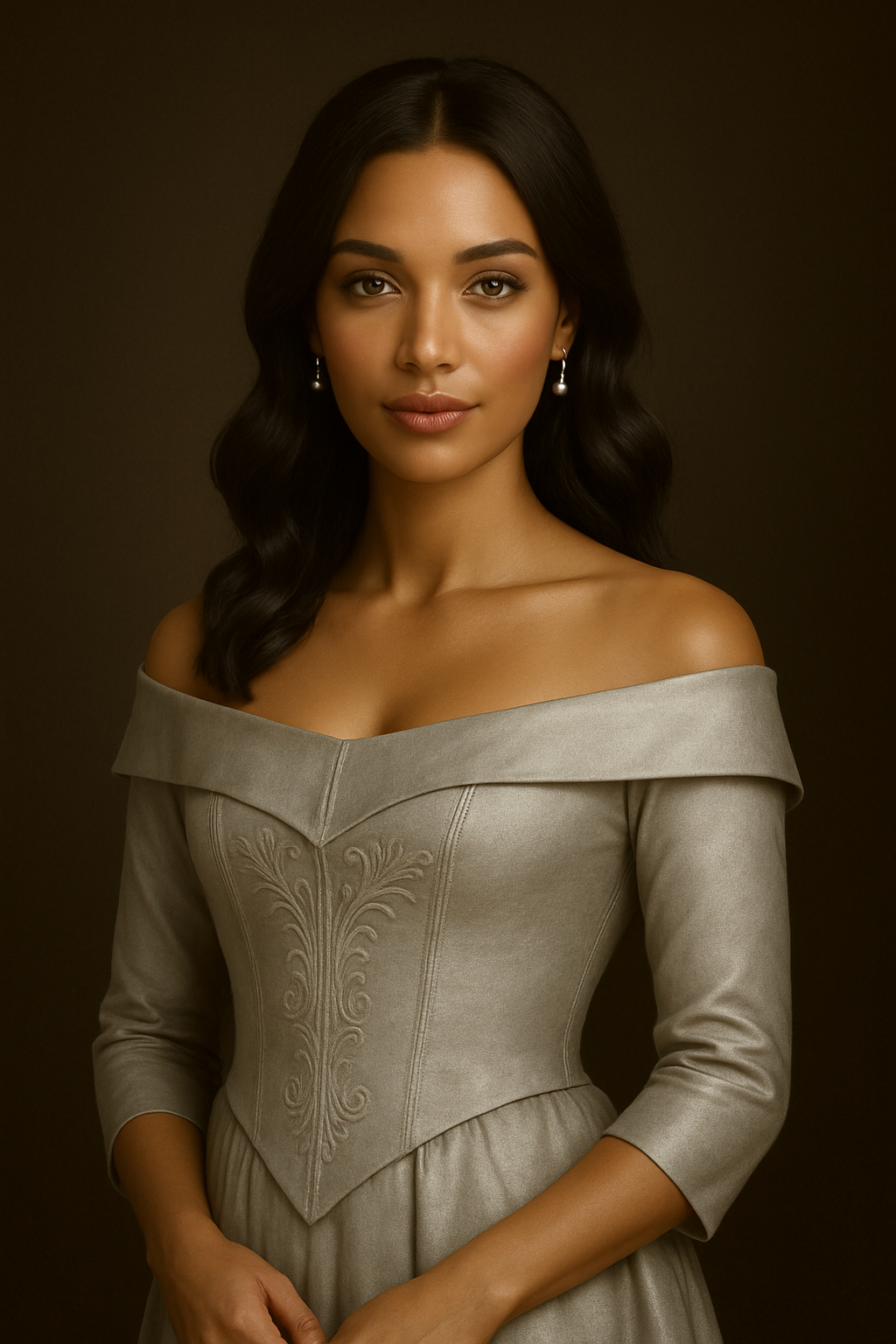
Current Location
Species
Honorary & Occupational Titles
Currently Held Titles
Date of Birth
14th of October, -25 BFE
Year of Birth
25 BFE
33 Years old
Circumstances of Birth
Planned
Birthplace
Tetherdeep
Children
Current Residence
Sapphire Palace
Sex
Female
Eyes
Hazel
Hair
Dark Brown, often styled in loose waves or functional braids
Skin Tone/Pigmentation
Fair, olive complexation, glowing
Height
5'6"
Weight
136
Aligned Organization
