
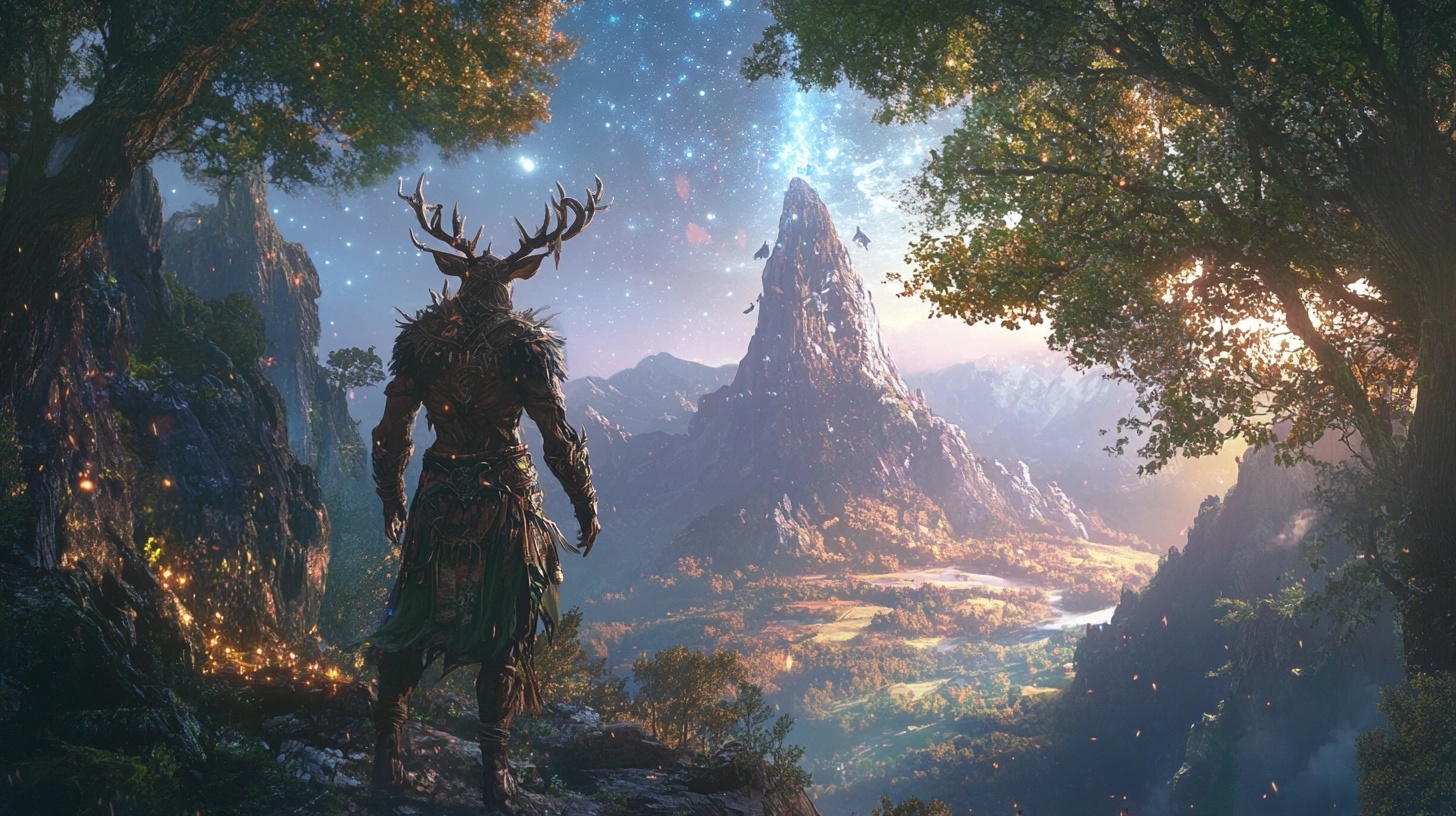
Firbolg
Firbolgs of Wakodia
Overview
Firbolgs are an ancient and reclusive race, known for their quiet strength, mystical connection to nature, and deep-rooted traditions. Though often mistaken for simple forest folk, Firbolgs are stewards of memory, balance, and the unspoken harmony between the mortal and the natural world. They dwell in remote biomes across Wakodia, from high cliffs to deep jungles, each tribe reflecting the environment that shaped it.Physical Characteristics
Appearance: Firbolgs are large humanoids, typically 7 to 8 feet tall, with subtle animalistic features such as elongated ears, broad noses, and thick hair. Depending on subrace, they may resemble deer
Show spoiler
in subtle but noticeable ways. Their skin tones range from pale gray to deep brown, often marked with faint natural patterns. , goats, camels, moose, or elephants
Lifespan: Firbolgs mature around age 30 and can live up to 500 years.
Height and Build: Firbolgs are tall and powerfully built, often towering over other races, though they carry themselves with humility and calm.
Subraces
Firbolgs in Wakodia are divided into six subraces, each shaped by the biome they inhabit and the values they hold most dear: 1. SylvaniRegion: Ardren Forest
Appearance: Slender with deer-like features and antler motifs.
Culture: Stargazers and memory-keepers with fey ties; attuned to seasonal cycles and fate.
Show spoiler
2. Mubari
Region: Thunderspan
Appearance: Broad and muscular, with buffalo-like posture and markings.
Culture: Nomadic and spiritual, they revere storms and winds as ancestral voices.
3. Rokhari
Region: Jernfjell Peaks
Appearance: Stocky, with goat-like eyes, horns, and hooved feet.
Culture: Steeped in tradition and spiritual endurance, they dwell in alpine forests and revere warmth and kinship.
4. Elnokh
Region: Northern mountain forests
Appearance: Towering and thick-boned, with moose-like antlers and stoic bearing.
Culture: Solitary and solemn, Elnokh Firbolgs are winter-hardened and bound by ancestral law.
5. Calmarin
Region: Deserts of Ramaal
Appearance: Lean and leathery, with long ears and camel-like endurance.
Culture: Wandering desert sages who revere survival, silence, and oasis-born wisdom.
6. Mnemari
Region: Thornscale Tangle
Appearance: Wrinkled and elephantine, with wide features and serene expressions.
Culture: Memory guardians and dream-speakers; masters of oral history and deep time.
Region: Thunderspan
Appearance: Broad and muscular, with buffalo-like posture and markings.
Culture: Nomadic and spiritual, they revere storms and winds as ancestral voices.
3. Rokhari
Region: Jernfjell Peaks
Appearance: Stocky, with goat-like eyes, horns, and hooved feet.
Culture: Steeped in tradition and spiritual endurance, they dwell in alpine forests and revere warmth and kinship.
4. Elnokh
Region: Northern mountain forests
Appearance: Towering and thick-boned, with moose-like antlers and stoic bearing.
Culture: Solitary and solemn, Elnokh Firbolgs are winter-hardened and bound by ancestral law.
5. Calmarin
Region: Deserts of Ramaal
Appearance: Lean and leathery, with long ears and camel-like endurance.
Culture: Wandering desert sages who revere survival, silence, and oasis-born wisdom.
6. Mnemari
Region: Thornscale Tangle
Appearance: Wrinkled and elephantine, with wide features and serene expressions.
Culture: Memory guardians and dream-speakers; masters of oral history and deep time.
Culture and Society
Firbolgs value patience, subtlety, and the preservation of balance. They live in tight-knit tribal societies, rarely interfering with outside affairs unless balance is threatened. They are known for their oral traditions, seasonal rites, and quiet diplomacy. Some serve as dream-seers, others as memory-keepers or wardens of forgotten wilds.Religion and Cosmology
Firbolgs do not worship gods in the conventional sense. Instead, they revere ancestral forces, nature spirits, and prime deities tied to memory, nature, and harmony. Tribes often integrate elements of local deities, such as Brômak (the god of roots and memory), into their rituals. They see the divine in stories, seasons, and the silent guidance of the earth.Role in History
Firbolgs rarely appear in historical records, preferring the background to the spotlight. However, their influence is felt through ancient oaths, preserved knowledge, and forgotten sanctuaries. Some Firbolgs stood as protectors during the Arcane Cataclysm, shielding old places from ruin.Magic and Firbolgs
Firbolgs lean toward natural and spirit magic — druids, rangers, and clerics are common among them. They rarely use arcane magic, preferring the slow, rooted power of the world itself. Some possess innate magical abilities tied to concealment, illusion, or communion with ancestral spirits.Relationships with Other Races
Humans: Firbolgs find human ambition curious and dangerous. While some ally with wise elders or druids, others distrust humanity’s thirst for expansion.Elves: Firbolgs and elves share a bond of long memory and nature-ties, though elves often find Firbolg ways frustratingly slow.
Dwarves: Firbolgs respect dwarven craftsmanship and endurance but avoid their rigid hierarchies.
Other Races: Firbolgs interact infrequently, but when they do, they seek mutual understanding through stories and spirit-sharing.
Legacy
The legacy of the Firbolgs lies in the unseen: in ancient trees still standing, in forgotten shrines still tended, and in stories passed through the firelight. Though their hands are not often found in the building of empires, their presence endures in the deep places of Wakodia — timeless, patient, and rooted in the old ways.Playing as a Firbolg
Firbolgs are grounded, mystical figures who blend nature, memory, and ancestral power. Players drawn to reflective, spiritual characters or those who value tradition and hidden strength will find deep narrative potential in Firbolg culture. Base Traits:– Size: Medium
– Speed: 30 ft
– Languages: Common, Sylvan, and one tribal dialect
– Rooted Spirit: You have advantage on saving throws and ability checks against being knocked prone, moved against your will, or grappled by natural effects (such as wind, tremors, or beast attempts). This does not protect you from magical spells.
– Natural Invisibility: Once per short rest, you can turn invisible until the start of your next turn (or until you attack or cast a spell).
– Veil of the Wilds: You can cast Disguise Self once per long rest. When you do, your disguise always incorporates natural motifs (moss, bark, leaves, antlers, etc.).

Comments