

D8 The Willow-Stairs
Primary Seat of Gilathadar Telva (Telva, Dawnpromise) — part embassy, part school, part court
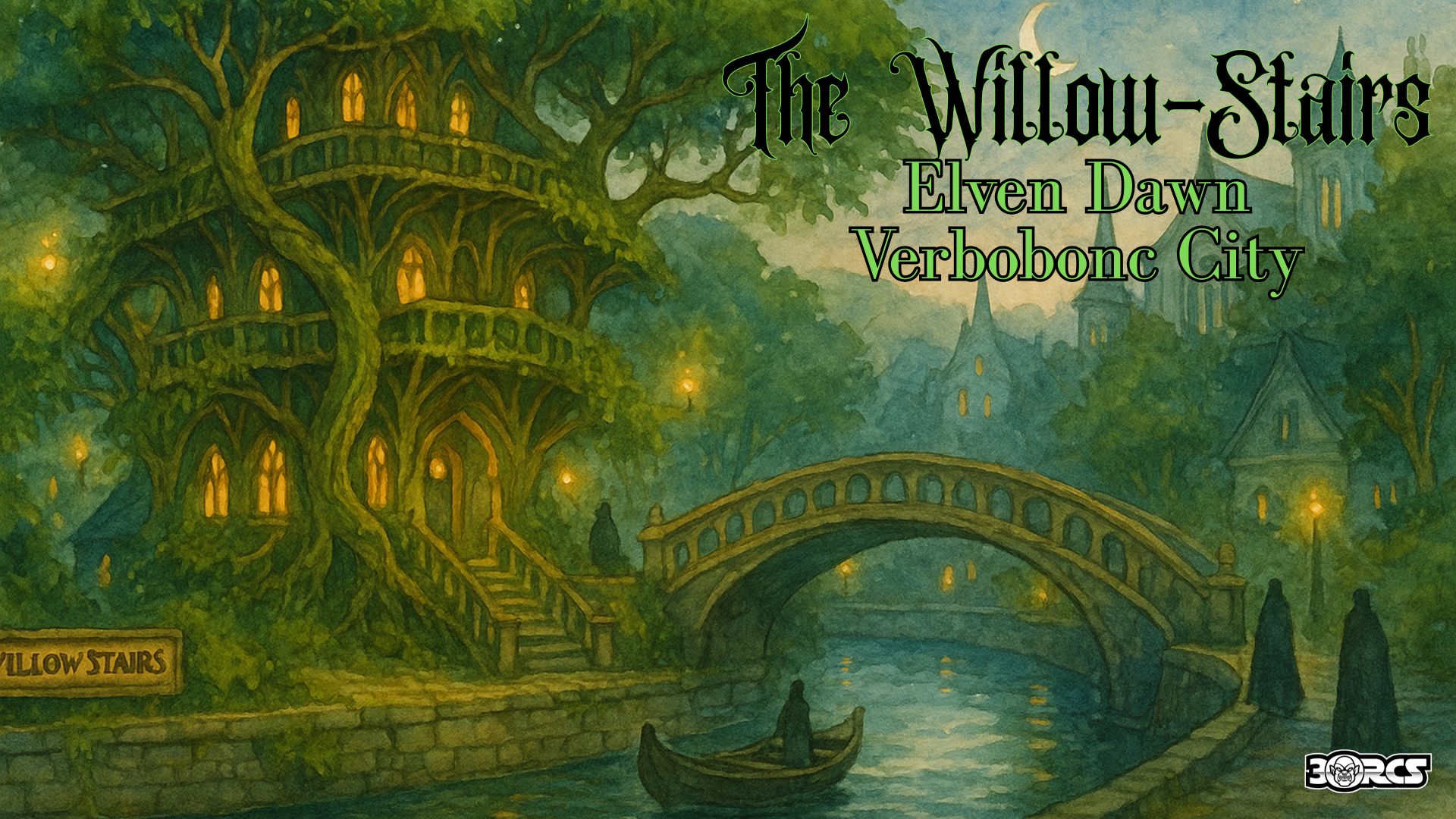
A multi-level townhouse grown into living trellises above a side canal in the D1 - D7 Elven Dawn Quarter, the Willow-Stairs serves as Gilathadar Telva, Lon’Törl urban seat. It functions simultaneously as a Telva embassy, a school of ward-geometry, and a quiet court where forest compacts are witnessed for city use. The building’s living architecture and ceremony mirror the enclave around it: luminous streets, ipt-houses, and a measured hush that marks the quarter’s etiquette.
Location & Approach
The Willow-Stairs stands on a pearl-lit lane in the Dawn Quarter (Olve Quarter), a short walk from the Bastion of the Conclave and its pebblestone roads. Visitors arrive by footbridge or canal skiff; house wardens greet guests beneath woven trellis landings that give the manor its name. The setting is unmistakably elven: orderly, quiet, and edged with soft street-light from household cantrips.
Architecture & Grounds
The townhouse is “grown” rather than built: stacked galleries of willow-framed walks, stair-tubes of interlaced boughs, and rooms paneled in living bark. Its plan echoes older Verbobonc elven work—narrow passages, airy halls, and spiraling stair without banisters—married to the enclave’s ipt-house tradition. A vine-screened court opens to the canal; a moon-bridge of pale wood spans to a small lecture arbor across the water.
Functions of the House
- Embassy: The front galleries host Telva parley with city factors, Dyvers agents, and Kron Hills gnomes; oaths witnessed here are later sealed beneath the clan’s Oath Oak in Alaeduril. The manor’s registry coordinates with the Elven Conclave’s council nearby.
- Elven Clan Interest: This is the house to support Clan Meldarin
- School: An upper floor doubles as a ward-geometry school where Gilathadar tutors select apprentices in “quiet geometry”—hidden glyphs woven into leaf-veins and trellis joints—supporting the enclave’s preservation ethos.
- Court: On market eves the Willow-Stairs sits in session to hear trail-rights, sanctuary claims, and bonded-caravan disputes; judgments are forwarded to the Conclave’s records and the city’s authorities as needed.
Security & Wards
The Willow-Stairs relies on layered discretion over brute force: sight-breaking trellis screens, soft street-glow, and watch-relief from the Conclave barracks. A concealed ward-path links the house ledger to Conclave archives; in emergencies the Barracks’ veterans can muster to the lane within minutes.
Neighborhood & Atmosphere
The surrounding Dawn Quarter is serene and judgment-quiet; even taverns and meeting halls keep measured tones. Gardens, performance pavilions, and ipt-house canopies define the streetscape, with recent elven arrivals reviving traditional forms. Public order is coordinated with city wardens but steered by Conclave etiquette.
Political Positioning
Gilathadar’s seat exemplifies the enclave’s balance: cooperative with Verbobonc authority while guarding elven autonomy and culture. Its proximity to the Conclave underscores close ties to the council and the quarter’s militia, and its parley rooms are where elven–human–gnomish compacts often begin before formal sealing.
City Context
Beyond the quarter’s boughs, Verbobonc blends human stonework with ancient elven artistry; the palace and river trade define the skyline and economy, while the city’s motto—“Earth and Stone, Man and Gnome”—frames its multicultural pragmatism that Gilathadar leverages in policy.
Rooms & Notable Features
- Canal Landing & Moon-Bridge: Skiff berth beneath woven willow; a single-arc bridge of pale wood links to a lecture arbor. (Adaptive design echoes enclave practice.)
- The Trellis Hall: Reception gallery with living pillars; soft cantrip-light mirrors the quarter’s pearlescent lanes.
- The Stair-Tubes: Spiraled bough stairs without banisters, a nod to classic elven interiors preserved across the city.
- The Dawnbank Scriptorium: Map drawers keyed to Conclave beacons; copies logged with the Barracks’ strategic room.
- Court of Quiet Geometry: Arbored chamber where leaf-vein wards are taught and civic oaths are recorded under Telva law.
Using the Willow-Stairs in Play (576 CY)
- Audience with the Elder. PCs seek transit writs or sanctuary; protocols require soft-voice testimony and a witness from the Conclave.
- Map-Room Heist. A page from the Conclave’s strategic maps vanishes; skiff chases through canal arbors ensue.
- Pearl-Lane Vigil. During Temple-related unrest, Barracks veterans request the PCs hold the moon-bridge until relief arrives from the pebblestone roads.
Cultural Notes
The house observes the enclave’s exclusive membership ethos (elves and half-elves who call the city home) and hosts regular poetry evenings and oath-witnessings that draw leaders from the quarter.
Setting the stage: What the characters feel first
Tone: The city is polite on the surface and flinty underneath. Lanterns glow soft in the Dawn Quarter, but every market rumor is a knife.
One-minute read-aloud for arrival at D8 (Willow-Stairs):
Pearled light from cantrip-lanterns paints the canal in long strokes. A townhouse of woven willow rises in terraces, its stairways formed from living branches. Elven wardens watch from the trellis shadows—not hostile, simply measuring. A moon-carved seal hangs above an open court. Somewhere inside, a scribe coughs softly, ink drying on the edge of a ledger.
The power center you’ll use: D8 The Willow-Stairs
Function: part embassy, part school, part court.
Owner: Gilathadar Telva, wood-elf Wizard 15; hereditary chief elder of the Telva (Dawnpromise) tribe; former Binder of Oaths during the Elemental War.
Why here: It’s neutral ground where elven, human, and gnomish compacts get drafted before anyone swears them under the Oath Oak. Your party can access high-level help—or make high-level enemies.
Table-ready NPC capsule—Gilathadar Telva
- Public face: courteous, surgical with words, prefers compacts over threats.
- Private worry: Nulb’s smuggling is laundering bandit coin through respectable houses.
- Leverage: transit writs for caravans and “quiet geometry” wards that make ambushes harder.
- One-line quote: “Beauty without duty is a withered leaf—let our compacts be the roots that hold forest and city together.”
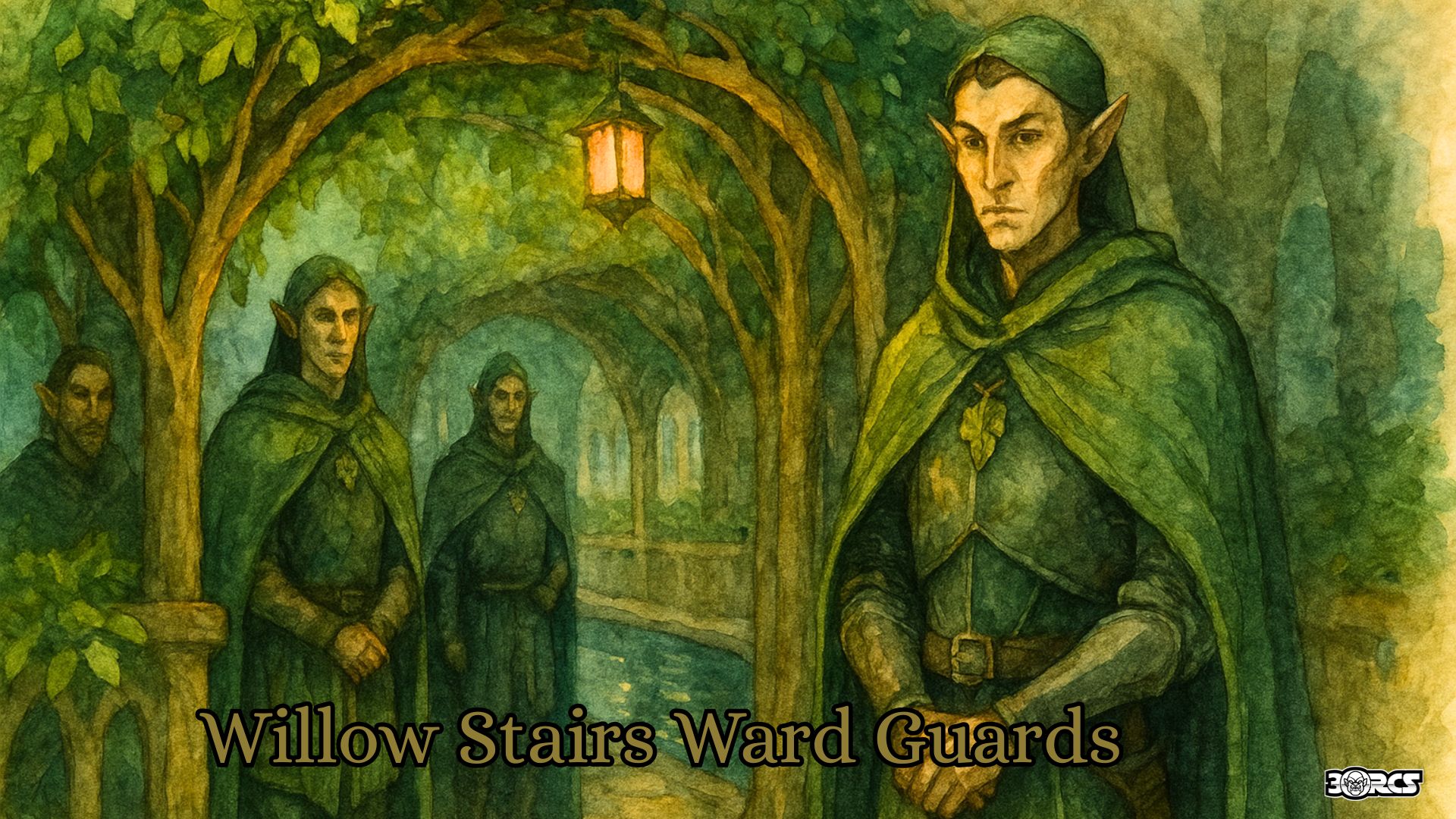
The Telva Wardens (house guard): Half-dozen veteran elves who rotate with Conclave militia patrols; they enforce soft voices, sheathed steel, and signed ledgers.
What’s boiling in Spring 579 CY (and how to run it fast)
Use these three faction clocks to pace the city while the party tackles Hommlet:
- Bandit Ledger (0–6): Smugglers out of Nulb buy stolen grain and tools, then sell “protection” to merchants on the Low Road.
- Tick on: failed convoy escorts, bribed gate guards, PCs ignore road rumors.
- Advance effect: prices spike in Hommlet; militia redeploy; your players feel the squeeze.
- Gnome Walkout (0–6): Kron Hills gnomes threaten a stop-work after “missing shipments” ruin contracts.
- Tick on: Dyvers factors stall payments; evidence points to slaver intermediaries.
- Advance effect: parts, clockwork, and tools grow scarce; PCs barter favors instead of coin.
- Elven Patience (0–6): Dawn Quarter leaders debate closing canopy routes to non-bonded caravans.
- Tick on: poaching incidents, torch-trade at night, PCs treat the quarter like “just another tavern.”
- Advance effect: road travel time increases unless the party negotiates writs at the Willow-Stairs.
Side quests that plug straight into Hommlet
1) The Convoy of Honest Daylight
Premise: Dyvers wants a bonded caravan to reach Hommlet without feeding Nulb’s black market.
At the Willow-Stairs: Gilathadar offers a transit writ if the party escorts the wagons and logs every checkpoint.
Complications:
- A “rescued” mule cart is actually a slaver test—freeing the chained driver reveals a false brand.
- A Ranger contact insists on rerouting through fernshade paths; bandits are waiting on the old road.
Reward: Favor with the Dawn Quarter; a ward-token that grants advantage vs. surprise on forest roads for a tenday.
2) The Dawnguide’s Missing Leaf
Premise: A page from Gilathadar’s restricted map atlas has been stolen.
Clues: Boat tar with glittering mica (Conclave canal), a forged Conclave seal, and a token used by Nulb ferrymen.
Outcome: Recover it and you learn about a backdoor supply line to the Moathouse that your players can ambush.
3) Letters from Avras
Premise: Old correspondence between Gilathadar and Avras Verdanhart (the Viscount’s grandfather) surfaces in a pawn stall; it proves a noble house has been skimming road tolls.
Play: Social infiltration in market courts; one tense hearing at the Willow-Stairs.
Hook to Hommlet: The guilty house is quietly funding a Moathouse scout team; beating them to a relic changes later dungeon balance.
4) The Green Favor
Premise: The Telva Wardens offer the PCs a green leaf-token—good for one timely intervention—if they broker peace between a Woodsman hamlet and a caravan master.
Payoff: When the Moathouse’s alarms turn ugly, that token buys a Ranger squad’s arrival on round 3.
Dialogue seeds you can speak at the table
Use these lines verbatim when the party meets city figures at D8:
- Gilathadar to the party: “Predictability is the bandit’s map. Walk the road at different hours and make the lanterns lie.”
- Telva Warden checking papers: “If your ink was bought in Dyvers, your conscience must be paid in Verbobonc.”
- Gnome factor at a hearing: “We count gears, not excuses. Pay the draymen, or we stop counting for you.”
- Conclave veteran: “South of the Wailing Halls we hunt without warning—if that bothers your patrons, choose better ones.”
Staff & Household
- Telva Wardens (House Guard): A half-dozen veteran door-wardens rotate with Conclave militia patrols posted from the nearby barracks.
- Archivist-Scribes: Keep copies of trail compacts and way-sanctuary maps; exchange updates with the Bastion’s map room.
- Canal-Keepers: Two boatwright-gardeners maintain the skiff landing and living trellis over the water, in line with the quarter’s adaptive, sustainable design.

You step off the stone footbridge into lantern-warm shadow. Vines knit the trellis above like green latticework; the canal laps, soft as breath. You’ve heard the Dawn Quarter was quiet—no one said it would listen.
A figure eases from the willow columns, cloak pinned with a leaf-brooch. Another mirrors him to your left, then a third at the stairs. Not drawn blades—just veteran stillness.
“Hold a moment,” the lead warden says, voice low enough not to disturb the water. “Name your company and your errand at the Willow-Stairs.”
You show empty hands first. “Travelers under peaceful writ,” you say, offering the folded parchment. “Seeking counsel on safe passage through the southern approaches.”
A fourth warden takes the writ without touching your fingers, eyes flicking over signets and dates. “Dyvers ink,” he notes. “No torch-trade.” He returns it with a nod. “Good.”
The leader studies your boots, your packs, the way you stand. “Steel stays sheathed on the stair. Spellbooks closed unless asked. If you carry questions for the elder, you’ll leave answers behind—oaths as needed.”
You feel the trellis breathe in the night breeze. “We agree.”
“Then cross under the green,” he says, stepping aside. “Speak softly; this house records what is said. A scribe will fetch water and witness.”
As you pass, a younger warden falls in beside you, professional but not unkind. “First time?” he murmurs.
“It shows?”
“Only to those who listen.” Ahead, the willow-grown stair curls up into amber light. “Mind your step, friend. The Stairs prefer to keep those who rush.”


Comments