

A4 Harvester Theatre Ruins
The Burning of Verbobonc's High Quarter Theater
dcIdcn the heart of the High Quarter district of Verbobonc, a tragedy unfolded that would ripple through the corridors of power and the streets of the city alike. The renowned theater, a beacon of culture and entertainment for the city's elite and common folk, was consumed by flames in an event that has since sparked controversy, rumors, and political upheaval.
The Incident and Immediate Aftermath
On a night that promised enchantment and performance, the theater unexpectedly became the stage for a real-life drama. The fire, which tore through the building with merciless fury, left nothing but ashes and unanswered questions in its wake.
Impact on City Politics
- Lords and the Viscount: The destruction of the theater has become a contentious issue among the lords and Viscount Wilfrick Verdanhart, challenging the stability and security of the High Quarter. Accusations of negligence and debates over the allocation of resources for public safety have intensified, straining the usually cordial relations among Verbobonc's ruling elite.
- Vigil Wardens and Billets of St. Cuthbert: Tasked with investigating the incident, the Vigil Wardens of Verbobonc, in collaboration with the Billets of Church of St Cuthbert, delved into the ruins. Their findings would lead to whispers of conspiracy and divine retribution that have since permeated every corner of the city.
Once the pride of Verbobonc’s cultured elite, the Harvester Theatre now stands as a burned-out husk in the High Quarter. The fire of 574 CY gutted the amphitheatre in a single night, killing actors, patrons, and servants alike and igniting a political storm that has yet to fully subside.
Today the ruins are cordoned by city patrols, but the curious, desperate, and devout still slip through gaps in the barriers to grieve, to pry loose souvenirs, or to seek answers the Vigil Wardens never publicly gave.
- Type: Ruined amphitheatre / former performance house
- District: High Quarter (A1–A12)
- Current Control: Nominally the city; practically watched by patrols, Billets of St. Cuthbert, and occasionally agents of the Conservatory of Lirr.
- Primary Themes: Divine rivalry, art vs. chaos, political blame, haunted performance space.
The Night of Fire
On what was meant to be a gala evening, a packed house gathered for a new comedic masque penned in honor of Olidammara, the Laughing Rogue. Sometime in the second act, lantern-light flared, illusory fireworks misfired, and a roaring curtain of flame swept across the stage. Within minutes, the whole theatre was ablaze.
The Vigil Wardens and the Billets of St. Cuthbert were tasked with the investigation. Their inquiries uncovered hints of sabotage, strange arcane residues, and conflicting eyewitness accounts—fuel for every rumor-monger in the city.
Politically, the disaster was a humiliation: the High Quarter’s “safest” venue had become a mass grave. Lords on the Council and Viscount Wilfrick traded accusations over funding cuts, safety wards, and who should have prevented the tragedy.
Divine Whispers: Olidammara & Lirr
Two divine names haunt every retelling of the Harvester fire:
- Olidammara, the Laughing Rogue – God of music, revels, wine, rogues, and tricks, whose worship delights in unpredictable joy and mischief. Rumor claims the play that night invoked him too boldly—blending real rites into stage business—and that his capricious favor tipped into chaos.
- Lirr, Lady Poet and Lorekeeper – Goddess of poetry, drama, literature, and the preservation of art, sworn to protect creative works from destruction and suppression. Some whisper that the script mocked her ideals or stole from a sacred text of Lirr without proper credit, provoking divine backlash—or at least the wrath of her clergy.
Whether the blaze was accident, arson, or the clash of two offended deities is still hotly debated in taverns, temples, and council chambers alike. Meanwhile, a gambling-house-temple of Olidammara elsewhere in the city keeps politely silent, which only deepens suspicion.
The Ruins Today – Key Features
Keep this section tight at the table; expand the areas you’ll use in play.
1. The Scorched Plaza
A small stone-paved square lies before the main doors, now half-blocked by collapsed masonry and wooden barriers. A rough street shrine of candles, wilted flowers, and bits of costume marks where families once waited for news of loved ones. This is the safest place for meetings and quiet speeches.
2. Main Entrance & Grand Foyer
Double doors hang blackened on their hinges. Inside, a ruined foyer of cracked marble, toppled columns, and half-melted chandeliers still shows traces of former splendor. Faded frescoes of masked actors and stylized muses line the upper walls—some defaced, others eerily intact beneath smoke. Perfect for hidden sigils of Lirr or Olidammara, secret doors, or clues.
3. The Burned House (Audience Seating)
Tiered stone benches ring the central pit where the wooden stage once stood. Much of the original seating collapsed into the lower levels; navigating here requires balance and care. At night, witnesses swear they see phantom patrons in fine dress, applauding unheard lines.
4. The Stage Pit & Orchestra Well
The stage has fallen in, revealing a dark, debris-filled cavity. Beneath lies the old orchestra pit and service tunnels where stagehands, musicians, and priests of Lirr once worked. This is a natural entry point for dungeon-style exploration: hidden shrines, smuggler routes, or cult hideouts.
5. Backstage Ruins & Shrine Niche
Charred dressing rooms, prop closets, and hanging rigging form a tangle of fire-blasted timber. In one half-collapsed alcove, a cracked stone niche bears both an illustrated book (Lirr’s symbol) and a grinning mask (Olidammara’s), fused by heat into a single warped relief—an evocative relic or potential magical focus.
6. Subcellars & Service Tunnels
The under-levels stored costumes, wine, and records. Now they collect stagnant water, ash, and rats. Vigil Wardens periodically sweep these tunnels, but smugglers, cultists, or followers of Olidammara may reclaim them between patrols.
Factions & Visitors
- Vigil Wardens of Verbobonc – Maintain a loose cordon, use the site for occasional training or ongoing investigations tied to NSQ-02: St. Cuthbert’s Investigation.
- Billets of St. Cuthbert – Treat the ruins as a warning about lax morals and magical excess; some push for the site to be fully razed and rebuilt as a shrine or court.
- Clergy & Bards of Lirr – Quietly argue that the ashes should be preserved as a memorial to lost art, and that any surviving scripts or scores must be recovered from the subcellars.
- Followers of Olidammara – Rogues, minstrels, and gamblers treat the place as half-sacred, half-cautionary. They might seek relics from the last performance or stage illicit revels by night.
- City Nobles & Patrons – Some wish to rebuild; others quietly prefer the theatre remain a ruin so old scandals stay buried.
Adventure Hooks
- NSQ-02: St. Cuthbert’s Investigation – The PCs accompany Billets or Vigil Wardens into the ruins to recover a missing evidence log, holy relic, or surviving witness (perhaps a half-mad stagehand who refuses to leave the cellars).
- Ghostlight Performance – On certain nights, a spectral reenactment of the final play manifests. If the party joins the performance—playing their “roles” correctly—they may learn who set the first spark or gain a boon from Lirr for preserving the truth.
- The Mask and the Book – The fused shrine niche (book + mask) begins to bleed ink or wine when the PCs approach. Choosing to align it toward Lirr (restoring order and artistry) or Olidammara (embracing chaos and freedom) could shift a local miracle, open a hidden vault, or change how each church views the party.
- Rebuilding the Harvester – A noble patron or priestess of Lirr hires the party to clear hazards, secure funding, and negotiate with rivals so the theatre can be rebuilt. Enemies include frightened traditionalists, criminals using the ruins, and perhaps a cult that feeds on the lingering tragedy.
Sample Dialogue: Haunted Stagehand
Use this if the party meets a surviving stagehand, priest, or bard who witnessed the fire. Read in character; adjust details as needed.
The old man’s eyes fix on you, wide and glittering in the ash-dusted gloom.
“You there… aye, you. Think ye can tread these boards and not feel the gods watchin’? We begged Lirr for inspiration, we did—ink-stained hands and all. But the director, he… he wanted more.” His voice drops to a hoarse whisper. “‘Let us make the Laughing Rogue himself our patron,’ he said. We mixed prayer with parody, wine with witch-light, and when the mask was raised…”
He shudders, fingers clawing at the burned stone.
“The music turned strange, like strings snapping one by one. Then came the heat. Not from the lamps—no, from everywhere. Tell me, strangers—will ye mend what we broke… or just pick through the ashes like the rest?”
Verbobonc Locations Referenced by Type
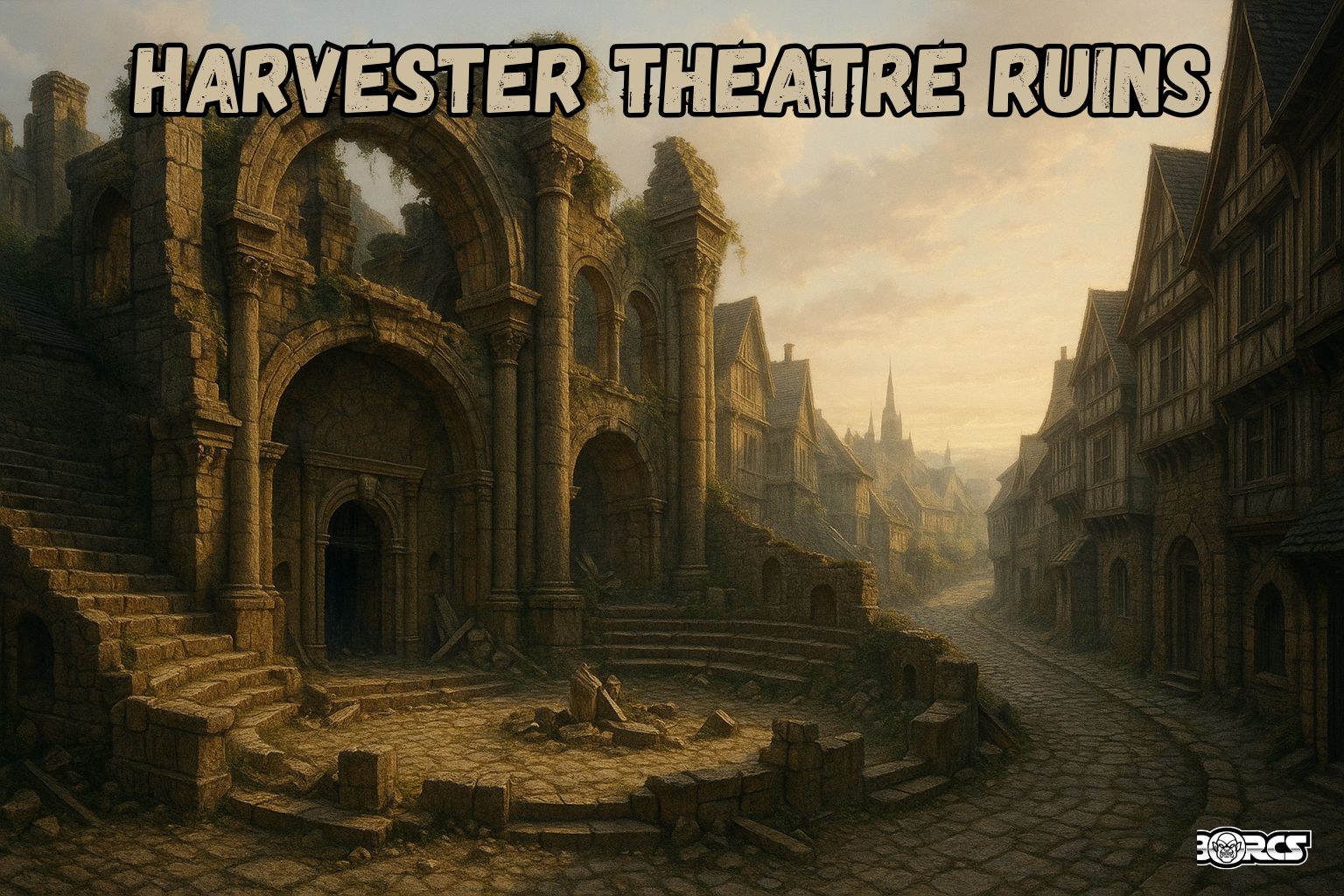
Where laughter turned to ash.”
- Type: Ruined theatre / amphitheatre
- District: High Quarter
- Owner / Authority: City of Verbobonc under the Viscount’s authority
- Primary Factions:
- Clergy and bards of Lirr (mourning and preserving lost art)
- Followers of Olidammara (revelry, rumor, and blame)
- Vigil Wardens & Billets of St. Cuthbert (security, ongoing investigation)
574


Comments