
The Arcane
in Metaphysics & Cosmology"Magic does not obey us. It remembers us, and that is enough."
The arcane is the study and use of power that exists beyond the physical world. It is not a separate force but the hidden structure beneath everything, the invisible pattern that connects matter, thought, and energy. To practice the arcane is to learn how that structure responds to intention, and how meaning can be turned into action through knowledge, focus, and will.
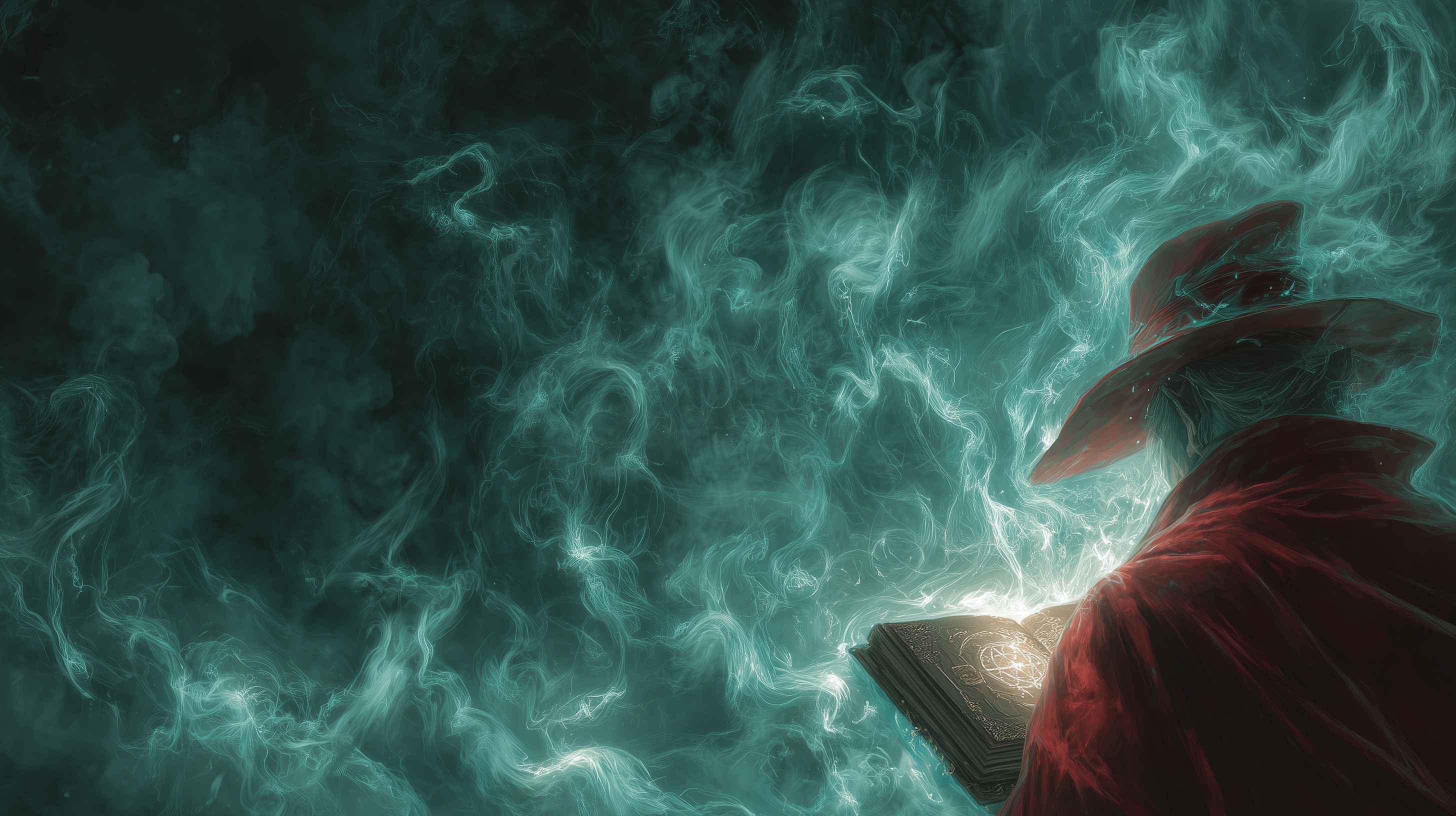
Most scholars describe the arcane as the residue of creation. When the universe first took form, not all its energy settled into stable shape. Some remained fluid, moving through the world like unseen tides. That current became what mortals now call the weave, an endless field of potential that hums beneath reality. Those who can feel it sense the pulse of existence itself, a rhythm that responds to language, emotion, and imagination. The weave is not alive, yet it behaves as though it remembers everything that has ever touched it.
Arcane practice is the art of shaping that current without breaking it. Spells are not commands but negotiations, each one a conversation between the will of the caster and the limits of the world. Every gesture, word, or symbol used in magic is a way of describing an idea so precisely that reality agrees to momentarily change. The greater the precision, the safer the spell. The greater the emotion, the more powerful and unpredictable it becomes.
The study of magic divides broadly into two paths. The first is discipline, taught through academies, orders, and generations of written knowledge. It values structure, reason, and consistency. Those who follow it see magic as a science, built upon rules that can be discovered and refined. The second is instinct, practiced by those who treat magic as expression rather than formula. For them, the arcane responds to need and feeling, revealing its secrets only to those who trust intuition over theory. Between these two paths lies most of the world’s spellcraft.
No form of magic exists without cost. Each use of the weave creates strain, however small, as energy is borrowed from one part of reality to reshape another. For this reason, the most skilled practitioners work with restraint. They study balance, ensuring that what they change can return to what it was. Reckless use of the arcane leaves scars on both the caster and the world. History holds many examples of such imbalance, from cities lost to miscalculated rituals to landscapes warped by residual energy that never settled again.
Magic itself is not moral. It does not distinguish between purpose or belief. A spell heals and harms with equal obedience. The nature of the arcane reflects the nature of its user, amplifying intent more than guiding it. This neutrality has made magic both a source of wonder and fear. Many societies treat it with reverence, binding its study to priesthoods or regulated guilds. Others forbid it entirely, remembering too clearly the disasters it once caused. The balance between trust and caution shapes how each culture survives its own understanding of power.
To master the arcane is not to control it but to coexist with it. The most gifted mages describe their work as listening rather than commanding, attuning themselves to the rhythm of the weave until their will and its movement align. In that harmony lies the closest thing to true mastery. Those who achieve it rarely speak of greatness. They speak of clarity, of the quiet understanding that power is a responsibility shared with the world itself.
The relationship between magic and knowledge remains inseparable. Libraries, towers, and archives serve as both places of study and sanctuaries of memory. Each spell, theory, and experiment becomes another attempt to translate the arcane into language mortals can understand. Yet even the oldest records admit that full comprehension is impossible. The weave changes as the world changes. Every generation rediscovers magic in its own way, rewriting truths that once seemed final.
In essence, the arcane is the will of creation still unfolding. It exists wherever there is potential, wherever an idea seeks form. To wield it is to take part in that process, to act as a bridge between what is known and what might be. The power itself has no end, only new directions to flow. For as long as there are minds to imagine and hands to shape, the arcane will remain the quiet pulse that keeps the world alive.
World Codex
Unless otherwise noted here, all art is the creation of SolomonJack through Dall-E, Midjourney & Stable Diffusion.
© Brian Laliberte 1993 - 2025. All rights reserved.
Unknown Shores is an original fantasy setting. Unauthorized reproduction, distribution, or adaptation without permission is prohibited.
This work includes material from the System Reference Document 5.2.1 (“SRD 5.2.1”) by Wizards of the Coast LLC, available at D&D Beyond