


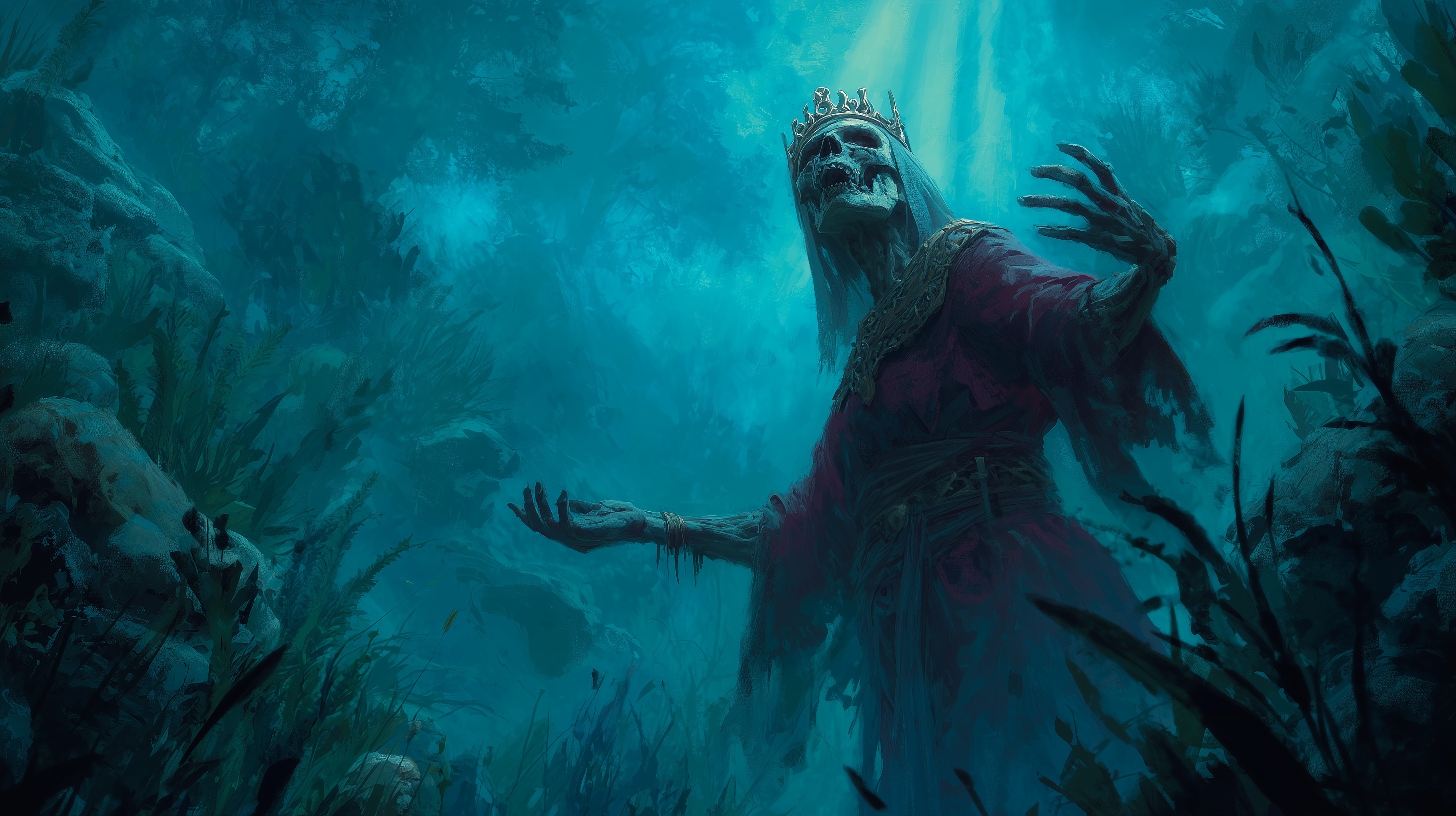
Necromancy
Necromancy is the school of magic that studies the forces of life, death, and undeath. It explores what gives living things their vitality, what happens when that energy departs, and how it might be influenced. Though it carries a dark reputation, necromancy itself is not evil. It is simply the manipulation of the same energies that move through every living being. Its practice can harm or heal, preserve or destroy, depending on the intent of the one who wields it.
Necromancers learn to sense and shape the unseen power that links spirit and flesh. They study the cycle of birth, growth, decay, and renewal, seeking to understand how energy leaves the body and where it goes. Some focus on preservation and restoration, using their art to prolong life or to ease the passing of the dying. Others turn their knowledge toward the reanimation of corpses or the summoning of spirits, forcing remnants of life to obey their will. These acts often cross cultural and moral boundaries, which is why necromancy is so often feared and condemned.
The study of necromancy falls into two main paths. The first path concerns the use of life force to heal and protect. Spells that steady the heartbeat of the dying or strengthen the body against harm are drawn from this gentler tradition. The second path seeks to command the energy that lingers in death. It includes spells that raise skeletons and zombies, communicate with the dead, or drain the vitality of enemies. Both paths rely on the same principles, but the intent of the caster determines whether their work brings comfort or corruption.
Magic of this school draws on what scholars call the animating essence, the invisible spark that drives all living things. Necromancers learn to gather and redirect this essence, pulling it from the dying or infusing it into still flesh. This practice is dangerous. Each act of control carries a cost, and those who rely too heavily on death’s power often feel their own life begin to thin. The more one bends this energy, the more it resists. Experienced necromancers treat their art with discipline, knowing that arrogance leads to decay of body and mind alike.
Throughout history, necromancy has been both outlawed and worshiped. Some temples forbid it entirely, believing that disturbing the dead breaks the natural order. Others see it as a sacred duty to guide lost spirits and protect the living from what lingers beyond the grave. Despite its many restrictions, necromancy endures because no other magic can replace its function. It reveals truths buried with the dead and grants strength when all other hope has failed.
In the greater framework of arcane study, necromancy stands as a reminder that life and death are not opposites but parts of the same current. To practice it is to walk the edge between creation and oblivion. Every spell is a dialogue with mortality, and every true necromancer knows that understanding death is the first step toward understanding life itself.
Type
Metaphysical, Arcane



Comments