


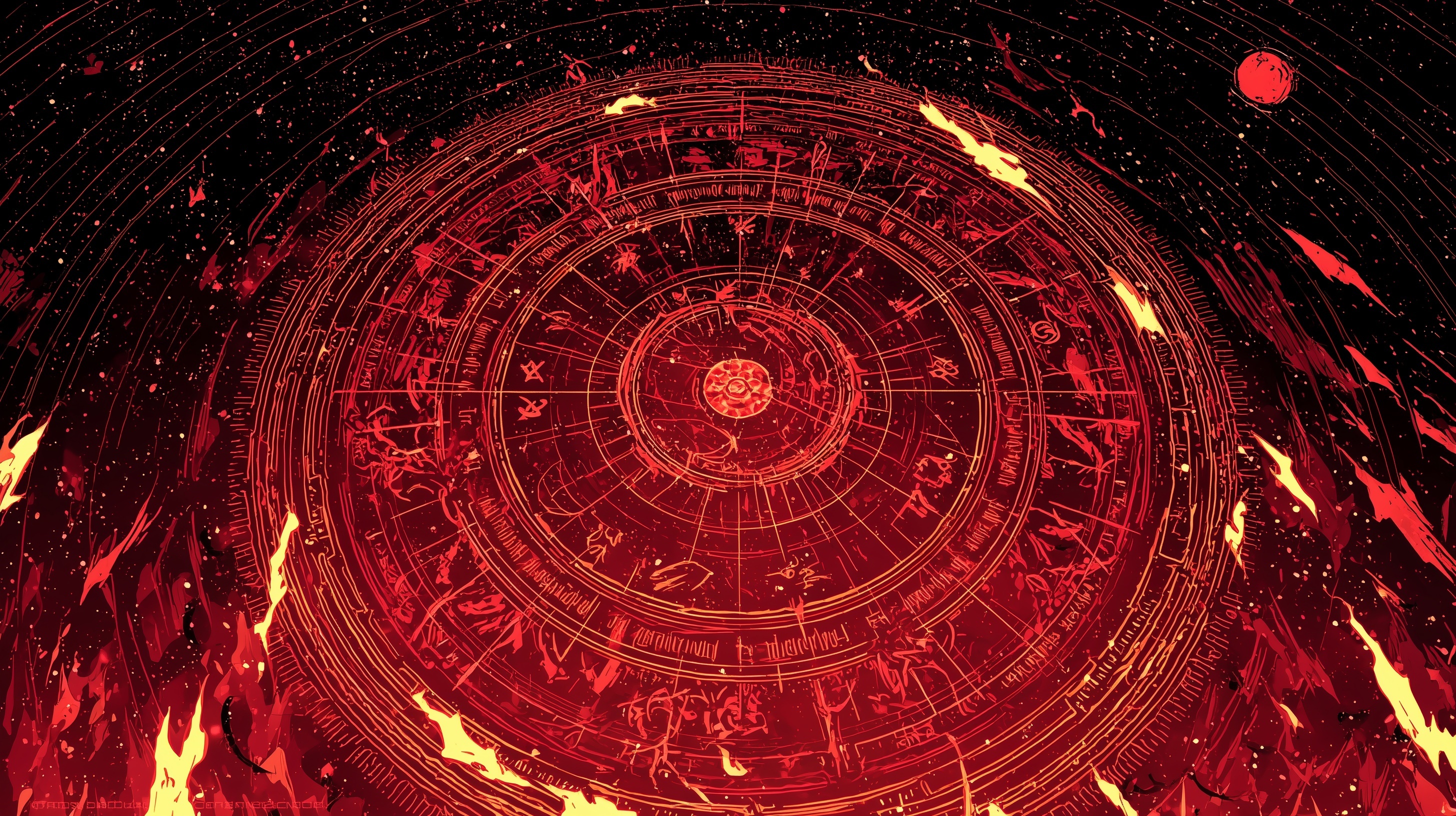
Invocation
Invocation is the school of magic centered on calling and channeling power from external sources. It is the art of appealing to greater forces and shaping their response through will and discipline. Where evocation draws on raw elemental energy and conjuration summons matter into being, invocation focuses on communion. It is a bridge between the mortal and the divine, the finite and the infinite, a dialogue between the spellcaster and the vast powers that answer when called.
The essence of invocation lies in resonance. Every plane of existence, every deity, and every primal force vibrates with its own pattern. An invoker learns to attune themselves to that pattern and to draw it into the world through word, gesture, and intent. This resonance becomes a conduit through which holy light, shadow, or elemental fire may pass. Clerics and warlocks often rely on this discipline instinctively, their prayers or pacts serving as structured forms of invocation. Wizards and scholars approach it more analytically, seeking to isolate the mechanisms behind divine or planar contact.
The magic of invocation takes two primary forms. The first is direct channeling, where the caster becomes the vessel of an outside power. This may manifest as radiant energy that heals the wounded or as destructive force that burns through corruption. The second form is petition, where the caster calls upon a presence beyond themselves to act. These spells often create barriers, blessings, or curses that carry the signature of the power invoked. In both forms, success depends less on dominance than on clarity of purpose, for no power answers chaos.
Invocation demands faith, though not always in a religious sense. The invoker must trust in their connection to the force they call upon, knowing that hesitation can sever the link or invite backlash. Each casting is an act of surrender balanced with control. The caster opens themselves to something larger, channels its essence, and closes the connection before it consumes them. The difference between mastery and ruin is often a single breath of discipline.
Because invocation touches the realm of gods and spirits, it carries both reverence and danger. Those who wield it without respect risk drawing attention from entities that do not forget insults. The wise treat every invocation as a negotiation, offering acknowledgment or tribute in exchange for borrowed strength. Over time, skilled invokers develop personal rites that honor their sources of power, binding loyalty through respect rather than fear.
Philosophically, invocation represents humility and alignment. It teaches that mortal will can shape vast energies, but only through harmony with something greater than itself. To practice it is to recognize that power is not always owned but shared, and that true command lies in cooperation. The invoker stands at the threshold between worlds, neither supplicant nor master, channeling forces beyond comprehension into forms that can heal, protect, or destroy. In this balance of calling and restraint, invocation becomes not only a craft of power, but an act of devotion.
Type
Metaphysical, Arcane



Comments