


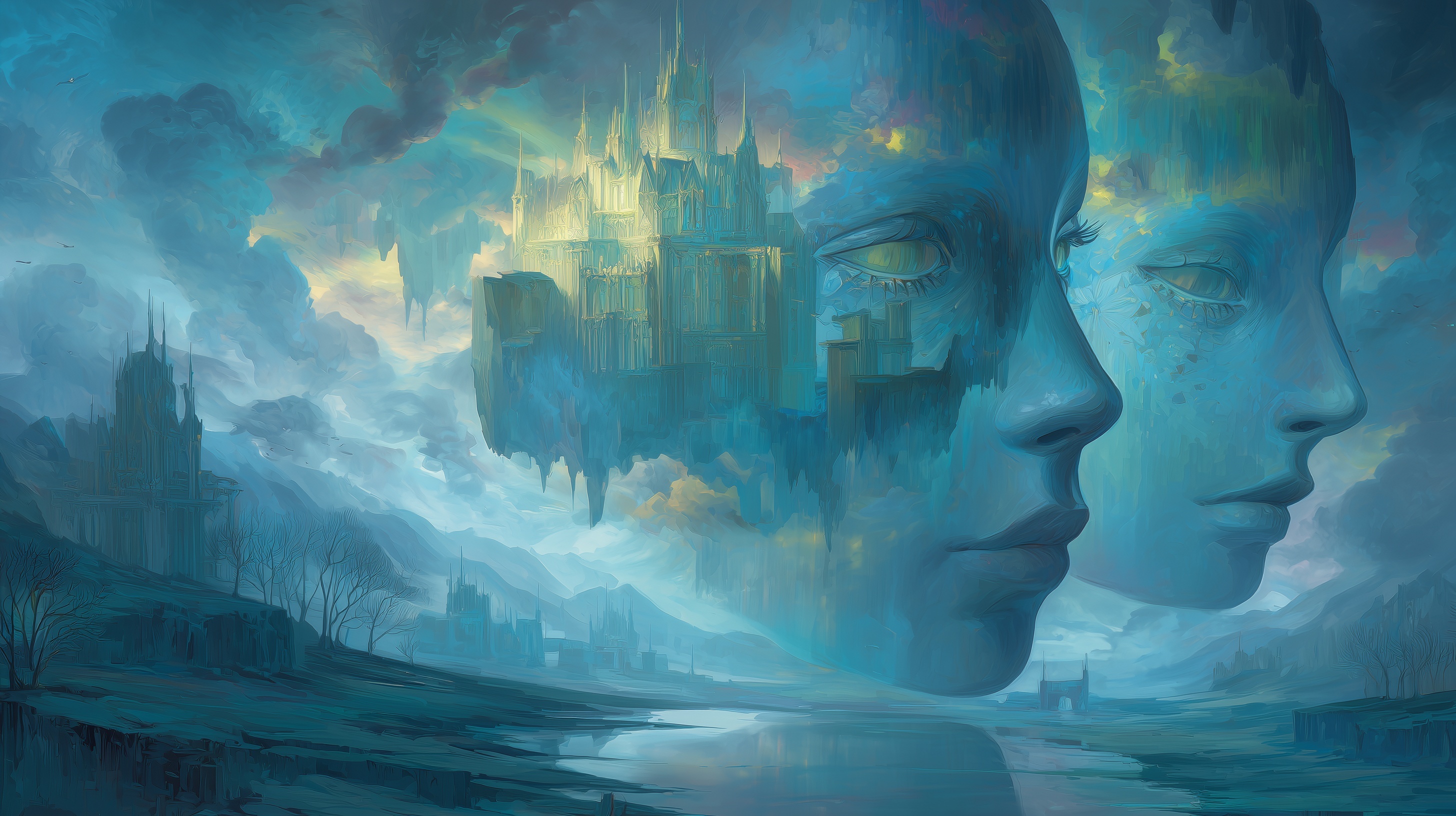
Illusion
Illusion is the school of magic that shapes perception and manipulates the senses. It deals not with matter or energy, but with belief. To study illusion is to learn how the mind interprets reality and how easily that interpretation can be changed. An illusionist does not create substance. They create experience, guiding what others see, hear, and feel until imagination becomes indistinguishable from truth.
The foundation of this art lies in understanding attention. The human mind cannot perceive everything at once, so it fills the gaps with assumption. Illusion magic exploits that habit, offering convincing details where none exist. A flicker of color, a shift in sound, or a hint of texture can persuade an observer that what they see is real. The simplest spells conjure small images or phantom noises. The most advanced craft entire environments so seamless that even seasoned mages hesitate to question them.
Illusion magic divides into two broad paths. The first is sensory manipulation, which alters perception directly. These spells create sounds, lights, and scents or bend them away from the observer. Minor illusion and invisibility belong to this path. The second path is mental influence, which reaches beyond the senses to shape belief itself. Phantasmal killer and weird work by planting visions inside the mind, making the victim’s own thoughts the source of terror or wonder. Both rely on precision, for the slightest inconsistency can shatter the illusion entirely.
The practice of illusion demands creativity, discipline, and empathy. The caster must understand how others think and what they expect to see. A perfect illusion requires more than magical power. It needs storytelling, an instinct for timing, and an awareness of how emotion guides perception. The most skilled illusionists use their art not to deceive for cruelty but to reveal insight through contrast, showing that perception defines reality more than fact.
Illusions can serve many purposes. They hide movement, distract enemies, protect secrets, and even bring comfort to the grieving. Some scholars use them to reconstruct history or teach complex ideas through visual memory. Yet illusion remains one of the most mistrusted schools, for it blurs the boundary between truth and falsehood. Ethical illusionists accept that risk and use their craft to inspire rather than to manipulate. They understand that every false image carries meaning, and that a convincing lie can still teach a deeper truth.
Within the greater body of arcane study, illusion represents imagination itself. It reminds mages that perception shapes existence and that reality begins in the mind. To practice it is to explore how the world is seen and how it might be seen differently. Illusion teaches that the line between truth and appearance is not fixed but fluid, and that wisdom lies in knowing when to question what the eyes claim to see.
Type
Metaphysical, Arcane



Comments